
Key Points
- Seattle architecture firm AOME Architects says Washington’s newly enacted 9.9% income tax has cut its revenue by more than half and led to three employee layoffs, even though the state has yet to collect any revenue from the tax.
- AOME Architects owner Mark Elster told FOX 13 Seattle that affluent clients began withdrawing from residential construction projects immediately after state Democrats signed the measure into law.
- The tax applies a 9.9% rate to individual and household income above $1 million, with collections set to begin officially in 2029.
- Supporters say the tax targets top earners who can afford the cost and have projected nearly $4 billion in annual state revenue, along with B&O tax relief for smaller businesses.
- Elster and other affected commercial leaders are preparing a joint letter to Governor Bob Ferguson to protest what they describe as the policy’s immediate effect on construction and housing.
- Washington Democrats added a necessity clause to the legislation to prevent a public referendum. The move was backed by a state Supreme Court ruling that opponents say doubled the standard signature collection thresholds.
- Despite the procedural hurdles, the political organization Let’s Go Washington collected more than 511,000 signatures, putting Initiative 645 on the November ballot and giving voters the option to repeal the statute.
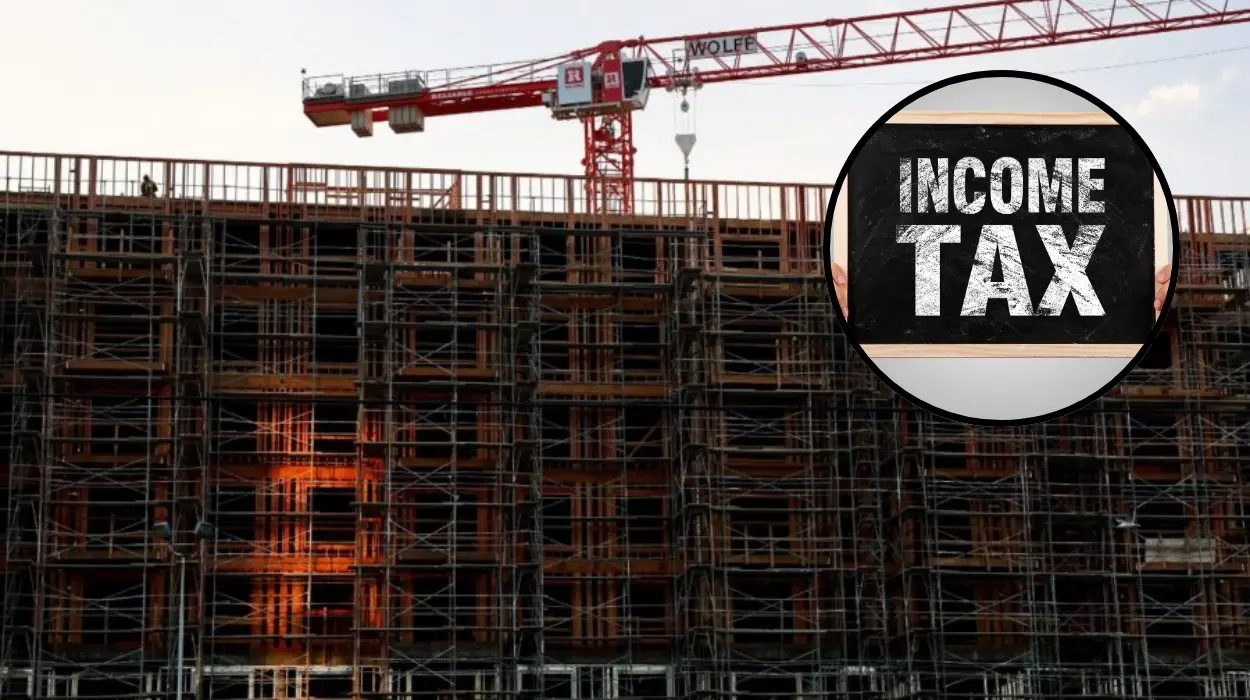
Seattle (Evening Washington News) August 24, 2026 – Uncertainty and preemptive market reactions surrounding Washington State’s landmark tax policy are already translating into tangible economic casualties for regional small businesses. Even before the state has processed a single payment or formally begun collections, a prominent Seattle-based architectural enterprise reports that the state’s newly established 9.9% income tax has decimated more than 50% of its operational revenue and triggered immediate workforce downsizing.
The policy, widely characterised by lawmakers and critics alike as a “millionaires tax,” targets individual and household earnings exceeding $1 million. While formal collection mechanisms are not slated to activate until 2029, the psychological and financial shockwaves are already echoing across the Pacific Northwest’s high-end residential real estate and construction ecosystems.
Why Are High-End Clients Walking Away From Major Construction Projects?
According to statements gathered by FOX 13 Seattle, the legislative passage of the tax acted as an immediate deterrent for wealthy clientele. Mark Elster, the owner of AOME Architects, disclosed to the broadcaster that high-net-worth individuals began abandoning planned architectural and structural investments the moment Washington Democrats successfully maneuvered the tax into law.
As reported by Seattle Red staff, Elster’s business recently lost the single largest contract on its active books after the client explicitly cited the newly minted tax framework as the primary reason for cancellation. Rather than representing an isolated incident, Elster noted that this trend reflects a broader, systemic contraction across the high-end residential architecture market.
As reported by FOX 13 Seattle, Mark Elster stated that:
“They’re all reporting some anecdotal evidence of a chill in client activity, the number of projects going on, and projects being canceled after they’ve started.”
This sudden evaporation of investor confidence has cascaded down a vast supply chain, impacting far more than just design professionals. Elster emphasized that hundreds of blue-collar workers and independent contractors were financially tied to the single large-scale project his firm lost. Architects sit merely at the initial conceptual phase of a development cycle; behind them stand an intricate network of structural framers, licensed electricians, specialized roofers, custom cabinet makers, and material suppliers who will never personally file a million-dollar tax return.
How Severely Has the Tax Impacted Small Business Operations?
The direct financial fallout for AOME Architects manifested rapidly, catching firm leadership off guard despite promises that small enterprises would ultimately benefit from structural tax reforms.
As reported by Seattle Red, Mark Elster stated that:
“Our revenue has declined by over 50% in a matter of months.”
This drastic 50% reduction in incoming capital swiftly necessitated defensive corporate restructuring. As detailed in coverage by Seattle Red, the financial squeeze forced the architecture firm to lay off three valued employees to stay afloat. Elster stressed during his interview with FOX 13 Seattle that none of the terminated workers belonged to the wealthy demographic targeted by the state’s legislative architecture.
Supporters of the 9.9% levy have consistently defended the policy by arguing that it focuses exclusively on individuals capable of easily absorbing the financial burden. Proponents have estimated that the tax could generate close to $4 billion annually for the state budget, while simultaneously funding business and occupation (B&O) tax relief aimed at protecting small-scale enterprises. Ironically, Elster’s enterprise falls squarely into the exact category of small employers that lawmakers claimed the B&O tax relief package was designed to safeguard.
Explore More Seattle News
Anduril Vacates Seattle Shipyard After Navy Program Cut — Seattle 2026
Seattle City Council Unanimous Votes Criticised by Tech CEO Seattle 2026
What Are Business Owners Doing in Response to the Legislation?
Frustrated by what they view as a profound disconnect between legislative intent and real-world economic consequences, local employers are mobilizing. Mark Elster revealed to FOX 13 Seattle that he, alongside a coalition of fellow business owners and commercial leaders, is currently in the process of drafting a formal joint letter addressed to Washington State Governor Bob Ferguson.
The intended correspondence aims to explicitly detail how the mere anticipation and psychological weight of the tax are actively crippling the construction and housing development sectors long before any public revenue models can be realized.
As reported by Seattle Red, Mark Elster expressed deep frustration with the legislative process, stating that he:
“wish[es] those lawmakers had a better practice of consulting impacted stakeholders…and learning about the second- and third-order impacts before they enact legislation.”
Critics argue that policymakers failed to account for capital mobility. High-net-worth individuals and investors possess the financial agility to redirect their capital, investments, and residency to states with more favorable tax climates, leaving regional contractors and service providers to absorb the local losses. This sentiment has found broader validation in national financial commentary; concurrently, outlets like The Wall Street Journal have issued broad economic warnings regarding the long-term consequences of aggressive “tax the rich” agendas, noting that such measures frequently accelerate wealth flight rather than stabilizing state coffers.
Will Washington Voters Get a Chance to Repeal the Tax?
The political battle over the 9.9% income tax has already transcended legislative chambers, transitioning into a high-stakes legal and electoral war.
Recognizing the potential for fierce public backlash, Washington Democrats strategically embedded a necessity clause into the original drafting of the bill. This legislative maneuver was deliberately designed to insulate the statute from standard public referendum processes. When the measure faced initial scrutiny, the Washington State Supreme Court upheld aspects that opponents argued substantially increased the procedural signature-gathering thresholds required to mount a citizen-led challenge.
Despite these legislative and judicial roadblocks, grassroots political mobilization proved resilient. The advocacy organization Let’s Go Washington successfully spearheaded a statewide petition drive, collecting and submitting more than 511,000 valid signatures. This massive populist push successfully certified Initiative 645, placing a direct repeal measure onto the upcoming November ballot and handing the ultimate decision back to the state’s electorate.
However, the political friction has extended deep into the administrative language surrounding the vote itself. Critics have pointed out that official state ballot disclosures caution voters that a successful repeal of the tax would result in immediate funding cuts to public education and vital healthcare programs. Opponents of the tax have labeled these warnings as fundamentally misleading, noting that because the state has yet to collect a single dollar from the tax and no active state programs rely on its projected revenue, claims of immediate budgetary cuts are flatly inaccurate.
As November approaches, the plight of firms like AOME Architects serves as a focal point for a fierce ideological debate. For business owners like Mark Elster, the crisis is not merely a theoretical discussion about tax equity, but an immediate struggle for survival in an economic landscape altered before the law has even taken full effect.