
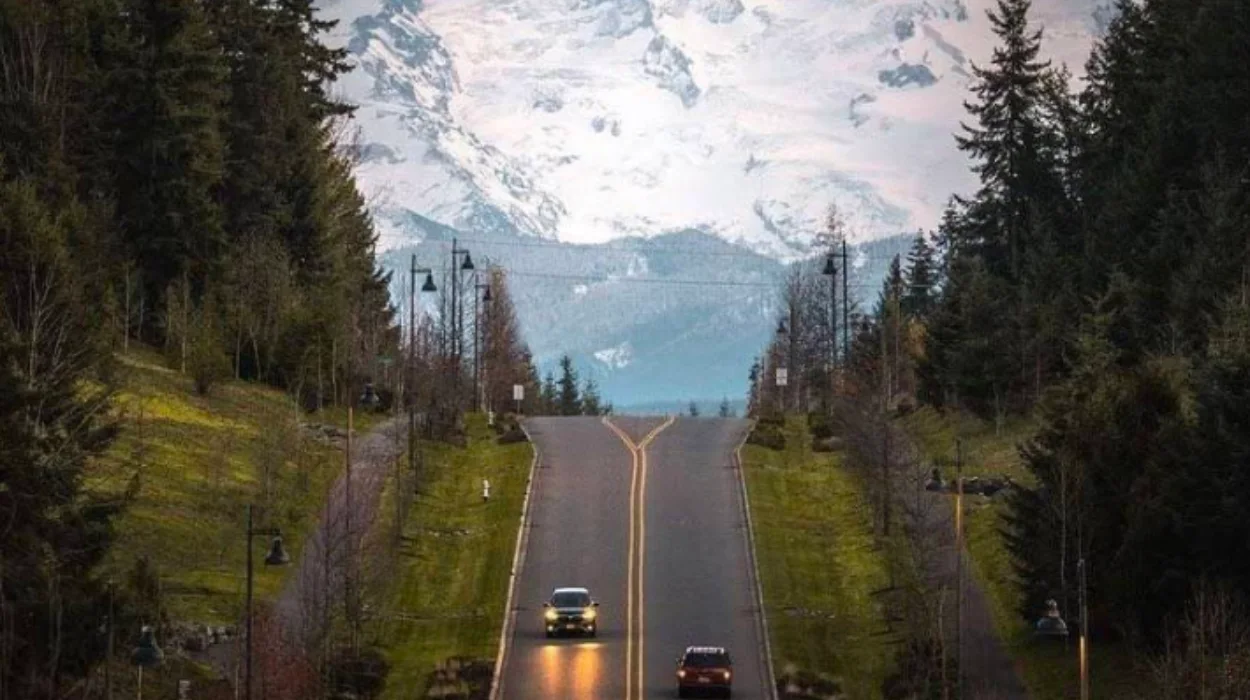
A Seattle to Mount Rainier road trip is one of Washington’s most accessible mountain trips, with a drive time of about 2 to 3 hours depending on your route and destination inside the park. Mount Rainier National Park is open year-round, but road access, weather, and facilities change by season, so route planning determines the experience.
- What is the Seattle to Mount Rainier road trip?
- Why does this road trip matter?
- How do you drive from Seattle to Mount Rainier?
- Which route should you choose?
- When is the best time to go?
- What should you know about park access?
- What are the main stops?
- What should you do on a day trip?
- What should overnight travelers plan?
- What road conditions affect the drive?
- What are the best travel tips?
- Why does this trip stay relevant?
- How should you plan the route?
What is the Seattle to Mount Rainier road trip?
A Seattle to Mount Rainier road trip is a scenic drive from Seattle, Washington, to Mount Rainier National Park, a 14,411-foot stratovolcano in the Cascade Range. The trip combines interstate travel, state highways, and park roads, with access to Longmire, Paradise, Sunrise, and other park areas.
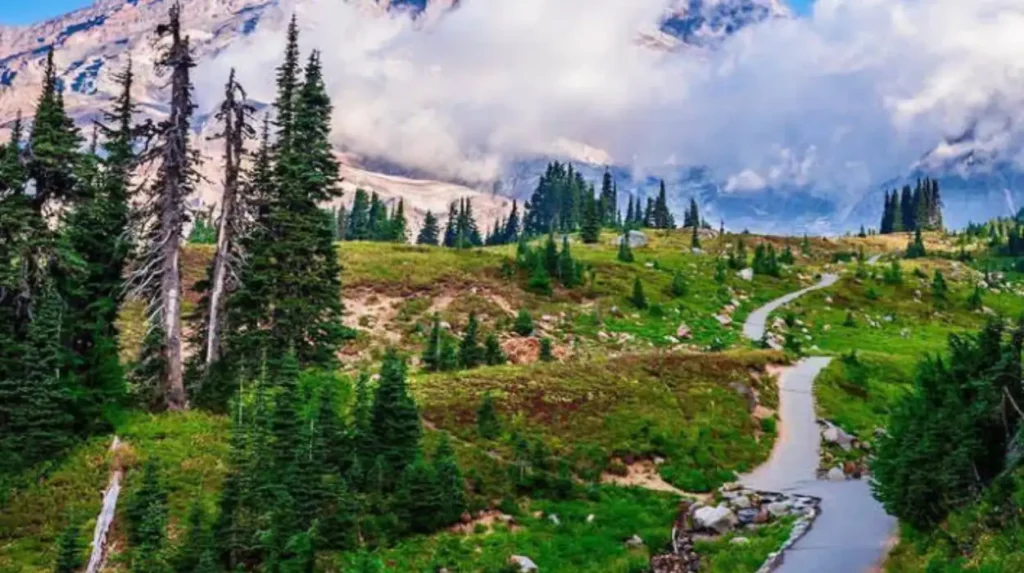
Mount Rainier is one of the most recognizable natural landmarks in Washington. It rises above western Washington and draws visitors for glaciers, subalpine meadows, waterfalls, and alpine viewpoints. The park is a core part of Washington outdoor travel because it is close to Seattle and supports day trips, overnight stays, and multi-day scenic itineraries.
The route is not one single road. Travelers choose among several corridors, including the southwest entrance via Ashford and Nisqually, the northeast approach via Enumclaw and SR 410, and the southeast approach via US 12 and White Pass. Each route reaches different park areas and gives a different road-trip experience.
Why does this road trip matter?
This road trip matters because it links Seattle to one of the Pacific Northwest’s most visited national parks with relatively short drive times, year-round access, and multiple scenic entry points. It fits day trips, weekend travel, and seasonal hiking or sightseeing plans.
Mount Rainier National Park is open 24 hours a day all year, but visitation peaks in July and August when weather is warm, dry, and wildflowers bloom. The park also experiences heavy summer congestion, so advance planning is essential, especially for Washington travelers who want to avoid delays.
The road trip also matters because access changes sharply with elevation. Low-elevation areas stay open longer, while higher roads such as Sunrise close earlier and reopen later depending on snow, plowing, and maintenance. That seasonal variation shapes everything from packing lists to route choice.
How do you drive from Seattle to Mount Rainier?
Most Seattle travelers reach Mount Rainier by driving south or southeast out of the city, then following one of several state highway corridors into the park. The southwest route to Paradise via Ashford is the most direct for many visitors, while SR 410 and US 12 serve other park districts.
The most common southwest route starts from Seattle on I-5 South, then connects through state highways toward SR 706 and Ashford for the Nisqually Entrance and Paradise corridor. The official park directions list Seattle to Paradise at about 99 miles via SR 706, and about 109 miles via SR 410 and Enumclaw. In practical terms, the drive usually takes about 2 to 3 hours, though traffic and road conditions change that estimate.
A second popular route goes through Enumclaw and SR 410 toward the northeast side of the park. That route is especially useful for access to Sunrise when open. A third route uses US 12 toward Morton, Packwood, and White Pass for the southeast side of the park. Each route serves different trip goals, so the best choice depends on whether the visit focuses on Paradise, Sunrise, hiking, photography, or a long scenic loop.
Which route should you choose?
Route choice depends on the part of the park you want to visit, the season, and current road openings. Paradise is the best-known year-round destination, Sunrise is a summer destination, and White Pass works well for travelers coming from southeastern Washington or combining the park with a longer Cascade drive.
The southwest entrance via Ashford and SR 706 is the most reliable visitor route because the Nisqually Entrance is the main year-round vehicle entry and Longmire remains the primary lower-elevation hub. This route is best for a first visit, a short day trip, or any trip focused on iconic Rainier views from Paradise.
The northeast route via SR 410 and White River is the right choice for Sunrise when that area is open. Sunrise has seasonal access and operates on a shorter schedule than the lower park zones. The route delivers a different landscape than Paradise, with broad views and easier access to east-side trailheads in summer.
The southeast route via US 12 and Packwood is useful for longer road trips and for travelers coming from Yakima, Morton, or beyond. It also works well for a loop trip when paired with other Washington mountain destinations. Pass availability across Chinook Pass and Cayuse Pass changes seasonally, so this route requires checking road status first.
When is the best time to go?
The best time for a Seattle to Mount Rainier road trip is late July through August for the warmest weather, the clearest roads, and the widest trail access. Spring brings waterfalls and fewer crowds, fall brings color, and winter brings snow but limited road access.
The National Park Service says visitation peaks in July and August, when weather is warm and dry and wildflowers bloom. It also says that entering before 10 a.m. or after 2:30 p.m. helps avoid delays during heavy summer traffic. Summer is therefore the best season for first-time visitors who want the most predictable access.
Spring is a strong choice for waterfalls and quieter visits, but weather and road openings remain variable. Fall offers brilliant colors and a more relaxed pace, though facilities and roads start closing earlier. Winter requires more preparation because vehicle access is limited and tire chains are required from November 1 to May 1.
What should you know about park access?
Mount Rainier National Park is open year-round, 24 hours a day, but road access and facilities vary by season. In 2026, timed entry reservations are not required anywhere in the park, and all visitors still need an entrance pass.
The park’s entrance fee system is straightforward. Standard entrance passes cost $15 to $30, the annual pass costs $55, and the America the Beautiful Pass ranges from free to $250 depending on eligibility type. The park does not accept cash, so visitors should plan for card or electronic payment.
Timed entry reservations are not required anywhere in Mount Rainier National Park in 2026. That simplifies planning for most visitors. Even so, parking and entrance lines can still become long in summer, especially on weekends and holidays.
Winter driving requires extra caution. The park requires all vehicles to carry tire chains from November 1 to May 1. Some roads close entirely, while some lower corridors stay open with weather-based restrictions.
What are the main stops?
The main stops on a Seattle to Mount Rainier road trip are Longmire, Paradise, Sunrise, and supporting areas such as Ohanapecosh, White River, and Carbon River. Each stop serves a different travel purpose, from visitor services to hiking access and scenic overlooks.
Longmire is the southwest base area and a practical first stop for visitor services, lodging, and historical context. The Longmire Museum is open seasonally, and the National Park Inn provides year-round lodging and dining. Longmire is also useful for trip orientation because it sits at lower elevation and tends to remain more accessible than higher areas.
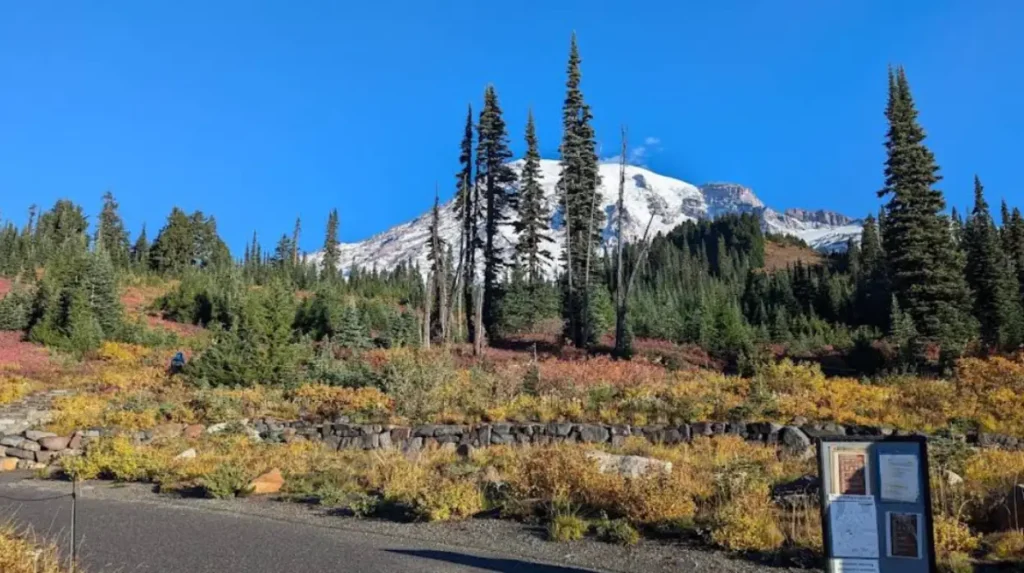
Paradise is the park’s best-known destination and the most iconic stop for many Washington visitors. The Henry M. Jackson Memorial Visitor Center at Paradise is open year-round with limited winter hours, and it provides access to major trailheads and viewpoints. This area is the best match for first-time road-trippers who want classic Mount Rainier scenery.
Sunrise is the highest road-accessible area in the park and is generally open later in summer through mid-September. It gives broad mountain views and a different side of the park’s landscape. Ohanapecosh, White River, and Carbon River round out the park system with additional trail and visitor options, though current closures and construction affect some access in 2026.
What should you do on a day trip?
A day trip should focus on one park district, not the whole mountain. The most efficient day-trip plan from Seattle is to drive to Paradise, spend time at Longmire and Paradise, walk short trails, and return before evening traffic builds.
A strong day trip starts early in Seattle and reaches the park before the heaviest congestion window. The park advises entering before 10 a.m. or after 2:30 p.m. to reduce delays during busy periods. For a single-day trip, Paradise gives the best mix of scenery, visitor services, and trail access.
A realistic day-trip sequence includes a drive to Longmire, a stop for information or food, a visit to Paradise, and a short hike or viewpoint stop. Because Mount Rainier weather changes quickly, visitors should carry layers, water, and food even in summer. The goal is to keep the schedule simple and avoid trying to cross the entire park in one day.
What should overnight travelers plan?
Overnight travelers should plan for lodging, reservations, and seasonal closures before leaving Seattle. Staying in or near the park allows more flexible timing, easier sunrise or sunset photography, and less pressure from summer traffic.
The National Park Service lists the National Park Inn at Longmire and Paradise Inn among its lodging options. Campgrounds also operate with changing seasonal availability, and Ohanapecosh Campground is closed for 2026 due to construction. White River Campground is open in limited loops, but it has no water, so travelers must bring supplies.
Overnight visitors should also plan around facility schedules. Visitor center hours, food service hours, and store hours differ by area and season. Because the park is open year-round but not every facility is open year-round, a successful overnight trip depends on checking current road and operating status before departure.
What road conditions affect the drive?
Road conditions affect the trip more than distance does. Snow, plowing, bridge closures, seasonal pass openings, and weather-based closures all change access, especially on higher park roads such as Sunrise Road and pass corridors like Chinook Pass and Cayuse Pass.
Sunrise Road is closed for the season, while Longmire to Paradise is open but may close at any time depending on weather and road conditions. SR 123 and SR 410 are open at the time of the current update, but travelers should check pass information before leaving. This means the road trip is not just a navigation problem; it is a seasonal operations problem.
The Carbon River Road access issue is especially important. There is no public access to Carbon River and Mowich Lake from SR 165 because the bridge is closed to pedestrians, bicycles, and vehicles. That closure removes an entire approach route and makes pre-trip verification essential.
What are the best travel tips?
The best travel tips are simple: leave early, check road status, carry the right pass, bring water and layers, and choose one park district per visit. These steps reduce delays and improve the chance of a successful trip in every season.
Summer travelers should arrive before the morning rush or after the busiest late-morning arrival window. Midweek travel also reduces crowding. Because parking is limited, the difference between a smooth trip and a stressful one often comes down to timing rather than route length.
All visitors should carry a valid entrance pass and use card or electronic payment because the park does not accept cash. Winter travelers should carry tire chains from November 1 to May 1. Summer travelers should still pack for rain and cold because the park’s climate is generally cool and rainy, and even July and August can bring changing weather.
Why does this trip stay relevant?
This road trip stays relevant because Mount Rainier remains one of Washington’s most accessible national park destinations, and its changing seasons create repeat visit value throughout the year. The trip works for hiking, sightseeing, photography, waterfall viewing, snow travel, and scenic driving.
The park’s climate and elevation differences create a strong seasonal rhythm. Summer offers the widest access, while spring and fall offer a quieter park experience and changing scenery. Winter creates a different kind of trip with snow, limited road access, and chain requirements.
That mix makes the Seattle to Mount Rainier road trip evergreen for Washington audiences. It supports short drives, weekend plans, and repeat visits across the year. It also works well for search intent because the topic naturally includes route planning, park logistics, seasons, fees, and driving conditions.
How should you plan the route?
Plan the route around your destination inside the park, then confirm roads, passes, and weather on the day you leave. A Seattle to Mount Rainier road trip works best when the route matches the season and the specific park area you want to reach.
For a first visit, choose the southwest route to Longmire and Paradise. For summer sunrise and east-side hiking, use SR 410 toward Sunrise when open. For a longer scenic drive from south-central Washington, use US 12 and Packwood.
The best trip plan is practical, not complicated. Check road status, confirm facility hours, buy the entrance pass in advance if possible, and leave Seattle early. That approach gives the most reliable results in every season.
How far is Mount Rainier from Seattle?
Mount Rainier National Park is approximately 95 to 110 miles from Seattle, depending on the entrance you choose. The drive typically takes 2 to 3 hours under normal traffic and weather conditions.