
Washington State offers some of the most varied road-trip scenery in the United States, from Pacific coastlines and temperate rainforests to volcanic peaks, alpine passes, river canyons, and high-desert landscapes. The best scenic drives combine reliable infrastructure, nationally recognized landmarks, and strong seasonality, which makes them useful for both weekend travel and longer evergreen planning.
- What makes Washington State road trips scenic?
- Which Washington road trip has the most iconic mountain views?
- Why is the Olympic Peninsula a top scenic drive?
- Is the Cascade Loop worth the drive?
- What scenic drive shows the best coastal views?
- Which route is best for fall colors?
- What are the best east side scenic drives?
- How should travelers plan a Washington scenic road trip?
- Which Washington road trips work best for different trip lengths?
- Why do Washington scenic drives stay relevant year after year?
- What should a complete Washington scenic road trip article include?
- Suggested article focus
What makes Washington State road trips scenic?
Washington State road trips are scenic because the state compresses multiple major landscapes into short driving distances, including ocean beaches, old-growth forests, mountain passes, glacial lakes, and dry eastern plains. That diversity creates high visual contrast, strong seasonal color, and repeated access to protected public lands.
Washington’s geography explains the variety. The state includes the Olympic Mountains, the Cascade Range, Puget Sound, the Columbia River corridor, and eastern agricultural regions such as the Palouse, all of which support distinct road-trip experiences. Scenic driving routes in the state commonly connect parks, byways, and small towns rather than only serving as point-to-point highways.
A scenic Washington road trip also benefits from clear route identity. Many of the best drives are known by named corridors such as the Cascade Loop Scenic Highway, Chinook Pass, Chuckanut Drive, and the Olympic Peninsula loop, which makes them easier for travelers and search engines to understand as separate entities.
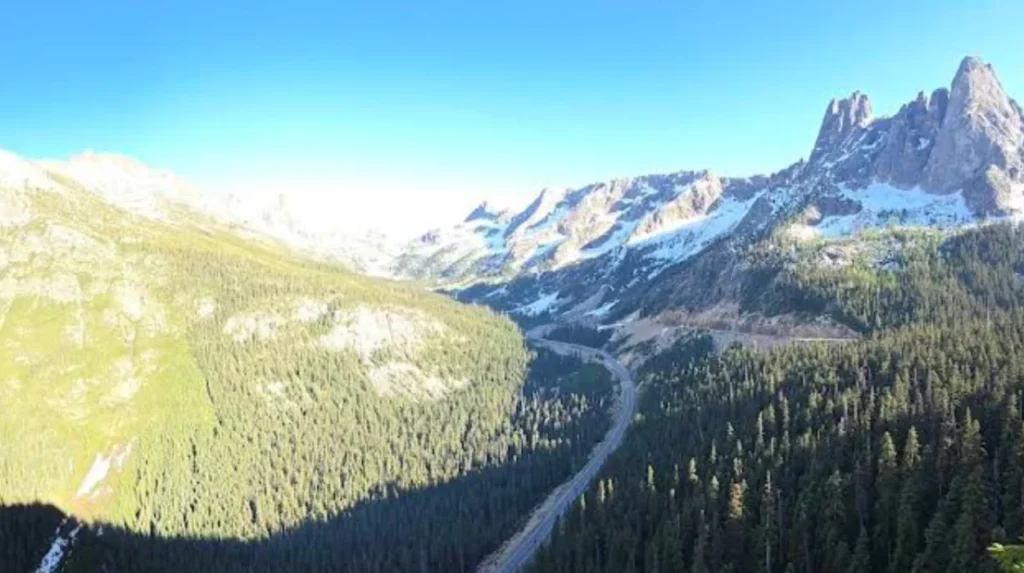
Which Washington road trip has the most iconic mountain views?
Mount Rainier and the Cascade mountain corridors deliver the most iconic mountain views in Washington State, with alpine scenery, glacier-facing roads, and high-elevation overlooks concentrated along routes such as Chinook Pass and the Mount Rainier region. These drives pair dramatic peaks with seasonal wildflowers and forested approaches.
Mount Rainier is one of the state’s defining scenic landmarks, and the surrounding road network gives drivers several ways to view the mountain from different angles. Chinook Pass is especially important because it places travelers near high-country scenery and creates a classic summer mountain-drive experience. That route is strongly seasonal because mountain passes in Washington often have winter weather limitations, making late spring through early fall the most reliable window for scenic travel.
The broader Mount Rainier region matters for evergreen content because it serves both short outings and full-day trips. Travelers use it for photography, hiking access, and loop-style exploration, which strengthens its relevance for broad search intent around scenic Washington road trips. For article planning, this route should be presented as a core example of Washington’s alpine driving identity.
Why is the Olympic Peninsula a top scenic drive?
The Olympic Peninsula is a top scenic drive because it combines coastal views, rainforest, mountains, and protected public lands in one region. It is one of Washington’s strongest all-in-one road-trip areas for travelers who want changing scenery within a single itinerary.
The peninsula stands out because it offers multiple landscape types on connected roads rather than one repeated view. Travelers can move from Pacific Ocean beaches to mossy temperate rainforest and then to mountain-adjacent viewpoints, which creates unusually high scenic density for a road trip. That variety is one reason the Olympic Peninsula remains a consistent recommendation in road-trip roundups.
For evergreen content, the peninsula works well as a macro route with several micro experiences. The coast, the rainforest, and the inland mountain sections each provide distinct visual value and separate planning needs. This structure helps readers understand the route as a flexible road-trip zone rather than a single highway.
Is the Cascade Loop worth the drive?
The Cascade Loop is worth the drive because it is one of Washington’s best-known scenic circuits, linking mountains, rivers, forests, islands, and small towns into a long-form road trip. It is especially strong for travelers who want a classic statewide scenic itinerary.
The Cascade Loop Scenic Highway is commonly described as a large loop that can be driven in segments, which gives it strong practical value for both short breaks and extended travel. Its route identity is important because it includes multiple Washington subregions and connects scenic stops that appeal to different audiences, including families, photographers, and road-trip planners.
This loop is useful for evergreen SEO because it naturally supports geographic clustering. The route includes the Everett and Deception Pass side, the North Cascades side, and eastern mountain-town side trips, creating a broad entity network around Washington scenic drives. That makes it one of the most comprehensive road-trip topics in the state.
What scenic drive shows the best coastal views?
The best coastal scenic drive in Washington is the Olympic Peninsula coastline, where travelers see beaches, surf, driftwood, cliffs, and storm-watching landscapes along the Pacific edge. The route is one of the state’s strongest options for ocean scenery.
Washington has a limited direct Pacific coastline compared with the rest of its land area, which increases the importance of coastal drives in travel planning. That scarcity gives the coastal route strong search value because travelers specifically look for ocean access, beach viewpoints, and weather-driven scenery in one trip.
A coastal road trip also offers more than a single look at the ocean. It combines open shoreline, forest edge, and small-town access points, making the drive valuable for multiple trip lengths and seasons. In an evergreen article, this route should be treated as the state’s primary ocean-view road trip.
Which route is best for fall colors?
The best Washington road trips for fall colors are the Cascade mountain corridors, including routes around the North Cascades, Mount Rainier, and other forested foothill drives. These roads deliver alpine larches, maples, mixed forest color, and mountain backdrops during the autumn season.
Washington’s fall color appeal comes from elevation change and forest diversity. Higher elevations can produce different color timing than lower valleys, which gives travelers a longer viewing window across the state. This matters for evergreen search intent because people often look for “best time to go” and “where to see fall colors” in the same query set.
The North Cascades and related mountain routes are strong candidates because they combine dramatic topography with forest color and lake scenery. That mix creates more photographic variety than a simple tree-lined drive. For long-term usefulness, this section should explain that peak color timing changes each year based on weather and elevation.
What are the best east side scenic drives?
Eastern Washington scenic drives are best for wide-open landscapes, dry weather, river views, basalt formations, and agricultural patterns such as the rolling hills of the Palouse. These drives show the state’s desert and steppe character, which contrasts sharply with western Washington.
The Palouse Scenic Byway is especially important because it represents one of the most visually distinctive drives in Washington. Its rolling agricultural hills create a landscape very different from the forests and coastlines of western Washington. That contrast strengthens the article because it broadens the state’s scenic profile beyond mountain and coastal clichés.
Eastern routes also appeal to travelers seeking less crowded roads and more open sightlines. The broad horizon, farmland geometry, and dry-season visibility create a different kind of scenic experience. In a complete guide, this section should position the east side as the best choice for landscape contrast and long-view driving.
How should travelers plan a Washington scenic road trip?
Travelers should plan a Washington scenic road trip by choosing the region first, checking seasonality second, and matching the route length to daylight and weather conditions. Mountain routes need more seasonal attention, while coastal and lowland routes offer broader year-round access.
Washington scenic driving is shaped by weather, elevation, and road access. Mountain passes and high-country corridors are more sensitive to snow and closure windows, while coastal and lowland routes generally remain easier to use across more months. That means route selection should follow the trip calendar instead of only the scenery category.
A useful planning method is to divide routes into three trip types: short day drives, weekend loops, and multi-day circuits, for example Chuckanut Drive for a short coastal outing, Mount Rainier for a day trip, and the Cascade Loop for a longer circuit. This approach helps travelers set realistic expectations and improves article clarity for AI extraction. It also supports semantic grouping around route length, scenery type, and seasonality.
Which Washington road trips work best for different trip lengths?
Different Washington road trips fit different trip lengths, with short drives favoring Chuckanut Drive, day trips favoring Mount Rainier or Deception Pass areas, and multi-day routes favoring the Olympic Peninsula and Cascade Loop. Route length matters because scenery density and access time vary widely by region.
Short scenic drives work best when the destination itself is the experience. Chuckanut Drive is a good example because it is known for coastal and bluffside views without requiring a full weekend. This makes it suitable for travelers who want a compact route with high visual payoff.
Weekend and multi-day routes require more narrative depth because they combine multiple scenic zones. The Olympic Peninsula and Cascade Loop both fit this pattern because they include several linked landscapes rather than a single overlook. For evergreen SEO, these distinctions help answer user intent more precisely than a simple list of attractions.
Explore More Things to do News
Colchuck Lake Hike Guide: Washington State Adventure Tips
Lake Wenatchee Washington Guide for Outdoor Activities and Camping
Why do Washington scenic drives stay relevant year after year?
Washington scenic drives stay relevant because the state’s landforms, protected parks, and named byways create stable travel demand across seasons and search trends. The underlying geography does not change, so the routes remain evergreen for both tourists and local travelers.
Evergreen travel content works best when the subject has stable identity, repeated public interest, and clear regional landmarks. Washington scenic road trips meet all three conditions because they depend on established landscapes such as the coast, mountains, rainforest, and eastern plains. These routes also map cleanly to user intent, including weekend getaway planning, photography, family travel, and seasonal foliage searches.
The routes remain relevant because they are tied to enduring places rather than temporary events. Mount Rainier, the Olympic Peninsula, the Cascade Loop, the Palouse, and Chinook Pass all have long-term recognition in travel writing and state tourism framing. That makes them strong targets for Google and AI search engines that favor durable, entity-rich content.
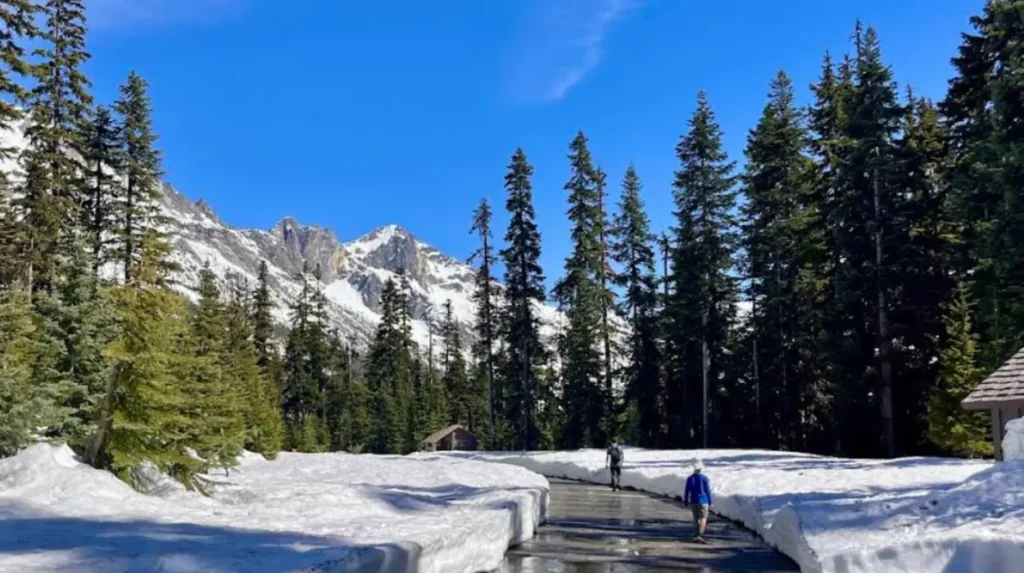
What should a complete Washington scenic road trip article include?
A complete Washington scenic road trip article should include route definitions, landscape types, seasonal timing, trip-length options, and examples of major drives such as the Olympic Peninsula, Mount Rainier, the Cascade Loop, Chuckanut Drive, and the Palouse. Those elements cover the full traveler decision process.
The article should begin with Washington’s geographic diversity and then move into route-level examples. That structure helps readers understand why the state supports so many scenic drives. It also helps search systems extract direct answers because each section names a distinct route, landscape, or planning factor.
The strongest evergreen structure is macro to micro. Start with the statewide scenic identity, then explain mountains, coast, rainforest, and eastern landscapes, and finally describe specific trips and planning implications. That organization matches how travelers search and how AI systems summarize travel content.
Suggested article focus
For publication, the best angle is a route-based guide that balances iconic drives with practical planning. The strongest core entities are the Olympic Peninsula, Mount Rainier, the Cascade Loop, Chuckanut Drive, Chinook Pass, and the Palouse Scenic Byway. Those routes cover the major scenic categories that define Washington travel.
A publish-ready version should add one short intro, six to eight route sections, a seasonality section, and a planning section. That shape gives the article enough depth for 1800+ words while keeping the topic focused on one macro entity: Washington State road trips for scenic views.
What makes Washington road trips so scenic?
Washington packs multiple major landscapes into a relatively small area. A single trip can include Pacific beaches, old-growth forests, alpine passes, volcanoes, waterfalls, rivers, and high-desert scenery, creating exceptional visual variety.