
Key Points
- Direct talks between Israel and Lebanon have resumed at the US State Department in Washington, D.C., with both sides represented at ambassador level.
- The opening session will cover political and security issues, with separate security-focused sessions scheduled to follow later in the week.
- The meetings were facilitated and hosted by the United States, with senior State Department officials present and statements issued by the department.
- Lebanese and Israeli delegations agreed to launch direct negotiations at a mutually agreed time and venue following preliminary consultations.
- Delegations are led by the countries’ ambassadors to Washington: Lebanon’s ambassador and Israel’s ambassador, who took part in the talks.
- The talks take place amid broader regional tensions linked to the Israel–Hezbollah conflict and wider concerns about spillover from hostilities in the region.
- US officials described the initial discussions as “productive” and signalled that more time and further sessions would be necessary to make progress.
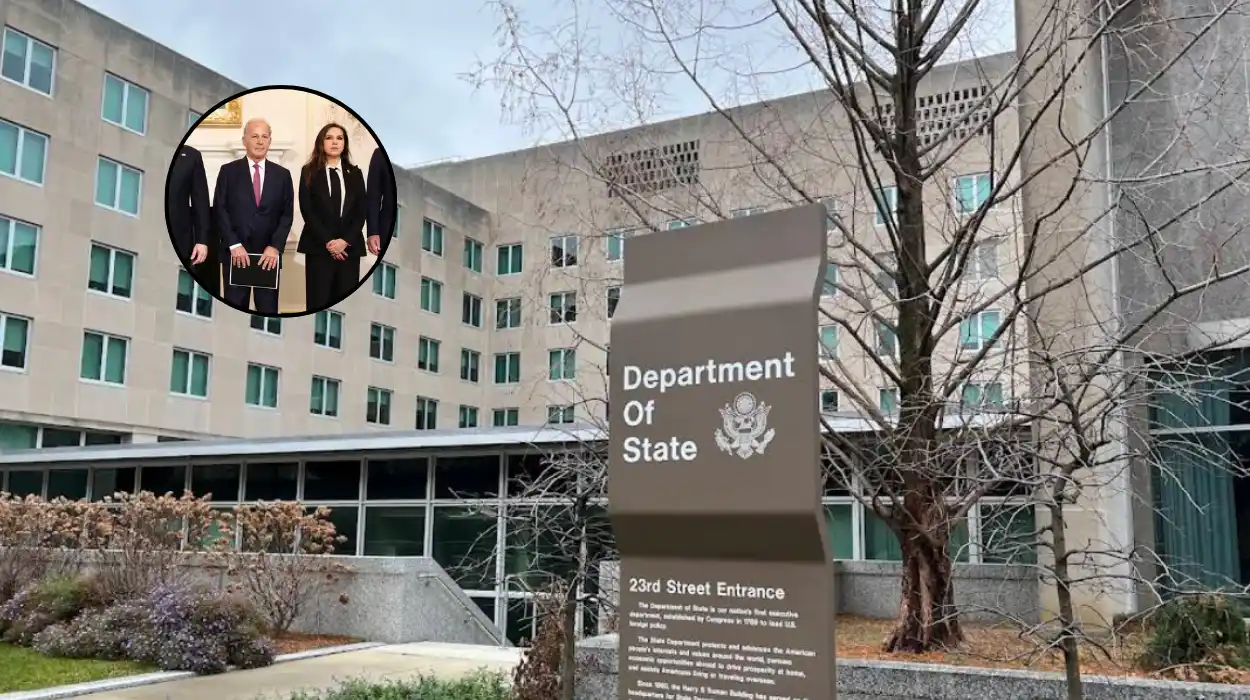
Washington DC (Evening Washington News) June 23, 2026 –Washington — The United States State Department on Tuesday hosted a renewed round of direct, ambassador-level talks between Israel and Lebanon aimed at addressing political and security dimensions of the ongoing hostilities on the Israel-Lebanon border, officials said.
- Key Points
- Why are Israel and Lebanon meeting in Washington now and who is attending?
- What issues will the opening round in Washington cover and how are the sessions organised?
- How did the decision to hold direct negotiations come about and what did the preliminary consultations conclude?
- What has been publicly said about expectations and likely outcomes from Washington’s meetings?
- What statements have Lebanese and Israeli representatives made about the talks?
- What role is the United States playing in the negotiations and how is Washington framing its objectives?
- Are there precedents for direct Israel-Lebanon talks and why are these sessions notable?
- How will security discussions address the presence and actions of non-state actors such as Hezbollah?
- What practical hurdles and political constraints could limit the talks’ success?
- What are the immediate next steps following this opening Washington session?
- Who are the principal figures leading the delegations and what is their diplomatic remit?
- Will there be third-party monitoring or international observers involved in any security arrangements?
- How are regional and international actors reacting to the talks?
- What are the indicators to watch to judge whether the talks are producing results?
- Background of the particular development
- Prediction:
- Notes on sourcing and reporting
Why are Israel and Lebanon meeting in Washington now and who is attending?
As reported by Tommy Pigott of the US State Department, the talks were convened at the State Department with Lebanese Ambassador to the US Nada Hamadeh and Israeli Ambassador Yechiel Leiter attending the session, and were hosted by Secretary of State Marco Rubio’s team, who facilitated preliminary consultations that led to the launch of direct negotiations.
The two delegations met amid heightened concern about cross-border exchanges and the risk of broader escalation involving Hezbollah in Lebanon and Israeli forces, a context underscored by regional analysts and reporting.
What issues will the opening round in Washington cover and how are the sessions organised?
US officials said the opening session will concentrate on both political and security matters before the talks split into more focused security sessions on subsequent days, with additional meetings scheduled for Wednesday and Thursday, respectively.
The structure reflects a two-track approach: initial collective discussions to set framework and confidence-building parameters, followed by separate, specialised sessions to address technical security arrangements and verification measures.
How did the decision to hold direct negotiations come about and what did the preliminary consultations conclude?
According to a joint statement relayed by the State Department, preliminary trilateral consultations involving US, Israeli and Lebanese officials resulted in an agreement to begin direct negotiations at a mutually agreed time and venue, with all sides committing to launch talks and pursue diplomatic engagement.
US officials characterised the consultations as “productive” while underlining that sustained progress will require multiple sessions and detailed follow-up work.
What has been publicly said about expectations and likely outcomes from Washington’s meetings?
US State Department briefings conveyed cautious optimism about the ability of ambassador-level engagement to hammer out steps toward de-escalation, but officials emphasised that these are early-stage talks and that more time will be needed to reach substantive agreements.
Observers and regional correspondents noted that while the talks are a significant diplomatic development, scepticism remains among analysts in Beirut and Jerusalem about whether the sessions can produce durable, verifiable arrangements without parallel confidence-building on the ground.
What statements have Lebanese and Israeli representatives made about the talks?
Lebanese and Israeli delegations have so far limited public remarks to formal statements issued via embassy and State Department channels, confirming participation and expressing a willingness to engage in direct negotiations.
In these statements, officials framed the meetings as an opportunity to address both immediate security concerns and broader political questions that have complicated stability along the border.
What role is the United States playing in the negotiations and how is Washington framing its objectives?
The United States is hosting and facilitating the direct talks at the State Department, positioning itself as the mediator and guarantor of a process intended to reduce the risk of cross-border escalation and to create a diplomatic path for addressing contested security issues.
US briefers emphasised their aim to create conditions for longer-term stability rather than to impose a rapid settlement, stressing that follow-up sessions and technical work will be essential.
Are there precedents for direct Israel-Lebanon talks and why are these sessions notable?
Analysts and reporting note that direct, ambassador-level talks between Israel and Lebanon are rare, particularly in an era of active hostilities involving Hezbollah, and that engaging directly after decades of indirect or mediated contacts marks a notable diplomatic shift.
The sessions in Washington are therefore seen as a test of whether diplomatic engagement can translate into tangible security arrangements on the ground and possibly halt the expansion of violence beyond the immediate battlefronts.
How will security discussions address the presence and actions of non-state actors such as Hezbollah?
While the formal, public outlines of the talks list political and security issues, reporting indicates that dealing with the role and activities of Hezbollah remains a central, though politically sensitive, component of any negotiation between the two states, because the group’s operations out of Lebanese territory are a primary driver of the current violence and Israeli security responses. Delegates are expected to explore mechanisms that could reduce direct military exchanges, including buffer arrangements, verification steps, and potential international monitoring or support, although specifics are likely to remain the subject of intense negotiation.
What practical hurdles and political constraints could limit the talks’ success?
Observers highlight several constraints: domestic political pressures in both Beirut and Jerusalem that limit negotiators’ flexibility; the centrality of Hezbollah in Lebanese politics and security; differing threat perceptions and red lines; and the difficulty of securing credible verification and enforcement mechanisms on a volatile border.
US officials noted these challenges themselves, indicating that any progress would probably be incremental and conditional on parallel on-the-ground measures to reduce tensions.
What are the immediate next steps following this opening Washington session?
US briefings indicate that the talks will continue across a set schedule, splitting into dedicated security sessions on Wednesday and Thursday to focus on the technical details needed to implement any political understandings from the opening meeting.
Delegations signalled their intent to reconvene and pursue further work, with Washington suggesting that subsequent rounds, whether in Washington or at another mutually agreed venue, would be necessary to advance substantive arrangements.
Who are the principal figures leading the delegations and what is their diplomatic remit?
The delegations are led by the countries’ ambassadors to Washington:
Lebanon’s ambassador and Israel’s ambassador, who are charged with conducting the initial direct negotiations and reporting back to their capitals, where political leaders and military officials will evaluate any proposals that emerge from the talks.
Their ambassadorial status allows for formal state-to-state dealings while limiting, in some cases, the scope of decisions they can make without further authorisation from national governments.
Will there be third-party monitoring or international observers involved in any security arrangements?
Public reporting on the opening sessions does not specify a concrete plan for third-party monitoring, though the idea of international verification mechanisms has been discussed among diplomats and analysts as a plausible component of any robust security framework.
US facilitation may include proposals for international technical support or monitoring, but delegates would need to agree on specifics—mandates, composition, and deployment—before such mechanisms could be activated.
How are regional and international actors reacting to the talks?
Regional and international statements have generally welcomed the diplomatic initiative as a constructive step toward de-escalation, although some countries and commentators express reserved optimism, citing the deep-rooted nature of the conflict and the complex set of actors involved, notably Hezbollah and its regional backers.
The United States has emphasised the importance of continued international engagement to support a sustained diplomatic process.
What are the indicators to watch to judge whether the talks are producing results?
Key indicators include: agreement on a ceasefire or clear de-escalation commitments, specific security measures such as buffer zones or troop withdrawals, acceptance of third-party monitoring arrangements, and a timetable for implementation and follow-up sessions. Progress on any of these fronts would represent tangible movement beyond talks themselves.
Explore More Politics News
Global Alliances Fray Over U.S.-Iran Talks and DNI Standoff: Washington 2026
Israel and Lebanon Negotiate Border Security Pilot Zones: Washington 2026
Background of the particular development
Direct, in-person negotiations between Israel and Lebanon are historically rare, especially at the ambassadorial or higher level, because both states have long-standing disputes and because Lebanon’s internal politics are heavily influenced by Hezbollah—a non-state armed actor that Israel regards as an existential security threat.
The current round of talks is taking place against the backdrop of an intensifying border conflict and broader regional tensions that followed Israel’s military operations and Hezbollah’s responses; those dynamics increased international concern about a wider conflagration and provided impetus for US-led diplomatic engagement.
Prior attempts at mediated or indirect talks have sometimes produced limited, temporary arrangements; the Washington sessions represent a renewed effort to move from episodic disengagement to a more sustained negotiation process with US facilitation.
Prediction:
For regional governments and diplomats, the Washington talks could open a diplomatic channel that reduces the immediate risk of cross-border escalation and provides a framework for technical solutions; success may encourage wider diplomatic cooperation and relieve pressure on international crisis management mechanisms.
For residents living near the Israel-Lebanon border, any agreement that reduces exchanges of fire, establishes clearer lines and verification mechanisms, or pauses major operations could directly reduce civilian casualties and displacement in the short term, though such improvements would depend on strict compliance and effective monitoring.
For international stakeholders and mediators, a credible negotiating process would offer a model for targeted engagement elsewhere in the region, but failure to secure enforceable measures could deepen scepticism about diplomatic remedies and increase calls for more robust international involvement.
Notes on sourcing and reporting
This article draws on official State Department statements and contemporaneous reporting from international news agencies and outlets that covered the opening sessions and the State Department’s announcement.
Where officials provided public statements through embassy and department channels, those statements have been summarised in neutral language to reflect available facts and to avoid editorial interpretation.