
Key Points
- Three Westwood Middle School students developed the Baby Observation and Notification Device (BOND) to provide affordable, real-time infant vital signs monitoring aimed at reducing Sudden Infant Death Syndrome (SIDS) risks.
- The team—comprising Remi Zickler, Eldona Zemedkun, and Kensey Bahme—is part of the Washington State University (WSU) Health Sciences Spokane Math, Engineering, and Science Achievement (MESA) program.
- The innovators secured first-place finishes at both the regional competition in April and the subsequent Washington state championship, naming them the top middle school engineering team in the state.
- Mentored by eighth-grade science teacher Michelle Clayton, who previously guided a 2024 team to a national title, the trio will represent Washington at the MESA USA National Engineering Design Competition in Baltimore.
- The initiative is part of Washington MESA’s broader mission, established in 1984, to bridge equity gaps and connect historically underrepresented 6th to 12th-grade students with pathways into STEM careers.
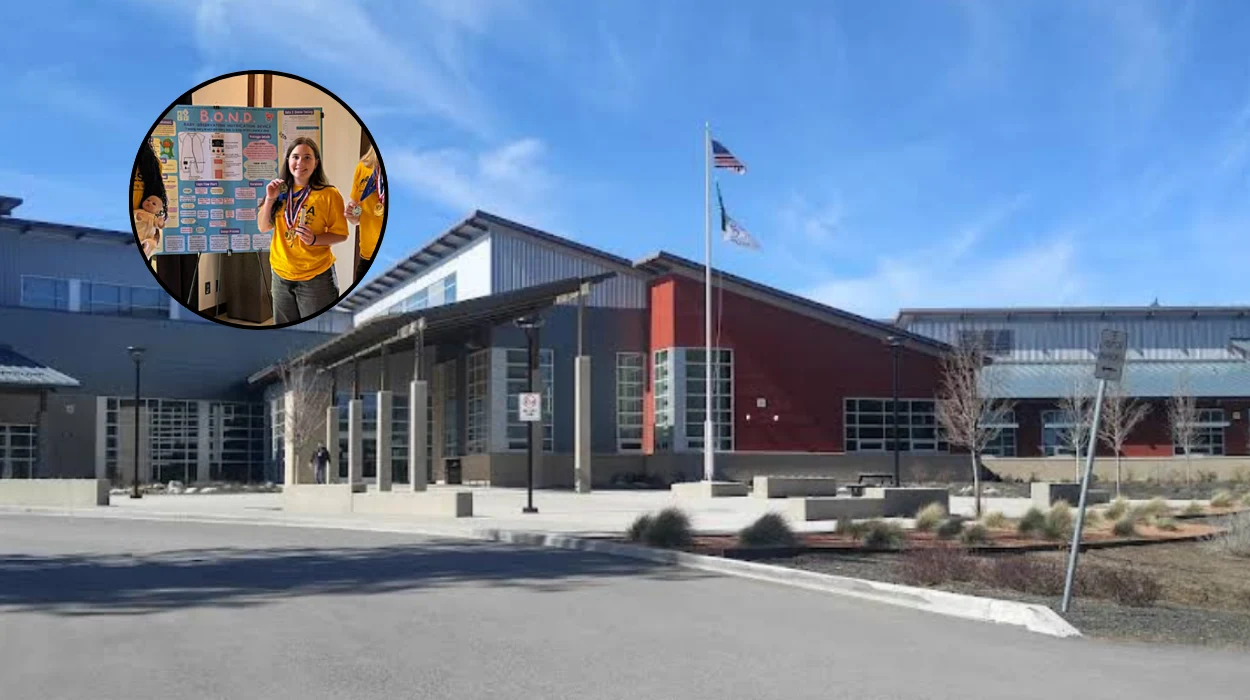
Washington (Evening Washington News) June 17, 2026 – A collaborative STEM initiative based out of Washington State University Health Sciences Spokane has propelled three local middle school students to the national engineering stage following their successful development of a low-cost medical device designed to mitigate infant health risks. Remi Zickler, Eldona Zemedkun, and Kensey Bahme, all students at Westwood Middle School, secured the title of Washington state’s top middle school engineering team. Their invention, the Baby Observation and Notification Device (BOND), functions as an accessible, real-time vital signs monitor specifically conceptualised to address Sudden Infant Death Syndrome (SIDS) across diverse socioeconomic backgrounds.
- Key Points
- What Is the BOND Innovation and How Does It Address Infant Mortality?
- How Did the Team Advance Through the MESA Competition Tiers?
- Who Anchored the Mentorship Behind the Students’ Success?
- What Statements Were Made by Educational Directors and Mentors?
- Background of the Washington MESA STEM Program
- Predictions: How This Development Affects Working-Class Caregivers and Underrepresented STEM Students
- Impacts on Underrepresented STEM Students
As a result of their first-place achievements at both regional and state tiers, the trio has advanced to represent the state of Washington at the MESA USA National Engineering Design Competition in Baltimore, Maryland, scheduled for later this month.
The project was executed under the auspices of the Spokane campus Math, Engineering, and Science Achievement (MESA) program, an educational architecture designed to equip underrepresented demographic groups with technical competencies.
By engineering a high-utility, low-cost alternative to expensive consumer infant monitors, the students met the rigid criteria of the MESA National Engineering Design Challenge, which tasks competitors with utilizing STEM methodologies to resolve pervasive community dilemmas.
What Is the BOND Innovation and How Does It Address Infant Mortality?
The core technological contribution of the Westwood Middle School team centers on the production of the Baby Observation and Notification Device (BOND).
Engineered specifically to alleviate the financial barriers associated with commercial infant telemetry, the device offers continuous, real-time monitoring of crucial neonatal physiological metrics.
The design architecture focuses heavily on accessibility, ensuring that parents and caregivers can monitor infant health indicators without requiring substantial capital deployment.
According to technical briefs detailing the competition criteria, the device functions as an early-warning mechanism.
By capturing and transmitting live vital data, BOND aims to provide a critical window of intervention for caregivers, addressing the sudden, unexplained physiological shifts associated with SIDS.
The design priority was explicitly placed on cost reduction, ensuring that low-income households—who experience statistically higher rates of healthcare disparities—can acquire functional medical-alert instrumentation.
How Did the Team Advance Through the MESA Competition Tiers?
The journey to the national championship in Baltimore involved a multi-tiered competitive evaluation process requiring rigorous technical defense and empirical verification of the device’s efficacy. In April 2026, the team entered the regional iteration of the MESA National Engineering Design Challenge.
This initial phase was hosted via a structural partnership between Eastern Washington University’s MESA branch and an array of regional academic and industrial stakeholders. The Westwood Middle School team secured a first-place victory, validating their early prototype against regional competitors.
Following the regional triumph, the innovators advanced to the Washington state championship. Confronted by top-tier student engineering cohorts from across the state, Zickler, Zemedkun, and Bahme again captured the first-place ranking.
This successive victory officially designated them as the premier middle school engineering team within the state jurisdiction, granting them the exclusive credentials required to represent Washington on the national circuit.
Who Anchored the Mentorship Behind the Students’ Success?
Central to the structural execution of the project was the instructional oversight provided by Westwood eighth-grade science teacher Michelle Clayton.
Clayton possesses an established institutional record within the MESA competitive circuit, having systematically guided multiple student teams through state-level assessments. Notably, her direct mentorship yielded a national championship title for her 2024 student cohort.
The continuity of Clayton’s instructional framework has emerged as an asset for the Westwood Middle School science department, establishing an academic pathway for successive waves of young researchers.
Her experience in translating abstract engineering principles into actionable middle-school design paradigms functioned as a primary mechanism for the team’s technical refinement between the April regional matches and the state finals.
What Statements Were Made by Educational Directors and Mentors?
Institutional leaders and direct supervisors have issued formal statements verifying the broader implications of the team’s engineering milestones.
As reported by communications officers at Washington State University Health Sciences Spokane, Alex Eppel, director of the Spokane campus MESA program, stated that,
“This team exemplifies what MESA is all about — empowering students to use STEM to solve real-world problems that impact their communities.”
Eppel further clarified the institutional view of the achievement, stating that,
“Their innovation, teamwork, and commitment to accessibility demonstrate the kind of leadership and ingenuity we strive to cultivate through MESA.”
The instructional perspective was concurrently articulated by the team’s direct advisor. As documented by regional educational reporters, Westwood eighth-grade science teacher Michelle Clayton stated that,
“I am incredibly proud of the hard work these students have put in to reach this point.”
Emphasizing the downstream institutional benefits of the victory, Clayton stated that,
“This accomplishment not only inspires pride among their classmates but also helps build a strong foundation for future Westwood MESA students who will follow in their footsteps.”
Background of the Washington MESA STEM Program
To fully understand the structural significance of this development, it is necessary to examine the historical trajectory of the Math, Engineering, and Science Achievement (MESA) framework within the state of Washington. Founded locally in 1984, the Washington MESA program was established as an integrated component of a broader national network designed to alter the demographic composition of the scientific workforce.
The programmatic focus is directed strictly toward students in grades 6 through 12, serving as an early-intervention pipeline to guide participants toward sustainable STEM career pathways and leadership roles.
Historically, systemic barriers have limited the entry of underrepresented demographics—including racial minorities, women, and low-income rural populations—into advanced technological fields. The Washington MESA model seeks to counteract these structural inequities by embedding hands-on, competitive engineering challenges directly within public school systems, such as the Spokane-area districts.
By partnering with higher education institutions like Washington State University and Eastern Washington University, the program provides public school students with access to university-grade labs, academic faculties, and industrial mentors that would otherwise remain unavailable to middle-school cohorts.
The engineering challenges are designed not merely as theoretical exercises, but as applied social interventions, requiring students to identify systemic vulnerabilities in their local environments—such as healthcare inequality—and deploy empirical engineering solutions to resolve them.
Explore More Local News
Gaethje Wins UFC Title at White House, Washington DC 2026
Iraq PM Ali al-Zaidi Visits Washington to Boost Economic Ties – Baghdad 2026
Predictions: How This Development Affects Working-Class Caregivers and Underrepresented STEM Students
The advancement of the BOND technology and the success of the WSU Spokane MESA program carry distinct implications for two primary audiences: socioeconomically vulnerable caregivers and underrepresented student demographics in the Pacific Northwest.
For working-class families and parents navigating systemic healthcare disparities, the development of the BOND architecture presents a measurable shift toward democratized medical technology. Historically, high-fidelity infant monitoring systems have been gated behind premium consumer pricing, rendering real-time physiological telemetry a luxury inaccessible to lower-income households.
- If the BOND prototype transitions from a competitive design model into scalable manufacturing, it will provide an affordable safety net for demographics that suffer from disproportionately lower access to preventative neonatal care.
- The deployment of low-cost signaling devices directly addresses the domestic anxiety associated with infant health management, offering equitable access to diagnostic peace of mind irrespective of household income.
Impacts on Underrepresented STEM Students
For the broader community of minority and rural students across Washington, the national validation of the Westwood Middle School team functions as an empirical proof-of-concept for localized STEM equity initiatives.
- The visibility of Zickler, Zemedkun, and Bahme on a national platform in Baltimore alters local perceptions regarding who can participate in complex medical engineering.
- This milestone is highly likely to drive increased state allocation of funds and resources toward the MESA pipeline, expanding the enrollment capacity of rural and urban STEM laboratories.
- Consequently, school districts observing these results are anticipated to integrate more intensive project-based engineering curricula into their standard instruction, driving higher matriculation rates of underrepresented youth into university-level engineering, computing, and biomedical science faculties over the next decade.