
Key Points
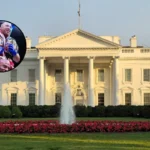
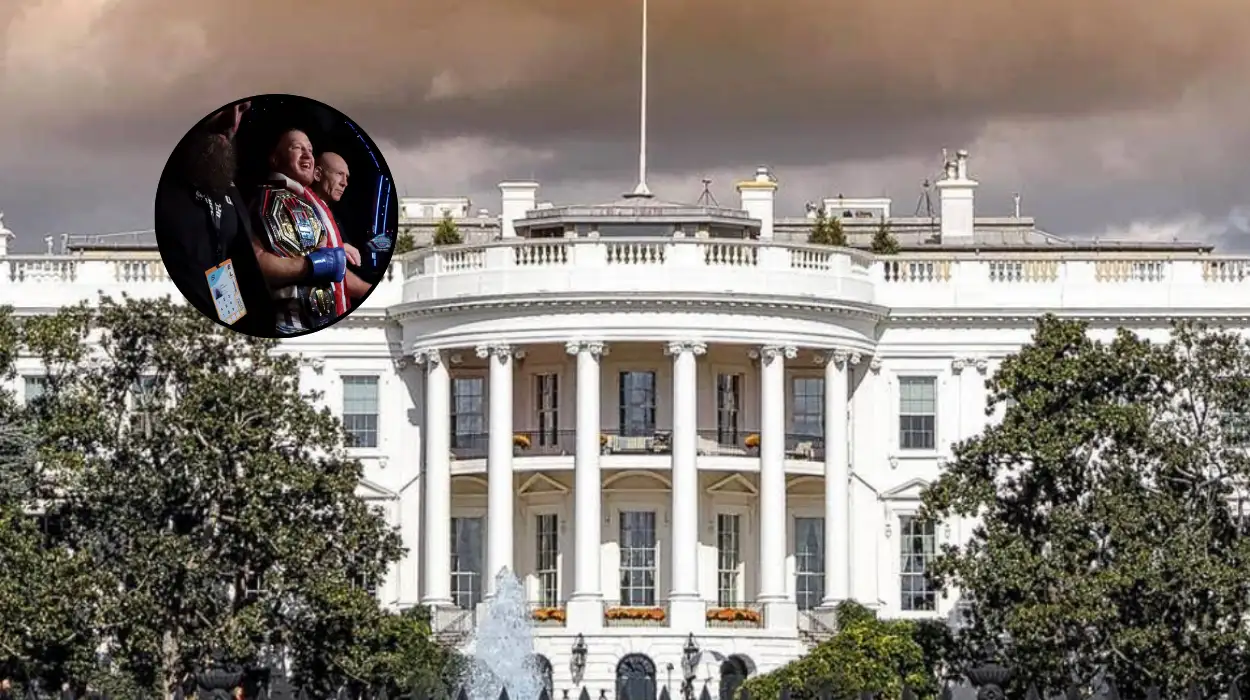
- Historic Venue: The Ultimate Fighting Championship (UFC) hosted its first-ever professional combat sports event on the South Lawn of the White House in Washington, D.C.
- Title Unification: American lightweight Justin Gaethje defeated previously unbeaten Ilia Topuria via a fourth-round corner stoppage to claim the undisputed UFC Lightweight Championship.
- Dual Commemoration: The event, named UFC Freedom 250, was officially held to mark the upcoming 250th anniversary of the United States Declaration of Independence and coincided with President Donald Trump’s 80th birthday.
- Co-Main Event Result: France’s Ciryl Gane captured the interim UFC Heavyweight Championship by defeating Alex Pereira via technical knockout (TKO) in the second round.
- Main Card Highlights: The seven-fight main card saw high-profile victories for Sean O’Malley, Josh Hokit, Mauricio Ruffy, Bo Nickal, and Diego Lopes, with every single bout finishing inside the distance.
- Political and Celebrity Presence: President Donald Trump and First Lady Melania Trump watched cage-side alongside high-profile figures including Meta CEO Mark Zuckerberg, House Speaker Mike Johnson, and FBI Director Kash Patel.
Washington, D.C. (Evening Washington News) June 15, 2026 – The Ultimate Fighting Championship (UFC) staged its historic UFC Freedom 250 mixed martial arts event on Sunday, June 14, 2026, transforming the South Lawn of the White House into a professional sports arena where interim champion Justin Gaethje secured a dramatic fourth-round technical knockout victory over undefeated undisputed champion Ilia Topuria to unify the UFC Lightweight title.
- Key Points
- How Did Justin Gaethje Secure the Undisputed Lightweight Title?
- Who Attended the White House Event and How Was It Organized?
- What Were the Major Results Across the Main Card Bouts?
- Did Ciryl Gane Claim the Interim Heavyweight Belt?
- How Did Sean O’Malley Defeat Aiemann Zahabi?
- Why Did Josh Hokit Fight Derrick Lewis?
- What Happened in the Remaining Main Card Fights?
- Background of the Presidential Sporting Events and UFC Acceptance
- Prediction: How Will This Event Affect the Mixed Martial Arts Industry and its Audience?
How Did Justin Gaethje Secure the Undisputed Lightweight Title?
The main event brought together current lightweight champion Ilia Topuria and interim titleholder Justin Gaethje to determine the undisputed ruler of the 155-pound division. As reported by the Al Jazeera Sports editorial team, Topuria entered the contest as the betting favourite, carrying an unblemished 17-0 professional record.
The fight, which commenced under a custom-built, 100-foot protective canopy designed to shield the canvas from intense summer heat, delivered significant swings in momentum before its final conclusion.
According to post-fight summaries published by E. Spencer Kyte on the official UFC digital network, Gaethje opened the first round strongly by connecting with several heavy strikes.
However, Topuria responded effectively in the second round, targeting Gaethje’s body with multiple heavy combinations and attempting several submission techniques once the action transitioned to the canvas.
From the third round onward, Gaethje shifted the momentum entirely. Utilizing precise, high-impact striking, the 37-year-old American dismantled Topuria’s defences. By the fourth round, Topuria was severely bloodied and swollen. As detailed by Associated Press (AP) Sports Writer Greg Beacham, the ringside medical staff heavily inspected a deep cut on Topuria’s face while fans shouted for the action to continue.
Though the fight was allowed to resume, Topuria’s corner declined to let their fighter continue at the conclusion of the fourth round, handing Gaethje the TKO victory at exactly 5:00 of Round 4.
Following the stoppage, Gaethje celebrated by performing his trademark backflip from the top of the Octagon cage before draping an American flag over his shoulders. Standing cage-side next to President Donald Trump, Gaethje reflected on his underdog status. As recorded by AP reporter Greg Beacham, Gaethje stated:
“Hey, I’m from America, 250 years ago we were way more than 6-1 underdogs. I know that was absolutely legendary because I cannot even believe it. Hard work, baby. I am made for these moments. This sport is made for me.”
Who Attended the White House Event and How Was It Organized?
The logistics of staging a full professional mixed martial arts card on the grounds of the executive mansion required months of multi-agency coordination.
As reported by the Whitchurch Herald, the event was explicitly scheduled to coincide with President Donald Trump’s 80th birthday and Flag Day, serving as an early celebration for the 250th anniversary of the United States Declaration of Independence, which falls 20 days later on July 4.
The physical constraints of the South Lawn forced a strict limitation on spectator attendance. While initial public estimates by the administration targeted upwards of 20,000 guests, UFC President and CEO Dana White subsequently clarified that total on-site seating was restricted to approximately 4,000 invited guests due to comprehensive Secret Service and federal security protocols.
To accommodate a wider audience, the UFC organized a concurrent public Fan Fest at The Ellipse, featuring large screens that broadcasted the card for free to an estimated 85,000 spectators.
Journalist Greg Beacham of the Associated Press noted that the event integrated extensive patriotic programming, blending traditional military elements with professional sports entertainment. The U.S. Marine Band performed inside the grounds, playing instrumental renditions of fighter entrance music, while country-rock group the Zac Brown Band performed the national anthem. Additionally, official flyovers were executed over the capital by the Navy’s Blue Angels and the Air Force’s Thunderbirds.
The ringside guest list featured prominent figures from global technology, politics, and sports. Media reporters on-site confirmed the presence of Meta CEO Mark Zuckerberg, Paramount Skydance CEO David Ellison, British heavyweight boxer Tyson Fury, UK Ambassador to the US Sir Christian Turner, Speaker of the House of Representatives Mike Johnson, and FBI Director Kash Patel.
What Were the Major Results Across the Main Card Bouts?
The UFC Freedom 250 main card featured seven high-profile matchups, every single one ending in a stoppage before reaching the judges’ scorecards.
Did Ciryl Gane Claim the Interim Heavyweight Belt?
In the co-main event, France’s Ciryl Gane faced former multi-division champion Alex Pereira for the interim UFC Heavyweight Championship. As detailed by Al Jazeera live commentators Patrick Keddie and Andrew Semple, Gane controlled the distance from the opening bell. Early in the second round, Gane unleashed a heavy combination of strikes that forced the referee to halt the contest at 1:27 of Round 2. Speaking immediately after his TKO victory, Gane stated to the broadcast crew:
“I’m really proud of myself and my team. People underestimate me.”
The win positions Gane for a future title unification bout against undisputed heavyweight champion Tom Aspinall.
How Did Sean O’Malley Defeat Aiemann Zahabi?
In bantamweight action, former champion Sean O’Malley halted the seven-fight winning streak of Canada’s Aiemann Zahabi. As reported by UFC digital ringside analyst E. Spencer Kyte, O’Malley demonstrated his signature counter-striking throughout the opening minutes. At 4:02 of the second round, O’Malley landed a precise right hand that knocked Zahabi out cold, prompting a walk-off celebration. Following the knockout, O’Malley addressed the crowd, stating,
“That was sexy. I felt the energy in here. I truly felt the energy in here.”
Why Did Josh Hokit Fight Derrick Lewis?
A late addition to the heavyweight card occurred due to direct presidential intervention. As documented in official UFC background logs, President Trump explicitly requested UFC CEO Dana White to add veteran heavyweight contender Derrick Lewis to the White House event. Lewis was matched against undefeated prospect Josh Hokit.
The bout concluded at 4:09 of the second round when Hokit overwhelmed Lewis with a barrage of ground-and-pound strikes, forcing a TKO stoppage and extending his undefeated professional record to 10-0.
What Happened in the Remaining Main Card Fights?
In the middleweight division, three-time NCAA Division I national wrestling champion Bo Nickal secured a swift victory over Kyle Daukaus. Nickal utilized his striking to secure a TKO victory at 4:34 of the first round.
Immediately upon the referee stopping the fight, Nickal exited the cage to speak directly with President Trump at his cage-side seat.
The remaining main card bouts saw Brazilian competitors find success. In lightweight action, Mauricio Ruffy defeated former Bellator champion and UFC title challenger Michael Chandler via TKO at 4:29 of the first round after pinning him against the wire mesh.
In the featherweight main card opener, Diego Lopes secured a quick knockout victory over Steve Garcia, stopping the contest at 2:42 of the second round after a highly aggressive exchange.
Background of the Presidential Sporting Events and UFC Acceptance
The staging of UFC Freedom 250 on the South Lawn represents a significant shift in both the utilization of the White House grounds and the mainstream acceptance of mixed martial arts. Historically, the executive mansion has hosted collegiate and professional championship teams for ceremonial receptions, or utilized its grounds for minor athletic exhibitions, such as tennis matches or the annual Easter Egg Roll.
UFC Freedom 250 marks the first instance in American history where a fully sanctioned, professional combat sports event has been constructed and executed directly on the residential lawns of the sitting president.
The relationship between Donald Trump and the UFC spans more than two decades, originating during a period when the sport faced severe political pushback and widespread regulatory bans across various US states. In 2001, when the newly formed Zuffa management group purchased the UFC, Trump provided a venue for UFC 30 and UFC 31 at the Trump Taj Mahal in Atlantic City, New Jersey, providing the promotion a critical footprint when mainstream athletic commissions refused to host them.
Over the subsequent decades, this corporate relationship evolved into a highly visible political alignment, with UFC executive Dana White routinely speaking at Republican National Conventions and prominent fighters actively campaigning for Trump during federal election cycles.
Financially and strategically, the White House event was structured differently from standard UFC pay-per-view broadcasts. The promotion bypassed traditional distribution channels to broadcast the entire seven-fight main card exclusively via the Paramount+ streaming platform. In an interview conducted in early June 2026 regarding the massive logistical costs of building a temporary outdoor stadium within a high-security federal zone, UFC CEO Dana White defended the expenditure, stating:
“This is a huge brand play. This is about propelling MMA further into the mainstream.”
Prediction: How Will This Event Affect the Mixed Martial Arts Industry and its Audience?
The execution of UFC Freedom 250 is highly likely to alter the commercial, political, and cultural landscape of combat sports, directly impacting fans, broadcasting networks, and the broader athletic community.
For the general sports audience and UFC fans, this event marks a permanent shift away from the traditional pay-per-view barrier for elite title fights. By delivering a double-championship card via a mainstream digital streaming subscription (Paramount+), the UFC has demonstrated the viability of high-access, platform-exclusive broadcasting for its premium products.
This development will likely cause fans to see fewer mandatory pay-per-view fees for landmark events moving forward, as promotions increasingly leverage corporate sponsorships and massive political or cultural branding plays to offset direct gate and viewer revenues.
Within the athletic and regulatory spheres, hosting a cage-fighting event at the most recognizable political residence in the United States completely closes the chapter on the sport’s historical “underground” stigma.
The imagery of world-class athletes walking directly out of the Oval Office to compete inside an Octagon elevates mixed martial arts to the highest tier of institutional acceptance, placing it on par with traditional American sports like baseball or football.
This institutional validation will likely accelerate corporate sponsorship investment from conservative or blue-chip brands that previously avoided MMA due to its perceived violence, ultimately increasing fighter purses and expanding global commercial media rights.
Finally, the overt convergence of professional sports entertainment with federal state pageantry establishes a new template for sports marketing. By intertwining a high-profile athletic card with a presidential birthday, Flag Day, and national military exhibitions, the UFC has solidified its alignment with a highly specific demographic within the American electorate.
Moving forward, audiences can expect professional sports promotions to increasingly seek out non-traditional, highly politicized, or culturally symbolic venues to create unique entertainment spectacles, permanently blurring the boundary between athletic competition and political showmanship.