
Key Points
- Proposed Land Sale: The Washington Fish and Wildlife Commission will formally evaluate the divestment of a historic fishing access easement situated along the Grande Ronde River to private local landowners.
- A Shift in Policy: The potential sale represents a notable departure from the regular conservation strategies of the state agency, which typically focuses on acquiring properties and expanding public easements to benefit wildlife management, hunters, and anglers.
- Decades of Inaction: Acquired in 1970 for $7,500 by the Washington Game Department, the easement was originally intended for a public campground and parking facility. However, a continuous lack of development funding left the site completely unimproved for over 50 years.
- Subdivision and Property Disputes: Over the intervening decades, the surrounding land near the landmark Boggan’s Oasis was subdivided and developed for residential use, sparking direct conflicts between recreational anglers trying to utilize the legal access and local property owners.
- Legislative Intervention: Following intense friction over a proposed public trail system, state lawmakers intervened in 2022, appropriating $500,000 to purchase and construct an alternative, fully infrastructure-supported public access point known as the Wheeler site.
- Landowner Initiative: Following the successful establishment of the alternative Wheeler facility downstream, adjacent private property owners approached state officials to officially purchase the redundant 1970 easement.
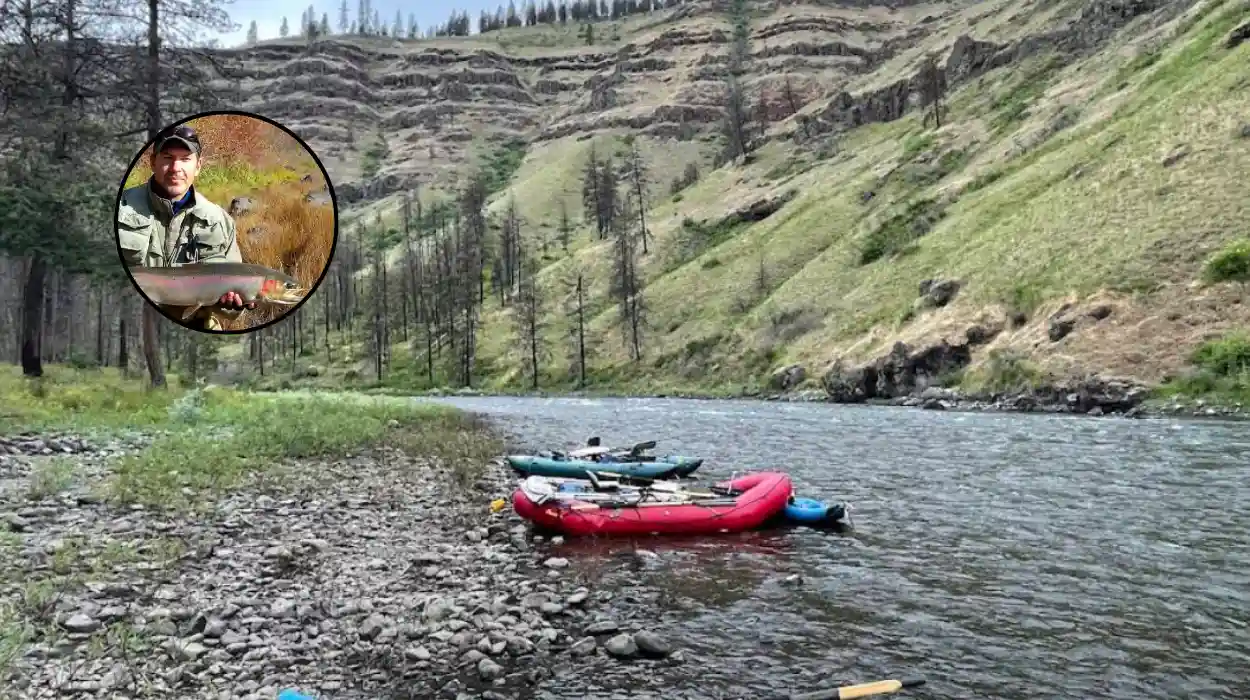
Washington (Evening Washington News) June 6, 2026 — The Washington Fish and Wildlife Commission, June 6, 2026 — The Washington Fish and Wildlife Commission will formally consider selling a portion of a public fishing access easement along the highly sensitive Grande Ronde River to local landowners when the governing body convenes in Olympia next week. The impending decision marks a highly unusual structural shift for a state entity whose core institutional mandate typically centers on the acquisition, preservation, and expansion of public lands and easements designed to safeguard wildlife habitats and guarantee access for hunters and outdoor anglers.
- Key Points
- Why Has the 1970 Grande Ronde River Easement Remained Unused for Over Fifty Years?
- What Caused the Escalating Conflicts Between Public Anglers and Private Landowners?
- How Did a $500,000 Legislative Appropriation Resolve the Alternative Access Problem?
- Background of the Particular Development
- Prediction
The specific real estate up for potential divestment is situated near Boggan’s Oasis, a prominent and historic recreational hub located within the rugged Grande Ronde River canyon.
According to regional officials, the administrative history of the tract, combined with decades of shifting land-use patterns and residential development, created an isolated logistical scenario that eventually rendered the original public easement impractical to maintain or develop.
Why Has the 1970 Grande Ronde River Easement Remained Unused for Over Fifty Years?
The roots of the current transactional dispute trace back more than half a century. The easement was originally purchased by the Washington Game Department—the historical predecessor to the modern Washington Department of Fish and Wildlife (WDFW)—in 1970 for a total sum of $7,500. At the time of the transaction, state conservation planners envisioned the site as a strategic public asset, intending to construct a fully managed campground and dedicated parking area to facilitate seasonal angling access to the productive waters of the Grande Ronde River.
However, the ambitious recreational master plan was never realized. Mike Kuttel Jr., the director of the Eastern Region of the Washington Department of Fish and Wildlife, stated that
“the department never had the money over the years to go in and make improvements, so the easement sat there for decades.”
During this extensive period of state budgetary stagnation, the physical and legal landscape surrounding the river corridor underwent drastic structural transformations. As reported by regional agency representatives, the open acreage surrounding the initial easement was progressively subdivided, sold off, and developed into private residential tracts.
Mike Kuttel Jr. further noted that while “the easements were there,” they were “never really used” by the public in a formal capacity, remaining largely hidden behind evolving private boundaries.
What Caused the Escalating Conflicts Between Public Anglers and Private Landowners?
As the Grande Ronde River grew in regional prominence as a premier destination for steelheading and sport fishing, sporadic public utilization of the historic 1970 easement inevitably collided with the privacy demands of the new residential communities.
Because the state had never installed defined pathways, fences, or parking boundaries, anglers attempting to exercise their legal right-of-way frequently crossed into what appeared to be private residential lawns and managed yards, sparking bitter localized land-use disputes.
The tipping point occurred when state wildlife managers attempted to resolve the lack of infrastructure by formalizing the access route. Bob Dice, the manager of the WDFW’s Blue Mountains Wildlife Area Complex, stated that in the recent past, the agency floated a specific proposal to the local property owners to build formalized public trails leading directly down to the riverbank.
The compromise proposal failed to achieve local consensus. According to administrative records compiled by regional managers, the trail plan did not go over well with the community and rapidly spawned an emergency inter-agency meeting.
The session was attended by senior WDFW agency officials, the affected private property owners, Asotin County commissioners, and concerned state legislators, all seeking to mitigate the growing legal and social friction within the canyon.
How Did a $500,000 Legislative Appropriation Resolve the Alternative Access Problem?
Recognizing the entrenched nature of the local property dispute, the Washington State Legislature stepped in to provide an alternative financial and geographical solution.
In 2022, state lawmakers—including Senator Mark Schoesler, a Republican from Ritzville—appropriated $500,000 in capital funding and issued a direct legislative mandate instructing the WDFW to acquire and develop entirely alternative river access sites.
The specialized funding allowed the WDFW to bypass the contested residential zone entirely. Wildlife managers utilized the state appropriation to purchase the Wheeler site, situated safely on the downstream side of Boggan’s Oasis.
Unlike the abandoned 1970 tract, the newly acquired Wheeler location was quickly outfitted with modern recreational infrastructure, including a public restroom facility and a primitive boat launch designed to accommodate drift boats and rafts.
Following the successful completion and public opening of the Wheeler facility, local property owners moved to permanently clear the clouds on their land titles. Mike Kuttel Jr.
stated that after the new infrastructure was established downstream, the adjacent property owners formally approached the department about purchasing the original, unused 1970 easement back from the state, setting the stage for next week’s Commission vote in Olympia.
Background of the Particular Development
The Grande Ronde River, a major tributary of the Snake River flowing through northeastern Oregon and southeastern Washington, occupies a unique place in Pacific Northwest natural resource management.
Designated under the National Wild and Scenic Rivers Act, the river corridor is tightly regulated to protect its “Outstandingly Remarkable Values,” which include world-class seasonal runs of summer steelhead, spring Chinook salmon, and bull trout. Consequently, public access points are highly prized by regional sporting associations, guides, and conservationists, making any proposed reduction in state-held access rights an intensely scrutinized policy shift.
Historically, the Washington Department of Fish and Wildlife and its predecessor agencies have operated under an acquisition-heavy framework. Faced with increasing population pressures and the fragmentation of rural lands, state policy for decades has prioritized buying up land titles and conservation easements to prevent critical shorelines from becoming completely privatized.
The 1970 easement purchase was part of a post-Vietnam War era push to secure public boat launches and campgrounds along prime fishing waters.
The transition of the surrounding canyon from wild, open terrain to subdivided residential properties near Boggan’s Oasis reflects broader demographic shifts across rural Washington, where recreational riverfront tracts have increasingly turned into permanent or semi-permanent homesteads.
This privatization has left public agencies stuck between old easement agreements and modern trespassing and nuisance complaints, frequently forcing the state to adapt through capital intensive buyouts like the 2022 Wheeler site appropriation.
Explore More Local News
$25,000 Bail Set for WA Capitol Vandal in Olympia 2026
Trump Cleans Washington Fountains & Restores Reflecting Pool – Chippewa Falls, 2026
Prediction
The impending decision by the Washington Fish and Wildlife Commission is expected to establish a notable administrative precedent for how public land managers handle legacy easements plagued by urban or residential encroachment.
By finalizing the sale of the 1970 easement to local landowners, the Commission will likely signal that it is willing to abandon unworked, high-conflict property rights provided that modern, well-equipped alternative locations can be secured nearby via legislative funding.
For the primary audience affected by this development—regional anglers, drift-boat operators, and local conservation groups—the long-term impact will be mixed but structurally sound.
While the official divestment represents a permanent loss of a legal footprint on that specific stretch of residential shoreline, the practical everyday access for fishermen will shift entirely to the Wheeler site.
Because the Wheeler location features dedicated parking, sanitation facilities, and an active boat launch, recreational users will experience a significant reduction in legal ambiguity and fewer hostile interactions with riparian landowners.