
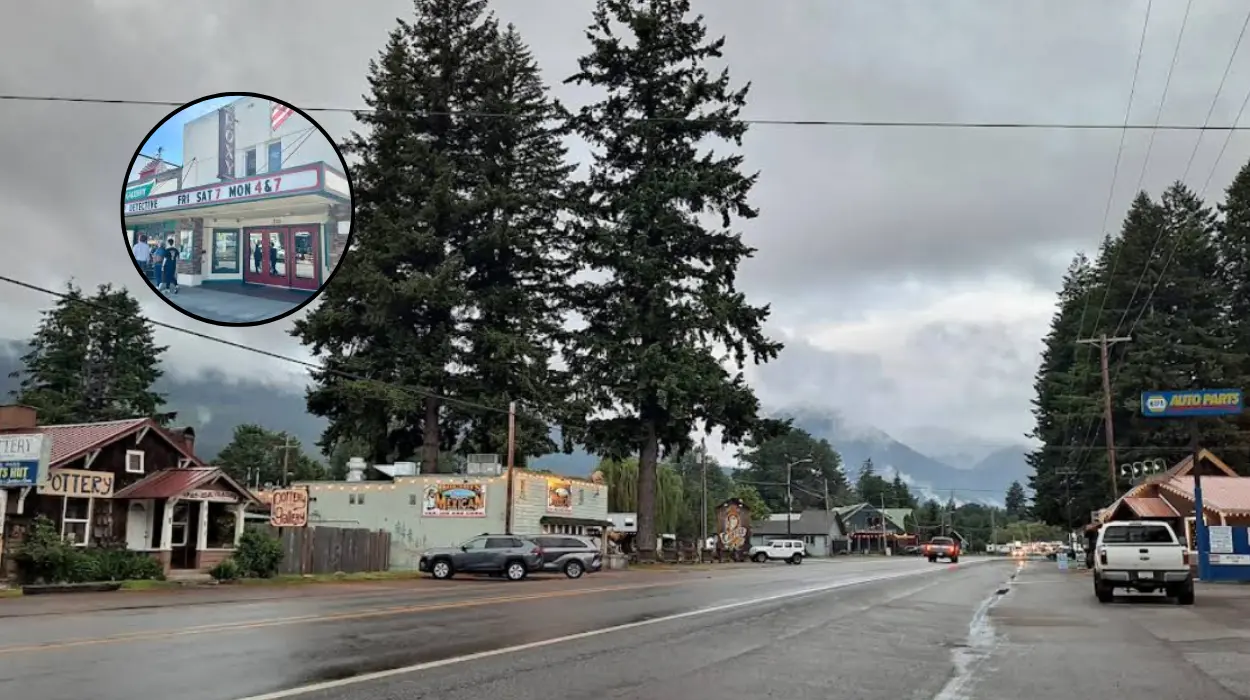
Key Points
- The writer is travelling in Packwood, Washington, a small village of about 300 people in eastern Washington state.
- He says the trip has brought him close to small-town life that reminds him of Plaquemine.
- He notes the food is bland and petrol is expensive in the Pacific Northwest.
- He says the scenery, especially around Mount Rainier, has made the journey worthwhile.
- He highlights Morton, Washington, as a lumber and mining town with a Main Street that still reflects local community life.
- He observes that many businesses have closed, but the remaining independent shops still define the town.
- He points out that aside from Dollar General, the stores are locally owned and operated.
- He singles out the Roxy Theater, a one-screen cinema operating since 1933, as an important local attraction.
- He compares Morton’s theatre life with the loss of the Osage Theater in Plaquemine.
Packwood (Evening Washington News) June 2, 2026 — In a travel column by the writer, Packwood and nearby Morton are presented as small towns that echo the feel of Plaquemine, with local businesses, quiet streets and a strong sense of place.
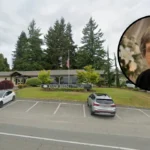
As reported in the column, the writer says he is writing from a wooded area in Packwood, about two hours from Seattle or Portland, and describes the village as a place of roughly 300 residents.
He notes that the setting is remote but appealing, with the journey offering a chance to see a part of the country he had never visited before.
Why does the writer compare Washington towns with Plaquemine?
The comparison is drawn mainly through atmosphere, scale and local commerce. The writer says the Main Street area in Morton reminded him of Plaquemine because some businesses have closed, while those that remain still serve as the heart of the town.
He also says that, aside from a Dollar General, the stores in Morton are locally owned and operated. That detail is used to underline the town’s community identity and the importance of independent businesses in smaller places.
What did the writer say about the scenery and costs?
The column says the scenery has been a major reason the trip has been worthwhile, particularly the views around Mount Rainier, which the writer refers to as standing at an elevation of 14,000 feet. He contrasts the natural landscape with the practical downsides of the trip.
He says the food is bland and petrol is expensive, adding that he paid $6.29 a gallon for regular at a Unocal station in Packwood.
He compares that with prices at home in Plaquemine and Baton Rouge, where he says fuel is cheaper.
Why is the Roxy Theater important?
The writer highlights the Roxy Theater in Morton as a notable landmark. He describes it as a one-screen movie theatre that has been operating since 1933 and still opens most days of the week.
He presents the theatre as one of the town’s enduring attractions and says it made him think of the Osage Theater in Plaquemine, which he says he wishes had remained open.
The point is less about nostalgia for its own sake and more about how a single venue can shape a town’s social life.
How does the column frame small-town identity?
The piece suggests that small towns are defined not only by population size, but by the survival of local institutions.
In Morton, the grocery store, drug store and hardware store are described as prominent fixtures, showing how daily life still centres on familiar, practical businesses.
The writer’s perspective is personal, but the details are observational rather than argumentative. He uses comparisons between Washington and Louisiana towns to show how similar communities can feel despite being far apart geographically.
Explore More Local News
Washington Salmonella Outbreak: Don’t Kiss Chickens, 2026
USDOT Announces $466m Union Station Revamp, Washington DC 2026
Background of the development
The development at the centre of the column is not a breaking event but a travel reflection on small-town America.
It focuses on Packwood and Morton in Washington state, where the writer notices the continuing role of local shops, older buildings and historic venues in shaping community character.
The column also sits within a wider pattern of writing about place, memory and contrast between regions.
By linking Washington towns to Plaquemine, the writer uses everyday details such as petrol prices, main streets and cinemas to show how local identity is often preserved through small, visible institutions.
Prediction
For readers from small towns, especially those in Plaquemine and similar communities, the column may reinforce a sense that their own local landmarks and independent businesses matter beyond their immediate area. It may also prompt reflection on how closures affect the identity of a town over time.
For audiences interested in regional travel or community reporting, the piece suggests that small-town stories remain powerful when they focus on ordinary places rather than major events. The main effect is likely to be a stronger appreciation of how local life, history and business ownership shape a town’s character.