Key Points
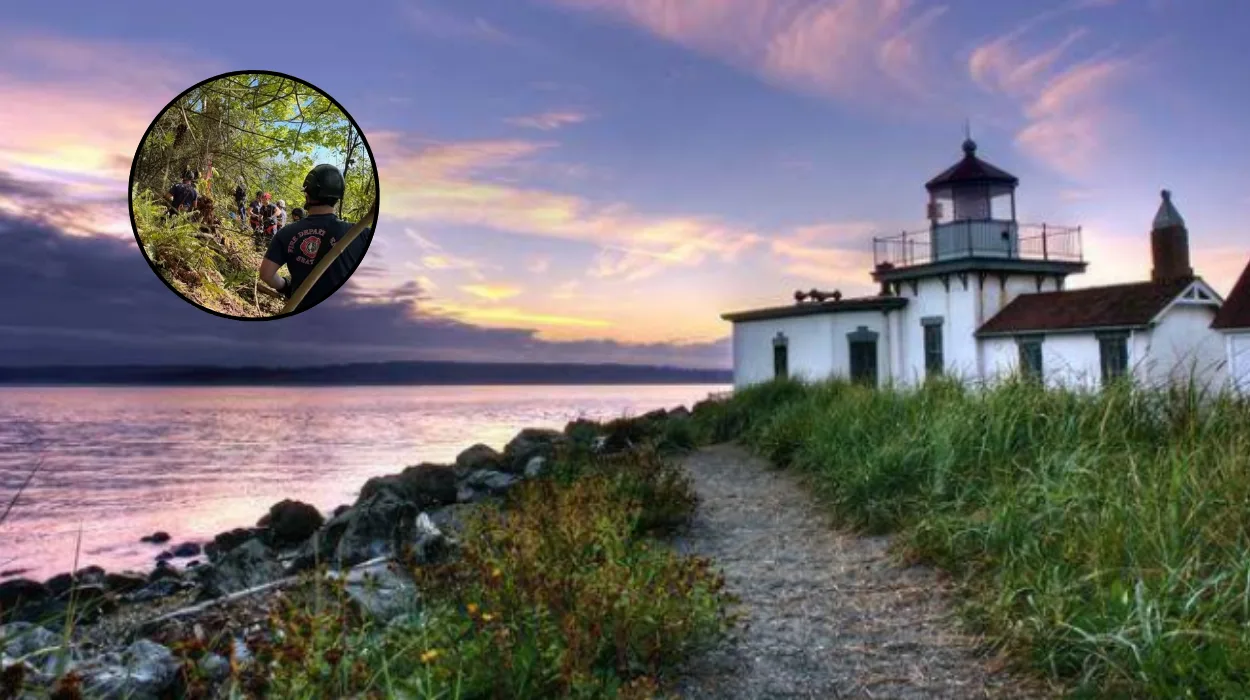
- Seattle firefighters conducted a rope rescue operation on Sunday at Discovery Park after a report of a person trapped approximately 40 feet down an embankment.
- The incident was reported shortly before 4 p.m., prompting an immediate response from the Seattle Fire Department.
- Crews executed an aerial high-direction rope rescue to extract the patient safely.
- Firefighters established contact with the patient, who reported a minor injury and was seated on a shelf down the embankment.
- Teams cut through thick brush to reach the individual, with firefighters from Rescue Company 1 lowered to assist.
- The patient was transported down to the beach in a Stokes basket, where medics evaluated them.
- The patient declined transport to the hospital following the evaluation.
Seattle, Washington (Evening Washington News) — May 4, 2026 – Seattle firefighters carried out a successful rope rescue on Sunday after receiving a report of a person trapped about 40 feet down an embankment in Discovery Park. The Seattle Fire Department confirmed that crews responded to the call shortly before 4 p.m. and initiated an aerial high-direction rope rescue to retrieve the patient from the steep terrain.
- Key Points
- What Triggered the Emergency Response at Discovery Park?
- How Did Firefighters Execute the Rope Rescue Operation?
- What Was the Patient’s Condition and Outcome?
- Why Was Discovery Park the Site of This Incident?
- Who Were the Key Responders Involved?
- Background of the Development
- Prediction: How This Can Affect Park Visitors
The operation unfolded methodically, with firefighters first making contact with the patient, who was seated on a shelf down the embankment and reported only a minor injury, according to a statement from the department. Crews then navigated thick brush to access the location, lowering firefighters from Rescue Company 1 to secure the individual. Once reached, the patient was placed in a Stokes basket and lowered to the beach area, where additional crews were staged for support.
Medics on site evaluated the patient, who ultimately turned down transport to the hospital, indicating the minor nature of the injury sustained during the incident.
What Triggered the Emergency Response at Discovery Park?
The call came in shortly before 4 p.m. on Sunday, alerting the Seattle Fire Department to a person trapped approximately 40 feet down an embankment within Discovery Park, one of Seattle’s largest public parks known for its rugged coastal trails and dense foliage.
As reported by the Seattle Fire Department in their official update, crews assessed the situation and opted for an aerial high-direction rope rescue, a specialised technique suited for such steep and inaccessible terrain.
The department noted that the patient was conscious and communicative upon initial contact, reporting a minor injury while seated on a natural shelf along the embankment. This detail allowed rescuers to proceed with precision, avoiding unnecessary risks in the challenging environment.
How Did Firefighters Execute the Rope Rescue Operation?
Firefighters faced thick brush en route to the patient, which they cut through to establish access, as detailed in the Seattle Fire Department’s account.
Members of Rescue Company 1 were then lowered down the embankment to reach the individual directly.
The extraction involved securing the patient in a Stokes basket, a standard rigid stretcher used for technical rescues, and lowering them safely to the beach below where staging crews awaited. This step-by-step approach ensured the operation’s success without further complications.
What Was the Patient’s Condition and Outcome?
Upon reaching the beach, medics conducted an on-site evaluation of the patient, who had reported a minor injury during the initial contact.
The Seattle Fire Department stated that the individual declined transport to the hospital, signifying that the injury did not require further medical intervention.
No additional details on the patient’s identity or the precise circumstances leading to the fall were released by authorities, maintaining standard privacy protocols in such non-critical incidents.
Why Was Discovery Park the Site of This Incident?
Discovery Park, spanning over 534 acres in Seattle’s Magnolia neighbourhood, features miles of trails, bluffs, and beaches that attract hikers, runners, and nature enthusiasts daily.
Its steep embankments and coastal edges pose inherent risks, particularly in areas with uneven terrain and thick vegetation, which likely contributed to the entrapment scenario described by the fire department.
The Seattle Fire Department’s response highlights the preparedness for such park-related emergencies, given the area’s popularity and natural hazards.
Who Were the Key Responders Involved?
The operation was led by the Seattle Fire Department, with specific mention of Rescue Company 1 firefighters who were lowered to the patient. Staging crews and medics completed the effort at the beach level, ensuring a comprehensive handover.
No individual names of rescuers were provided in the department’s update, focusing instead on the team’s coordinated execution.
Background of the Development
Discovery Park has a history of requiring emergency responses due to its expansive wilderness areas, including past incidents involving hikers slipping on trails or encountering wildlife.
The park, managed by Seattle Parks and Recreation, underwent trail maintenance and safety upgrades in recent years to mitigate such risks, though steep embankments remain a feature of its natural landscape.
Rope rescue operations like this one are routine for the Seattle Fire Department in urban parks, drawing on specialised training for high-angle environments. This event aligns with broader patterns of minor injuries in outdoor recreational spaces, where quick response times prevent escalation.
Prediction: How This Can Affect Park Visitors
This development underscores potential risks for park visitors, particularly those exploring less-travelled trails or coastal edges, where a fall could lead to entrapment similar to the 40-foot drop experienced here. Hikers and runners may exercise greater caution on embankments, potentially increasing reliance on marked paths and safety signage.
Local authorities could review trail conditions, possibly prompting temporary closures or enhanced warnings, which might temporarily reduce visitor numbers but improve overall safety awareness. Families and solo adventurers, common in Discovery Park, stand to benefit from heightened vigilance, reducing the likelihood of comparable incidents without altering the park’s appeal as a key recreational asset.