
Key Points
- Seattle’s housing market shows signs of cooling with median home prices declining in certain segments, such as Eastside areas down 9.4% year-over-year.
- Inventory levels have increased significantly, with new listings up 25.5% to 34.9% across regions like King County, reaching 2.0 to 2.3 months of supply.
- Closed sales remain steady or slightly up, with single-family homes +3.9% and condos/townhomes +8.6% in March 2026, though pending sales surged 35.5% month-over-month.
- Mortgage rates hover around 6.37% to 6.45% for 30-year fixed, contributing to longer days on market and more price adjustments.
- Seattle city median price at $910,000 (+3.4% YoY), King County $855,000 (+0.5%), while broader trends indicate moderation.
- Zillow reports average home value at $868,680, down 2.3% over the past year, with median sale price $778,300 and 1,857 homes for sale.
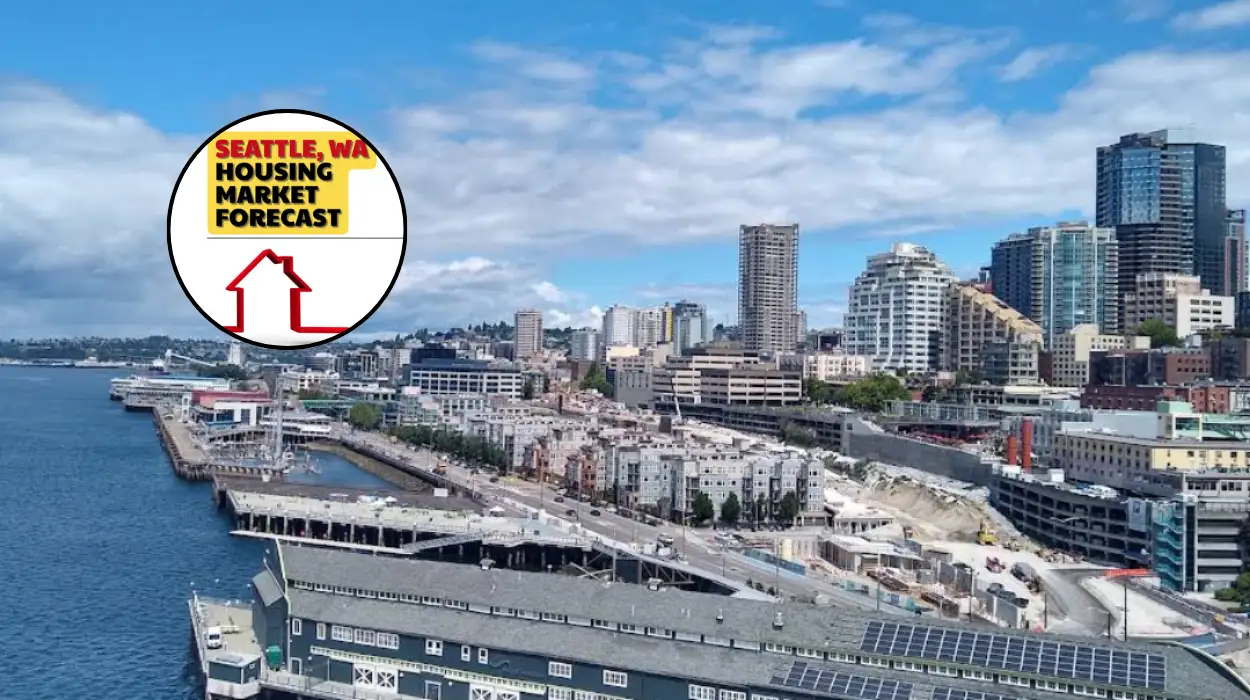
Seattle, WA (Evening Washington News) — May 2, 2026 — The Seattle real estate market is experiencing a shift with falling prices in key areas and rising inventory, creating a more balanced environment for buyers and sellers.
- Key Points
- What Is Causing Seattle Home Prices to Fall in 2026?
- How Has Inventory Changed in the Seattle Housing Market?
- What Do April 2026 Sales Figures Reveal About Seattle’s Market?
- Why Are Mortgage Rates Impacting Seattle Buyers and Sellers?
- How Does Seattle Compare to Surrounding Counties in 2026?
- What Should Buyers and Sellers Do in Seattle’s Shifting Market?
- Background of the Development
- Prediction: Impact on Homebuyers and Sellers in Seattle
What Is Causing Seattle Home Prices to Fall in 2026?
Prices in Seattle’s Eastside suburbs, including Bellevue, Kirkland, and Redmond, have dropped 9.4% year-over-year to a median of $1,550,000, as reported by Abhi Singh of John L. Scott Real Estate. Snohomish County saw a 2.3% decline to $738,000, while Pierce County prices remained flat at $520,000. Zillow data indicates the city’s average home value fell 2.3% over the past year to $868,680, with a median sale price of $778,300 against a list price of $726,250.
As detailed by David Croppi on LinkedIn, the Seattle market ended March with 2.0 months of inventory and a 101% sold-to-list price ratio, but pending contracts rose 35.5% month-over-month. This follows a broader trend where inventory jumped 29.3% year-over-year across Washington in March, per a YouTube market update.
Elevated mortgage rates, averaging 6.37% for 30-year fixed as of April 9 per Freddie Mac, are lengthening days on market and prompting more price cuts.
How Has Inventory Changed in the Seattle Housing Market?
New listings in the Northwest Multiple Listing Service (NWMLS) rose 25.5% year-over-year, with total homes for sale up significantly, according to Abhi Singh’s April update. King County inventory increased 34.9% YoY, shifting supply to 2.3 months in Seattle proper.
A Sammamish Mortgage report from late March notes inventory levels rising from 2024-2025 lows, with months of supply improving toward balance. Across Washington, listings grew 29.3% YoY while closed sales stayed nearly flat.
David Croppi highlighted 586 homes sold in March with inventory ticking upward, maintaining seller territory at 2.0 months. Zillow lists 1,857 homes for sale and 777 new listings, with a median sale-to-list ratio of 0.992.
What Do April 2026 Sales Figures Reveal About Seattle’s Market?
Closed sales rose for the sixth straight month, with single-family homes up 3.9% and condos/townhomes up 8.6%, as per David Croppi’s analysis. Seattle’s sales intensity stands at 47.2%, meaning nearly half of homes go pending within 30 days, according to a YouTube overview.
A YouTube update from April 12 confirms closed sales nearly flat statewide amid the inventory surge. King County’s median price edged up 0.5% to $855,000, while Seattle city prices rose 3.4% to $910,000.
Theodoracornelia.com notes low inventory persists due to the “lock-in effect,” keeping sellers in place despite increases. Early 2026 data from another YouTube report shows prices down, listings up, and closings slowed, favouring buyers slightly.
Why Are Mortgage Rates Impacting Seattle Buyers and Sellers?
Freddie Mac reported 6.37% for 30-year fixed on April 9, 2026, per the April 12 YouTube market update, creating payment pressure despite demand. A separate YouTube analysis cites ~6.45% rates, noting they haven’t slowed Seattle as expected.
Sammamish Mortgage observes homes taking longer to sell with moderated price growth. Buyers face competition for desirable properties, but rising supply offers leverage in some segments like condos.
How Does Seattle Compare to Surrounding Counties in 2026?
This table draws from Abhi Singh’s April report, showing varied trends. Zillow’s sale-to-list ratio of 0.992 indicates slight buyer advantages citywide.
What Should Buyers and Sellers Do in Seattle’s Shifting Market?
Sellers must focus on sharp pricing, presentation, and negotiation amid rising inventory, as advised in the April YouTube update. Buyers benefit from more choices but need preparation, per the same source.
A YouTube summary stresses affordability driving decisions, with spring timing key in April. David Croppi notes a strong spring pipeline from surging pendings.
Background of the Development
Seattle’s housing market has historically been intense, driven by tech sector growth from companies like Amazon and Microsoft, leading to high demand and prices through the 2010s and early 2020s. The “lock-in effect” emerged post-2020 when low rates locked homeowners into unaffordable refinances, suppressing supply. Recent increases stem from rate stabilisations and economic shifts, with inventory rising from pandemic lows as noted in Sammamish Mortgage’s early 2026 data. This builds on statewide trends where Washington’s market saw flat sales against inventory growth in March.
Prediction: Impact on Homebuyers and Sellers in Seattle
This development provides homebuyers with more options and negotiating power through higher inventory and softer prices in areas like Eastside, potentially lowering entry costs amid 6.4% rates. Sellers may face longer market times and required price adjustments, especially outside core Seattle where declines are steeper, though steady sales in single-family and condos offer opportunities for well-priced properties. Overall, the shift toward balance could stabilise the market for both groups by mid-2026 if inventory continues rising moderately.