
Key points
- A 31‑year‑old California man, Cole Tomas Allen, has been charged with attempting to assassinate U.S. President Donald Trump at the White House Correspondents’ Association (WHCA) dinner in Washington, D.C., on the evening of April 25, 2026.
- Allen stands accused of one count of attempting to assassinate the president, transporting a firearm across state lines with intent to commit a felony, and discharging a firearm during a crime of violence.
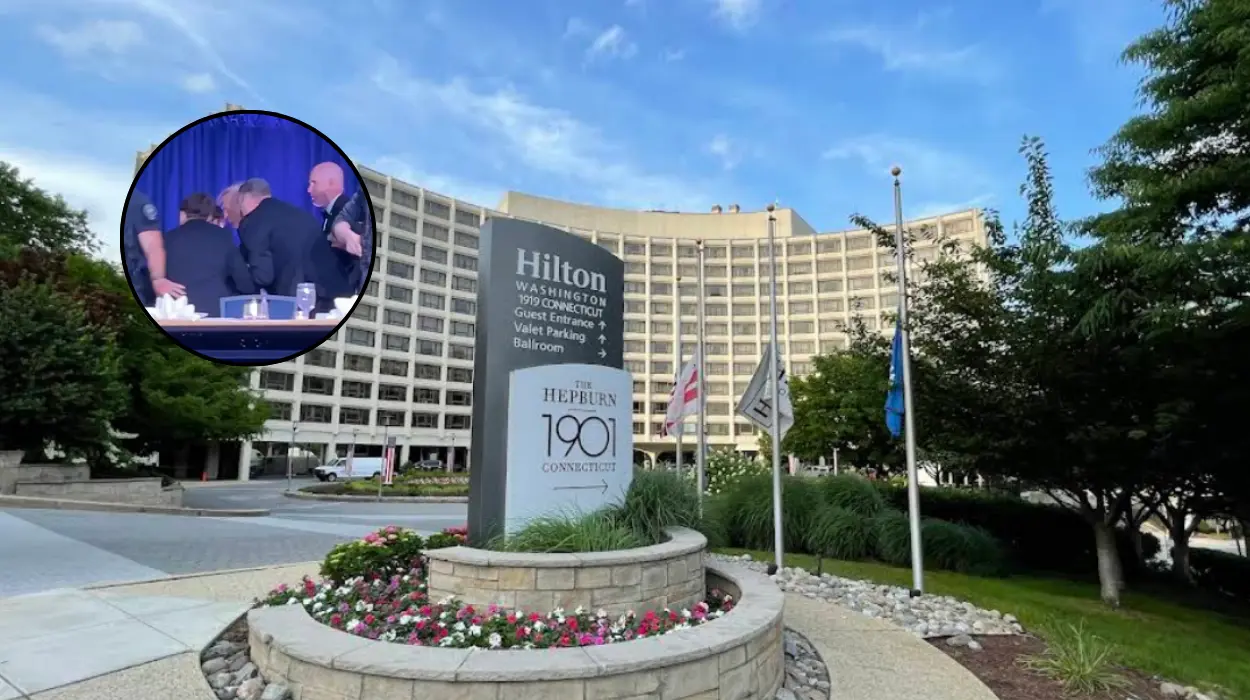
- Federal prosecutors allege that Allen traveled by rail from California to Chicago and then to Washington, checked into the Washington Hilton, and planned the attack for several weeks before the event.
- On the night of the shooting, Allen ran through a security checkpoint at the hotel’s Terrace Level, discharged a shotgun, and was shot at and subdued by U.S. Secret Service officers; one officer was hit in the chest but survived thanks to a ballistic vest.
- Allen was in possession of a 12‑gauge pump‑action shotgun, a semi‑automatic pistol, and three knives and had earlier sent a detailed manifesto to family members explaining his planned actions.
- Authorities have described Allen as having acted alone, with no prior criminal record, but as having spent years quietly acquiring weapons and plotting an assault on top Trump‑administration officials.
- Allen faces a maximum sentence of life in prison if convicted of attempting to assassinate the president, and further charges are possible as the investigation continues.
Washington, D.C. (Evening Washington News) April 30, 2026 – A man who tried to breach one of Washington’s most high‑profile political events has been charged with attempting to assassinate President Donald Trump and violating multiple federal firearms statutes, according to a U.S. Justice Department announcement and multiple media outlets.
- What charges is Cole Allen facing?
- How did the attack unfold at the WHCA dinner?
- Why did Allen target the White House Correspondents’ Dinner?
- What did Allen’s manifesto reveal?
- How did security respond at the White House Correspondents’ Dinner?
- What is known about Allen’s background?
- What is the legal and investigative path ahead?
Cole Tomas Allen, 31, of Torrance, California, was arraigned in U.S. District Court on April 26, 2026, after being intercepted on the evening of April 25 at the Washington Hilton during the annual White House Correspondents’ Association dinner. Wearing a blue jumpsuit and represented by two public defenders, Allen appeared calm during the brief hearing, and a federal magistrate ordered him to remain in custody ahead of a detention hearing later in the week.
What charges is Cole Allen facing?
As detailed in a criminal complaint filed by the U.S. Attorney’s Office for the District of Columbia and summarised in a Justice Department press release of April 27, 2026, Allen faces three principal counts: one count of attempt to assassinate the President of the United States, one count of transporting or possessing a firearm with the intent to commit a felony, and one count of discharging a firearm during a crime of violence.
Federal prosecutors have instructed that the maximum penalty if he is convicted on the presidency‑assassination count alone is life imprisonment, while the firearms counts carry additional mandatory prison terms under U.S. law.
Acting Attorney General Todd Blanche, speaking at a press conference after the Monday arraignment, stated that the government would
“apply the law fairly and … ensure that accountability is swift and certain.”
How did the attack unfold at the WHCA dinner?
According to FBI‑ and Secret Service‑related affidavits and timelines released by the Justice Department and reported by outlets such as CNN, The Washington Post, and ABC News, Allen had reserved a room at the Washington Hilton from April 24 to April 26, then traveled by train from California through Chicago to Washington, arriving around 1 p.m. on April 24.
At approximately 8:36–8:40 p.m. on April 25, Allen approached a metal‑detector checkpoint on the Terrace Level of the hotel, which led to the large ballroom where the WHCA dinner was underway. According to the affidavit, Allen ran through the magnetometer holding a long gun, and a loud gunshot was heard almost immediately.
A U.S. Secret Service officer wearing a ballistic vest was shot once in the chest but survived, and the officer returned fire, striking Allen with bullets that did not seriously injure him because he was wearing body armour of his own.
Agents then tackled and arrested Allen, discovering on his person a 12‑gauge Maverick pump‑action shotgun, a Rock Island Armory 1911 .38‑calibre semi‑automatic pistol, and three knives.
Why did Allen target the White House Correspondents’ Dinner?
Federal law‑enforcement officials, including FBI Director Kash Patel and U.S. Attorney Jeanine Pirro, have told reporters that the evidence indicates Allen came to Washington “for the purpose of assassinating President Trump and targeting members of the Trump administration.”
In a statement released on April 27, Pirro outlined that Allen booked his hotel more than two weeks before the event and that the firearms he carried matched serial‑number records for weapons he had purchased in California in October 2023 and August 2025.
FBI‑related affidavits and media reports describe Allen as having spent years quietly accumulating weapons and planning a multi‑target attack on senior officials, with the WHCA dinner timed to coincide with Trump’s presence in the ballroom alongside Vice President JD Vance and cabinet members.
What did Allen’s manifesto reveal?
Shortly before the attack, Allen sent an email to several family members and a former employer explaining his intent, according to Justice Department documents and media coverage. The email, scheduled to send automatically, included an apology for the “trouble” he was causing and was signed
Reporters at outlets such as NDTV and Fox‑affiliated local news outlets have described portions of the manifesto as depicting Allen’s self‑justification for targeting the Trump administration as a moral and political duty, citing grievances over immigration, foreign‑policy decisions, and alleged abuses linked to the administration.
The document also allegedly contained a “priority list” of federal officials he intended to attack, with Trump at the top, and instructions that Secret Service officers should be disabled only if necessary, according to summaries by The New York Times–style explanatory outlets.
Allen’s brother later contacted the New London Police Department in Connecticut after receiving the manifesto, prompting local officers to relay the material immediately to federal agencies, as reported by Associated Press‑carried accounts and ABC News.
How did security respond at the White House Correspondents’ Dinner?
Following the shots at the checkpoint, Secret Service agents and other protective units rushed to secure the ballroom, where Trump was on stage delivering remarks.
Multiple news outlets, including CNN and The Washington Post, reported that agents shouted “shots fired” and quickly evacuated Trump, Vice President JD Vance, and cabinet members to a secure location within the hotel, while dinner guests scrambled under tables and into corners.
Blanche, in remarks on CBS News’ Face the Nation with Margaret Brennan, maintained that security did not fail.
“Law enforcement did not fail,”
he said, emphasising that Allen was still
“a floor above the ballroom with hundreds of federal agents between him and the president of the United States”
when he was stopped. FBI Director Kash Patel and the FBI Washington Field Office have similarly described the outcome as a “foiled plot” that “prevented unimaginable tragedy.”
What is known about Allen’s background?
Public records and media profiles indicate that Allen is a 31‑year‑old mechanical‑engineering graduate of the California Institute of Technology (Caltech), as reported by CBS News and other outlets. Friends and acquaintances described him as “nice, quiet, and intelligent,” according to Fortune and local‑press profiles, and his family told investigators he had raised concerns about political and social issues in conversations but had not previously been arrested.
Allen’s sister, based in Rockville, Maryland, told investigators that he had made “extreme statements” in the past and expressed a desire to take action over perceived injustices, according to a Fox‑affiliated report that cited law‑enforcement sources.
Authorities have not yet publicly tied his actions to a specific domestic‑terrorist group, instead characterising him so far as a lone actor acting on a personalised, politically motivated grievance.
What is the legal and investigative path ahead?
The case is being prosecuted by Assistant U.S. Attorneys Jocelyn Ballentine, Charles Jones, and Adam Barry in the District of Columbia, with the FBI Washington Field Office and the U.S. Secret Service conducting the investigation, according to the Justice Department release.
Prosecutors have signalled that further charges could be added as evidence is reviewed, including potential counts related to assault on a federal officer and additional firearm‑related offences.
Allen’s public defenders have stated that he has no prior criminal record, as reported by national news services, and have indicated that they will contest the prosecution’s portrayal of premeditation and intent. Legal analysts cited by outlets such as The Hill and NPR‑partner stations have noted that the attempt‑to‑assassinate‑the‑president charge is extremely rare and carries a near‑automatic presumption of dangerousness, which will likely influence the judge’s decision on pre‑trial detention.
Background to this development
This incident marks the first documented attempt on a sitting U.S. president’s life at the White House Correspondents’ Association dinner, an event that has historically combined political satire, networking, and media‑industry fundraising.
The gala, held annually at the Washington Hilton since the 1960s, has in recent decades become a venue where presidents and senior officials appear amid high‑security perimeters, yet the 2026 attack has exposed vulnerabilities in how non‑White House venues are protected for presidential events.
U.S. law has long treated attempts on the president’s life as among the gravest federal offences, with the underlying statute dating back to the 1960s and carrying a maximum penalty of life imprisonment. The 2026 case has also reignited debates about firearms regulation, threat‑assessment protocols within the Secret Service, and the broader challenge of tracking individuals who plan lone‑actor attacks over months or years, as outlined in congressional‑staff briefings summarised by The Washington Post and The Hill.
Additionally, the circulation of Allen’s manifesto through email and social‑media‑adjacent channels has prompted renewed scrutiny of how extremist planning materials are shared and monitored, with federal cybersecurity officials warning that similar documents could inspire copycat actors if they are not removed swiftly from public platforms.
What might this development mean for different audiences?
For the American public, the attempted assassination at a high‑profile, media‑centred event underscores both the success of protective security measures and the persistent risk of political violence targeting elected leaders. Ordinary citizens may see tighter security checks at future political gatherings, broader debate over gun‑control measures, and increased pressure on federal agencies to improve early‑warning systems for lone‑actor threats.
For journalists and the media community, the disruption of the WHCA dinner—a cornerstone of Washington’s press‑corps calendar—could prompt re‑evaluations of security arrangements at press‑related events and raise questions about how much access political figures should maintain to relaxed, dinner‑style venues. Newsrooms may also face heightened scrutiny of how they handle and redact sensitive documents such as manifestos, given that outlets have already reproduced or summarised parts of Allen’s text.