Booking a White House tour in Washington, DC, is possible for both U.S. residents and foreign visitors, but it follows a formal, advance‑only process that requires planning 7–90 days ahead. The process relies on coordination with your Member of Congress (for U.S. visitors) or your country’s embassy (for international visitors), and slots are subject to change based on the President’s schedule and security requirements.
- What is a White House tour and how does it work?
- Who can book a White House tour and when?
- How do you start the White House tour booking process?
- What are the key deadlines and timing rules?
- What information must you provide for each visitor?
- What security and screening rules apply to White House tours?
- How do you handle group, family, or school White House tours?
- What are the typical tour hours and days of the week?
- How do international visitors book a White House tour?
- What should you do on the day of your White House tour?
- What are the rules for photography, bags, and prohibited items?
- What happens if your White House tour is canceled or changed?
- How do Spring Garden Tours and special‑event tours differ?
- What are the accessibility options and accommodations available?
- How can you plan a White House tour as part of a Washington, DC trip?
What is a White House tour and how does it work?
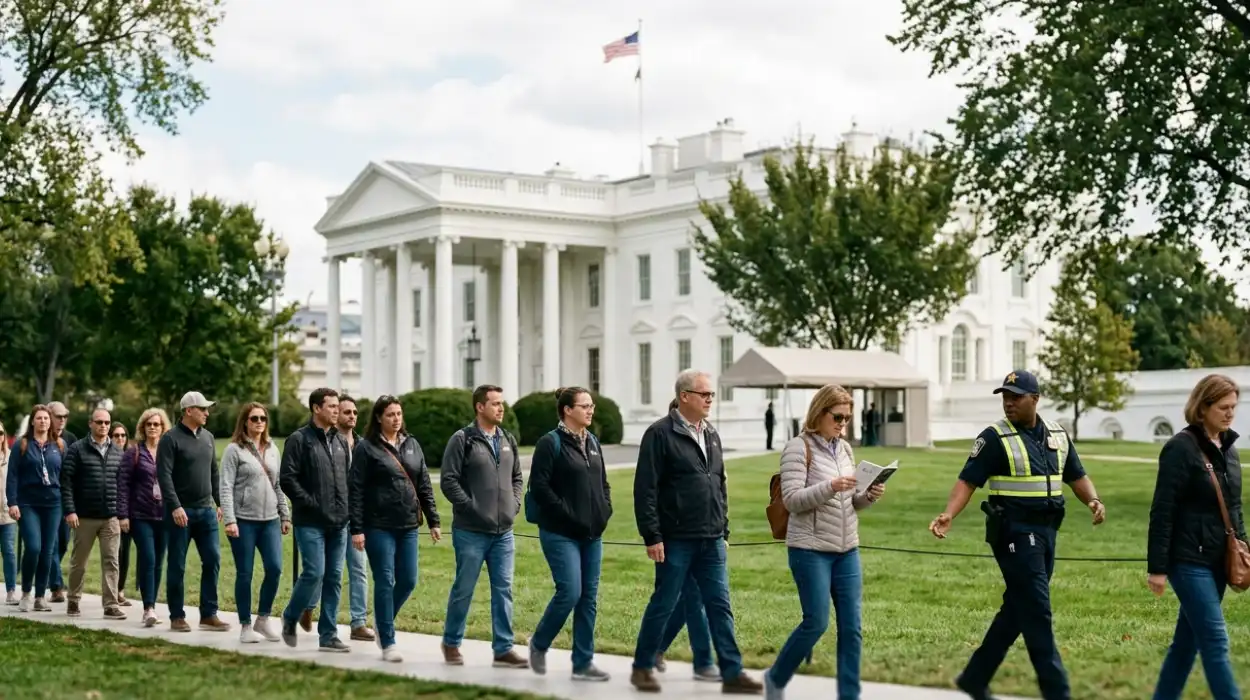
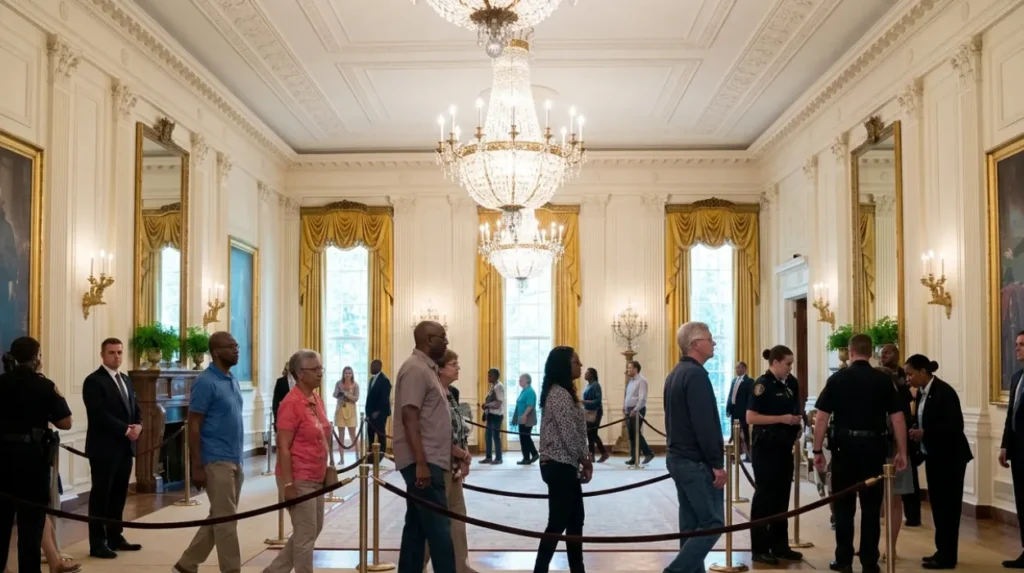
A White House tour is a self‑guided, public visit inside the Executive Residence of the President of the United States at 1600 Pennsylvania Avenue NW, Washington, DC. Visitors can walk through selected public rooms on the State Floor, including the East Room, Blue Room, Red Room, and Green Room, under the supervision of White House staff and security personnel.
Tours are free, last about 30–45 minutes, and run on limited days and time slots, typically Tuesday through Saturday mornings. The exact hours and availability can change without advance notice because tours must be cleared around the President’s public schedule, national events, and security operations.
Each visitor must pass a background‑check‑style screening based on full legal names and birth dates, and tightly controlled security rules apply to bags, clothing, and personal items. Large groups, schools, and organizations must submit one consolidated request rather than many individual ones, and the process is administered through congressional offices or the White House Visitor’s Office.
Who can book a White House tour and when?
U.S. citizens and permanent residents can request a tour through their Member of Congress between 7 and 90 days before their planned visit date. International visitors must instead contact their home country’s embassy or consulate in Washington, DC, which submits the request to the White House visitor system on their behalf.
Requests cannot be submitted earlier than 90 days or later than 7 days before the requested date, and all slots are filled on a first‑come, first‑served basis when they are available. Peak‑season dates (spring and fall) and major holidays can fill quickly, so many groups submit requests within the first few days of the 90‑day window to maximize chances of confirmation.
Children of all ages are allowed on tours, but each person—regardless of age—must have a ticket and pass the screening process. Visitors with disabilities can request accommodations, including accessible routes and assistive devices, through the requesting office or the White House Visitor’s Office in advance.
How do you start the White House tour booking process?
The first step for U.S. visitors is to identify and contact the correct congressional office: either the House Member representing their district or one of the two U.S. Senators from their state. Each office has its own online form or contact method, and many provide a dedicated “White House tour request” page or portal where visitors enter group size, dates, and member information.
For international visitors, the starting point is their national embassy or consulate in Washington, DC, which maintains a White House tour coordinator or liaison. Embassy staff collect the same data (names, dates of birth, citizenship, and requested dates) and forward one consolidated request to the White House Visitor’s Office or the relevant White House liaison.
Requests usually require:
- Full legal names as they appear on identification.
- Date of birth for every visitor.
- U.S. or foreign passport or ID number, as applicable.
- A preferred date and alternate backup dates.
- Emergency contact information for the group.
Mistakes in spelling, dates of birth, or nationality can delay or disqualify a request, so accuracy is required at this stage.
What are the key deadlines and timing rules?
White House tour requests follow a strict 7–90‑day window, meaning the earliest you can submit is 90 days before the visit and the latest is 7 days before. Example: if you want to tour on May 15, 2026, you can submit a request between February 16 and May 8, 2026.
Tours are not guaranteed; when the requested window is available, the White House Visitor’s Office or the congressional office sends a confirmation email or ticket stub with the date, time, entry point, and ID requirements. If the preferred date is unavailable, some offices offer alternative dates or notify visitors that no slots exist for that date range.
Security and State‑scheduling events can cancel or suspend tours on short notice, especially during inaugurations, international summits, or major national events. In such cases, the United States Secret Service or White House Visitor’s Office issues a notice, and visitors must reschedule or forfeit the slot depending on the instructions.
What information must you provide for each visitor?
Each person on a White House tour request must be listed with their full legal name, date of birth, gender, and citizenship status (for example, U.S. citizen, U.S. permanent resident, or foreign national). For non‑U.S. visitors, the nationality and passport number are typically required, matching the information in the official travel document.
Adults should also provide a valid photo ID (such as a driver’s license, U.S. passport, or foreign passport) and may be asked for a full address or mailing information. Children under 18 must still be listed with their legal name, date of birth, and citizenship, even though they do not need a separate photo ID at the time of request.
All information is used to run a background review equivalent to the standard White House visitor screening process conducted by the United States Secret Service. Any discrepancies between the submitted data and the identification presented on the day of the tour can lead to denial of entry.
What security and screening rules apply to White House tours?
White House tours require advance name‑based security screening, and all adult visitors must present a valid photo ID matching the name on the tour request. Children under 18 are not required to carry photo ID but must still be accompanied by an adult whose ID matches the booking information.
The Secret Service enforces strict prohibitions on certain items, including:
- Firearms, knives, and any weapons.
- Food, drink, and chewing gum.
- Large bags, backpacks, and strollers (small personal bags may be allowed under strict limits).
- Recording devices such as cameras, video equipment, and tripods beyond small handheld devices.
These rules follow the official White House visitor policy and are subject to change based on threat levels or operational needs. Visitors who arrive with prohibited items may be asked to store them (where storage is available) or may be denied entry if they cannot comply.
How do you handle group, family, or school White House tours?
Student, church, and other organized groups must submit one consolidated request per date, rather than individual forms, to streamline processing. A group leader or organizer typically collects all participant information, reviews spellings, and submits the request through the relevant congressional office or embassy liaison.
For school groups, chaperones are often required at a minimum ratio (for example, one adult per 10–15 students), and teachers or administrators must communicate with the booking office about any special needs, such as accessibility or medical accommodations. Non‑U.S. school groups coordinate through their embassy or consulate, which aligns with the embassy’s own protocols for international educational visits.
Large blocks of seats (such as for a bus tour company or event planner) are generally not reserved; instead, each group must still follow the standard 7–90‑day window and cannot pre‑book multiple dates far in advance. If a group date is canceled due to security or scheduling reasons, the office that submitted the request communicates rebooking options or alternatives.
What are the typical tour hours and days of the week?
White House tours normally occur Tuesday through Saturday mornings, with limited runs on certain afternoon blocks when the schedule allows. Common weekday hours are 7:30 a.m. to 11:30 a.m., and weekend hours are often 7:30 a.m. to 1:30 p.m., though exact times can shift day to day.
Tours are not offered on Sundays for most of the year, except for special events such as the annual Spring Garden Tours, when the White House grounds open for limited public access. During those events, timed tickets are issued on the day of the tour at the White House Visitor Center, and the focus is on the gardens and exterior rather than the interior rooms.
Because the President’s public schedule and diplomatic events can overlap with tours, the Secret Service may shorten hours, delay start times, or cancel specific runs without warning. Visitors should confirm their exact time and entry instructions shortly before the tour through the congressional office or embassy that issued the confirmation.
How do international visitors book a White House tour?
International visitors cannot book White House tours directly online or through their hotel; they must coordinate through their home country’s embassy or consulate in Washington, DC. The embassy acts as the liaison between foreign nationals and the White House Visitor’s Office, submitting names, dates of birth, nationalities, and preferred dates.
Foreign visitors typically need to provide:
- Full legal name in English and, if applicable, their country’s native script.
- Date of birth and passport number.
- Nationality and type of visa or entry status (for example, tourist, business, or exchange‑visitor).
- One or more preferred dates and contact information.
Embassy‑based booking can take longer than domestic requests because of cross‑agency coordination, translation requirements, and additional screening steps. Embassies often advertise White House tour availability only during specific periods (such as spring or fall) and may impose their own internal deadlines within the 7–90‑day window.
What should you do on the day of your White House tour?
On the day of the tour, visitors must arrive at the designated entry point (usually the White House Visitor Center or a nearby security checkpoint) at least 30 minutes before the scheduled time. Late arrivals may be denied entry, because the White House departs groups in fixed cycles and cannot wait for individual stragglers.
Each adult must present a photo ID that matches the name and birth date on the tour confirmation. Children should be accompanied by a responsible adult whose ID matches the booking information, and all visitors must remove any prohibited items before entering the security line.
After security screening, visitors are grouped into manageable sizes and given instructions on how to proceed through the Executive Residence. Photography is allowed in designated areas, subject to any special restrictions posted that day, and use of flash, tripods, or drones is prohibited.
What are the rules for photography, bags, and prohibited items?
Photography is generally allowed inside the White House public rooms, but only with handheld devices and without flash or video equipment that exceeds simple phone‑style recording. Tripods, selfie sticks, and professional‑style rigs are not permitted, and staff may ask visitors to stop shooting if they block pathways or interfere with other guests.
Bags are tightly restricted: large backpacks, suitcases, and rolling luggage are prohibited, and even small bags may be limited to minimal dimensions. Some visitors rely on lockers or storage facilities near the White House Visitor Center when available, but storage is not guaranteed on the day of the tour.
Prohibited‑item rules align with the official White House visitor policy, which forbids weapons, food, drink, and bulky items that could pose security risks. Visitors who attempt to carry prohibited items may be turned away or required to dispose of or store them before entry.
What happens if your White House tour is canceled or changed?
White House tours can be canceled or moved because of national‑security directives, major events, or the President’s schedule. When this occurs, the White House Visitor’s Office or the office that submitted the request (congressional office or embassy) sends notification by email or phone, sometimes with short notice.
If a tour is canceled without an immediate alternative, visitors may be asked to submit a new request for a future date within the 7–90‑day window, subject to availability. Some international embassies include specific clauses in their White House tour process that state that cancellations are at the discretion of the U.S. government and that refunds are not applicable because the tour is free.
In the event of a short‑notice change, visitors should avoid traveling to the White House until receiving updated confirmation. Showing up without a confirmed slot or on a canceled date typically results in denial of entry, even if the visitor has valid identification.
How do Spring Garden Tours and special‑event tours differ?
Spring Garden Tours are limited‑access events that open the White House grounds and gardens to the public on specific weekend days in spring, rather than the interior rooms. For example, the 2026 Spring Garden Tours occur on Saturday, April 18, 2026, from 10:00 a.m. to 4:30 p.m., and Sunday, April 19, 2026, from 10:00 a.m. to 2:30 p.m.
These events are free and require timed tickets, which the National Park Service distributes at a tent outside the White House Visitor Center on the morning of each day. Visitors enter through the grounds, walk marked paths through the gardens, and view the exterior of the White House, but they do not tour the interior executive rooms unless a separate regular tour is scheduled for that day.
Special‑event tours, such as holiday‑season openings or centennial‑celebration viewings, are announced through the White House and the National Park Service and may include additional restrictions or themed access. These events often attract large crowds, so arriving early and following timed‑ticket instructions is essential.
What are the accessibility options and accommodations available?
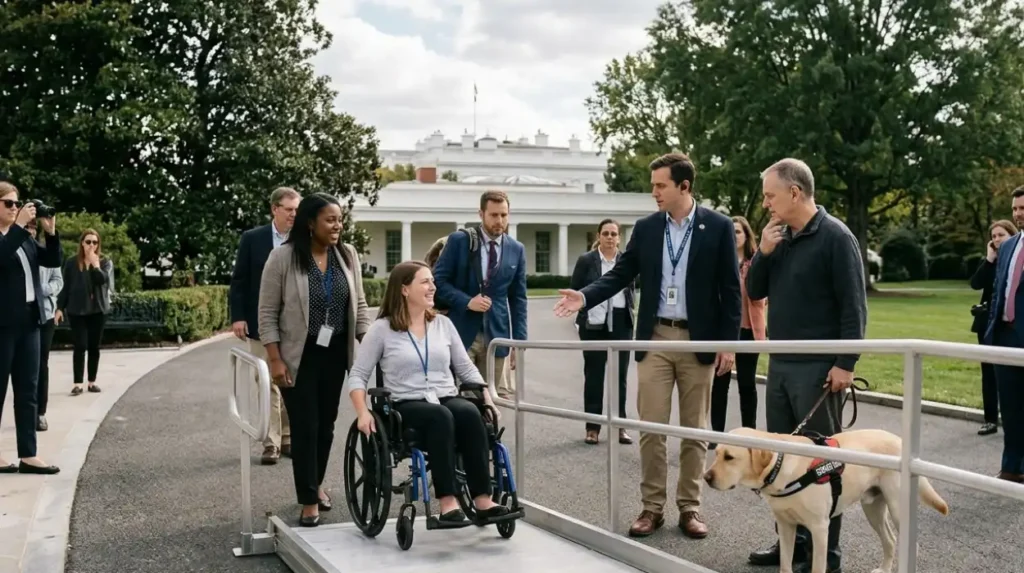
White House tours include accessible routes for visitors who use wheelchairs or have mobility limitations, as long as the requesting office or embassy communicates these needs in advance. The White House Visitor’s Office coordinates with accessibility staff to provide ramps, elevators, and priority seating where appropriate.
For visitors who are deaf or hard of hearing, the White House can sometimes provide written materials or assistive communication devices, depending on availability and advance notice. Sign‑language interpreters or guided‑tour accommodations for large groups are typically arranged through the congressional office or embassy liaison rather than through the general public form.
Visitors with medical conditions or service animals should disclose these needs on the request form and carry any necessary documentation (such as service‑animal certification or physician notes) on the day of the tour. Service animals are allowed under federal disability‑rights law, but they must remain under control and not disrupt the security or visitor experience.
How can you plan a White House tour as part of a Washington, DC trip?
Early planning is critical when adding a White House tour to a Washington, DC visit, especially if the trip is during peak season (spring or fall). Travelers should identify their preferred tour date within the 7–90‑day window as soon as their itinerary is confirmed and then initiate the request through the relevant congressional office or embassy.
It is wise to build flexibility into the schedule by selecting multiple preferred dates and keeping alternate days open, in case the first‑choice slot is unavailable or canceled. Many visitors combine a confirmed White House tour with nearby attractions such as the National Mall, the Smithsonian museums, and the White House Visitor Center, which provides exhibits even on days when interior tours are not offered.
Booking hotels and transportation near the White House or the National Mall also helps manage early‑morning tour times, which often require arriving downtown well before 8:00 a.m. Travelers should check the official White House and National Park Service websites shortly before the tour date for any last‑minute changes to hours or security protocols.
How early should I apply for a White House tour?B
Best strategy:
Apply as close to 90 days in advance as possible
Why:
Slots are limited
Peak dates (spring, holidays) fill fast