
Key Points
- India Meteorological Department issues yellow alert for Delhi with temperatures forecasted to exceed 40 degrees Celsius in coming days.
- Reports indicate India and US nearing completion of bilateral trade deal following advanced negotiations in Washington.
- US officials confirm most issues resolved, with final details under discussion after Modi-Trump call and US Supreme Court ruling on Trump-era tariffs.
- Violent clash at gurdwara in Moers, Germany, leaves multiple people injured, involving kirpans, knives, pepper spray, and a possible firearm.
- Incident linked to internal disputes over gurdwara board election and fund control, prompting police investigation and special unit deployment.
Washington (Evening Washington News) April 21, 2026 – The national capital prepares for its first heatwave of the year as the IMD has issued a yellow alert predicting temperatures over 40 degrees Celsius for the coming days, according to Mahima Kapoor of DW.
- Key Points
- Why Has Delhi Issued a Heatwave Alert?
- What Are the Latest Updates on India-US Trade Negotiations?
- What Happened in the German Gurdwara Violence?
- How Are These Stories Interlinked in Indian Media Coverage?
- Background of These Developments
- Prediction: How This Development Can Affect Indian Citizens
Why Has Delhi Issued a Heatwave Alert?
As reported by Mahima Kapoor of DW, the IMD has forecasted temperatures exceeding 40 degrees Celsius across Delhi, prompting a yellow alert to urge residents to take precautions. This alert comes amid rising summer conditions typical for north India, with the department monitoring heat index levels closely.
Kapoor noted in her coverage that such early heatwaves signal broader climate patterns affecting urban areas.
The yellow alert specifies potential health risks from prolonged exposure, advising limited outdoor activity during peak hours.
IMD officials have not yet declared a formal heatwave but expect conditions to meet criteria soon, defined as temperatures 4.5 degrees above normal for two consecutive days. Delhi’s urban heat island effect exacerbates the situation, with concrete infrastructure trapping warmth.
What Are the Latest Updates on India-US Trade Negotiations?
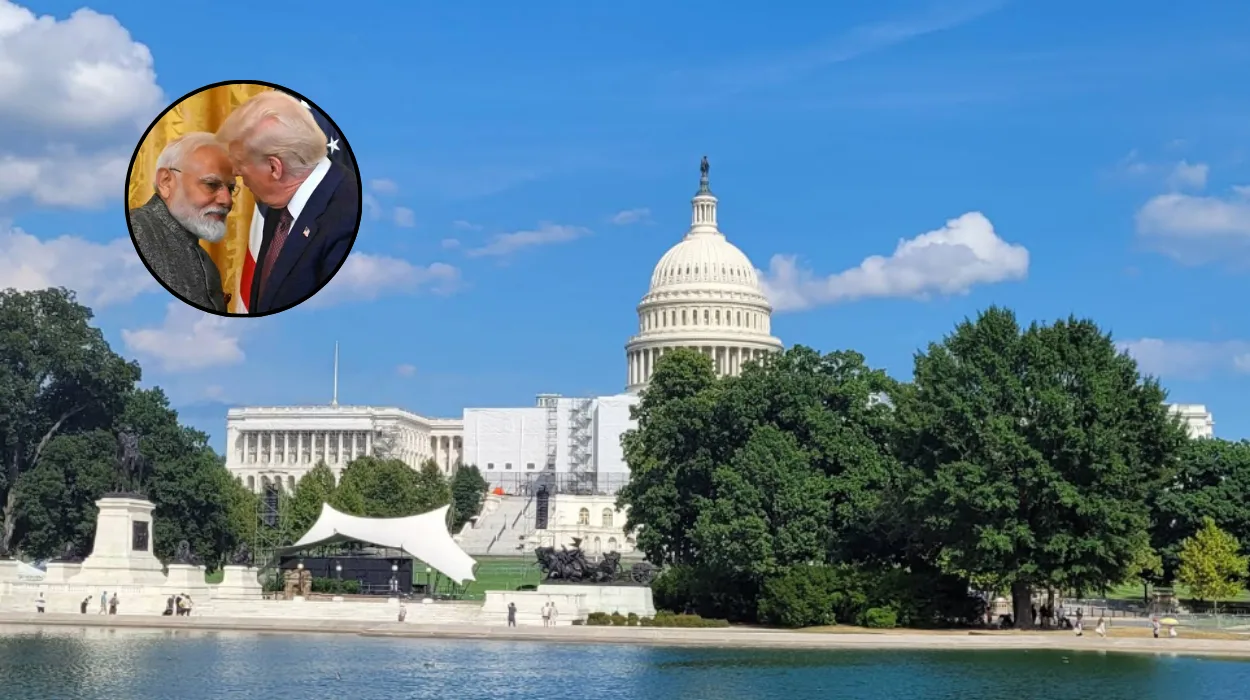
US officials stated that an agreement is nearing completion as negotiations resumed in Washington, per DW’s live coverage. A high-level Indian delegation is currently engaged in final talks, following a recent call between Prime Minister Narendra Modi and President Donald Trump.
This momentum builds on a US Supreme Court ruling striking down certain Trump-era tariffs, forcing a policy reset.
As detailed in India Briefing by Archana Rao, the US plans to reduce tariffs on Indian exports from 50 percent to 18 percent, activating the first phase of the trade framework.
India’s Commerce Secretary Rajesh Agrawal indicated the formal legal agreement could be signed by mid-March 2026, providing a statutory basis for India’s tariff reductions on US goods. Rao quoted Agrawal saying the deal would offer India better market access while addressing US procurement targets of US$500 billion.
A White House fact sheet confirmed President Trump signed an Executive Order removing an additional 25 percent tariff on Indian imports, recognising India’s commitment to halt Russian oil purchases. CNBC reported President Trump announcing via social media that the US would lower tariffs to 18 percent, with India eliminating duties on US imports, opening agriculture sectors, and committing to $500 billion in US goods purchases.
These steps follow a joint statement after the Modi-Trump call, reaffirming commitment to a broader Bilateral Trade Agreement.
YouTube coverage from recent updates described negotiations entering a decisive phase, with Foreign Secretary Vikram Misri’s visit to Washington from April 8-10 covering trade, defence, and technology.
News18 highlighted the deal’s focus on tariffs, market access, strategic cooperation, and investment opportunities.
What Happened in the German Gurdwara Violence?
Videos of violence inside a German gurdwara are causing a stir in India, as noted in DW’s live updates. The incident occurred at a gurdwara in Moers, Germany, where multiple people were injured in a violent clash, according to The Quint.
The Indian Express reported the violence erupted shortly before a scheduled prayer service when two groups clashed. Eyewitnesses described the use of kirpans, knives, and pepper spray, with turbans tossed and panic ensuing. A witness stated,
“Shortly before the prayer service, attackers used pepper spray, then one fired a pistol. I also saw knives.”
TOI Bharat’s YouTube report confirmed at least 11 injured, with around 40 individuals involved, visuals showing sharp weapons including kirpans. Witnesses claimed pepper spray and a firearm were used, possibly a blank-firing pistol.
Initial investigations point to disputes over a new board election and gurdwara fund control. Police detained at least one suspect, deployed special tactical units, and launched a probe into the sequence of events.
German authorities responded swiftly to control the situation, as captured in circulating social media videos.
How Are These Stories Interlinked in Indian Media Coverage?
DW combined coverage of Delhi’s heatwave alert with the India-US trade developments and the German gurdwara incident, reflecting overlapping national interests. The heatwave story underscores domestic weather challenges, while trade talks highlight economic diplomacy under President Trump.
The gurdwara violence raises concerns for the Indian diaspora and Sikh community abroad.
No direct links exist between the events, but they dominate Indian news cycles on April 21, 2026. Trade progress offers economic relief potential amid rising domestic temperatures affecting agriculture and labour. The gurdwara clash prompts questions on community safety in Europe.
Background of These Developments
India’s early heatwaves align with patterns observed in recent years, driven by climate change and urbanisation. The IMD’s yellow alert system, introduced to standardise warnings, builds on data from 2025’s record highs exceeding 49 degrees Celsius in parts of Delhi. Trade negotiations trace back to 2025 tensions over US tariffs, resolved partly by judicial intervention and diplomatic outreach post-Trump’s 2025 inauguration. The Moers gurdwara incident fits a pattern of internal Sikh community disputes in Europe, often tied to leadership and finances, as seen in prior UK and Canadian cases.
Prediction: How This Development Can Affect Indian Citizens
Elevated temperatures over 40 degrees may strain public health services in Delhi, increasing hospital admissions for heat-related illnesses among vulnerable groups like the elderly and outdoor workers. Farmers could face crop stress, impacting food prices. Progress toward the India-US trade deal holds potential to lower export tariffs, benefiting Indian manufacturers and boosting jobs in sectors like textiles and pharmaceuticals for domestic exporters.
Reduced US tariffs to 18 percent and India’s market openings could enhance bilateral trade volumes, stabilising supply chains for consumers reliant on imported goods. The German gurdwara violence may heighten safety concerns for the Indian diaspora, prompting government advisories and community vigilance measures that indirectly affect families back home through remittances and emotional ties.