Key Points
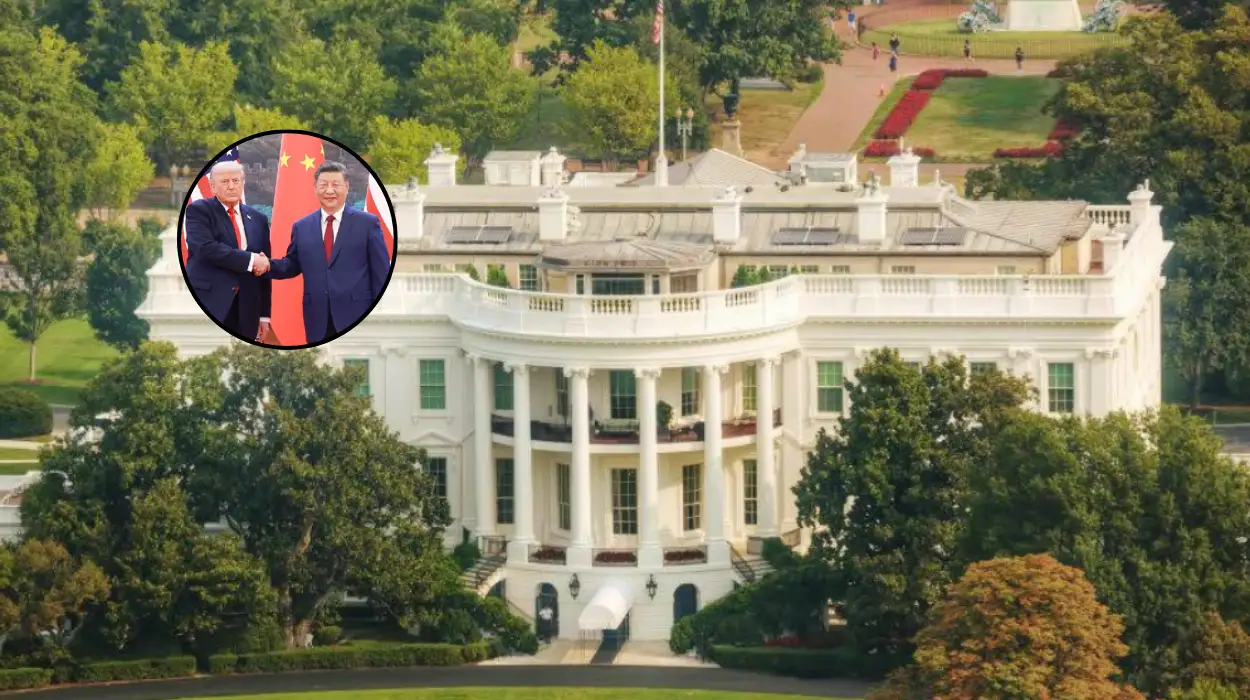
- U.S. President Donald Trump announced on Friday, 15 May 2026, that he looks forward to hosting Chinese President Xi Jinping in Washington, D.C.
- The remark was made during a private meeting at Zhongnanhai in Beijing with President Xi
- Trump expressed willingness to maintain “sincere and in-depth communication” with Xi Jinping
- Trump described his China visit as “very successful and unforgettable” and noted it had captured the world’s attention
- Trump thanked Xi personally for inviting him to Zhongnanhai, China’s leadership compound
- The private meeting occurred on the final day of Trump’s state visit to China, which ran from 13 to 15 May 2026
- The previous day, Xi held formal talks with Trump in Beijing
- Xi Jinping previously stated on 13 May that he expects 2026 to be a “historic, landmark year” for China–U.S. relations
- Xi said the two countries have “more common interests than differences” during their bilateral talks
- The summit focused on trade, diplomacy, Taiwan, and global geopolitical tensions, including the ongoing conflict in Iran
- Trump’s trip was originally scheduled for late March–early April 2026, but was postponed due to the Iran war
- White House press secretary Karoline Leavitt confirmed in March that Xi will also visit the U.S. at a later date
Beijing (Evening Washington News) May 15, 2026 – U.S. President Donald Trump, during a private meeting at Zhongnanhai in Beijing on Friday, 15 May 2026, declared that he is willing to continue maintaining sincere and in-depth communication with Chinese President Xi Jinping and warmly looks forward to hosting Xi in Washington, D.C. This statement comes at the conclusion of Trump’s state visit to China, which began on 13 May and marked the first time in his second presidency that he has visited Beijing.
- Key Points
- How Did Trump Describe His China State Visit?
- What Did Xi Jinping Say About China–U.S. Relations During the Talks?
- Where Did the Private Meeting Between Trump and Xi Take Place?
- What Topics Were Covered in the Trump–Xi Summit?
- Why Was Trump’s Visit to China Postponed?
- What Did White House Officials Say About Xi’s Future Visit to the U.S.?
- How Do Both Leaders View the Future of Bilateral Ties?
- Background: How Did This Diplomatic Development Emerge?
- Prediction: How Can This Development Affect Global Audiences and Key Stakeholders?
As reported by Xinhua, Trump made the remarks face-to-face with Xi in the highly secured Chinese leadership compound, underscoring the personal rapport between the two world leaders. The U.S. president expressed deep gratitude for Xi’s invitation to visit Zhongnanhai, a location rarely opened to foreign heads of state for private talks.
How Did Trump Describe His China State Visit?
According to Xinhua, Trump described his China trip as “very successful and unforgettable,” adding that the visit had captured the world’s attention.
His motorcade was observed entering Zhongnanhai on the final day of the summit, where the two leaders shared tea and lunch, and discussions focused on bilateral and global issues.
The summit concluded a two-day high-level engagement that addressed trade, diplomacy, Taiwan, and rising geopolitical tensions, including the ongoing conflict in Iran.
Trump’s visit had originally been scheduled for 31 March to 2 April 2026 but was postponed by several weeks due to the Iran war, as announced by White House press secretary Karoline Leavitt in March.
What Did Xi Jinping Say About China–U.S. Relations During the Talks?
Chinese President Xi Jinping, when holding talks with visiting U.S. President Donald Trump on Thursday, 13 May, stated that he expects 2026 to be a “historic, landmark year” that opens a new chapter in China–U.S. relations. As reported by Global Times, Xi emphasized that China and the United States have
Xi’s remarks set a constructive tone for the summit, which marked an escalation in high-level engagement between the two nations amid longstanding differences on trade, technology, and security.
The two leaders engaged in extensive bilateral discussions aimed at stabilising ties and managing competition responsibly.
Where Did the Private Meeting Between Trump and Xi Take Place?
The private meeting occurred at Zhongnanhai, Beijing’s most secure leadership compound, where China’s top officials conduct sensitive diplomatic business.
As reported by Al Jazeera, Trump’s motorcade entered the compound on the final day of his visit, where tea and lunch discussions were held with Xi.
Zhongnanhai is traditionally reserved for China’s most critical political meetings, and Trump’s invitation there signals a high level of diplomatic trust and mutual respect between the two leaders. The location choice underscores the significance of the U.S.–China summit in shaping future bilateral relations.
What Topics Were Covered in the Trump–Xi Summit?
The two-day summit focused on several critical global and bilateral issues, including:
- Trade and economic cooperation between the world’s two largest economies
- Diplomatic coordination on international conflicts and multilateral institutions
- Taiwan, a long-standing flashpoint in China–U.S. relations
- Global geopolitical tensions, including the ongoing conflict in Iran
As reported by Bloomberg, the summit followed a delay that brought fresh uncertainty to relations between the two nations, making the successful conclusion of talks particularly significant.
Why Was Trump’s Visit to China Postponed?
Trump’s state visit to China was originally set for 31 March to 2 April 2026 but was postponed to 14–15 May due to the ongoing conflict in Iran.
White House press secretary Karoline Leavitt announced the rescheduling in March, stating that the Iran war required Trump’s immediate attention and prevented the earlier trip.
The postponement introduced uncertainty into U.S.–China relations, as both nations had been preparing for what was expected to be a landmark diplomatic engagement.
The successful completion of the rescheduled visit therefore, carries added diplomatic weight.
What Did White House Officials Say About Xi’s Future Visit to the U.S.?
In March 2026, White House press secretary Karoline Leavitt confirmed that Chinese President Xi Jinping will also visit the United States at a later date, reciprocating Trump’s state visit to Beijing. This mutual exchange of visits signals a commitment to sustained high-level dialogue between Washington and Beijing.
The announcement reinforces the expectation that 2026 will be a defining year for China–U.S. diplomacy, with both leaders investing personally in stabilising and advancing the relationship.
How Do Both Leaders View the Future of Bilateral Ties?
Both Trump and Xi have expressed optimism about the future of U.S.–China relations. Trump praised the visit as “successful and unforgettable,” while Xi called 2026 a “historic, landmark year”. Their public statements reflect a shared desire to manage competition constructively and deepen cooperation in areas of mutual interest.
As reported by Pakistan Today, China and the U.S. have been stepping up high-level engagement to stabilise ties amid enduring differences. The summit in Beijing represents a key milestone in this ongoing effort.
Background: How Did This Diplomatic Development Emerge?
The private meeting at Zhongnanhai and Trump’s announcement about hosting Xi in Washington emerged from months of diplomatic preparation and recalibration following heightened global tensions.
Trump’s visit was rescheduled in March due to the Iran conflict, which diverted U.S. strategic attention. Despite the delay, both sides maintained behind-the-scenes coordination to ensure the summit would proceed smoothly.
Xi’s invitation to Zhongnanhai, a highly restricted political compound, was a notable diplomatic gesture, indicating China’s willingness to engage Trump at the highest personal level.
The timing—on the final day of the state visit—allowed both leaders to conclude the summit on a positive, forward-looking note.
The broader context includes intensified U.S.–China competition over technology, trade, and influence in the Indo-Pacific, alongside shared challenges such as climate change, global security, and economic stability. Both leaders have publicly acknowledged that cooperation is necessary despite disagreements.
Prediction: How Can This Development Affect Global Audiences and Key Stakeholders?
Trump’s announcement that he looks forward to hosting Xi in Washington, D.C., signals a potential shift toward more stable and predictable U.S.–China relations, which can affect multiple audiences in the following ways:
The mutual commitment to “sincere and in-depth communication” suggests that future disagreements may be managed through dialogue rather than confrontation. If both leaders follow through on hosting each other, this could mark the beginning of a new era in great-power diplomacy, reducing the likelihood of miscalculation and escalating tensions.
However, the long-term impact will depend on whether policy outcomes match the diplomatic rhetoric. Structural disagreements on Taiwan, technology, and human rights remain unresolved, and any breakdown in follow-through could reverse the current momentum.