Key Points
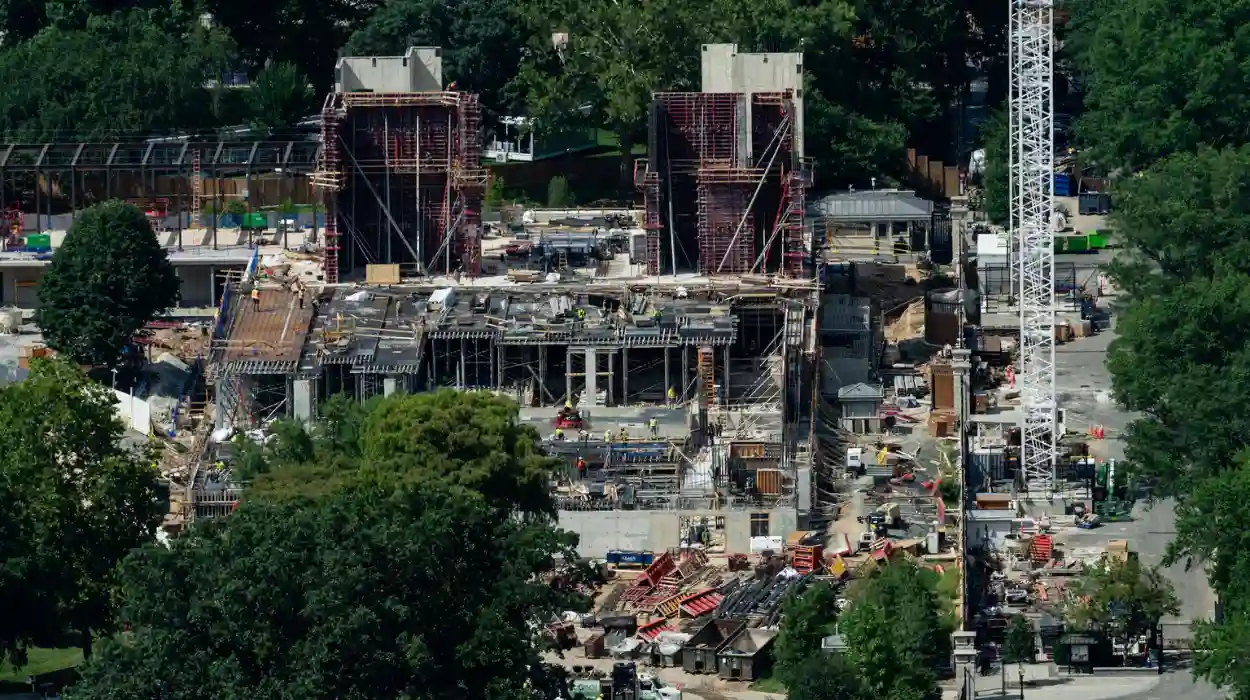
- Court Order: The court has ordered President Donald Trump to stop building a ballroom for the White House.
- Authority of Congress: The court has said that it is the right of Congress to decide whether the project of constructing the structure should be carried out and not the Executive Branch, clearly rejecting “Executive self-help”.
- Standing of the Case: The court has delivered this order on account of a legal suit filed by the historic preservationists against the executive branch over their right to construct the project.
- Stay on the Order: The court has stayed its own order for two weeks to allow the administration sufficient time to take the matter to the U.S. Supreme Court.
- Constitutional Obligation: The judges have stressed the point that the administration will have to obtain proper authorization from the Congress as per the Constitution and the law.
Washington (Evening Washington News) August 7, 2026 – The U.S. Court of Appeals has issued a significant ruling mandate, ordering an immediate halt to the construction of a proposed ballroom on the White House grounds. The decision places a direct limitation on the administration’s authority, explicitly stating that President Donald Trump must seek and secure approval from Congress before moving forward with the project.
- Key Points
- Why did the appeals court order a halt to the White House ballroom construction?
- What is the legal basis for the court’s requirement for congressional approval?
- Will the administration appeal the ruling to the Supreme Court?
- What are the implications for historic preservation at the White House?
The appellate court’s decision marks a victory for a coalition of historic preservationists who had initiated legal action against the administration, arguing that the project lacked the necessary legislative oversight. In their ruling, the judges were firm on the separation of powers, noting that the responsibility for approving such substantial modifications to the White House rests solely with the legislative branch.
Why did the appeals court order a halt to the White House ballroom construction?
The core of the judicial argument rests on the principle of legislative supremacy regarding federal property and executive projects. As reported by The Associated Press, the court made its position clear in the written opinion regarding the limits of executive power.
“Whether or not a massive ballroom should be constructed is for Congress to decide and is not a matter for Executive self-help,” the court stated.
The court’s ruling serves as a stark reminder of the constitutional boundaries that govern the Executive branch. By ordering the work to stop, the court has prioritised the requirement for congressional oversight over the administration’s desire to fast-track the building of the ballroom. The judges indicated that while the executive branch has broad authorities, it cannot bypass the traditional legislative processes when it comes to fundamental changes to historic national landmarks.
What is the legal basis for the court’s requirement for congressional approval?
The legal reasoning employed by the court focuses on the structural requirements of the United States Constitution. The justices emphasized that the project cannot proceed under the current circumstances without explicit legislative authorization.
According to the text of the court’s decision, as cited by The Associated Press, the ruling does not inherently judge the merits of the ballroom project itself. The court stated: “This holding has nothing at all to do with whether the proposed ballroom is desirable, or not, as a matter of policy. This ruling does not even necessarily mean that the Defendants may not ultimately construct the ballroom.”
The judiciary’s focus remained strictly on the procedural necessity of congressional involvement. The court continued, “What it does mean is that the Defendants may not do so during the district court’s expeditious litigation without securing Congress’s authorization, as the Constitution and laws require.”
This distinction is crucial for understanding the wider implications of the case. The court is not issuing a permanent injunction against the ballroom’s existence, but rather demanding that the administration adhere to the legal framework that necessitates congressional consent for such executive initiatives.
Explore more Politics News:
Trump Economy Shaken by Tariffs, Iran War, Washington 2026
What to Expect From Congress and Trump Ahead of Midterms, Washington DC 2026
Will the administration appeal the ruling to the Supreme Court?
While the immediate effect of the ruling is a halt in construction, the judicial process is likely far from over. The appeals court, acknowledging the high stakes and the potential for further legal challenges, provided a two-week window for the administration to seek intervention from the highest court in the land.
By granting a stay on the ruling for 14 days, the U.S. Court of Appeals has effectively created a brief “status quo” period. This window allows the administration the opportunity to file an appeal with the U.S. Supreme Court, which would then decide whether to hear the case or allow the appellate ruling to stand.
If the administration chooses to pursue this route, it will likely argue that the Executive branch possesses the inherent authority to make changes to the White House grounds without the need for additional legislative approval. Conversely, the historic preservationists are expected to maintain their position that the administration’s actions circumvented the legal requirements that ensure checks and balances between the branches of government.
What are the implications for historic preservation at the White House?
The involvement of historic preservationists in this lawsuit highlights the ongoing tension between modernization efforts at the White House and the protection of its historical status. The White House is not merely an executive office but a historic landmark with strict regulations governing any modifications to its structure or surroundings.
The preservationists involved in the suit argue that the construction of a “massive ballroom,” as described by the court, poses a threat to the integrity of the historic site. Their successful challenge at the appellate level suggests that these groups have significant legal standing to intervene when they believe federal projects threaten the preservation of national landmarks.
Moving forward, the outcome of this case—and any potential Supreme Court hearing—will likely set a precedent for how much authority any sitting president has to alter the White House premises. If the appellate ruling is upheld, it will solidify a requirement for congressional oversight that could significantly complicate, or even prevent, future unauthorized expansions or structural changes to the executive complex.
The administration has not yet released an official statement detailing its next steps, but observers in Washington remain focused on whether the two-week stay will be utilized to escalate the matter. As the situation develops, the focus will remain on the interplay between presidential authority and the mandates set forth by the legislative and judicial branches of the United States government.