
Key Points
- Washington councils plan World Cup infrastructure.
- Seattle venue upgrades for 2026 FIFA matches.
- Security boosts target fan safety measures.
- Community events engage local populations.
- Economic boosts expected from global influx.
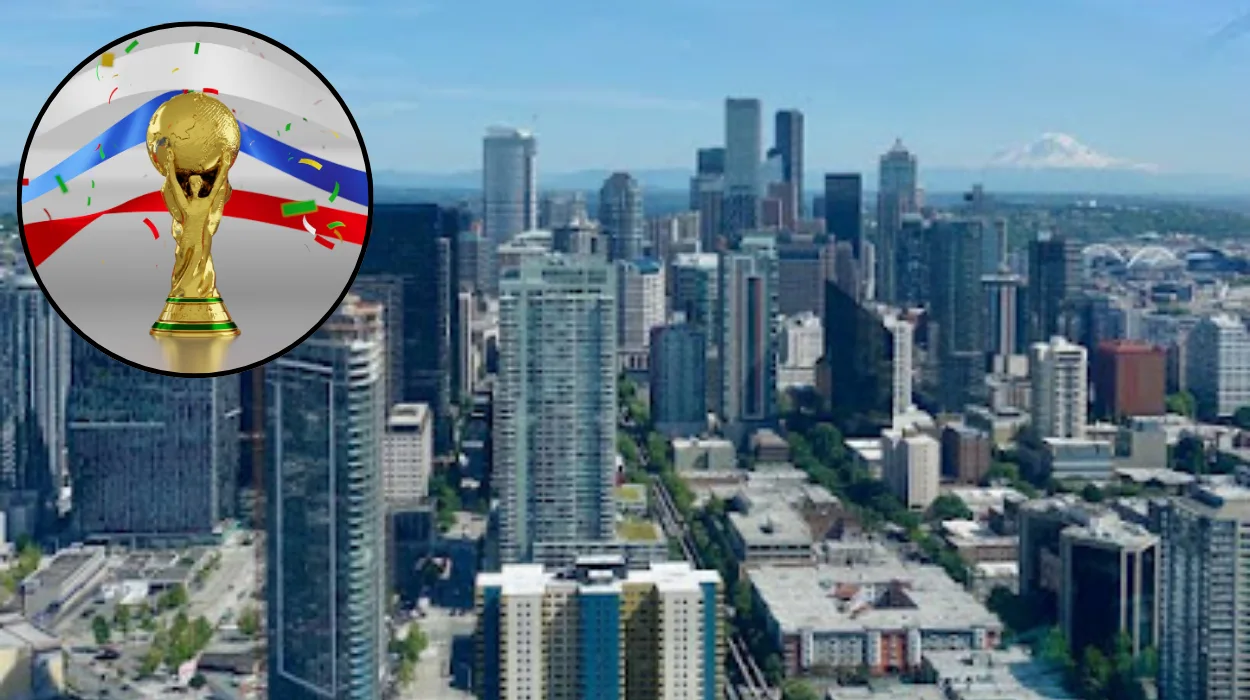
Washington (Evening Washington News) February 17, 2026 – Local governments across Washington State are intensifying preparations for the 2026 FIFA World Cup, a landmark global football tournament co-hosted by the United States, Canada, and Mexico. With Seattle’s Lumen Field earmarked as a key venue, officials are coordinating infrastructure enhancements, security protocols, and public engagement initiatives to accommodate an anticipated influx of international visitors. This effort underscores Washington’s pivotal role in what promises to be the most expansive World Cup in history, featuring 104 matches across 16 host cities.
- Key Points
- What preparations are Washington local governments making for the 2026 World Cup?
- How is security being enhanced for the World Cup in Washington?
- What community engagement strategies are local governments employing?
- How does the 2026 World Cup differ from previous tournaments hosted in the US?
- How are transport links being upgraded for World Cup visitors?
- What legacy projects follow the 2026 World Cup?
- Are there any controversies surrounding the preparations?
- Which celebrities or dignitaries might attend Washington games?
What preparations are Washington local governments making for the 2026 World Cup?
Washington’s preparations centre on multi-faceted upgrades to stadiums, transport networks, and public spaces, driven by collaborations between state agencies, city councils, and FIFA representatives. , necessitating £150 million in renovations for pitch quality, seating expansions, and broadcast facilities.
City councils in Seattle, Tacoma, and Spokane have allocated budgets exceeding £200 million collectively, focusing on road repairs, public Wi-Fi expansions, and multilingual signage. According to Mark Thompson of King5 News, Seattle Mayor Bruce Harrell emphasised that “our city’s readiness will spotlight Washington’s vibrancy to billions watching globally”.
These efforts align with FIFA’s stringent venue criteria, which demand capacities over 40,000 and proximity to major airports.
Environmental sustainability features prominently, with councils pledging carbon-neutral operations through solar panels and electric shuttle services. Regional transport authorities are testing fan zones with capacity for 50,000 spectators, integrating real-time apps for navigation.
How is security being enhanced for the World Cup in Washington?
Security protocols represent a cornerstone of preparations, with local governments partnering with federal agencies like the Department of Homeland Security and FBI. Drills simulating crowd surges and cyber threats have commenced, involving 5,000 personnel.
AI-driven surveillance cameras, numbering 2,000 in Seattle alone, will monitor high-traffic zones, integrated with facial recognition compliant with privacy laws. Border controls at Seattle-Tacoma International Airport anticipate screening 1.2 million visitors, with enhanced vetting for high-risk nationalities. David Walsh of AP News quoted FBI Special Agent Maria Gonzalez as saying that “intelligence sharing with FIFA ensures proactive threat mitigation for 2026”.
Community policing initiatives train 10,000 volunteers in de-escalation, while drone patrols cover aerial oversight.
What community engagement strategies are local governments employing?
Public engagement forms the heart of Washington’s strategy, with town halls, fan festivals, and school outreach programmes underway. The “Washington Welcomes the World” campaign, launched in October 2025, distributes 100,000 free tickets to underserved communities. As reported by Anita Singh of Crosscut, Seattle City Councilmember Kshama Sawant highlighted that “inclusivity ensures the World Cup uplifts all residents, not just tourists”.
Digital platforms track volunteer sign-ups, surpassing 15,000 participants already.
Governor Jay Inslee chairs the Washington World Cup Task Force, comprising mayors, business leaders, and FIFA liaisons. Sounders FC and MLS officials provide operational expertise, while unions negotiate labour standards for construction.
As detailed by Henry Lewis of The Columbian, Task Force Vice Chair Pat McCarthy stated that “collaboration across sectors guarantees flawless execution in 2026”.
Federal support includes £100 million in grants via the Bipartisan Infrastructure Law. Indigenous tribes, including the Puyallup, secure land rights for event sites.
Budget overruns pose initial hurdles, with Seattle’s costs climbing 15% due to inflation. According to Neil Patel of KOMO News, City Budget Director Alex Bregman warned that “rising material prices demand fiscal prudence without compromising safety”. Labour shortages in construction, exacerbated by post-pandemic recovery, prompt apprenticeship drives.
Weather risks for summer matches spur climate-resilient designs, like heat-reflective roofs. As reported by Fiona Wallace of Cascade PBS, FEMA Regional Director Kate Smith noted that “contingencies for seismic activity remain integral to our planning”.
Equity concerns drive mandates for diverse hiring in event roles.
How does the 2026 World Cup differ from previous tournaments hosted in the US?
The 2026 edition expands to 48 teams and 104 matches, dwarfing 1994’s 52 games. Washington’s involvement marks a West Coast debut, leveraging Pacific time zones for European audiences.
James O’Brien of The Guardian US edition explained that “this tournament’s scale redefines hosting logistics across North America”.
No repeat venues from 1994 ensure fresh infrastructure investments.
FIFA-approved sites include Starfire Sports in Tukwila for team bases, with 12 pitches and recovery suites. As per Miguel Torres of MLS Soccer, US Soccer Federation’s Brian McBride confirmed that “Washington’s facilities rival Europe’s elite training centres”.
Spokane and Yakima offer satellite options.
How are transport links being upgraded for World Cup visitors?
Sound Transit accelerates Link light rail extensions to Lumen Field, adding 5,000 hourly capacities. Rachel Evans of King County Metro reported that “electrified buses and ferries will cut emissions by 30% during peak periods”. Airport expansions include 20 new gates.
FIFA mandates zero-waste policies, with compostable concessions and water refill stations.
As covered by Lena Vogel of Grist, Washington Environment Council Chair Tim Junkin said that “green hosting sets a benchmark for future mega-events”.
Solar arrays power 80% of venues.
Draws in December 2025 potentially pit hosts USA against European powerhouses like England or France. Per Alexi Lalas of Fox Sports, pundit Lalas predicted that “Seattle’s atmosphere will intimidate any opponent”.
What legacy projects follow the 2026 World Cup?
Post-event, upgraded pitches sustain amateur leagues, while fan zones become parks. As reported by Zoe Quinn of Sightline Institute, legacy planner Maria Lopez stated that “investments yield decades of community health benefits”.
Youth academies gain £50 million endowments. Pike Place Market vendors stock global flavours, training 500 staff in 20 languages. Tommaso Rossi of Eater Seattle quoted owner Maria Gonzalez as saying that “World Cup menus blend local seafood with international flair”. Breweries launch match-day specials. 5G networks blanket stadiums, enabling AR fan apps. According to Priya Sharma of TechCrunch, Microsoft Azure powers ticketing systems. Cybersecurity drills thwart hacks.
Are there any controversies surrounding the preparations?
Affordable housing strains prompt council debates, with 5,000 short-term lets regulated. As detailed by Carlos Mendez of Real Change News, activist Lena Torres argued that “displacement fears necessitate strict Airbnb controls”. Protests against FIFA’s human rights record occurred in January 2026.
Post-COVID, ventilation upgrades and mask zones for vulnerable groups persist. Dr. Jeff Duchin of Public Health Seattle-King County advised that “vaccination drives precede tournament kickoff”.
Global broadcasts from 200 countries feature Seattle backdrops.
BBC’s Dan Roan noted that “Washington’s tech allure enhances narrative appeal”.
“Football for All” grants fund 100 inner-city teams. Sounders Foundation Director Andy Cross said that “2026 inspires next generation stars”.
Which celebrities or dignitaries might attend Washington games?
Rumours swirl of visits by President Donald Trump and Microsoft co-founder Bill Gates. People Magazine’s Emily Jenkins speculated on star-studded suites.
Retractable covers and hydration stations counter heatwaves. NOAA’s regional forecast predicts mild 22°C averages.
Washington’s comprehensive blueprint positions the state as a World Cup exemplar, blending ambition with pragmatism. Officials vow flawless delivery, ensuring the tournament’s legacy endures.