Key Points
- The issue of mandatory fireproof construction and defensible space requirements is still pending in Washington state even after the destruction of over 800 homes and buildings.
- Due to public backlash and political tensions, government officials had to cut back on some of their proposed fire safety measures, but debates are still ongoing concerning mandatory fireproof materials like roofs and walls in new construction.
- As noted in an article by NPR, government officials had to retreat from some of their plans amid criticisms, while other Western states, including Oregon, had faced similar criticisms and rescinded such plans.
- Green groups and city advocates contended that mandatory vegetation removal measures may conflict with city tree cover and heat wave prevention plans.
- The Department of Natural Resources in Washington State is working on updating its wildfire hazard map, with the revised version expected in December.
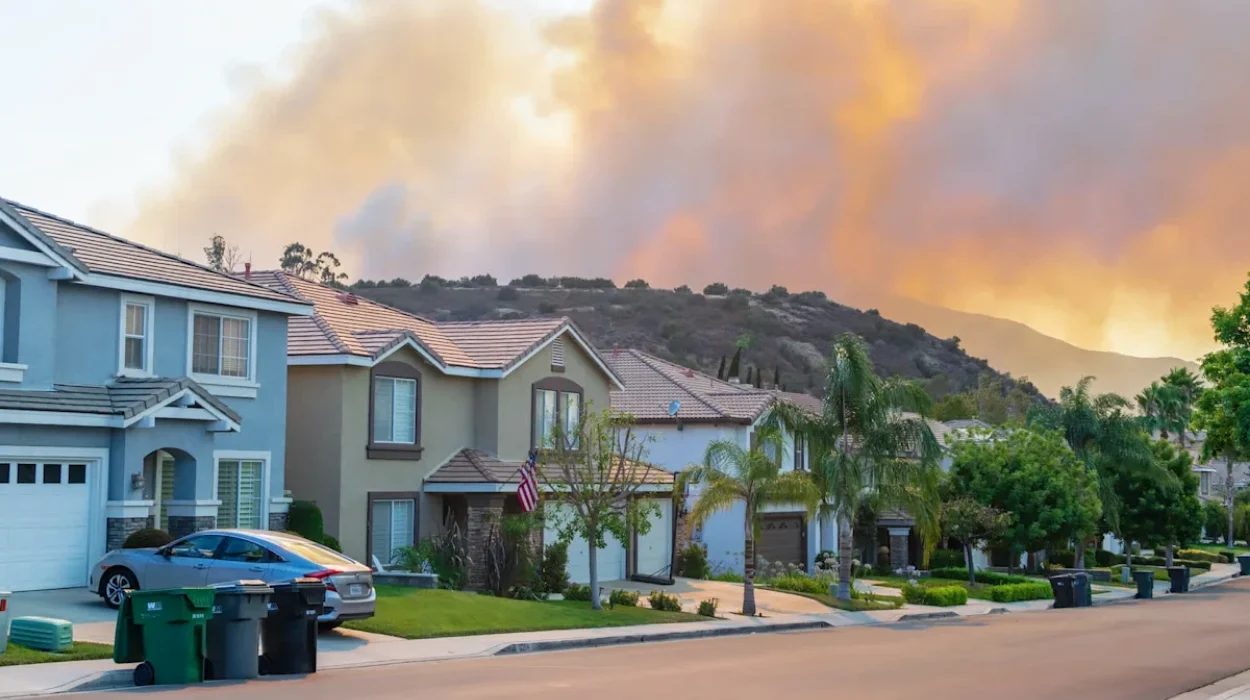
Washington (Evening Washington News) August 31, 2026 — Washington state continues to grapple with intense political deadlock over how strictly to mandate wildfire-defense building codes and landscape management rules, even in the devastating aftermath of more than 800 homes and structures lost to regional blazes.
While fire safety engineers and emergency responders argue that stringent building protections and localized vegetation clearances are critical to community survival, pushback from property owners, local developers, and environmental advocates has repeatedly stalled reform.
The ongoing impasse leaves communities across the Pacific Northwest vulnerable to wind-driven embers, mirroring a wider, fragmented regulatory landscape across the American West where state policies diverge sharply on wildfire mitigation.
Why Is Wildfire Safety Regulation So Contentious in Washington?
For several years, regulatory bodies in Washington have attempted to establish robust, statewide wildfire safety standards tailored for homes situated in high-risk zones. These proposals historically combined rigorous building-code updates with strict defensible-space mandates requiring homeowners to manage vegetation near structures. However, intense public criticism and localized pushback ultimately forced officials to scale back several of these safeguards, as reported by NPR.
As observed by Dave Kokot—a retired fire protection engineer with the Spokane Department who faced twin wildfires threatening his Spokane residence in August—personal preparation can significantly mitigate structural vulnerability. Kokot utilized fire-resistant siding and diligently cleared surrounding vegetation, keeping his anxiety lower than that of his unprepared neighbors. Nevertheless, Kokot emphasized that the extensive local destruction should shatter any lingering community illusions that certain neighborhoods are inherently safe from wildfire threats.
Despite scaling back broader proposals, the state maintains intentions to mandate specific fire-resistant construction features for new builds—notably roofs and exterior siding. Conversely, mandatory vegetation management rules for existing homeowners have largely been dropped due to political resistance. Fire safety research consistently demonstrates that wind-driven embers frequently serve as the primary ignition source for residential structures, and unchecked flammable vegetation nearby drastically accelerates fire spread and complicates firefighting efforts.
As noted in coverage from NPR, changes that stripped away mandatory yard clearances caused deep concern among local emergency services. Unidentified representatives from the fire service noted regarding the policy rollback:
“That got the fire service pretty concerned, because that’s our primary protection.”
How Do Varying Western State Policies Affect Wildfire Risk?
The regulatory patchwork governing the American West has created an uneven playing field for municipal planners and vulnerable residents alike. Ryan Maye Handy, a researcher specializing in community wildfire planning at Headwaters Economics, highlighted the fragmented nature of these regional guidelines.
As stated by Ryan Maye Handy of Headwaters Economics,
“It’s up to the political will of a community to adopt a building code to address wildfire.”
Handy further explained the broader regional reality:
“What we’re increasingly seeing is many different interpretations of how to reduce that risk. It is literally all over the map.”
Handy contended that implementing comprehensive wildfire building codes remains one of the most effective mechanisms to establish a uniform safety baseline across vulnerable jurisdictions. Without standardized oversight, neighborhoods remain only as safe as their least-prepared properties, since flying embers readily leap from unmitigated lots to protected homes.
Explore More Spokane News
Spokane Higher Education Admissions Stabilize 2026
Wildfire Evacuees Face Hazmat Risks in Spokane 2026
What Are the Environmental and Political Objections Raised by Critics?
While the core objective of wildfire regulation centers on human safety and property preservation, state and local mandates targeting residential architecture and landscaping frequently trigger intense political friction. During public hearings held in 2023, vocal opponents argued that strict vegetation removal guidelines directly contradicted separate municipal objectives aimed at expanding urban tree canopies and reducing dangerous urban heat island effects during extreme heat waves.
Concerns regarding local ecosystems and wildlife habitats were prominently voiced by conservation representatives during legislative evaluations. As testified by Eric Seibel on behalf of the Tahoma Audubon Society,
“Our greatest concern at Audubon is preserving bird habitat. I’m concerned that trees, which are our best defense against climate change, will be destroyed en masse if the provisions of the code pass.”
Washington’s struggles mirror wider regional legislative battles across neighboring states. Oregon previously moved to repeal its newly introduced wildfire rules following intense public resistance, whereas California has successfully enforced stringent fire-resistant construction standards for nearly two decades. Meanwhile, states like Colorado and Utah have pushed forward with unified statewide codes, though numerous Western states still function entirely without comprehensive risk mapping or standardized safety regulations.
What Steps Are State Officials Taking Next?
In an effort to ground future policy discussions in accurate data, Washington state authorities are currently revising statewide wildfire hazard maps, with updated iterations scheduled for release in December. State administrators report that these revised maps will thoroughly incorporate historical wildfire patterns to deliver a much sharper, localized picture of geographic vulnerability.
Proponents of early structural intervention argue that integrating safety measures during initial construction phases offers the most practical path forward. Elaborating on this regulatory perspective, Angie Lane, an assistant division manager with the Washington Department of Natural Resources, noted the pragmatic advantages of proactive design.
As stated by Angie Lane of the Washington Department of Natural Resources,
“It’s trying to make sure that people are smart, building in those areas.”
Lane added,
“When you’re starting fresh, it’s easier to go ahead and prepare for all of that while you’re building.”
Until state leaders reconcile environmental protection, housing affordability, and community safety under a unified policy framework, Washington’s neighborhoods will remain locked in a precarious holding pattern against future fire seasons.