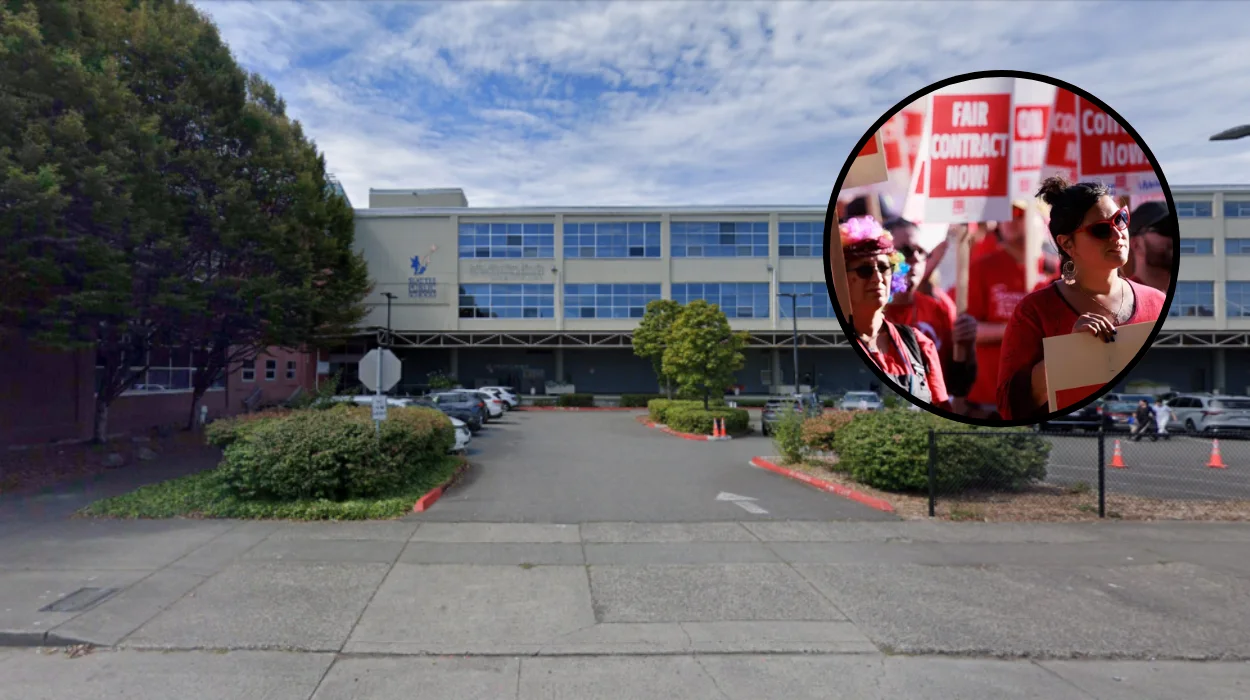
Key Points
- Reaching an Impasse: Seattle Public Schools (SPS) and Seattle Education Association (SEA) have reached an important impasse during negotiations for the contract ahead of the beginning of the academic year.
- Authorization of Strike: The members of the SEA overwhelmingly authorized a strike by about 91.2% if no agreement is reached on an equitable and complete contract.
- Major Areas of Dispute: The major areas of dispute between the district and the union include salary increases above inflation rates, smaller classes, increased workload, and stronger staffing of special education programs.
- Budget Deficit: The officials of SPS, headed by the superintendent of SPS, Ben Shuldiner, insist that SPS has a budget deficit of $87 million and a reduced rainy-day budget, preventing them from paying the salary increases demanded by the union.
- Effect on Students: About 50,000 students are likely to be affected by the first day of their studies as happened during the previous strike in 2022, where the academic schedule was postponed by five days.
Washington (Evening Washington News) September 1, 2026 — The threat of a strike by Seattle school educators intensified significantly as Seattle Public Schools and the educators’ union remained far apart on core contractual issues.
- Key Points
- Why Are Seattle Public Schools and the Educators’ Union at an Impasse?
- What Are the Specific Demands Being Made by the Union?
- How Are District Budget Deficits Fueling the Conflict?
- What Arguments Are Critics Raising Against a Potential Teacher Strike?
- What Steps Are Being Taken to Avert a Walkout?
While Seattle Public Schools Superintendent Ben Shuldiner and district administration insist that financial constraints make fulfilling the union’s extensive demands virtually impossible, union representatives counter that vital educational investments and respectful compensation are non-negotiable for supporting students and school staff.
Why Are Seattle Public Schools and the Educators’ Union at an Impasse?
The core friction in the ongoing dispute stems from a combination of economic demands, working conditions, and structural budgetary challenges within the school system.
According to reporting by Frank Sumrall of MyNorthwest, the Seattle Education Association—which represents approximately 6,000 teachers, paraprofessionals, office staff, and school nurses—voted 91.2% in favour of authorizing a strike.
Bargaining teams have reportedly held 24 negotiation sessions since discussions began in June, yet union leadership claims the two sides have only agreed on roughly 12% of overall contract terms.
As reported by Frank Sumrall of MyNorthwest, Seattle Education Association Vice President and Lead Bargainer Davina Diaz stated that:
“Our members have spoken, and we are united in our commitment to Seattle students. We are ready to keep working toward an agreement that gives educators the conditions we need to support every student and build the thriving schools our community deserves.”
Conversely, the district maintains that it has put forward reasonable and responsible proposals while grappling with immense fiscal pressures. As reported by The Center Square, Superintendent Ben Shuldiner outlined the district’s position on teacher compensation, emphasizing that the baseline salary line containing the highest concentration of Seattle teachers currently provides a base wage of $118,716 for 180 days of work.
Adding additional contractual days, technology days, and Time, Responsibility, and Incentive (TRI) pay brings total average wages to approximately $142,584 before benefits, retirement contributions, and stipends. Furthermore, Shuldiner noted that the district has offered a minimum cumulative 8.8% salary increase over three years, adjusted upward if future state inflation projections exceed estimates.
What Are the Specific Demands Being Made by the Union?
The Seattle Education Association is pushing for a multi-year contract extending through the 2028-29 school year that includes pay raises ranging from 1.5% to 5% above the rate of inflation, depending on the specific job classification. Beyond financial compensation, the union is demanding structural improvements designed to ease pressures on staff and improve learning environments. These include significantly smaller class sizes, enhanced workloads, and increased staffing levels dedicated to special education students.
As reported by The Center Square, SEA President Ibijoke Idowu stated in a union release that:
“We don’t want to strike, but unless the district starts prioritizing student learning and supports, the district is giving us no choice.”
Educators on the ground have also expressed profound frustration over the slow pace of bargaining. As reported by Ranji Sinha of KIRO 7 News, Katy McDermott, a school nurse, noted that talks have dragged on for months without substantial progress.
“We’re pretty frustrated. We thought we’d be farther along right now, especially since we started in June,”
McDermott told KIRO 7. Price Jimerson, a high school teacher, echoed these sentiments to KIRO 7, stating:
“We just want to get the process over so we can relax, rest and be ready for our students as soon as possible.”
Explore More Seattle News
Seattle Mayor Recall Withdrawn: New Legal Filing Planned for 2026
Can Seattle Teachers Legally Strike? What WA Law Says Seattle 2026
How Are District Budget Deficits Fueling the Conflict?
A major pillar of the district’s pushback against the union’s demands is an ongoing budget crisis. Seattle Public Schools is confronting a projected $87 million budget deficit for the academic year, paired with a heavily depleted rainy-day reserve fund that has dropped from a recommended $135 million down to approximately $30 million.
District leaders attribute part of this severe financial strain to declining enrollment. Over the past six years, SPS has lost roughly 3,000 to 4,000 students as families move away due to the high cost of living in Seattle or choose to enroll their children in private and parochial institutions. Because Washington state funds public school districts primarily based on student enrollment figures, every departing student results in a loss of roughly $20,000 in annual state revenue.
Superintendent Ben Shuldiner has repeatedly stressed that the district must focus heavily on limiting overspending rather than committing to unfinanced salary increases. In statements reported by MyNorthwest and KIRO 7 regarding the district’s broader financial health, Shuldiner asserted that:
“Everything is on the table. When you’re $87 million in the hole, you can’t just pretend that money grows on trees.”
Shuldiner also noted that the district has targeted administrative restructuring and central office reorganizations to trim costs without directly harming front-line classroom instruction.
What Arguments Are Critics Raising Against a Potential Teacher Strike?
The looming labor dispute has drawn sharp criticism from policy organizations and community stakeholders regarding the decision to leverage the start of the school year. Writing for the Washington Policy Center, Elizabeth New argued that public education should not be used as a bargaining chip, pointing out that Seattle public educators are among the highest-paid in the nation.
As reported by the Washington Policy Center, Elizabeth New stated:
“Members of the Seattle Education Association (SEA) voted 91.2% last week to authorize a strike if they don’t reach a contract agreement with Seattle Public Schools. The current contract expires today. Washington’s public educators should not be threatening to withhold school from children and families to gain leverage at the bargaining table.”
Critics also note a legislative change in Washington state that allows striking public workers to qualify for unemployment insurance benefits—subject to weekly job-search requirements—which has added a new dynamic to how prolonged labor disputes unfold financially for striking union members.
What Steps Are Being Taken to Avert a Walkout?
Despite the high stakes and the imminent expiration of their previous collective bargaining agreement, representatives from both Seattle Public Schools and the Seattle Education Association have emphasized their commitment to continuous dialogue. Bargaining teams have maintained open lines of communication, meeting around the clock to try and bridge the gap.
As reported by KIRO Newsradio, Seattle Public Schools released a formal statement reading:
“Bargaining continues in good faith and with respect for our labor partners. The opportunity for conversation and progress remains. SPS is working to open the school year successfully with an agreement that centers our students, supports our educators, and keeps our school district fiscally viable into the future.”
Similarly, union communications indicate a strong preference for a negotiated settlement over a disruption to instruction. In a social media statement published following the initial strike authorization vote, the SEA wrote:
“We return to the bargaining table tomorrow and will bargain every day to try to get to an agreement. We want to be back with our students, and we want to return with a contract that provides more of what our students need to succeed.”
With approximately 50,000 students scheduled to return to classrooms, parents and community members await a final determination from negotiators as the deadline rapidly approaches.