
Key Points
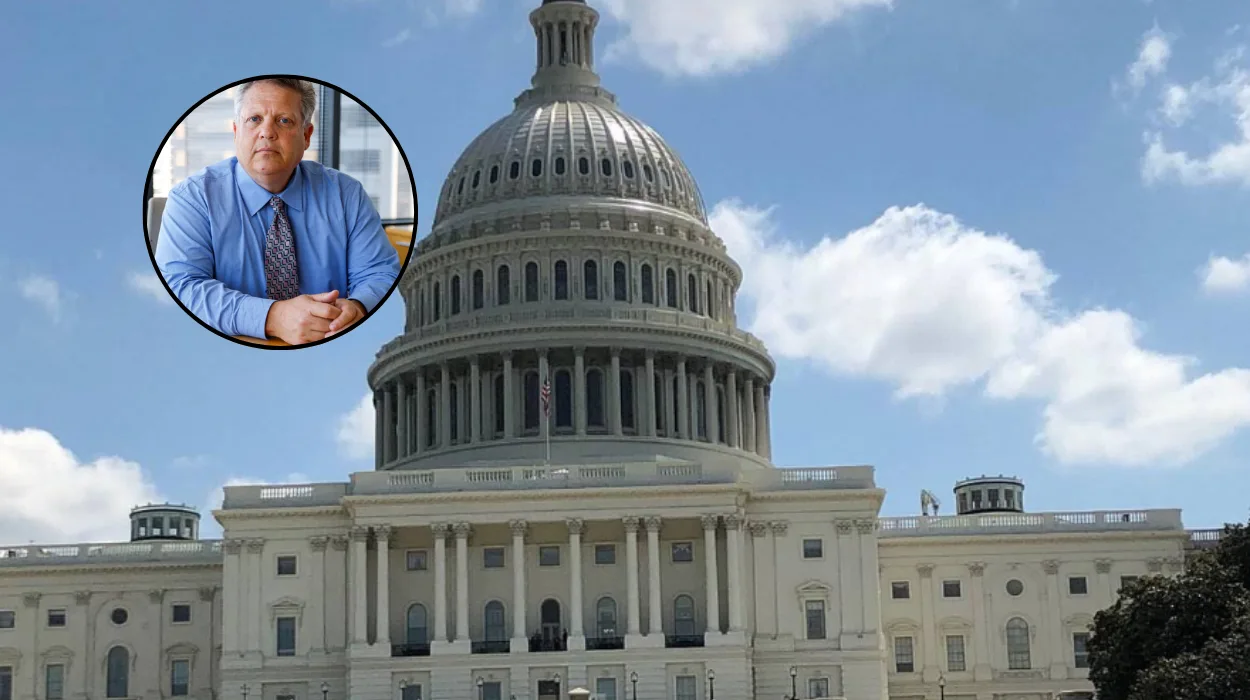
- Legal Challenge Launched: Roger Rogoff, a former federal prosecutor and King County Superior Court judge, filed a federal lawsuit on Tuesday, 21 July 2026, against President Donald Trump, Acting Attorney General Todd Blanche, the Executive Office of the President, and the US Department of Justice (DOJ).
- Rapid Dismissal: Rogoff was unanimously appointed as the US Attorney for the Western District of Washington by local federal district judges on 15 July 2026. Less than one hour after taking the oath of office, he received an email from the White House informing him of his immediate termination.
- Core Constitutional Debate: The lawsuit tests the boundary between presidential executive removal authority under Article II and Congressional statutory design under 28 U.S.C. § 546, which allows federal courts to fill prosecutorial vacancies until a Senate-confirmed nominee assumes office.
- First Lawsuit of Its Kind: Although the Trump administration has previously terminated court-appointed prosecutors in other jurisdictions—including New York, New Jersey, Virginia, and Nevada—Rogoff is the first ousted prosecutor to launch a direct court challenge.
- Relief Sought: Rogoff is asking the US District Court in Seattle to void his termination, declare that he remains the lawful US Attorney for the district, and grant him full access to DOJ facilities and systems.
Seattle (Evening Washington News) July 22, 2026 — How did a historic legal conflict erupt in Western Washington following the abrupt termination of a court-appointed top federal prosecutor?
As reported by Melissa Quinn of CBS News, former US Attorney Roger Rogoff filed a lawsuit in the US District Court for the Western District of Washington on Tuesday, asking federal judges to declare his dismissal by President Donald Trump unlawful and to reinstate him as the region’s chief law enforcement officer until a presidential nominee is formally confirmed by the US Senate.
As reported by Mike Scarcella of Reuters, Rogoff was appointed to the position on 15 July 2026 by a unanimous decision of the federal district judges in Seattle after the post had remained vacant without a Senate-confirmed presidential appointee for an extended period.
However, less than 60 minutes after Chief Judge David G. Estudillo administered the oath of office, Rogoff received an electronic notification from the Executive Office of the President informing him that he was removed from office pursuant to presidential authority under 28 U.S.C. § 541(c) and Article II of the US Constitution.
As reported by Eric Tucker of the Associated Press, the lawsuit marks the first direct legal challenge by an ousted federal prosecutor against the White House over the administration’s practice of removing court-appointed US attorneys.
The complaint asserts that federal law explicitly dictates that a court-appointed prosecutor serves until a presidential nominee is formally confirmed by the Senate, meaning the executive branch lacks the unilateral statutory authority to summarily dismiss court-selected interim leaders without placing a Senate-confirmed successor in the role.
What Arguments Are Presented in the Lawsuit Against the Trump Administration?
As reported by the Associated Press, Rogoff maintained that the administration’s actions violate both federal statutory framework and constitutional protections. In an official statement issued through his legal counsel, Rogoff stated:
“The President’s actions violate the law, and they ignore the protections of the Constitution of the United States. His removal of me, like his removal of other court-appointed U.S. Attorneys across the country, is illegal and cannot stand.”
As reported by Melissa Quinn of CBS News, Rogoff’s legal team—led by former US Solicitor General Donald Verrilli Jr.
of the law firm Munger Tolles & Olson—argued in court documents that if the executive branch is permitted to dismiss court-appointed prosecutors without nominating replacements, the administration can circumvent Congress entirely. The complaint highlights that:
“Defendants’ attempt to fire [Rogoff] cannot stand… [Their actions] will permit the Executive Branch to evade the Senate’s advice-and-consent role indefinitely.”
As reported by local news outlet KING 5 News in Western Washington, the complaint specifically names President Donald Trump, the Executive Office of the President, Acting Attorney General Todd Blanche, and the US Department of Justice as co-defendants. Rogoff is seeking a temporary restraining order and preliminary injunction that would:
- Declare his termination legally null and void.
- Recognise him as the active US Attorney for the Western District of Washington.
- Grant him physical and electronic access to government facilities, case management files, and employee benefits necessary to fulfill his official duties.
- Enjoin the administration from treating any other individual as the district’s chief federal law enforcement officer until a Senate-confirmed nominee takes office.
How Has the Department of Justice and the White House Responded?
As reported by Devlin Barrett of The Washington Post, the Justice Department defended the White House’s action as an inherent exercise of executive authority. A Justice Department spokesperson stated that the federal district bench failed to liaise with executive officials prior to making their selection, adding:
“District court judges did not coordinate with DOJ on this selection. Consistent with other firings of this type, this is wholly within the President’s authority.”
As reported by The Center Square, Acting Attorney General Todd Blanche addressed the situation on social media shortly after the dismissal occurred, maintaining that the president holds ultimate authority over federal prosecutors. Blanche wrote:
“District court judges can appoint a temporary U.S. Attorney, and POTUS can fire them. (Washington) judges abandoned the time-honored process of consultation with the administration so that the selected U.S. Attorney is qualified to serve in the administration. Roger Rogoff has been fired by the President.”
As noted by reporters tracking the developments, Blanche made these statements while undergoing his own confirmation proceedings before the US Senate to permanently head the Department of Justice.
What Is the Background of the Particular Development?
How did the vacancy in Western Washington arise, and what led to the breakdown between the federal bench and the White House?
The Western District of Washington has been without a Senate-confirmed top prosecutor since mid-2023. Following the start of President Trump’s second term, the White House removed former interim US Attorney Tessa Gorman, who had previously been selected by the region’s federal judges in May 2024.
To manage federal prosecution offices across the nation without submitting candidates for Senate confirmation, the Justice Department has frequently relied on 120-day interim appointments. Under 28 U.S.C. § 546, the Attorney General can appoint an interim US attorney for up to 120 days. When that period expires without a presidential nomination, the statutory authority to appoint an interim leader transfers to the judges of the local US District Court.
To avoid losing operational control to court-appointed prosecutors, the Justice Department in several instances reappointed career prosecutors as First Assistant US Attorneys, effectively keeping them as acting heads of offices after the 120-day clock ran out. In Seattle, First Assistant US Attorney Charles Neil Floyd was placed in charge of daily operations.
However, citing the prolonged duration of the leadership void, Chief Judge David G. Estudillo announced on 15 July 2026 that the district bench had unanimously decided to exercise its statutory mandate to select a full interim prosecutor. In his court order, Chief Judge Estudillo noted:
“In view of the longstanding United States Attorney vacancy in this District, and to ensure the integrity and effective administration of justice in this District, the Court has unanimously decided to appoint a United States Attorney. Mr. Rogoff has deep ties to the Western District of Washington and has devoted his career to serving its citizens.”
Rogoff, who previously served as an Assistant US Attorney, a state court judge in King County, and most recently as a private practitioner at Osborn Machler & Neff, was formally sworn in before the White House sent its termination order minutes later. Similar rapid removals of court-appointed prosecutors have occurred in Virginia,
New Jersey, New York, and Nevada, but none of those individuals formally sued the executive branch, making Rogoff’s filing a precedent-setting test case.
What Is the Prediction for How This Development Can Affect the Legal and Public Audience?
How will this high-stakes legal battle impact the judiciary, the executive branch, and the wider public administration of justice?
Legal scholars and constitutional specialists predict that Rogoff v. Trump et al. will serve as a seminal landmark case defining the limits of presidential control over independent judicial appointments.
If the federal courts rule in favour of Rogoff, it will establish a firm judicial boundary against executive overreach, reinforcing the Senate’s constitutional “advice and consent” role.
Judges across the country would gain confidence that their statutory appointments to keep federal prosecutor offices functioning during prolonged political gridlock cannot be casually erased by executive memo.
Conversely, if the courts rule that the president possesses absolute dismissal authority over court-appointed prosecutors, the judiciary’s statutory mechanism under 28 U.S.C. § 546 will effectively become obsolete, rendering court-appointed terms entirely subject to White House veto.
A ruling upholding presidential removal power would allow the White House to maintain de facto control over US Attorney offices indefinitely using career first assistants, bypassing the Senate confirmation process altogether.
However, an adverse ruling against the administration would force the White House to formally submit nominees to the Senate for confirmation rather than relying on perpetual interim leadership structures.
For the legal community, defense attorneys, and law enforcement agencies in Western Washington, the immediate effect is operational uncertainty regarding prosecutorial authority.
Cases signed or authorized during periods of disputed leadership could face procedural challenges from defense counsel questioning whether the acting officials possessed lawful executive power. Resolving this case swiftly is critical to restoring procedural certainty to criminal and civil federal litigations across the region.