Key Points
- Seattle Mayor Katie Wilson greenlit the expansion of the city’s closed-circuit television (CCTV) network on Tuesday, ending months of administrative delays that began when she paused the project upon taking office.
- The decision followed the release of an independent audit by New York University School of Law’s Policing Project, which identified oversight gaps in the Seattle Police Department’s Real-Time Crime Center (RTCC) but left expansion decisions to elected officials.
- Mayor Wilson initially halted the expansion—which was approved by her predecessor and funded in the 2026 municipal budget—over concerns that federal immigration enforcement or reproductive health agencies might demand city surveillance footage.
- Interim Police Chief Andre Sayles confirmed during a press conference that the department has received no immigration-related requests for CCTV footage, a statement echoed directly by Mayor Wilson.
- City Councilmember and Public Safety Chair Bob Kettle criticized the previous policy of manually deactivating cameras, noting that the Stadium District cameras temporarily activated for the summer World Cup required labor-intensive resets.
- Business advocacy groups, including the Seattle Metro Chamber and Challenge Seattle led by former Governor Chris Gregoire, praised the decision, citing polling data showing 75% public support for expanded surveillance tools to address public safety.
Seattle (Evening Washington News) November 11, 2026 – Seattle Mayor Katie Wilson announced on Tuesday that she is allowing the city to proceed with the expansion of its municipal closed-circuit television network, reversing months of administrative delays. Speaking at a Tuesday press conference following the release of an independent oversight audit of the Seattle Police Department’s Real-Time Crime Center, the socialist mayor stated that cameras previously deployed during the summer FIFA World Cup in the Stadium District would be reactivated immediately. The expansion plan, originally authorized under her predecessor and funded through the 2026 municipal budget, had been stalled over civil liberty protections and fears of federal data disclosures.
- Key Points
- What Prompted Mayor Katie Wilson to Lift the Months-Long Pause on CCTV Expansion?
- What Did the New York University Policing Project Audit Reveal About Seattle’s RTCC?
- How Have City Council Members and Law Enforcement Evaluated the Camera Network?
- What Was the Public and Business Community Reaction to the Policy Shift?
- Background of the Particular Development
- Prediction: How This Development Can Affect Seattle Municipal Governance and Public Safety Strategies
What Prompted Mayor Katie Wilson to Lift the Months-Long Pause on CCTV Expansion?
The decision by Mayor Katie Wilson to allow the deployment of additional surveillance infrastructure comes in the wake of an external review evaluating the governance of the Seattle Police Department’s Real-Time Crime Center.
As reported by The Center Square journalist Taylor Millard, Mayor Wilson initially halted the camera rollout due to concerns that federal immigration authorities or outside agencies might subpoena municipal footage. However, following an audit conducted by New York University School of Law’s Policing Project, which was made public on Monday, the administration faced mounting pressure from local business owners, residents, and the City Council to utilize existing budgetary allocations for public safety.
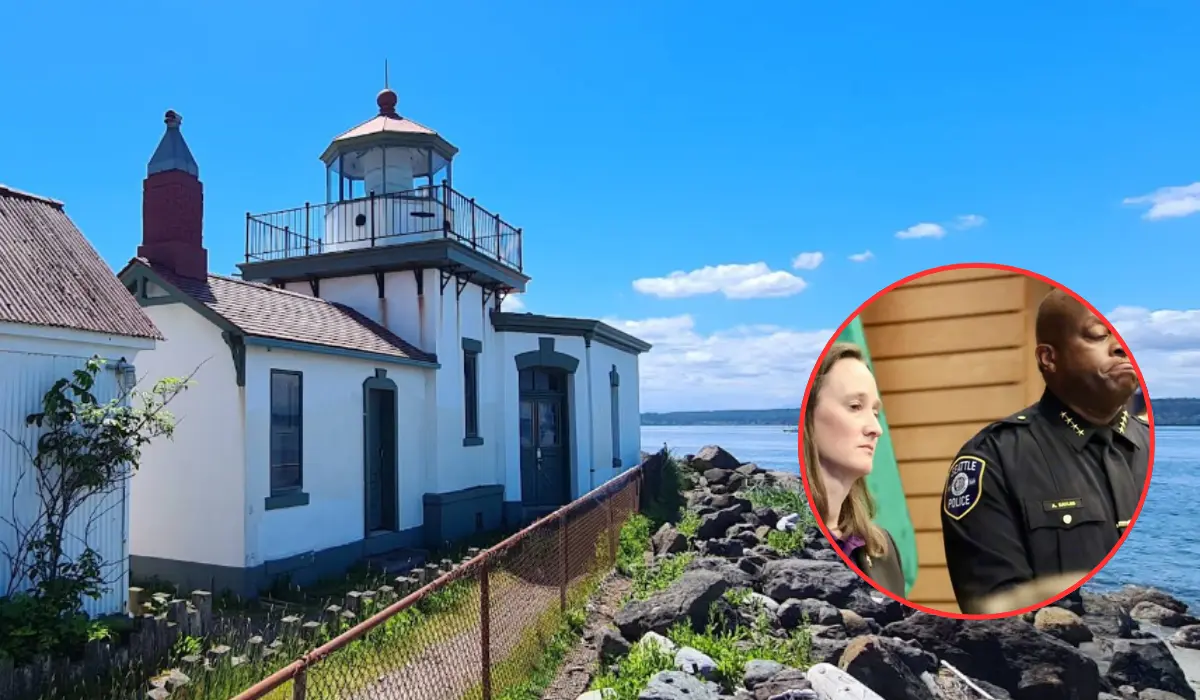
When questioned by The Center Square during her Tuesday press conference regarding whether the Seattle Police Department had received any immigration-related demands for video logs, Interim Police Chief Andre Sayles stated that no such requests had been made to his knowledge. Mayor Wilson immediately confirmed this position, stating:
“We have a policy in place so that if there were any request it would come to my desk. There has been no request that I’m aware of.”
What Did the New York University Policing Project Audit Reveal About Seattle’s RTCC?
The comprehensive review conducted by New York University School of Law’s Policing Project examined the operational structure and data governance of Seattle’s Real-Time Crime Center. The audit revealed multiple institutional oversight gaps within the existing CCTV framework.
According to reporting by The Center Square, the audit stopped short of issuing a directive on whether the city should expand its camera network, noting that infrastructure decisions ultimately rest with municipal leadership and the electorate. Instead, the Policing Project issued 19 core recommendations designed to safeguard civil liberties and data transparency.
These recommendations include establishing explicit usage policies governing when and how cameras may be operated, defining strict retention schedules for recorded video files, regulating inter-agency data sharing, and developing a public-facing monitoring dashboard. Mayor Wilson indicated her intention to adopt these framework guidelines as part of the phased rollout.
How Have City Council Members and Law Enforcement Evaluated the Camera Network?
The operational efficacy of Seattle’s surveillance network has been a subject of intense debate between the executive branch and the legislative branch. The city currently operates over 300 standalone CCTV cameras, alongside access to roughly 100 cameras distributed across nine police facilities and approximately 100 municipal traffic feeds.
During a separate afternoon press conference on Tuesday, City Councilmember and Public Safety Chair Bob Kettle addressed the logistical hurdles of turning municipal cameras on and off. As reported by The Center Square, Kettle stated:
“These cameras are not designed to be turned on and off. We need to move forward.”
Kettle highlighted operational vulnerabilities resulting from previous administrative delays, citing an August shooting outside a Pioneer Square bar and a recent investigation involving a suspected rideshare impersonator where nearby municipal cameras were non-functional.
When The Center Square asked Interim Police Chief Andre Sayles whether investigators had documented specific cases where a lack of CCTV coverage hindered casework, Sayles responded:
“I think the biggest thing is sometimes we get caught into the notion that we need cameras to solve crimes. We haven’t looked into that.”
Chief Sayles previously noted that RTCC-linked cameras and CCTV feeds supported 17 separate homicide investigations throughout the preceding year.
What Was the Public and Business Community Reaction to the Policy Shift?
The resumption of the camera expansion was welcomed by commercial coalitions and civic leaders who have advocated for enhanced security measures amid rising concerns over retail theft and street-level crime.
According to polling data released in August by the Seattle Metro Chamber and Challenge Seattle, roughly 75% of surveyed residents expressed support for expanded public safety camera installations, whereas only 34% registered confidence in Mayor Wilson’s overarching public safety strategy.
Following the mayor’s Tuesday announcement, former Washington Governor Chris Gregoire, serving as the Chief Executive Officer of Challenge Seattle, issued a supportive public statement. As reported by The Center Square, Gregoire stated:
“Residents and businesses have sent a clear message: they want our officers to have the tools to keep them safe. By moving forward with camera expansion, Mayor Wilson is taking a critical step toward a safer city.”
Despite greenlighting the reactivation of the Stadium District cameras, Mayor Wilson emphasized that the full procurement and installation process for new hardware—specifically targeting zones around Garfield High School and Capitol Hill—will take several months to complete. Concluding her remarks, Mayor Wilson cautioned against viewing technology as a singular panacea:
“So, I’m not here to say ‘the cameras are going to solve all our problems, they’re going to solve all our crimes, they’re going to prevent crime.’”
Background of the Particular Development
The expansion of closed-circuit television monitoring in Seattle represents a contentious intersection between municipal security modernization and progressive civil liberties advocacy. The city’s Real-Time Crime Center was established to aggregate disparate data streams, traffic feeds, and police facility cameras into a centralized monitoring hub intended to accelerate emergency response times and aid post-incident investigations.
However, Seattle’s history of strict municipal surveillance ordinances—including historical legal restrictions on automated license plate readers and facial recognition technology—has consistently subjected police monitoring programs to rigorous public scrutiny. When the Seattle City Council approved funding for expanded neighborhood CCTV installations in the 2026 municipal budget, ideological debates emerged regarding data privacy, potential over-policing, and the security of immigrant communities. Mayor Wilson’s initial decision to freeze the project reflected these community anxieties, leading directly to the commissioning of the NYU Policing Project audit that ultimately paved the way for Tuesday’s compromise.
Prediction: How This Development Can Affect Seattle Municipal Governance and Public Safety Strategies
The resumption of Seattle’s CCTV expansion under strict NYU Policing Project governance guidelines is projected to generate distinct administrative and operational outcomes across local law enforcement and civil rights monitoring bodies.
Impact on Law Enforcement Operations and Infrastructure Deployment
For the Seattle Police Department and the Real-Time Crime Center, the greenlight to proceed removes a major administrative roadblock, allowing engineers to resume physical camera mounting in high-traffic commercial corridors and school zones such as Capitol Hill and Garfield High School. While the procurement and installation cycle will take several months, the integration of these feeds will provide tactical units with broader situational awareness. However, commanders will be required to operate under tighter compliance frameworks, balancing the investigative utility of the network against strict internal auditing protocols.
Impact on Municipal Oversight and Privacy Governance
For civil rights advocates, the City Council, and the Mayor’s office, the implementation of the New York University Policing Project’s 19 recommendations will establish a new benchmark for municipal surveillance accountability in the Pacific Northwest. The mandate to create transparent data dashboards, restrict unauthorized inter-agency data sharing, and codify strict video retention limits will serve as a legal buffer against potential privacy violations. This dual approach—permitting infrastructural growth while institutionalizing external oversight—will likely become a policy template for managing public safety technology in politically progressive metropolitan jurisdictions.