
Key Points
- Public Consultation Initiated: The Washington State Department of Ecology has opened a 40-day public comment period running from 15 July 2026 to 24 August 2026 regarding a draft air quality permit for Sabey Data Center’s Building E expansion.
- Proposed Infrastructure: Sabey Data Center Properties seeks approval to install 14 emergency diesel generators rated between 2.25 and 2.5 MWe, alongside one smaller emergency diesel generator rated between 1.0 and 1.5 MWe at 4405 Grant Road, East Wenatchee.
- Projected Atmospheric Emissions: The expansion would permit additional annual emissions including 35.0 tons of nitrogen oxides ($\text{NO}_x$), 6.96 tons of carbon monoxide ($\text{CO}$), 2.1 tons of fine particulate matter ($\text{PM}_{2.5}$), 1.5 tons of volatile organic compounds ($\text{VOC}$), and 0.64 tons of toxic diesel engine exhaust particulate ($\text{DEEP}$).
- Regulatory Stance: Environmental regulators at the Department of Ecology have preliminarily determined that the proposal satisfies state safety regulations under Chapter 173-400 of the Washington Administrative Code (WAC) and intend to approve the Notice of Construction (NOC) application.
- Hearing Requests & Community Reaction: Local residents and environmental advocacy groups have raised formal objections citing toxic health risks, cumulative air quality impacts, lack of real-time monitoring, and agricultural concerns, requesting an online public hearing originally scheduled tentatively for 18 August 2026.
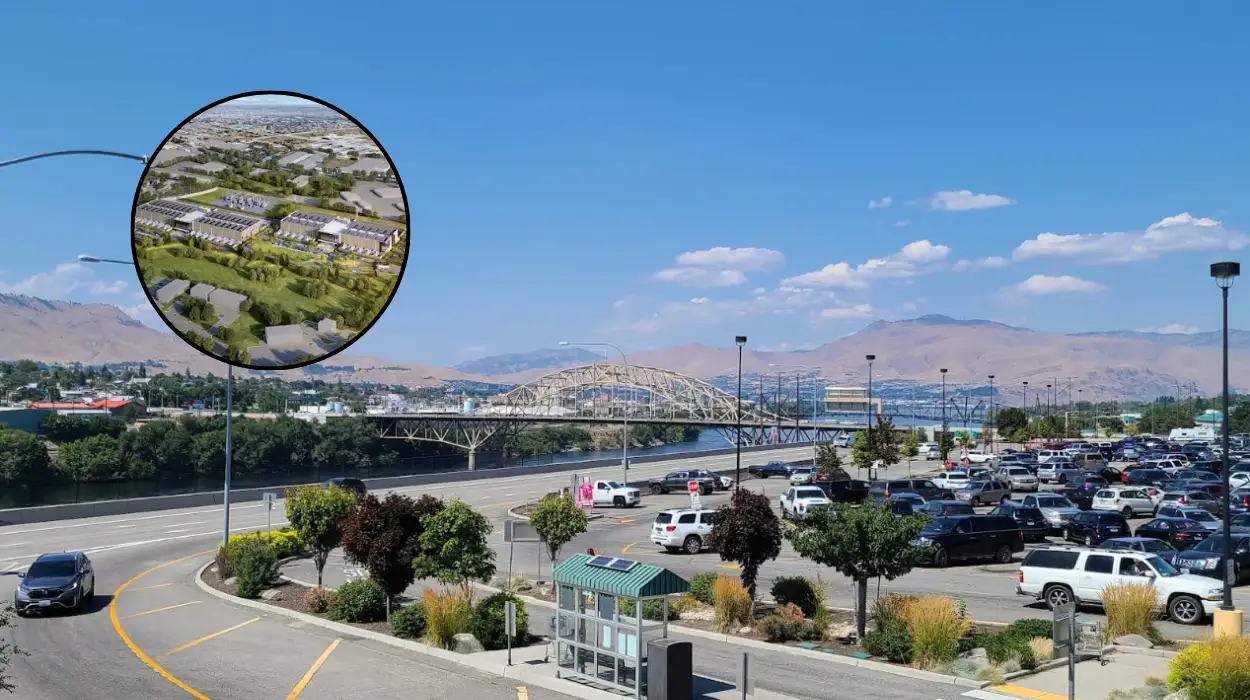
East Wenatchee (Evening Washington News) July 31, 2026 – State environmental regulators in Washington have formally invited public scrutiny on an application by Sabey Data Center Properties to expand its computational facility in Douglas County, opening a regulatory review window that runs through 24 August 2026. The Notice of Construction (NOC) draft air quality permit, published by the Washington State Department of Ecology, details plans for the installation of 15 industrial-scale diesel generators to supply backup emergency power to a newly constructed facility known as Building E, situated at 4405 Grant Road in East Wenatchee.
- Key Points
- What Are the Key Technical Details of the Proposed East Wenatchee Expansion?
- How Can the Public Participate and Request a Formal Hearing?
- Why Are Local Community Members and Advocacy Groups Expressing Concern?
- What Is the Historical Background of Data Center Expansion in Central Washington?
- How Can This Development Affect Local Residents, the Environment, and the Regional Economy?
What Are the Key Technical Details of the Proposed East Wenatchee Expansion?
As documented in official permit filings released by the Washington State Department of Ecology, the proposed expansion at the Intergate Columbia II campus involves the integration of 14 primary emergency diesel engines rated at 2.25 to 2.5 megawatt-electric (MWe) output each, complemented by a single 1.0 to 1.5 MWe auxiliary emergency unit.
These backup systems are designed to maintain server uptime during regional power grid interruptions.
As reported by regulatory specialist Ryan Vicente in technical evaluation documents for the Department of Ecology, the operation and routine maintenance testing of these combustion units will result in quantifiable atmospheric pollutant increases.
The state agency’s official technical support document outlines the following maximum allowable annual emission increases associated with the Building E project:
Under state legal frameworks governed by Chapter 173-400 of the Washington Administrative Code (WAC), the Department of Ecology completed a preliminary review confirming that the installation complies with established ambient air quality limits and technology-based controls.
Consequently, state officials have published a preliminary determination indicating an intent to issue the final approval order, subject to the outcome of the public consultation process.
How Can the Public Participate and Request a Formal Hearing?
According to guidelines published on the Department of Ecology’s public portal, written feedback regarding the draft air permit, Notice of Construction application, and Tier 2 Health Impact Assessment (HIA) will be accepted until 11:59 p.m.
PT on 24 August 2026. Members of the public can submit comments online via the agency’s dedicated portal or submit written documentation directly to project managers in Olympia and Yakima.
The agency also established a procedural framework for a tentative online public hearing scheduled for Tuesday, 18 August 2026, at 6:00 p.m. PT.
Under state rules, convening this oral testimony session was made contingent upon receiving significant public interest requests submitted prior to a 30 July deadline.
Spanish language translation services and accessibility accommodations were made available upon request to ensure broader community engagement across North Central Washington.
Why Are Local Community Members and Advocacy Groups Expressing Concern?
As recorded in public submissions filed on the Department of Ecology portal, local residents and regional environmental organisations have voiced strong opposition to the expansion proposal. Public health advocate Josh Martinez submitted a comment urging regulators to deny the permit, stating:
“These generators are not necessary and will be harmful to the environment… This plant will generate profits for one company while poisoning the water and air for millions of Washingtonians”.
Similarly, agricultural stakeholders in the greater Wenatchee and Columbia Basin region have raised flags regarding potential environmental overlap. Local resident Karen Kittelson submitted a formal objection highlighting the proximity of heavy industrial processing to regional food production, writing:
“The Quincy Washington area is a major farming area. There should not be a polluting entity such as a data center anywhere near a place that produces the food we eat”.
In addition, a petition campaign coordinated by community groups including Washington AI Resistance, No Data Centers NCW, and Wenatchee for Palestine has gathered signatures demanding comprehensive environmental review.
The petition documents allege that adding 15 new emergency engines to the 11 already operating at the Grant Road location—bringing the total to 26 diesel generators—will lead to localized air degradation.
Critics argue that diesel exhaust particulate ($\text{DEEP}$) and nitrogen dioxide ($\text{NO}_2$) concentrations could exceed state Acceptable Source Impact Levels ($\text{ASILs}$) during extended testing or emergency usage, potentially aggravating respiratory conditions such as asthma in vulnerable populations.
Objectors further contend that current permitting frameworks evaluate facilities in isolation, omitting cumulative air quality impacts from adjacent data centers operated by companies like Microsoft and Vantage, while lacking provisions for real-time continuous emissions monitoring.
What Is the Historical Background of Data Center Expansion in Central Washington?
The proliferation of high-density server infrastructure in North Central Washington spans over two decades, driven primarily by the abundance of low-cost, low-carbon hydroelectric power generated along the Columbia River system.
Municipalities across Douglas, Chelan, and Grant counties—including East Wenatchee, Wenatchee, and Quincy—became primary hubs for global technology conglomerates seeking energy-dense sites for cloud computing and artificial intelligence workloads.
Sabey Data Center Properties, a Seattle-based developer, established its presence in the region through large-scale developments such as Intergate Quincy and Intergate Columbia.
As noted by John Sabey, Senior Vice President of Real Estate, during the early phases of regional acquisition, the company viewed North Central Washington as a logical long-term extension for its digital infrastructure footprint due to fiber optic connectivity, municipal infrastructure, and regional community partnerships.
Over time, the rapid accumulation of server facilities across Central Washington necessitated extensive backup energy infrastructure.
Because commercial utility contracts mandate high reliability, data center operators rely heavily on utility-scale diesel generator arrays to prevent server downtime during potential electrical disruptions.
This dependence has drawn increasing oversight from the Washington State Department of Ecology.
Following legal challenges before the Pollution Control Hearings Board (PCHB) regarding aggregate toxic air contaminants, state regulators instituted Tier 2 Health Impact Assessments for facilities whose potential emissions exceed established trigger levels, requiring rigorous modeling of toxic air pollutants before construction permits are finalized.
Explore More Local News
Where Are Wildfires Burning In Washington State? Track Active Blazes (2026)
Four Juveniles Arrested After Armed Robbery Near Bellingham Cinema 2026
How Can This Development Affect Local Residents, the Environment, and the Regional Economy?
The outcome of the Department of Ecology’s permitting decision carries direct implications for several distinct stakeholder groups across East Wenatchee and the surrounding Columbia River basin:
- Local Residents and Public Health: If approved without additional emission mitigation requirements, nearby residents may experience incremental increases in localized ambient nitrogen dioxide ($\text{NO}_2$) and fine particulate emissions ($\text{PM}_{2.5}$) during periodic generator maintenance cycles. Communities in downwind sectors could face elevated baseline air quality risks, particularly during summer months when regional air quality is already compromised by wildland fire smoke and agricultural dust. Conversely, strict permit conditions capping annual operating hours (historically limited to roughly 55 to 100 hours per engine annually for maintenance testing) aim to keep long-term cancer risk well below the state’s statutory threshold of 10 in one million.
- Agricultural Sector and Local Environment: Agricultural producers in Douglas and Chelan counties maintain heightened sensitivity to industrial emissions. While emergency generators run infrequently, sustained expansion of fossil-fuel backup systems across the valley fuels ongoing debates over cumulative regional land use, soil deposit quality, and long-term environmental sustainability in prime orchard zones.
- Energy Grid Dynamics and Utility Consumers: The continuous physical growth of data centers places expanding structural loads on public utility districts, such as Douglas County PUD. While data center developments generate substantial commercial tax revenue and fund municipal infrastructure, high electrical demand compresses surplus generation capacity. Regional energy analysts indicate that rapid load growth could eventually necessitate costly transmission grid upgrades, influencing future electricity rate structures for residential and small-business ratepayers.
- Technology Sector and Clean Energy Transition: The regulatory decision will serve as an indicator for how Washington State balances its aggressive decarbonisation goals with the computational demands of expanding cloud computing and artificial intelligence infrastructure. A decision requiring Sabey to explore alternative clean backup energy options—such as battery energy storage systems or green hydrogen fuel cells—could set a precedent for future data center air quality permits across the Pacific Northwest.