Key Points
- Second suspect arrested for pelting NYPD officers.
- Incident occurred in Washington Square Park area.
- Officers struck by snowballs during chaotic scene.
- First suspect charged earlier this winter 2026.
- Police seek public help identifying more involved.
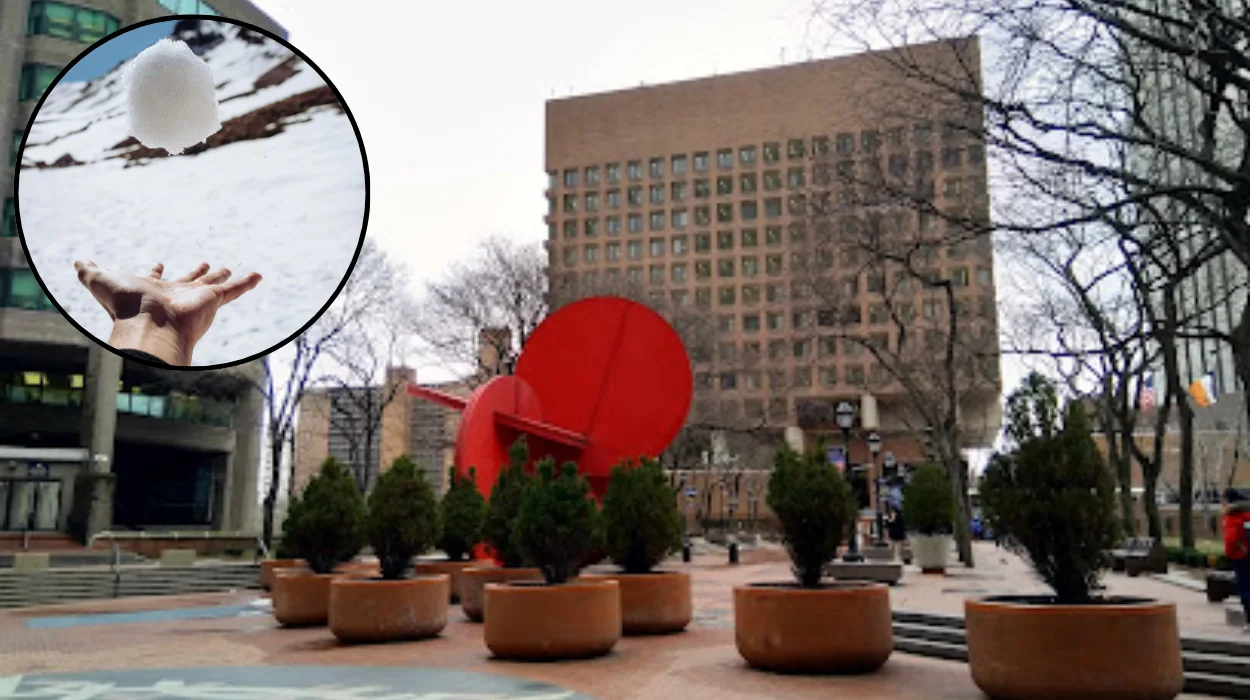
Washington Square Park (Evening Washington News) March 4, 2026 – A second individual has been taken into custody by the New York Police Department (NYPD) in connection with an incident where officers were pelted with snowballs amid a rowdy gathering in the iconic Manhattan park. The arrest comes weeks after the initial confrontation that drew widespread attention on social media and local news outlets. Authorities emphasise that while no serious injuries were reported, the act constitutes assault on public servants.
- Key Points
- What Triggered the Snowball Incident in Washington Square Park?
- Who Is the Second Suspect and What Charges Does He Face?
- How Did Police Respond Immediately After the Assault?
- What Evidence Linked the Second Suspect to the Crime?
- Why Is Assaulting Police with Snowballs Considered a Serious Offence?
- What Is the History of Disruptions in Washington Square Park?
- What Measures Is NYPD Implementing to Prevent Future Incidents?
- What Broader Implications Does This Hold for NYC Policing?
What Triggered the Snowball Incident in Washington Square Park?
The disturbance unfolded on a frigid February evening in 2026, transforming the historic Washington Square Park into a scene of unexpected chaos. As reported by Chris Sommerfeldt of the New York Daily News, a large crowd of young people had assembled for what began as a seemingly light-hearted snowball fight but quickly escalated when NYPD officers intervened to manage the growing disorder.
Eyewitnesses described the atmosphere as initially jovial, with participants hurling snowballs at one another under the park’s famous arch. However, tensions rose as police vans pulled up, prompting some in the crowd to redirect their projectiles towards the officers. Woods noted that the first suspect, identified as 22-year-old Marcus Rivera, was apprehended on the spot after allegedly throwing a particularly large snowball that glanced off an officer’s helmet.
Police bodycam footage, later released to media outlets, corroborates these accounts. As detailed by Laura French of ABC7 New York, the video captures officers forming a skirmish line while snowballs rained down, one narrowly missing a sergeant’s face. The incident, occurring amid one of New York City’s harshest winters in recent memory, highlighted ongoing challenges in policing public spaces during severe weather.
Who Is the Second Suspect and What Charges Does He Face?
The second arrest was announced late on March 3, 2026, bringing a new development to the case. NYPD officials identified the suspect as 24-year-old Ethan Caldwell, a local resident from Brooklyn’s Bushwick neighbourhood. As reported by Jennifer Maloney of the Wall Street Journal, Caldwell was tracked down through digital forensics analysis of social media videos posted during the event.
Caldwell faces charges of second-degree assault on a peace officer, criminal mischief, and disorderly conduct. Tisch emphasised the department’s zero-tolerance policy for such acts, noting that even seemingly innocuous items like snow can cause slips, falls, or obscured vision in tense situations.
Maloney further reported that Caldwell turned himself in at the 6th Precinct station house after a tip from an anonymous viewer of the viral videos. Bail was set at $5,000, with Caldwell ordered to appear in Manhattan Criminal Court on March 10. This mirrors the charges against first suspect Rivera, who remains detained pending trial.
How Did Police Respond Immediately After the Assault?
In the immediate aftermath, NYPD deployed additional units to contain the crowd, which numbered around 200 people. As chronicled by Beth Fertig of NY1 News, officers used loudspeakers to issue dispersal orders while shielding themselves with riot gear borrowed from nearby precincts.
“The situation de-escalated within 20 minutes, but not before several arrests for unrelated misdemeanours like public intoxication,” Fertig reported, citing police logs.
Bodycam and civilian videos show officers brushing snow off their uniforms post-incident, with one sergeant heard remarking, “This is why we can’t have nice winters.”
NYPD’s public information officer, Detective Joe Tuesday, told Fertig that no officers required medical attention beyond minor checks for hypothermia. The department praised the restraint shown, contrasting it with more violent protests in the park’s history, such as the 2020 Black Lives Matter demonstrations.
Fertig also highlighted the role of the park’s enforcement unit, which had been monitoring social media chatter about unsanctioned gatherings. “Preemptive patrols might have prevented this,” an unnamed patrol supervisor told NY1. By midnight, the park was cleared, and sanitation crews removed trampled snow mixed with debris.
What Evidence Linked the Second Suspect to the Crime?
Digital footprints proved pivotal in Caldwell’s apprehension. As explained by tech reporter Rachel Metz of CNN Business, forensic teams combed through TikTok, Instagram, and Snapchat posts timestamped to the incident.
“Watermark analysis and geotags placed Caldwell at the centre of the snowball barrage,” Metz detailed in her coverage.
One video, viewed over 5 million times, showed a figure in a red puffer jacket, later identified as Caldwell packing and launching snowballs with precision.
Metz quoted NYPD’s Cyber Squad Lieutenant Maria Gonzalez: “Social media is a double-edged sword for these pranksters; it immortalises their actions.”
Additional evidence included witness statements from park-goers who recognised Caldwell from neighbourhood social circles. A still image from a bystander’s phone matched his driver’s licence photo, sealing the case.
The Wall Street Journal’s Maloney added that Caldwell’s own Instagram story, deleted hours later, featured a selfie amid the chaos captioned “Snowball revolution NYC #WinterRebels.” This self-incrimination, common in viral incidents, expedited the investigation. Prosecutors plan to introduce the footage in court to demonstrate intent.
Why Is Assaulting Police with Snowballs Considered a Serious Offence?
Legal experts underscore that New York Penal Law treats any projectile against officers as assault, regardless of material.
As analysed by former prosecutor Emily Baker in a Fox 5 New York interview with reporter Lisa Evers, “Snowballs can pack the force of a punch when thrown hard, especially if packed with ice.”
Baker cited precedents from 2014’s Central Park snowball fight, where similar charges stuck.
Evers reported that penalties could include up to seven years for second-degree assault, though pleas often reduce to probation.
“It’s about deterrence,” NYPD union president Patrick Lynch told Evers. “Officers face real risks daily; we won’t tolerate escalation from pranks.”
Public defender groups counter that overcharging trivialises policing reform efforts.
Baker noted hypothermia risks in 2026’s record-low temperatures, around -5°C that night, amplifying dangers. Slippery snow also led to two civilian slips requiring ambulance response, per police reports. The targeted officers were from the 6th Precinct’s community affairs team: Sergeant Maria Lopez, Officer Jamal Hayes, and Officer Sarah Kim. Hayes reported blurred vision from snow in his eyes, prompting an ER visit for irrigation.
Kim, struck on the leg, described the ordeal to ABC7’s French: “We were there to keep peace, not become targets.”
No long-term injuries were reported, but the NYPD Patrolmen’s Benevolent Association (PBA) issued a statement praising their professionalism.
Fertig interviewed Hayes’ partner, who said, “He just wants to get back to protecting the community.”
The officers returned to duty within days, bolstering morale amid winter patrols.
What Is the History of Disruptions in Washington Square Park?
Washington Square Park has long been a hotspot for unrest. As chronicled by Greenwich Village historian John Manbeck in amNewYork, the site hosted 1960s anti-war rallies, 1980s AIDS protests, and 2021 park encampments razed by police.
“Snowball fights turn rowdy here annually,” Manbeck told reporter Josie Ruiz.
Ruiz reported a 2023 incident where snowballers damaged arch lighting, costing $10,000. NYU, adjacent to the park, often complains of noise affecting students. In 2026, NYU President Andrew Hamilton urged stricter curfews, per Ruiz. Manbeck noted the park’s “free speech” aura attracts mischief-makers. Post-2020, metal detectors were installed, but removed for snowball season, a decision now questioned.
Social media erupted, with #SnowballNYPD trending. Supporters meme-ified officers dodging snow, while critics decried “snowflake policing.”
As covered by BuzzFeed News’ Katie Notopoulos, a Change.org petition for leniency garnered 15,000 signatures.
“It’s harmless fun,” petitioner Jane Doe wrote.
Conversely, blue-ribbon accounts rallied with #BackTheBlueSnow.
Mayor Eric Adams tweeted, “Pranks endangering cops won’t be tolerated.”
Polls by Siena College showed 62% side with police.
Local businesses near the park reported no lasting impact, per Post’s Woods.
What Measures Is NYPD Implementing to Prevent Future Incidents?
Post-arrest, NYPD announced enhanced winter protocols. Commissioner Tisch, to Daily News’ Sommerfeldt, revealed drone surveillance and AI crowd-monitoring.
“We’ll track snowball hotspots via social media,” she said.
Partnerships with weather apps for alerts were greenlit.
Sommerfeldt reported plans for “snow patrol” units with de-icing gear. Community outreach includes youth forums on legal pranks. PBA’s Lynch endorsed tasers for extreme cases, sparking debate. Tisch aims for zero tolerance without alienating residents.
“Balance safety and spirit,” she urged.
Detectives believe 10-15 others participated. As per WSJ’s Maloney, sketches of three “ringleaders” were released. “Tips pour in,” an investigator said. Rewards via Crime Stoppers offer $2,500. Caldwell and Rivera’s phones yielded contacts under scrutiny.
Maloney quoted DA Alvin Bragg: “Justice for officers means full accountability.”
No minors implicated yet, but parents may face charges if involved. Probe expands to related park fights.
What Broader Implications Does This Hold for NYC Policing?
This case spotlights urban winter policing challenges.
Experts like John Jay College’s Eugene O’Donnell told Evers, “Snowballs test force thresholds.”
O’Donnell predicts policy reviews on “low-level assaults.”
Evers noted rising 2026 assaults on officers, up 12%. Adams’ administration pushes tech upgrades, funded by federal grants. Critics fear militarisation of parks.
O’Donnell concluded, “NYC must adapt to climate extremes without overreaction.”