
Key Points
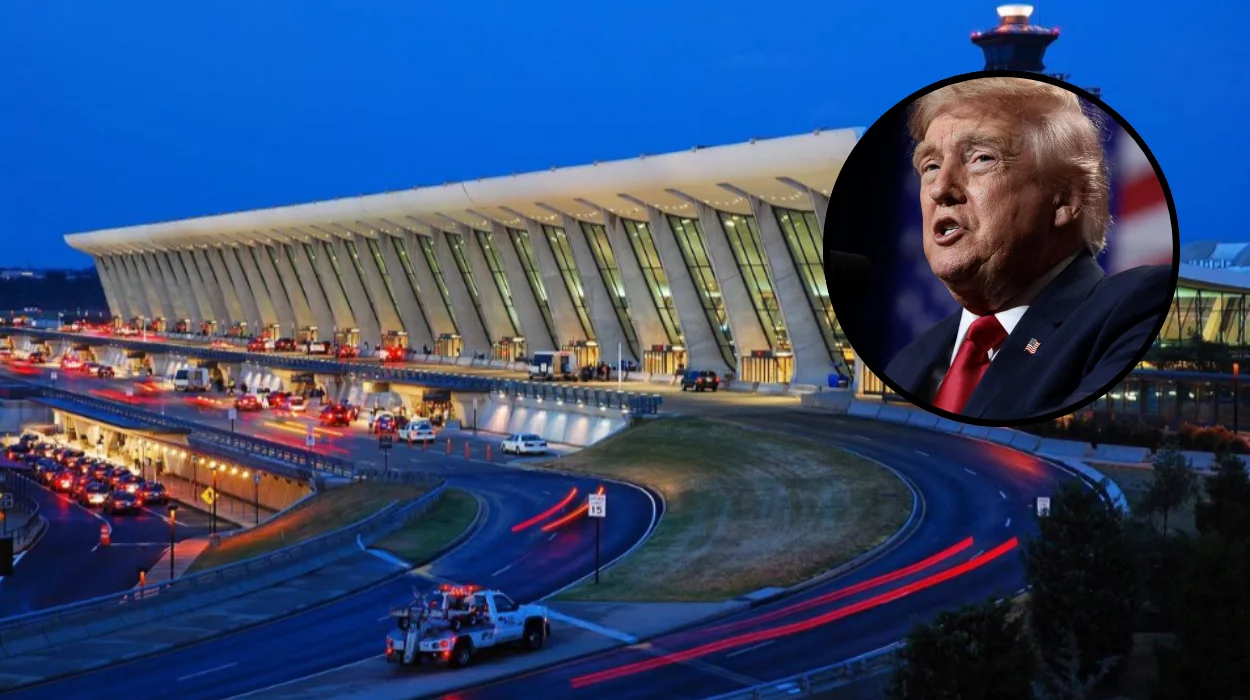
- Massive Investment: President Donald Trump has announced a $22.5 billion renovation plan for Washington Dulles International Airport.
- Infrastructure Overhaul: The project aims to eliminate the airport’s long-standing “people movers” (mobile lounges) in favour of a U-shaped underground AeroTrain network, a central walking tunnel, and additional moving walkways.
- New Additions: The proposal includes the construction of a massive, above-ground parking garage with 32,000 spaces located closer to the main terminal.
- Architectural Preservation: While Concourses C and D are slated for demolition—described by President Trump as “basic disasters”—the iconic original main terminal designed by Eero Saarinen will be preserved.
- Scope and Scale: The project involves over 5 million square feet of new or renovated space.
- Funding Model: Officials state the project will not rely on federal funding; instead, it will be financed through Metropolitan Washington Airports Authority (MWAA) bonds and contributions from airlines.
- Projected Timeline: Construction could potentially begin as early as next spring, with the overall goal of completing the work before the end of the President’s term in January 2029.
Dulles, Virginia (Evening Washington News) August 8, 2026 – President Donald Trump, joined by Transportation Secretary Sean Duffy and United Airlines CEO Scott Kirby, unveiled a sweeping $22.5 billion modernisation plan for Washington Dulles International Airport on Wednesday. Characterising the facility as the “worst airport” due to what he described as “crazy distances” for travellers, the President presented a vision to transform the gateway into a world-class travel hub. The project, which seeks to leave a lasting architectural mark on the nation’s capital region, aims to replace ageing infrastructure while preserving the facility’s historic main terminal.
- Key Points
- What are the major changes proposed for Dulles International Airport?
- Why has President Trump criticised the current state of Dulles?
- How will the $22.5 billion renovation be funded?
- Will the historic main terminal be demolished?
- What is the timeline for construction and implementation?
- What has been the reaction to the proposal?
What are the major changes proposed for Dulles International Airport?
The proposed renovation is one of the most significant infrastructure overhauls in recent U.S. history. As reported by The Independent, the plan focuses heavily on improving passenger flow and modernising the transit experience within the airport. The primary target of these upgrades is the removal of the “people movers,” the mobile lounge shuttles that have ferried passengers across the tarmac for decades and have long been a source of traveller frustration.
In their place, the administration proposes a U-shaped underground AeroTrain network, complemented by a central walking tunnel and a system of modern moving walkways. According to FOX 10 Phoenix, the project will add more than 5 million square feet of new or renovated space. Furthermore, the plan includes the construction of a 32,000-space parking garage situated significantly closer to the main terminal than existing facilities, aimed at streamlining arrivals and departures.
Why has President Trump criticised the current state of Dulles?
President Trump has been vocal in his disdain for the current layout of the airport, which he frequently labels as a “terrible” or “worst” facility. During his announcement, as noted by PBS News, the President used a laser pointer to highlight specific bottlenecks on conceptual renderings, emphasising the “crazy distances” that passengers are currently forced to navigate.
As reported by David Shepardson of Reuters, President Trump told the press,
“It’s considered one of the worst airports anywhere in the world; we’re going to make it maybe the best with some hard work.”
He further articulated that the reconstruction of what he termed the “horribly thought of” Dulles was a necessary step in his broader effort to ensure that Washington, D.C., is “safe and beautiful again.”
Explore More Airport News
WA Repeals Aircraft Luxury Tax – PNBAA Win (Washington 2026)
Dulles Airport: MWAA vs Trump $7B Plan Washington 2026
How will the $22.5 billion renovation be funded?
The question of financing a project of this magnitude has been a central focus of the announcement. While the figure of $22.5 billion is substantial, officials have clarified that the federal government does not intend to foot the bill.
According to FOX 10 Phoenix, the project is expected to be financed through municipal bonds issued by the Metropolitan Washington Airports Authority (MWAA). Additionally, the costs are expected to be shared by the airlines operating at the hub. Transportation Secretary Sean Duffy, speaking alongside the President, confirmed the financial structure of the plan, which seeks to leverage private and authority-level capital rather than direct federal taxpayer funding. This strategy follows a previous $7 billion capital plan already approved by the airport authority.
Will the historic main terminal be demolished?
A significant aspect of the renovation plan is the balance between modernisation and historical preservation. While the President has been aggressive in his criticism of the airport, specifically targeting Concourses C and D as “basic disasters” that are slated for demolition and replacement, he has remained committed to the preservation of the original main terminal.
As detailed by New Atlas, the main terminal was designed by the renowned Finnish-American architect Eero Saarinen in 1958. Celebrated for its dramatic silhouette and graceful elliptical form, the terminal is considered a landmark of mid-century design. The proposed plan ensures that this structure remains intact while the surrounding concourses are overhauled to accommodate increased capacity and modern amenities.
What is the timeline for construction and implementation?
The administration is eager to move quickly, aiming to leave a “significant mark on the Washington region” before the President’s term concludes in January 2029, as noted by The Independent.
According to wusa9.com, the proposed timeline suggests that construction could begin as early as next spring. Project leaders have expressed optimism that the massive overhaul can be completed with minimal disruption to daily airport operations. The goal is to synchronise the new construction with existing projects—such as the new Concourse E, which is already being developed under previous legislation—to ensure a cohesive, modernised facility.
What has been the reaction to the proposal?
The reaction to the announcement has been varied, reflecting both the excitement for much-needed infrastructure improvement and questions regarding the scale of the investment. As reported by Reuters, the proposal has raised questions regarding the potential impact on the cost of air travel, given that the financing relies on airport bonds and airline contributions.
Despite the President’s sharp criticism, industry data reflects a different narrative regarding the airport’s popularity. Reuters reported that Dulles was actually the fastest-growing large U.S. airport last year, handling a record 29 million passengers in 2025, representing a 6.4% increase. This statistical growth underscores the paradox of the airport: while it is criticised for its ageing transit systems and “jet fuel smell” (as highlighted by the Department of Transportation last December), it remains a vital and highly utilised international gateway.
The administration views this project as a legacy effort. Beyond the airport, the President is also pursuing other high-profile projects in the D.C. area, including a new ballroom for the White House and a monumental triumphal arch near the Lincoln Memorial. For supporters, the Dulles overhaul is seen as a necessary modernisation of the “front door” to the nation’s capital. For critics, the focus remains on whether the proposed $22.5 billion investment is the most effective way to address the infrastructure needs of a facility that is already experiencing record growth.
As the plans move forward, the Metropolitan Washington Airports Authority will face the complex task of integrating these ambitious designs into an active, high-traffic environment, all while managing the budgetary expectations of both the airlines and the travelling public. For now, the proposal stands as a bold, multi-billion-dollar statement of intent for the future of aviation in Northern Virginia.