Key Points
- Ferocious Wildfires: The Spokane Complex Wildfire broke out on August 1, 2026, spreading extremely fast from the wildlands to inhabited places in Eastern Washington, requiring the evacuation of more than 65,000 people and causing damage to many structures.
- Apostolic Visit: President Dieter F. Uchtdorf, Acting President of the Quorum of the Twelve Apostles, together with Elder Neil L. Andersen, a member of the Quorum of the Twelve Apostles, visited Spokane to provide spiritual consolation to those who survived the wildfire and also visit the members of the church residing there.
- Important Milestone: The apostolic visit was done during the last day of the 27th-anniversary of the dedication of the Spokane, Washington Temple, which had been built between August 21 and 23, 1999.
- Communal Efforts of Service: Missionaries from the Washington Spokane Mission gave more than 1,200 hours of volunteer time in the initial 17 days of the month of August, while the congregations wrote around 400 thank-you letters to the firefighters and emergency workers along with giving humanitarian assistance.
Favs News - Groundbreaking of a Temple: A significant event took place on August 29, 2026, when the groundbreaking ceremony of the new temple in Coeur d’Alene, Idaho took place.
Spokane (Evening Washington News) September 2, 2026 — Against the backdrop of scorched landscapes, displaced families, and extensive community grief left behind by destructive blazes in the Inland Northwest, local Latter-day Saints have found unexpected layers of faith, resilience, and comfort through high-level apostolic visits, grassroots humanitarian relief, and the forward-looking promise of sacred architectural milestones.
How did the Spokane Complex Fires impact the Inland Northwest community?
The crisis began when the Spokane Complex Fires erupted on August 1, quickly transitioning from rural wildland environments into heavily populated neighborhoods across Eastern Washington. As reported by Jennifer Hicks in FāVS News, more than 65,000 residents faced sudden evacuation orders at the height of the emergency, fleeing with little warning and leaving behind personal keepsakes, photographs, and lifetimes of accumulated property.
As detailed in local updates published by the Spokane Stake of The Church of Jesus Christ of Latter-day Saints, the fast-moving flames burned thousands of acres and destroyed or heavily damaged at least 600 structures, displacing families throughout the Spokane North Stake and the Mt. Spokane Stake. Evacuees were initially housed in temporary community shelters such as Spokane Falls Community College before operations shifted to the Spokane Convention Center, while the Spokane County Fairgrounds accommodated displaced animals.
In what ways did church members and missionaries respond to the disaster?
Despite enduring personal evacuations and property threats, local congregations mobilised swiftly alongside first responders, civil organizations, and neighborhood volunteers. According to data compiled by FāVS News, full-time missionaries serving within the Washington Spokane Mission contributed more than 1,200 hours of manual service during the first 17 days of August alone. Additionally, church members wrote approximately 400 letters expressing gratitude to firefighters and frontline emergency personnel.
As noted by FāVS News, church humanitarian aid reached diverse community organizations and tribal populations throughout Eastern Washington. Meanwhile, individual members engaged in quiet, day-to-day acts of kindness. Writing for FāVS News, Jennifer Hicks highlighted these gestures:
“Other acts happened quietly: a meal delivered, a displaced family welcomed into a home, debris cleared from a property, or someone simply sitting with a neighbor whose life changed in a matter of hours. In those moments, faith became something tangible.”
Leadership also moved quickly to protect and shelter the vulnerable. President Todd R. Kerr, president of the Washington Spokane Mission, confirmed that all full-time missionaries remained safe, while regional meetinghouses under the Spokane Coordinating Council opened their doors to shelter displaced individuals. Speaking on the importance of this outreach, Elder Jared M. Spataro, an Area Seventy for the region, stated as reported by the Spokane Stake Sentinel:
“During times of disaster, we are reminded that the Savior’s invitation to love and serve one another becomes even more meaningful. We are grateful for the many members, missionaries, community partners and first responders who are offering Christlike service to those affected by these fires.”
Echoing these sentiments, President Ronald D. Hardy, president of the Spokane North Stake, stated as noted by the Spokane Stake Sentinel:
“We continue to pray for all whose lives have been disrupted by these devastating fires. We are especially grateful for neighboring stake presidents and members who immediately opened their meetinghouses and communities to shelter displaced members and provide Christlike care during this difficult time.”
Explore More Spokane News
Adams Elementary Rebuild Advances Toward 2027 Opening in Spokane
Washington Wildfire Building Rules Deadlock in Washington 2026
Why was the apostolic visit on August 23 historically significant?
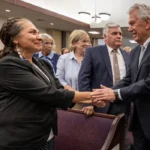
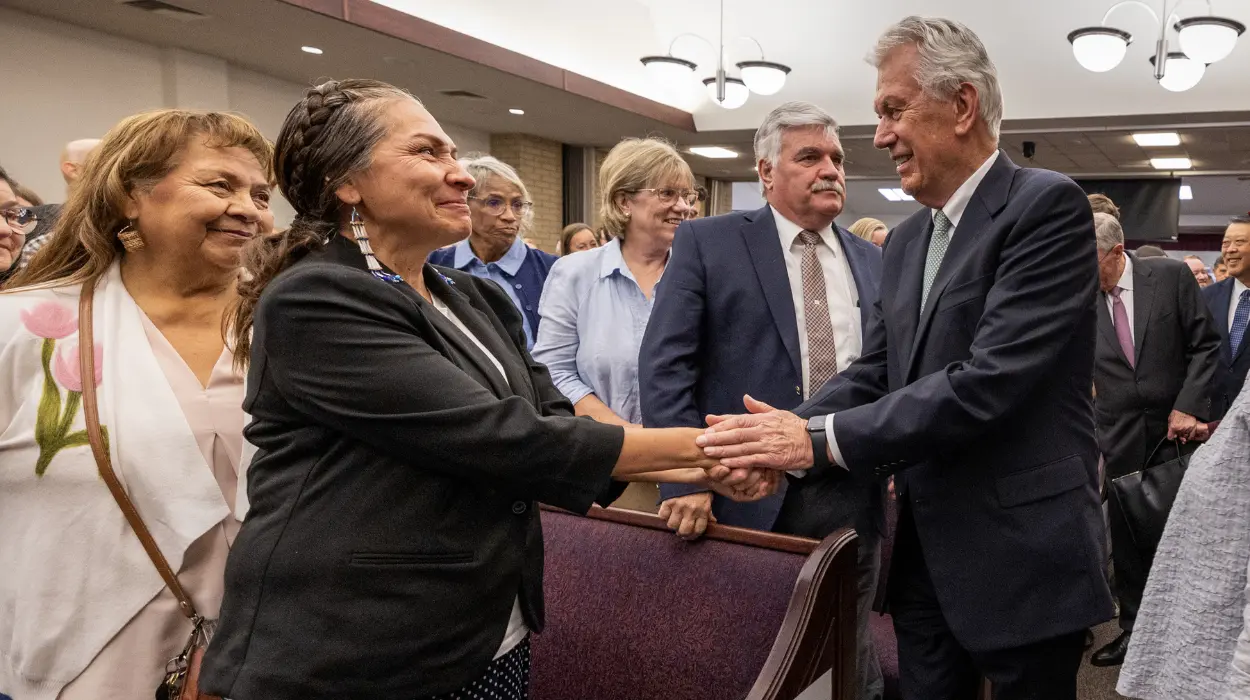
The unfolding crisis gained spiritual and emotional reinforcement on Sunday, August 23, 2026, when top-tier leadership from Salt Lake City arrived to minister directly to the traumatized populace. As reported by LDS Living and LDS Daily, President Dieter F. Uchtdorf, Acting President of the Quorum of the Twelve Apostles, and Elder Neil L. Andersen of the Quorum of the Twelve Apostles traveled to Spokane to lead a special regional meeting and survey the charred neighborhoods.
Roughly 1,300 people packed the Spokane Washington North Stake center for the Sunday morning gathering, while the proceedings were broadcast to multiple stakes across the region. The timing of the visit carried profound symbolic weight. Exactly 27 years prior, on August 23, 1999, the community had concluded the final day of the original three-day dedication for the Spokane Washington Temple.
Addressing the grieving congregation, President Uchtdorf offered messages centred on faith, eternal perspective, and the peace found through Jesus Christ. As documented by LDS Living, President Uchtdorf stated to the congregation:
“My dear brothers and sisters, it’s indeed a great honor to be in your presence. We’re all friends in the gospel of Jesus Christ. We’re all brothers and sisters. When we heard about your suffering, your losses, your pain, your uncertainties, our hearts reached out to you.”
President Uchtdorf further emphasized how hardship reshapes human character when met with collective support. As reported by LDS Daily, President Uchtdorf noted:
“Sometimes we can recognize that these moments of suffering can lift us up to totally new heights.”
Sister Harriet Uchtdorf, accompanying her husband on the trip, shared her deep humility regarding how local residents handled their tragedy by looking outward rather than inward. As covered by LDS Daily, Sister Uchtdorf remarked:
“For me, it was very humbling to see those people today and to see how they interact with each other, how they helped each other out. One sister told me that I have a new purpose right now to help my neighbors because I’m the one whose house is still standing. I am the one who now can help.”
Jennifer Hicks of FāVS News underscored the poignant contrast of the apostolic ministry arriving not for a celebratory anniversary gala, but directly amid deep regional suffering. Hicks observed that while faith does not act as a shield against natural disasters or prevent the destruction of homes, it dictates how individuals respond in the aftermath. Writing in FāVS News, Hicks noted:
“Rather, faith asks what we will do when those things come: where we will turn, whom we will serve and whether we can continue to hope when the landscape around us looks very different from the one we knew before.”
How does the Coeur d’Alene temple groundbreaking mark a turning point?
Even as families face a protracted recovery process involving insurance claims, temporary housing, and structural debris removal, the region experienced another major milestone just days after the apostolic visit. On August 29, 2026, formal construction began with a ground-breaking ceremony for a new temple in Coeur d’Alene, Idaho.
Writing for FāVS News, Jennifer Hicks framed the juxtaposition between regional disaster and spiritual renewal as a central narrative for local believers:
“After such a severe trial, the promise of another house of the Lord rising in the Inland Northwest seems somehow sweeter.”
While the emotional and physical healing across Eastern Washington will take months and years to complete, journalists and community chroniclers note that the convergence of an anniversary remembrance, apostolic presence, and a new temple groundbreaking has provided residents with a powerful anchor. As observed by FāVS News, the events of late August 2026 demonstrate that while disasters can drastically alter physical geography overnight, the collective capacity for human compassion and enduring faith offers a permanent vision toward recovery.