Key Points
- Air Quality Alert Level: The air quality alert level has been declared officially by the National Weather Service (NWS) for Spokane, Washington, concerning Central Washington.
- Affected Areas: The alert has been declared for Chelan, Douglas, and Okanogan counties.
- Duration: The advisory was implemented at 12:07 PM Saturday and will stay in effect till 12:15 PM Sunday.
- Key Reasons: The degraded condition is mainly due to particulate matter (PM2.5) because of regional wildfires.
- Wider Meteorological Background: There have been additional concerns of severe weather, including fire weather warnings and thunderstorm warnings with damaging winds in Eastern and Central Washington.
Spokane (Evening Washington News) August 29, 2026 – Central Washington inhabitants woke up to increasingly hazardous atmospheric conditions this weekend as regional authorities implemented urgent safety measures to counter drifting smoke.
- Key Points
- Why Was An Air Quality Alert Issued For Central Washington?
- Which Specific Counties And Communities Are Affected?
- How Do Regional Wildfires Feed Into This Environmental Crisis?
- What Other Severe Weather Threats Accompanied The Alert?
- What Precautions Are Authorities Recommending For Residents?
According to reports published by meteorological desks and syndicated news teams, the National Weather Service office in Spokane formally established air quality advisories across multiple counties as particulate pollution levels climbed dangerously.
The ongoing crisis highlights a precarious ecological landscape driven by persistent regional blazes, compounding anxieties for local populations already navigating a tense wildfire season.
Why Was An Air Quality Alert Issued For Central Washington?
Explaining the immediate triggers behind the bulletin, meteorologists detailed that atmospheric stagnation and continuous smoke production from active fires necessitated direct state intervention. As reported by weather correspondents of The News Tribune, the NWS Spokane, WA office specified that the air quality alert was officially put into effect starting Saturday afternoon at 12:07 PM, running continuously through Sunday afternoon at 12:15 PM.
The advisory serves as a vital safeguard for residents living in the path of heavy particulate matter, which poses immediate respiratory risks. State agencies emphasized that fine particles, commonly categorized as PM2.5, can easily penetrate deep into the lungs and bloodstream, creating significant health hazards for vulnerable demographics, including children, the elderly, and individuals with pre-existing respiratory conditions.
Which Specific Counties And Communities Are Affected?
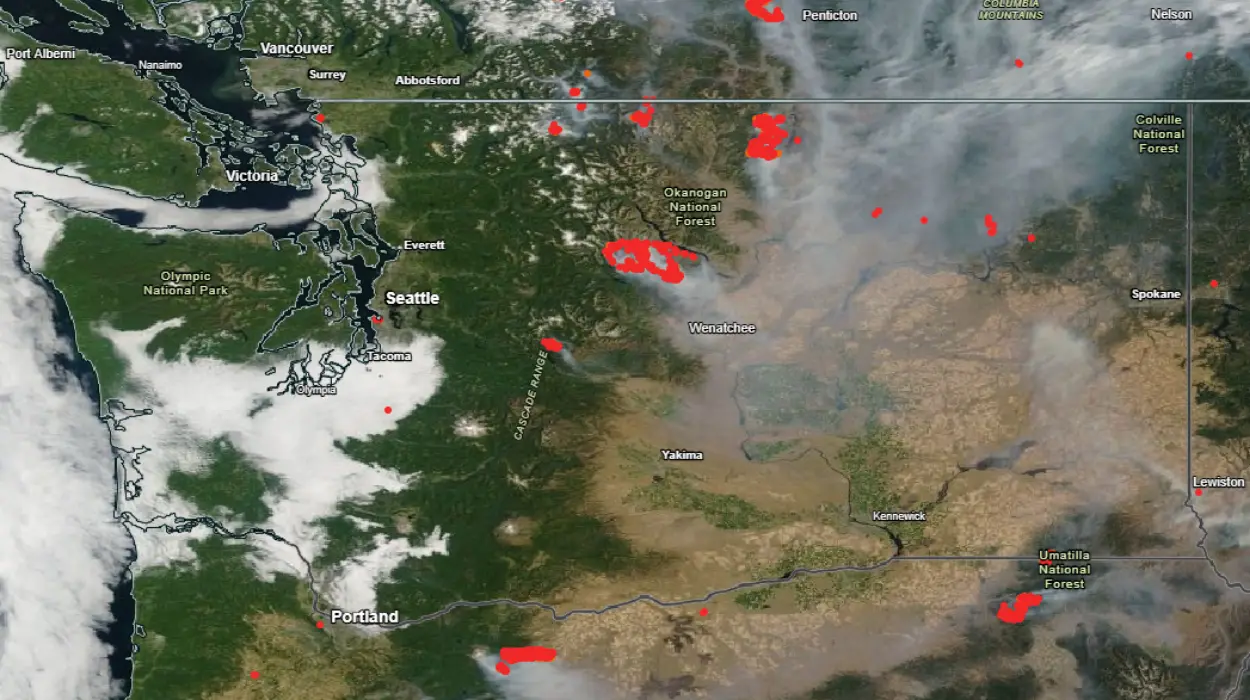
Detailing the geographical footprint of the advisory, official bulletins confirmed that the warning is tightly concentrated around the north-central districts of the state. As outlined by weather reporting teams at The News Tribune, the alert spans across “Chelan, Douglas and Okanogan counties.”
These regions encompass major valleys, river communities, and mountain towns historically prone to thermal inversions that trap wildfire smoke close to the ground. Local authorities across these jurisdictions have urged populations to monitor real-time air quality monitors closely, restrict outdoor physical exertion, and seal indoor environments to minimize toxic inhalation.
Explore More Weather News
Seattle Weather Forecast: Weekend Rain and Sunbreaks in Seattle 2026
Seattle Weather Brings Cooler Showers and Mountain Storms 2026
How Do Regional Wildfires Feed Into This Environmental Crisis?
Examining the root causes behind the recurrent smoke alerts, environmental analysts note that active fires along the Cascade Range and surrounding timberlands continue to generate massive plumes. As detailed in regional meteorological breakdowns cited by The News Tribune and allied regional outlets, particulate pollution remains a persistent byproduct of both ongoing local fires and transboundary smoke drifting from adjacent states and British Columbia.
The interaction between high seasonal temperatures, dry vegetative fuels, and shifting transport winds has created a volatile cycle. While daytime heating sometimes helps lift surface smoke temporarily, nighttime cooling frequently causes the dense haze to settle back down into lower-elevation river basins and mountain valleys, worsening localized air pollution indices.
What Other Severe Weather Threats Accompanied The Alert?
Beyond the immediate particulate hazards, emergency managers have had to contend with a compounding sequence of volatile weather phenomena across Eastern and Central Washington. As documented in weather updates from The News Tribune, the weekend disruptions followed closely on the heels of other severe advisories, including localized forecasts warning of damaging winds and thunderstorms sweeping through parts of Eastern Washington.
Earlier in the week, forecasters also tracked critical fire weather conditions, issuing targeted fire weather watches for features like the Okanogan Valley and the Waterville Plateau. These overlapping atmospheric threats—ranging from lightning-producing thunderstorms to high-velocity outflow winds—have continuously complicated firefighting efforts and heightened the risk of rapid fire propagation across parched terrain.
What Precautions Are Authorities Recommending For Residents?
With health officials rating air quality at concerning thresholds in affected zones, public safety guidelines remain strict. As emphasized by health specialists referenced in regional disaster response logs, residents residing within Chelan, Douglas, and Okanogan counties are advised to take active shelter, utilize indoor air filtration systems, and avoid unnecessary travel through heavily smoked corridors.
As meteorologists and news organizations continue to track the trajectory of the smoke plumes and shifting wind patterns, local emergency management agencies maintain that further extensions or updates to weather advisories will be issued should atmospheric stability fail to improve.