Key Points
- Inspection contractor Applied Technical Services LLC warned Nippon Dynawave Packaging Company that a major chemical tank was “not fit for continued service unless corrected” nearly 10 months before it ruptured in May 2026.
- The tank failure at the Longview, Washington, paper mill released about 900,000 gallons of white liquor and killed 11 workers, making it one of the deadliest modern industrial disasters in U.S. history.
- Federal investigators said Nippon Dynawave received repeated warnings about severe wall thinning in July 2025, October 2025 and February 2026, but did not carry out internal repairs, take the tank out of service or reduce its capacity.
- The Washington Department of Ecology recently cited Nippon Dynawave for 35 environmental violations following the disaster.
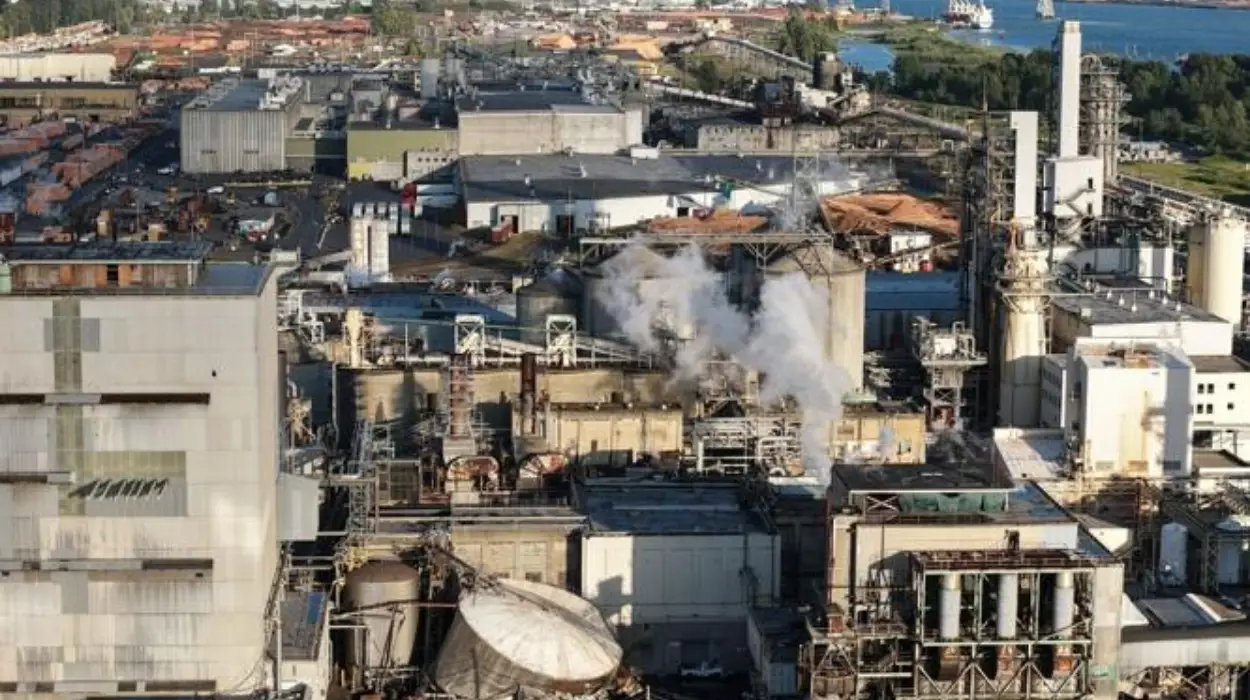
Longview (Evening Washington News) August 28, 2026 — An independent federal update released on Friday revealed that an industrial chemical tank responsible for a catastrophic and deadly disaster at a Washington state paper mill had been flagged as critically unsafe nearly a year before it ruptured.
- Key Points
- What did the federal investigation reveal about the tank’s condition prior to the disaster?
- How did Nippon Dynawave respond to the inspection warnings?
- Exactly how did the catastrophic failure unfold on May 26?
- What were the immediate human and safety consequences inside the plant?
- What broader regulatory penalties and environmental fallout are facing the company?
As reported by journalist Claire Rush of the Associated Press (publishing via the Yakima Herald and other regional outlets), the U.S. Chemical Safety Board (CSB) disclosed that inspection contractors had warned the Nippon Dynawave Packaging Company that the vessel was “not fit for continued service”.
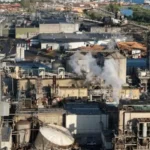
The tragic May 26 failure at the Longview facility unleashed a torrent of corrosive chemical liquid that blew out building walls, flooded operational courtyards, and claimed the lives of 11 workers.
What did the federal investigation reveal about the tank’s condition prior to the disaster?
According to findings detailed by CSB investigators, inspection contractor Applied Technical Services LLC evaluated the exterior of the massive industrial container in July 2025 and discovered “significant thinning” below the minimum safe thickness across its lower regions. As noted by the federal report, this safety metric measures a tank’s critical capacity to support its own structural weight and contain internal liquid pressures.
As reported by the Associated Press, the July 2025 inspection report explicitly categorized the hazards under
“Priority 1: Not fit for continued service unless corrected,”
highlighting a
“high likelihood/consequence of failure (or) critical code/standard deficiency”.
The contractor’s assessment explicitly stated,
“Owner should plan to have an internal inspection performed in order to determine the extent of the required repairs. It’s likely that the entire shell course should be replaced”.
Despite these stark warnings, follow-up external inspections conducted by the same contractor in October 2025 and February 2026 repeatedly confirmed that large sections of the tank remained dangerously below safe thickness parameters.
How did Nippon Dynawave respond to the inspection warnings?
Investigators found that the management at Nippon Dynawave Packaging Company did not execute any internal inspections or structural shell repairs between the initial July 2025 warning and the fatal accident in May 2026. Furthermore, federal authorities emphasized that the business failed to take vital operational precautions.
As stated by the CSB,
“The company also did not remove the tank from operation or derate the tank for reduced service”.
Voicing profound alarm over these oversights, CSB Chairperson Steve Owens stated in an official release that
“we are greatly concerned that the tank was not promptly removed from service or properly repaired after the clear findings in the inspection report”.
When contacted for comment following the release of the federal update, a representative answering the phone at the Nippon Dynawave plant in Longview declined to speak, and email inquiries sent to corporate management received no immediate response.
Explore More Local News
Tacoma secures $4.6M police grant amid deficit concerns in Tacoma 2026
Can Seattle Teachers Legally Strike? What WA Law Says Seattle 2026
Exactly how did the catastrophic failure unfold on May 26?
The tragedy struck during the early morning hours just as workers were arriving for their shifts. According to the CSB timeline, a facility vessel known as a digester was taken offline for maintenance shortly before 2:00 a.m. on May 26. Because the digester was closed, the transfer of white liquor from the storage tank was halted; however, production streams continued pumping more liquid into the tank.
By approximately 6:20 a.m., the vessel approached maximum operational capacity, and it structurally failed less than an hour later. The rupture discharged roughly 900,000 gallons of white liquor—a highly caustic blend primarily composed of sodium hydroxide and sodium sulfide utilized in pulping and paper manufacturing.
The sudden wall collapse and chemical flood crushed onsite vehicles, blew out structural walls, and poured directly into the lower levels of nearby buildings where staff were holding morning gatherings.
What were the immediate human and safety consequences inside the plant?
The human toll of the disaster was devastating. Investigators confirmed that all eight workers inside the facility’s electrical maintenance shop, alongside one worker stationed in the courtyard, died instantly. In an adjacent mechanical maintenance shop, five employees and their foreman managed to escape, though two were fatally overcome by severe chemical exposure while trying to flee. Several other survivors sustained critical chemical burns and inhalation injuries.
The federal report also highlighted critical miscommunications during the emergency response phase. According to the CSB, when the company radioed its internal medical response team, it failed to inform responders that a massive spill of white liquor had occurred. Consequently, a team member rushed into a large chemical pool under the impression that it was ordinary water, sustaining severe chemical burns in the process.
What broader regulatory penalties and environmental fallout are facing the company?
In addition to the ongoing federal safety probe by the CSB, the regulatory net has tightened around the facility’s operators. Earlier in the week preceding the CSB report update, the Washington Department of Ecology formally issued notices citing Nippon Dynawave with 35 distinct environmental violations. These infractions target failures linked to the facility’s strict environmental waste laws as well as state-monitored air and water quality compliance frameworks.
While state agencies and the U.S. Environmental Protection Agency continue assessing the environmental footprint of the massive chemical discharge into local drainage channels and surrounding ecosystems, the CSB’s comprehensive investigation remains active. Federal safety officials indicated that a complete, final report outlining all root causes, organizational oversight failures, and formal safety recommendations will be published upon the conclusion of the probe.