Key Points
- The total wildfire acreage in Washington state has doubled since the end of July, jumping from 425,000 burned acres to 851,557 scorched acres.
- In total, there have been 1,456 wildfires in the current season.
- Catastrophic fires in the region of Spokane, beginning on August 1, have destroyed more than 830 houses and buildings.
- The damage from Spokane Complex Fires was estimated by Spokane County Assessor Tom Konis at more than $1 billion and may become the costliest wildfires in Washington’s history.
- The data from the whole state show that 18 large fires are still burning, managed by the Department of Natural Resources of the state.
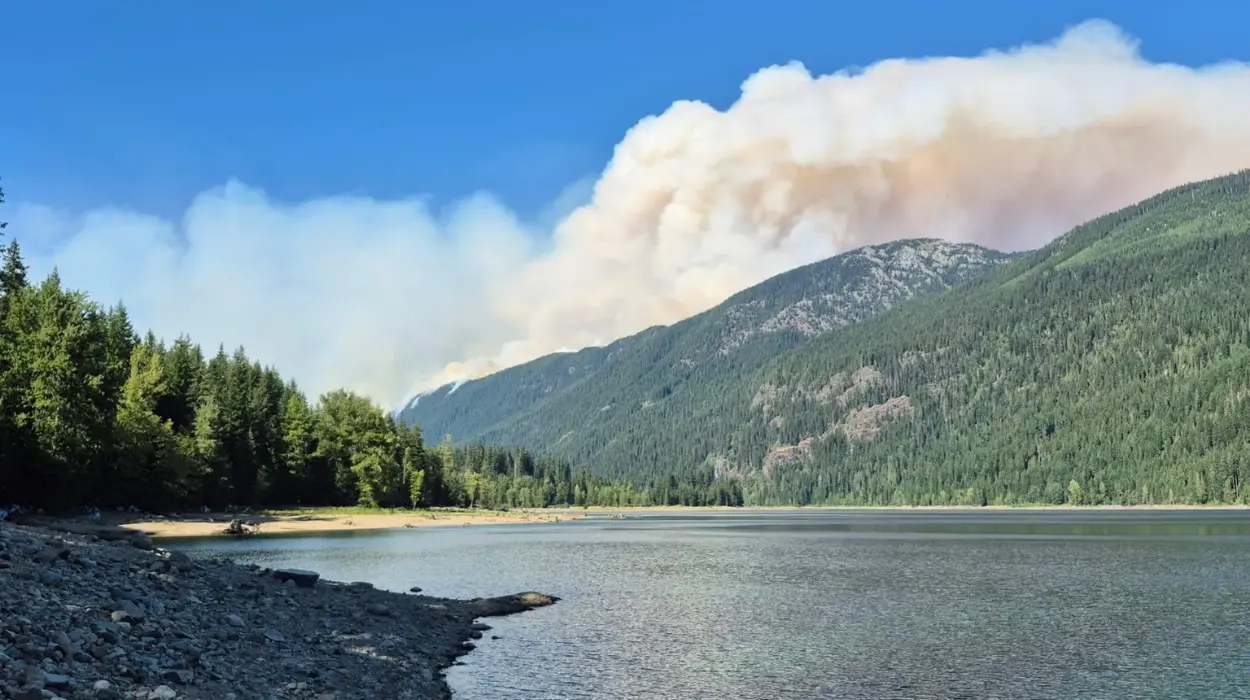
- Among major fires are the Sinlahekin and Little Giant fires in north-central Washington state, with both fires exceeding 150,000 acres in addition to smaller fires near Snoqualmie Pass.
- Washington and Oregon states together already have surpassed historical records for burned acreage in one wildfire season, according to the climate scientist Daniel Swain.
- Preparedness Level 5 is the highest on the scale and represents stretched firefighting resources for the state of Washington.
- The relief comes in relation to smoke in Western Washington, where onshore winds, as forecasted by the National Weather Service meteorologist Melissa Gonzalez-Fuentes, will move smoke east of the Cascades.
- September is the month when a high risk of fires continues due to severe dry vegetation and burn bans enforced throughout the state.
Washington (Evening Washington News) August 28, 2026 — Washington state’s wildfire season has deteriorated dramatically over a four-week window, with total scorched acreage doubling since the end of July as relentless drought and severe dry conditions fuel an unprecedented environmental crisis.
How severe is the destruction in Spokane County?
The human and physical toll has concentrated heavily around Spokane, where fast-moving fires ignited on August 1. According to Spokane County Assessor Tom Konis, speaking to the Spokesman-Review, the blazes have destroyed more than 830 homes and residential structures.
As reported by Tom Konis of the Spokesman-Review, the structural and economic damage from the Spokane Complex fires is expected to surpass $1 billion, a threshold that will officially position the event as the most expensive wildfire disaster in Washington state history.
What are the latest statewide fire statistics?
Aggregated state and regional fire data reveals that Washington has logged 1,456 individual wildfires, resulting in 851,557 scorched acres. This figure represents a doubling of the 425,000 acres that had burned as of July 31.
According to data compiled by the state Department of Natural Resources’ wildfire dashboard, 18 large fires continue to burn unchecked across various jurisdictions. Among the most aggressive are the Sinlahekin and Little Giant fires located in north-central Washington, each having devoured upwards of 150,000 acres. Meanwhile, closer to major population centers near Seattle, the Three Queens, King, and Goat fires have combined to scorch more than 10,600 acres just east of Snoqualmie Pass in Kittitas County.
Explore More Local News
Deadly Chemical Tank Rupture Investigation, Longview 2026
Tacoma secures $4.6M police grant amid deficit concerns in Tacoma 2026
Are regional climate records being broken?
The crisis extends far beyond local boundaries, straining regional ecosystems across the Pacific Northwest.
As stated by climate scientist Daniel Swain, Washington and Oregon combined have already broken the historical record for total acreage burned in a full wildfire season. Swain noted that this intensity is heavily driven by extended drought conditions and compounding seasonal heat anomalies.
Reflecting the severity of the emergency, Washington remains fixed at Preparedness Level 5, the highest tier on the national scale, indicating that state and federal firefighting resources are heavily committed and stretched to their limits. Evacuation orders and forest closures remain strictly enforced around multiple active fire perimeters.
Is there any relief expected for smoke and weather?
While active fire fronts continue to rage, Western residents can expect temporary relief from atmospheric pollution.
As reported by Melissa Gonzalez-Fuentes, a meteorologist for the National Weather Service in Seattle, favorable onshore winds are expected to keep the bulk of the dense wildfire smoke pushed east of the Cascades through at least the middle of next week.
What challenges lie ahead for September?
Emergency managers and environmental authorities are maintaining maximum alert statuses as hazardous weather conditions persist.
State officials emphasize that September historically ranks as one of Washington’s most volatile and dangerous months for wildfire proliferation. With vegetative fuels thoroughly dried and primed to burn, a comprehensive statewide ban on all outdoor and agricultural burning remains rigidly enforced to prevent further human-sparked catastrophes.