Key Points
- Mass Hunger Strike Concluded: More than 140 detainees across two housing units (G3 and G4) at the Northwest ICE Processing Center (NWIPC) in Tacoma ended a week-long hunger strike.
- Core Grievances: The protest was sparked by severe complaints regarding inedible, unnutritious food—including meals allegedly containing burned plastic, metal strings, rope, splinters, hair, worms, and raw meat—alongside irregular meal schedules, unsafe drinking water, black mold, improperly cleaned laundry, and medical neglect.
- Facility Record: According to grassroots immigrant-rights organisation La Resistencia, this event marked the 20th hunger strike at the Tacoma facility this year, surpassing last year’s total of 16.
- Concessions Won: As reported by The Seattle Times, GEO Group—the private prison corporation that owns and operates the facility—promised new food options and larger portions, leading detainees to call off the strike over the weekend.
- Congressional Intervention: U.S. Representatives Maxine Dexter (D-OR) and Emily Randall (D-WA) conducted an unannounced oversight visit to the facility on Saturday amid concurrent protests outside, though they reported being restricted from accessing medical care areas.
- Official Responses: GEO Group stated that while it manages food services, U.S. Immigration and Customs Enforcement (ICE) oversees healthcare. Meanwhile, ICE spokesperson Jason Chudy dismissed claims of subprime conditions as “FALSE” in an email statement provided to The Stranger.
Tacoma (Evening Washington News) August 21, 2026 — More than 140 people detained at the immigration processing facility in Tacoma have officially concluded a nearly week-long hunger strike directed at demanding improved food quality and adequate medical care.
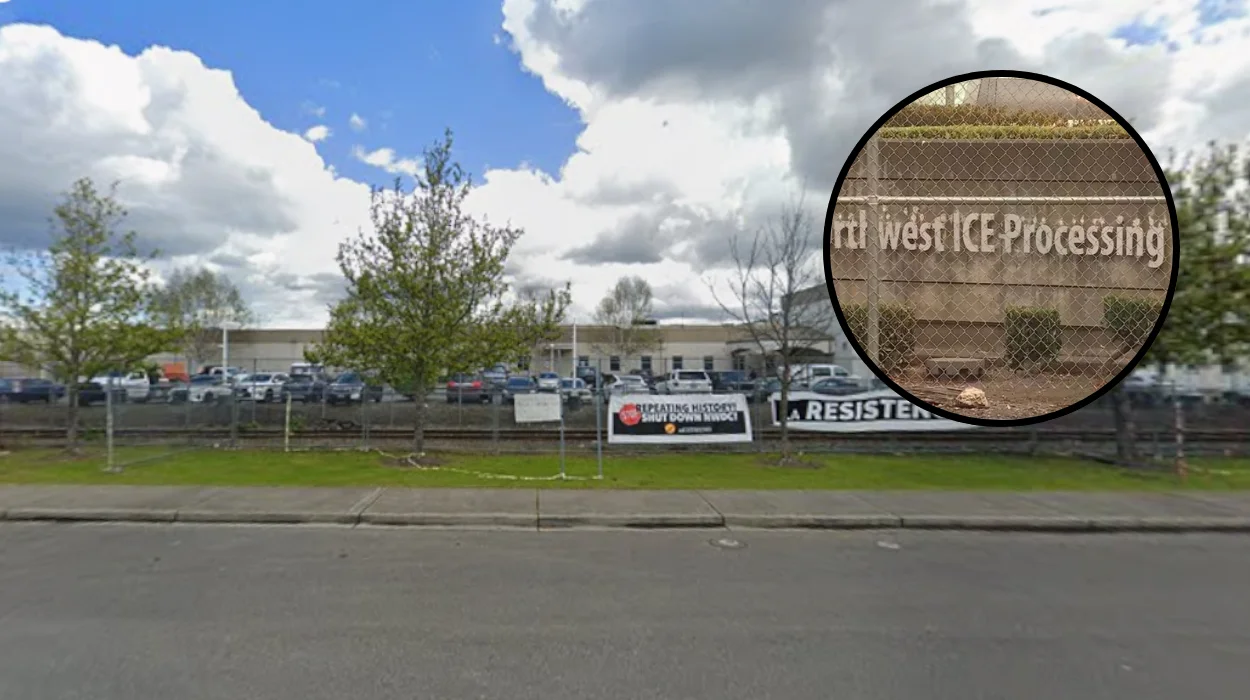
The protest took place inside the Northwest ICE Processing Center (NWIPC)—frequently referred to as the Northwest Detention Center—located in Tacoma, Washington. This recent demonstration marks the 20th hunger strike to transpire at the facility this year, highlighting escalating tensions over living conditions within the privately run institution. Detainees initially launched the strike in unit G3, and were joined the following morning by individuals in unit G4, sustaining the protest for five and six days respectively before securing concessions from management.
Why Did Detainees Launch the Hunger Strike?
According to reporting by The Seattle Times, individuals in custody initiated the strike after enduring severe grievances regarding the daily standard of living inside the facility. Strikers reported being served food that was not only unnutritious and served at irregular hours—with dinner frequently arriving after midnight—but also contaminated.
As documented by The Seattle Times, those in custody suffered from being served meals that contained foreign objects, specifically citing items such as
“burned plastic, metal string, rope, splinters, hair, and worms”.
Additional persistent complaints involved raw meat being distributed, inadequate medical services, unsafe drinking water, black mold, and improperly cleaned laundry. Due to the poor quality of facility-provided meals, detainees stated they were frequently forced to rely on expensive commissary items like chips and ramen to survive.
How Did GEO Group and ICE Respond to the Demands?
GEO Group, the private prison corporation that owns and operates the Northwest ICE Processing Center on behalf of the federal government, entered into direct negotiations with the participants as the strike pressed forward.
As reported by The Seattle Times, GEO Group ultimately promised new food options and larger portions, prompting the detainees to halt their strike over the weekend. In statements regarding the division of responsibilities within the institution, a spokesperson for GEO Group clarified that while the corporation is in charge of food services inside the detention center, U.S. Immigration and Customs Enforcement (ICE) holds direct authority over healthcare provisions. ICE itself declined to comment directly to The Seattle Times regarding the specific breakdown of medical grievances.
However, in an email statement provided to The Stranger, ICE spokesperson Jason Chudy pushed back strongly against the allegations, writing that any claims of “subprime conditions” in the NWIPC were “FALSE”. Chudy maintained that
“all detainees are provided with 3 meals a day, an adequate supply of clean drinking water or other beverages, clothing, bedding, showers, soap, and toiletries”.
Despite these assurances, local advocates remain deeply skeptical. Speaking on behalf of the immigrant-rights group La Resistencia, Josefina Mora-Cheung—the organisation’s director of organizing—noted that the participating migrants are cautious about trusting corporate promises.
As stated by Josefina Mora-Cheung of La Resistencia, as reported by The Seattle Times,
“They remain optimistic but cautious because they do not trust that GEO will actually follow through on their promises”.
Mora-Cheung added that her organisation, which has operated for over 12 years, has witnessed a sharp spike in discontent, noting,
“This year, this is the 20th hunger strike we are supporting”.
Explore More Tacoma News
Joe Bushnell, Tacoma City Council Vacancy, Tacoma 2026
Firefighters Rescue Koi Fish From Wildfire in Spokane 2026
What Happened During the Unannounced Congressional Visit?
The mounting crisis prompted urgent legislative intervention, drawing two members of Congress to the facility for an unannounced oversight visit. U.S. Representatives Maxine Dexter of Oregon and Emily Randall of Washington arrived at the detention centre on a Saturday, coinciding with a demonstration held outside the facility’s fences by community members and activists in solidarity with the strikers.
According to press releases and media accounts, detention center officials forced the congresswomen to wait an hour before finally permitting them entry to tour portions of the building. While inside, the representatives were granted access to inspect the facility’s kitchen, but were barred from entering the medical unit where detainees receive healthcare services.
Reflecting on the deception encountered during their inspection, Representative Maxine Dexter stated, according to KIRO 7,
“They misled us about who was on a hunger strike and what the status of that was”.
Representative Dexter, who practiced for over 20 years as a critical care and lung physician prior to her election, raised severe alarms regarding the physiological risks tied to prolonged hunger strikes and substandard sanitary conditions. As detailed in her office’s official release, Representative Dexter declared,
“This ICE facility is a human rights failure. I am here to sound the alarm about these poor conditions and demand action from GEO Group and ICE to address these concerns”.
Echoing these concerns regarding institutional opacity, Representative Emily Randall shared her thoughts with media outlets during the visit. As reported by KIRO 7, Representative Randall stated,
“It makes it very hard to parse what is actually happening in these facilities when we are hearing separate accounts”.
Representative Randall further criticized the financial incentives driving private detention operations, raising broader questions regarding government oversight and corporate profits.
What is the Broader Context of Detention Protests in Washington?
The resolution of this week-long strike unfolds against a backdrop of escalating legal and political friction surrounding immigration detention facilities across the Pacific Northwest and nationwide. Activists with La Resistencia point out that the volume of hunger strikes at the NWIPC has already outpaced last year’s tally of 16, driven by intense anxiety over federal immigration enforcement crackdowns.
Advocates have repeatedly accused federal authorities of retaliatory actions against prominent protest organizers inside detention facilities. For instance, organizers noted that earlier this year, a Cuban immigrant and strike organizer named Rogelio Enrique Bolufé Izquierdo was swiftly deported to Ecuador shortly after initiating a similar protest in late May.
State-level officials have likewise attempted to intervene in the management and oversight of the Tacoma facility. In July, a federal judge initially ruled in favor of a request by the Washington State Department of Health to audit conditions inside the detention center—though that ruling was subsequently reversed by the 9th U.S. Circuit Court of Appeals. Furthermore, the long-term operational status of the NWIPC remains uncertain; ICE declined to renew its 10-year contract with GEO Group late last year, opting instead to operate under a short-term agreement.
As the newly promised menu changes and portion adjustments take effect, local advocates emphasize that community surveillance remains vital. La Resistencia has urged local residents to continue attending solidarity rallies to reassure detainees that they are not isolated by the system.
As Josefina Mora-Cheung of La Resistencia emphasized, according to The Stranger, “Come to events like La Resistencia’s to show people on hunger strike that they’re not alone, because that’s what ICE and GEO [Group] continuously tries to make them believe”. Meanwhile, detainees remain watchful, warning that further industrial actions could resume if management fails to uphold its commitments.