
Key Points
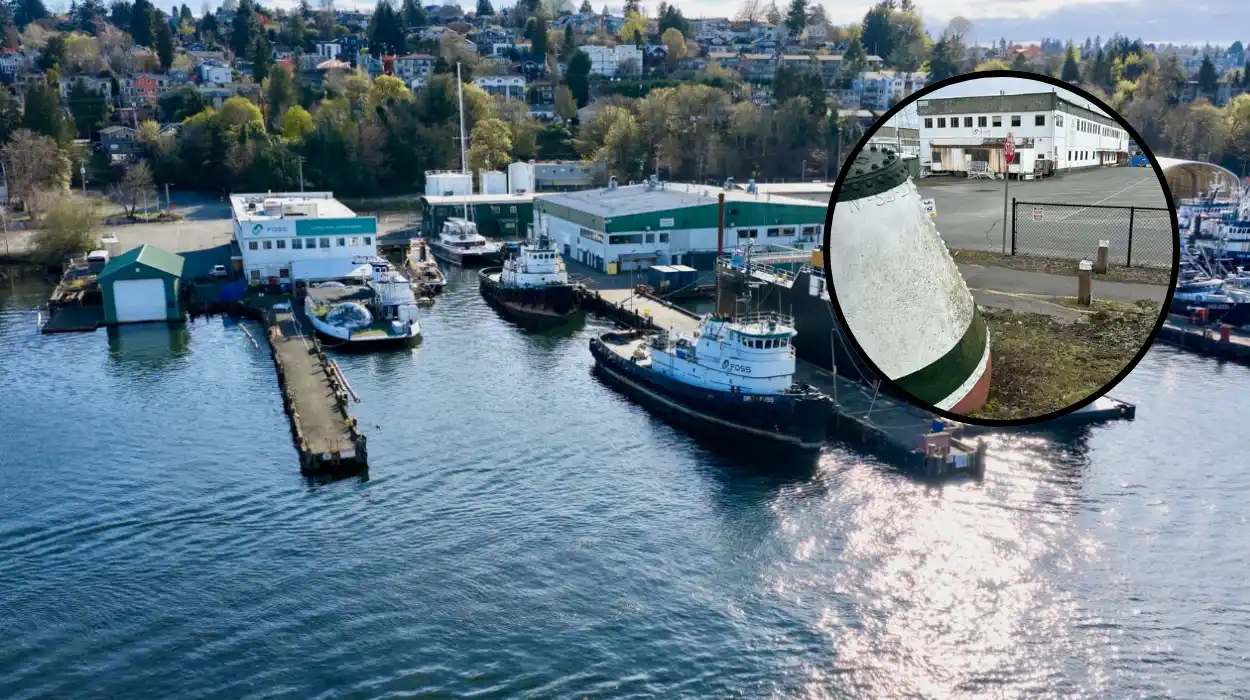
- Quiet Vacating: Defense technology giant Anduril Industries has vacated its maritime operations site located along Seattle’s historic Lake Washington Ship Canal at the former Foss Maritime shipyard space.
- Program Cancellation: The operational exit was triggered when the U.S. Navy abruptly cancelled the specific unmanned vessel acquisition program that Anduril was actively pursuing at the shipyard.
- Footprint Shift: While the specific shipyard facility is no longer needed, Anduril’s broader regional footprint continues to surge as the company expands its other corporate and engineering offices across the Seattle area toward a goal of 1,000 local engineers.
- Strategic Omission: The setback coincides with Anduril’s notable omission from recent U.S. Navy warship lists, marking a temporary hurdle in the defense unicorn’s ambitious maritime expansion.
Seattle (Evening Washington News) August 21, 2026 — Defense technology giant Anduril Industries has quietly vacated its maritime operations along Seattle’s Lake Washington Ship Canal after the U.S. Navy abruptly cancelled a key unmanned warship program that the company was pursuing at the historic former Foss Maritime shipyard site. The development marks a sudden shift in the local physical footprint of one of Silicon Valley’s most high-profile and rapidly expanding defense unicorns, even as its broader regional engineering workforce continues to scale up significantly toward a target of 1,000 local employees.
Why Did Anduril Vacate Its Seattle Shipyard Site?
According to statements confirmed to GeekWire by an official corporate spokesperson, the physical footprint at the waterfront location was rendered redundant following strategic changes implemented by the Pentagon. As reported by GeekWire, the company explained that the specific facility was tied entirely to a singular military initiative that ultimately did not survive budget cuts and shifting naval priorities.
“Anduril has moved out of its shipyard space in Seattle,”
an Anduril spokesperson stated to GeekWire, elaborating that
“the space supported a Navy program pursuit; the Navy canceled that program, and the shipyard footprint was no longer needed.”
The company further clarified the scale of the initial operation, noting that the Seattle shipyard presence was always relatively modest, housing only a small handful of personnel who worked directly from the waterfront premises. Despite the departure from the Lake Washington canal site, corporate representatives emphasized that Anduril’s wider corporate and engineering presence across the city and surrounding region remains robust and continues to grow through other commercial and engineering offices.
Explore More Seattle News
Seattle City Council Unanimous Votes Criticised by Tech CEO Seattle 2026
State Investigates Needle Cleanup Group in Seattle 2026
What Led to the U.S. Navy Program Cancellation?
The sudden cancellation of the unmanned vessel acquisition program reflects broader turbulence within modern defense procurement, where the U.S. military is continuously reevaluating its technological roadmap for autonomous naval warfare. Traditional defense primes and modern tech-focused startups alike have been vying for lucrative contracts to build autonomous surface vessels (ASVs) and underwater autonomous systems designed to operate in contested maritime environments.
However, shifting budget allocations and evolving strategic requirements by the Pentagon mean that experimental or early-stage acquisition programs can be trimmed or terminated overnight. For Anduril, which previously invested heavily in establishing physical maritime infrastructure in the Pacific Northwest to tap into regional shipbuilding traditions and local engineering talent, the cancellation of this specific initiative directly disrupted the utility of the historic Foss Maritime location.
How Does This Affect Anduril’s Broader Expansion in the Pacific Northwest?
Industry analysts observing the defense tech sector note that while losing a physical shipyard is a tangible setback, it does not signal a retreat from Anduril’s overarching regional strategy. As documented in ongoing reporting by GeekWire, Anduril has been aggressively scaling its presence throughout the Seattle metropolitan area, establishing unheralded office spaces and expanding its workforce to build augmented reality hardware, digital night vision systems, edge computing architecture, and artificial intelligence software.
Company recruitment drives and real estate acquisitions indicate that Anduril’s overall engineering headcount in the region is pushing upward toward 1,000 workers. While the waterfront assembly space on Lake Washington has been returned, the firm’s administrative, software development, and hardware engineering teams continue to operate extensively out of other facilities in Seattle and neighboring Bellevue.
What Are the Implications of Anduril’s Omission From the New Warship List?
The timing of the shipyard exit aligns with Anduril’s notable omission from recent official U.S. Navy warship lists, pointing to intense competition within the defense sector. As the military attempts to counter rapid foreign naval expansion by procuring hybrid fleets of crewless vessels, the procurement landscape remains intensely competitive.
Being left off the latest deployment and procurement schedules indicates that while firms like Anduril possess advanced software foundations—such as their signature Lattice operating system—securing long-term, high-volume hardware production contracts with the federal government remains an uphill battle. Defense experts interviewed across industry publications suggest that startups attempting to disrupt traditional defense manufacturing must remain highly adaptable, pivoting their physical infrastructure rapidly as military priorities shift between surface drones, autonomous submarines, and airborne counter-measure systems.
Ultimately, Anduril maintains that its core mission and financial backing remain extraordinarily strong, supported by massive recent funding rounds valuing the defense giant near the 100 billion dollar mark. Although the shipyard doors on Lake Washington are currently closed, the company insists its long-term investment in regional technical talent and national security infrastructure remains entirely unchanged.