Key Points
- Public Inquiry: Keith McCall, CEO of the geospatial data firm Omniris Group and founder of Pollen Systems, has publicly questioned the Seattle City Council’s tendency to reach near-unanimous decisions on fiscal matters.
- The Disconnect: McCall highlighted a recurring pattern where council members express concern about the city’s structural deficit and tax burden during committee discussions, only to vote in favour of the same spending and tax measures on the floor.
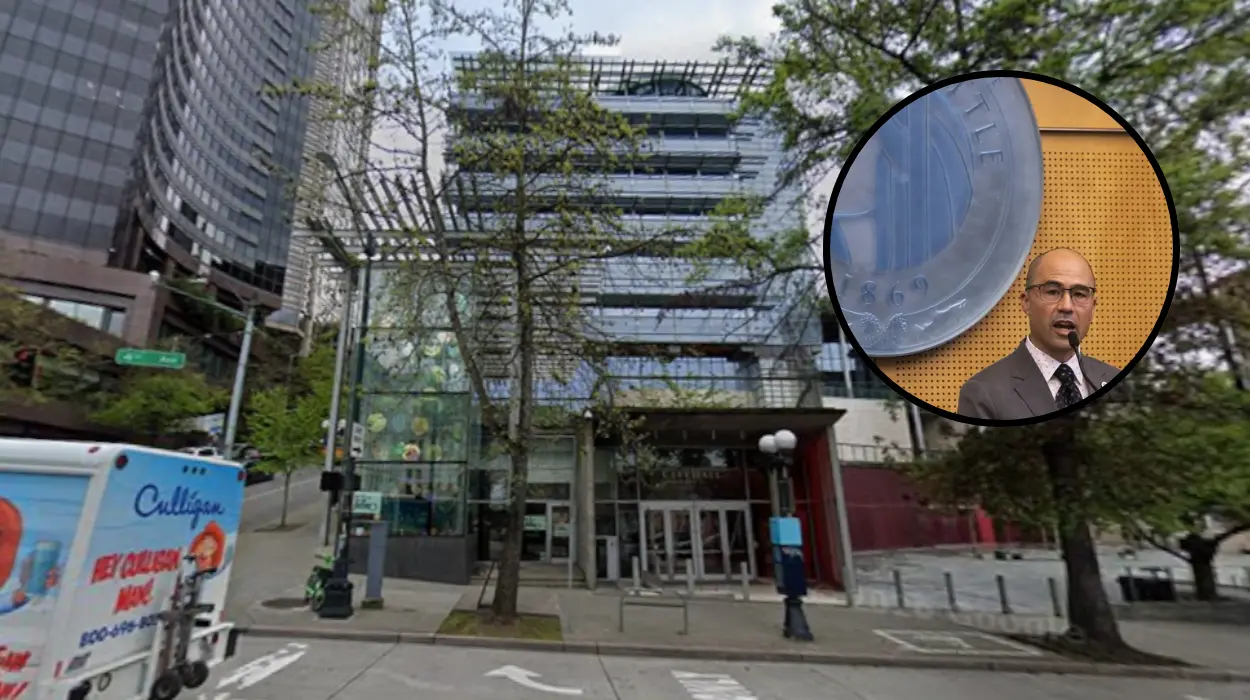
- Specific Criticism: McCall pointed to Public Safety Committee Chair Bob Kettle as an example of a council member who has voiced fiscal caution but has ultimately supported major financial legislation.
- Recent Votes: The critique references recent unanimous approvals for significant utility rate increases and a transit sales tax measure.
- Accountability Call: The tech executive is calling for greater transparency, arguing that a healthy democracy requires open debate and clear explanations for why officials choose to support or oppose specific policies.
Seattle (Evening Washington News) August 20, 2026 — A prominent Seattle-area technology executive has ignited a public debate regarding the internal dynamics of the Seattle City Council, specifically challenging why the legislative body’s votes on taxation and city spending are almost consistently unanimous, even when those same proposals face vocal scrutiny behind closed doors. Keith McCall, the CEO of the geospatial data firm Omniris Group and founder of Bellevue-based companies Pollen Systems and Everyvine, raised the issue in a recent social media post that has since gained traction among regional business leaders.
Why is a tech CEO questioning the Seattle City Council’s voting patterns?
The core of the concern, as articulated by Keith McCall, lies in the perceived contradiction between the rhetoric used by council members during committee meetings and the final results recorded during formal roll-call votes.
As reported by Jason Rantz of Seattle Red, McCall wrote that he is becoming
“increasingly concerned by what appears to be a pattern in Seattle politics,”
noting that the distance between public warnings regarding the city’s financial health and the final, often unanimous approval of tax hikes is problematic for civic accountability.
“That raises a reasonable question: if councilmembers represent different neighborhoods with different priorities, why do the final votes so often appear unanimous?”
McCall asked in a statement shared by Seattle Red. He suggested that the current trend leaves voters questioning whether council members have become too comfortable in their positions, or if these unanimous outcomes are indeed the result of genuine consensus following rigorous debate.
Who is being singled out in the critique of city fiscal policy?
In his commentary, McCall specifically identified Public Safety Committee Chair Bob Kettle. According to the reporting by Seattle Red, Kettle has been noted for voicing reservations about the city’s tax burden and structural deficit throughout the year.
Specifically, Seattle Red noted that Kettle previously pushed back against a transportation sales tax hike proposed by Mayor Katie Wilson, which would have increased the city’s sales tax rate to 10.80%. Despite his committee-level objections, McCall’s critique implies that Kettle’s eventual votes on the floor have not consistently reflected the caution expressed in earlier sessions.
Explore More Seattle News
State Investigates Needle Cleanup Group in Seattle 2026
Washington Behavioral Health Plan Fails in Seattle 2026
What specific votes have drawn this attention?
The focus on the council’s voting record stems from several recent legislative actions that were passed without a single dissenting vote.
As detailed by Seattle Red, the council recently reached a unanimous decision to approve two successive 9.5% rate increases for Seattle City Light, scheduled for 2027 and 2028. These increases are expected to cost residents approximately $20 more per month once both measures take effect. Additionally, the council unanimously moved to send a proposal to double the transit sales tax to the November ballot.
Following the vote on the utility rate hikes, Kettle reportedly reminded his colleagues that residents are already grappling with rising costs across multiple sectors, including sales and property taxes, yet he was part of the unanimous consensus that approved the utility increases.
How does the comparison to Bellevue factor into the argument?
Seeking a benchmark for alternative governance, McCall pointed to neighbouring Bellevue as a point of comparison.
“The contrast with Bellevue is worth examining,”
McCall wrote, as cited by Seattle Red. He noted that Bellevue recently reduced its property tax levy, a move he contrasted with the increasing tax burdens faced by Seattle property owners. Whether this difference is attributed to fiscal management strategies or varying political priorities, McCall argued that Seattle taxpayers are entitled to a more transparent explanation of their city’s fiscal direction.
What is the proposed solution for Seattle’s legislative process?
McCall’s critique is not merely an observation but a call for a fundamental change in the “order of operations” at Seattle City Hall. He suggested that the current approach appears to prioritize revenue generation as the first step in problem-solving rather than assessing spending efficiency.
As reported by Seattle Red, McCall stated:
“The conversation should not begin with, ‘How do we raise more money?’”.
He emphasised that a robust, healthy democracy is one that embraces disagreement rather than suppressing it through uniform consensus.
“Healthy democracies are rarely unanimous,”
McCall added.
“They thrive on thoughtful disagreement, open debate, and elected officials who explain not only why they voted ‘yes,’ but also why they voted ‘no.’ Seattle deserves that level of accountability”.
At the time of writing, there has been no formal collective response from the Seattle City Council regarding these specific comments from the tech executive. The ongoing discussion highlights a broader tension between the city’s budgetary needs and the concerns of the local business community regarding the cumulative impact of taxation on Seattle’s affordability and long-term economic stability.