Key Points
- Escalating Wildfire Threat: Destructive wildfires have severely impacted the American West, leaving states struggling to implement comprehensive fire protection and prevention mandates.
- Homeowner Preparation: Safety measures like clearing flammable vegetation and using fire-resistant siding significantly improve a home’s chances of surviving wind-carried embers, as noted by fire experts.
- Political Resistance: Restrictions governing residential property changes, building materials, and vegetation management often face fierce public backlash, leading state legislators to backtrack or repeal mandates.
- Washington State’s Legislative Retreat: Washington spent several years developing wildfire safety regulations, but due to intense public pushback, lawmakers weakened requirements, passing a 2024 bill that mandated hazard maps and fire-resistant roofs/siding for new construction while dropping compulsory vegetation management rules.
- Fire Service Concerns: Fire officials, including retired Spokane Fire Department fire protection engineer Dave Kokot, argue that omitting vegetation clearing undermines primary structural protection because defensible space is vital for firefighters.
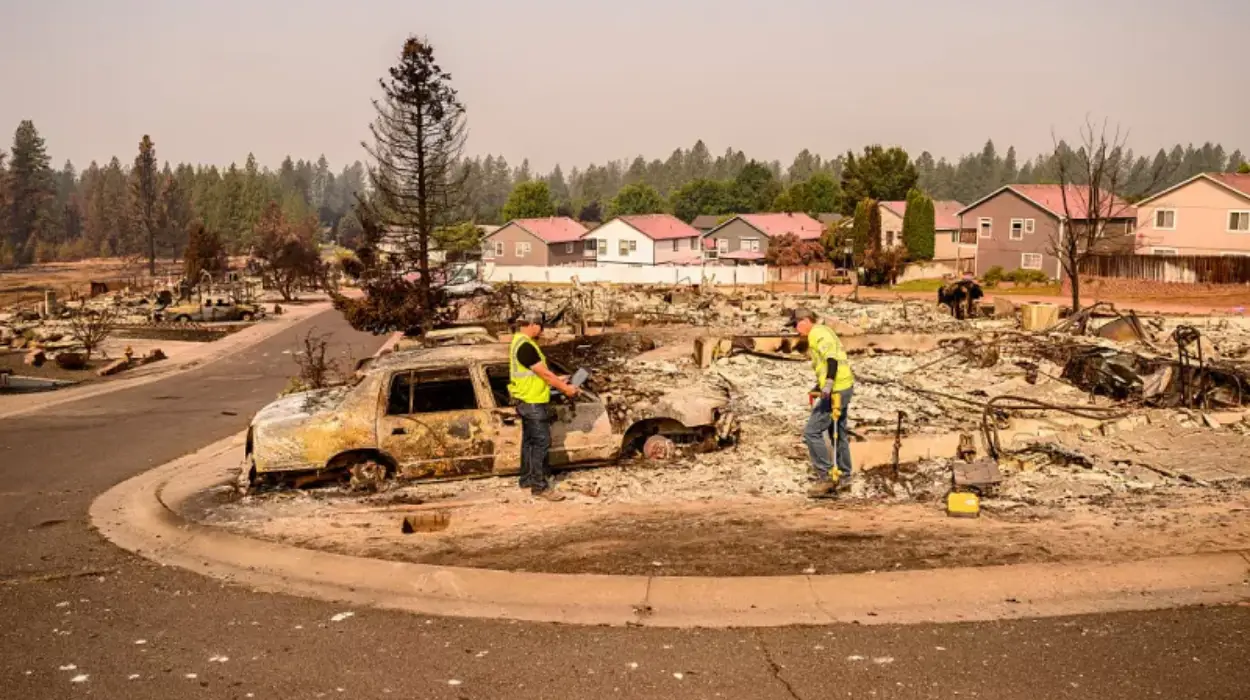
Spokane (Evening Washington News) August 17, 2026 — As increasingly severe wildfires rage across the American West, state governments find themselves locked in difficult political battles while attempting to pass and enforce vital fire protection rules. Although technical solutions and structural hardening methods are well-documented, public pushback and political friction frequently stall regulatory progress.
Why Is Home Preparation Crucial Against Wildfires?
When two distinct wildfires threatened the property of Dave Kokot in Spokane, Washington, earlier in the month, he and his family packed essential keepsakes in preparation for a potential evacuation. However, Kokot maintained confidence that his house could withstand the threat. As reported by Lauren Sommer of National Public Radio (NPR), Kokot stated that
“You don’t know how the house would go through a fire, but I think ours would have done fine.”
Kokot’s confidence stemmed from intentional building choices. The siding on his residence is built from fire-resistant materials instead of wood, and he systematically cleared flammable vegetation around the perimeter while ensuring that tree limbs remained clear of the structure. Extensive scientific research demonstrates that these proactive precautions help residential structures resist the onslaught of tiny, burning embers carried by strong winds—the primary driver behind rapid wildfire propagation during extreme climate conditions.
Explore More Politics News
Trump’s Secret Turkey Flight Ruse Over Iran Threat, Ankara 2026
Democracy Speaker Series Launches in Yakima 2026
What Qualifications Do Local Experts Bring to Fire Safety?
Kokot’s rigorous preparations were informed by a career dedicated entirely to wildfire safety, primarily served as a fire protection engineer at the Spokane Fire Department. Drawing on this extensive professional background, Kokot has actively pushed Washington state regulators to make exterior home preparations and defensible space maintenance mandatory for residents living in high-risk zones.
Despite the proven efficacy of these measures, enforcing them through legislation has proven exceptionally difficult. Washington state authorities have spent several years drafting new wildfire safety regulations—spanning specialized building codes for homes in vulnerable areas and mandatory rules for managing plants and surrounding brush. Yet, because these restrictions directly impact personal properties, gardens, and landscaping choices, they frequently invite severe public unpopularity. Following intense public pushback, state lawmakers ultimately backtracked and repealed multiple crucial requirements.
How Did Washington State Water Down Its Wildfire Regulations?
Legislative compromises have significantly altered the scope of structural fire safety mandates in the Pacific Northwest. According to reporting by Lauren Sommer of NPR, Washington passed a specialized bill in 2024 that instructed state regulators to produce updated wildfire hazard maps, albeit paired with significantly fewer enforceable rules.
Under this legislative framework, newly constructed homes are still required to feature fire-resistant roofs and exterior siding. However, the mandate for homeowners to execute ongoing vegetation management was stripped entirely from the final law. This regulatory omission has triggered deep alarm among emergency responders. Addressing the implications of the weakened policy, Dave Kokot told NPR,
“That got the fire service pretty concerned, because that’s our primary protection.”
Kokot further explained that maintaining a clear perimeter makes structural defense substantially safer, noting that it is far easier for fire crews to defend a burning building when flammable vegetation is cleared away from the immediate structure.