Key Points
- Full Capacity Reached: For the first time in several years, every marine terminal at the Port of Bellingham is officially occupied.
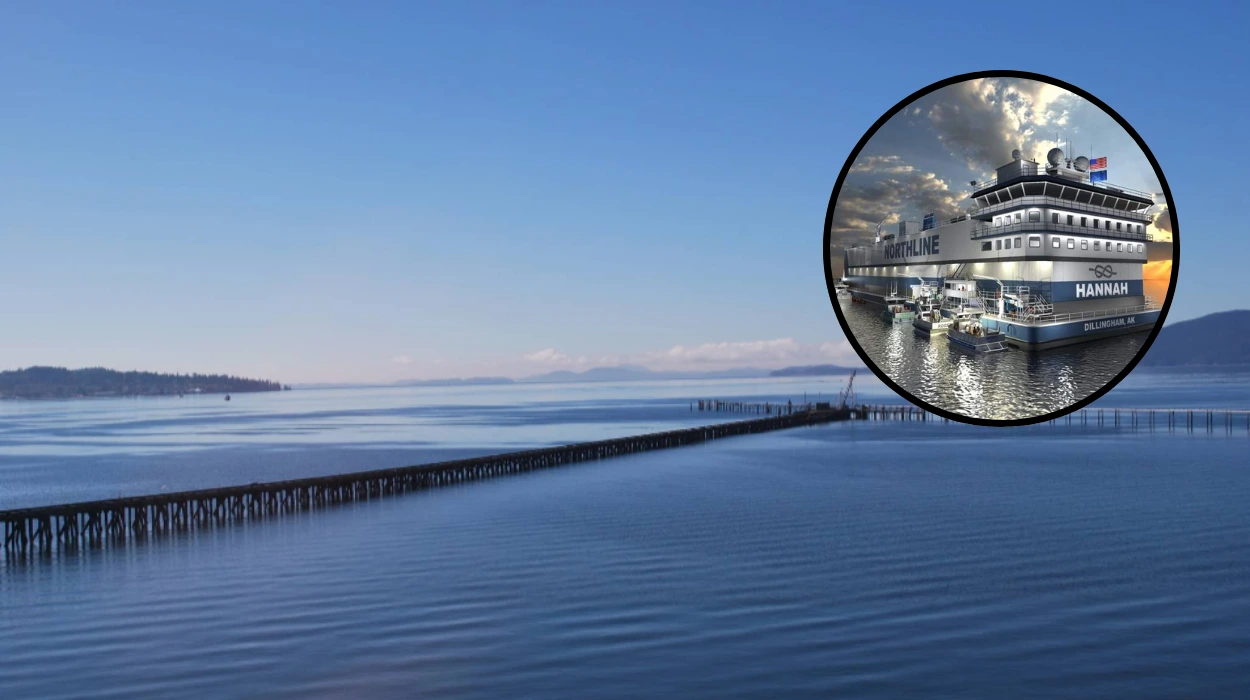
- The Hannah’s Return: The milestone was marked by the return of The Hannah, a 400-foot-long, locally built seafood processing and cold storage barge.
- Major Investment: The $60 million Hannah project, constructed at the Fairhaven Shipyard and completed in 2024, involved over 250 Washington-based businesses.
- Economic Impact: The construction of the barge brought more than $12 million into Whatcom County in the form of wages and contract work.
- Strategic Maritime Growth: Port officials cite the achievement as evidence that efforts to strengthen the working waterfront are yielding results.
- Seasonal Operations: The Hannah operates seasonally in Bristol Bay, Alaska, to process salmon before returning to Fairhaven for maintenance and cold storage during the offseason.
Bellingham (Evening Washington News) August 17, 2026 — The Port of Bellingham has hit a significant operational milestone, as all marine terminals at the facility are now fully occupied for the first time in years. This achievement, underscored by the return of the innovative seafood processing barge The Hannah, signals a robust recovery and expansion of the region’s maritime industrial sector.
How is the Port of Bellingham achieving full terminal occupancy?
The recent announcement by the Port of Bellingham highlights a long-term strategic push to modernise waterfront infrastructure and support marine trades. According to the Port’s official social media updates, the full occupancy of their marine terminals is an “exciting milestone” and serves as tangible proof that their ongoing efforts to build a “stronger, more robust working waterfront are paying off.
As reported by The Bellingham Herald, the Port aims to continue supporting the diverse array of businesses, vessels, and maritime activities that keep the local waterfront thriving. This growth is corroborated by wider economic data; a recent analysis by the McKinley Research Group, as cited by the Port of Bellingham, noted that Whatcom County’s maritime industry generated $1.6 billion in business revenues in 2023 alone.
Explore More Bellingham News
Man Arrested For Sexual Assault In Tent, Bellingham 2026
Washington Gas Prices Rise Sharply as Bellingham Costs Jump 2026
What is the economic significance of The Hannah barge?
The Hannah represents a cornerstone of the current industrial activity at the Port. Built locally at the Fairhaven Shipyard and completed in 2024, the $60 million vessel is described by the Port as an “all-in-one solution” for the modern seafood industry.
As reported by Mike Hogan, public affairs administrator for the Port of Bellingham, the construction project was a significant boon to the local economy. Hogan stated that the project engaged more than 250 Washington-based businesses and injected over $12 million into Whatcom County through construction, wages, and contract work.
Beyond the initial construction, the vessel supports ongoing employment. Northline Seafoods, the company behind The Hannah, previously noted that the vessel creates nearly 40 full-time jobs for its operations. Furthermore, the Port of Bellingham’s frequent disclosures highlight that The Hannah is not just a seasonal visitor; its presence during the offseason in Fairhaven ensures that the local economy remains engaged year-round by providing essential cold storage services.
Why is The Hannah considered a revolutionary vessel?
Designed by Alaska-based Northline Seafoods, The Hannah was built to change how wild Alaskan salmon is processed, frozen, and distributed. Benjamin Blakey, CEO of Northline Seafoods, explained to Cascadia Daily News that the vessel utilizes an ultra-low-temperature refrigeration system to freeze whole, round fish directly on the fishing grounds to a core temperature of -30°F.
Blakey emphasized the environmental and economic efficiency of this model. As reported by Julia Lerner of Cascadia Daily News, Blakey stated that the vessel is projected to save “hundreds of thousands of gallons of diesel every year” compared to traditional processing and transportation methods. By freezing fish at the source, the company minimizes waste and eliminates the need for excessive plastic packaging, ensuring “full utilization” of the catch.
How does the Port of Bellingham support its maritime tenants?
The Port of Bellingham’s success in maintaining full marine terminals is not accidental; it is the result of specific policy initiatives designed to protect the working waterfront from pressure for commercial or residential redevelopment.
According to the Port’s own statements and data provided to Visit Bellingham, the Port maintains a
“Water Reliant Commercial Marine Rental Policy.”
This policy offers discounted rates for marine trades and commercial fishermen, with land values calculated based on maritime use rather than potentially higher-priced commercial real estate valuations.
Port Executive Director Rob Fix stated, as reported in the Visit Bellingham press release, that
“The Port’s marine industrial land and buildings are full and we are modernizing waterfront infrastructure, cleaning up historic contamination and making new property available so our maritime industries can continue to grow and innovate.”
The Port is also currently engaged in a $30 million project to modernize the Bellingham Shipping Terminal. This infrastructure investment is designed to fortify docks for heavy cargo, restore navigational depths, and provide electricity for next-generation vessels, further solidifying the region’s role in the Pacific Northwest maritime economy.