Key Points
- Mass Evacuations: Over 64,000 residents in and around Spokane, Washington, have been placed under immediate evacuation orders.
- Severe Structural Loss: At least 700 buildings, predominantly residential homes, have been destroyed, with aerial surveys indicating up to 400 additional structures damaged or ruined.
- National Priority: The cluster of three blazes—the Old Trails Fire, Fairview Fire, and Meadowview Fire—is currently ranked as the top firefighting priority across the United States.
- Zero Containment: Firefighting crews comprising approximately 1,100 personnel have achieved zero per cent containment across the three blazes.
- Missing Persons Under Assessment: While no fatalities have been confirmed, an unspecified number of individuals are reported missing as fires transitioned from wildland to urban areas.
- Resource Strain: More than 29,200 firefighters are battling over 100 large blazes nationwide, heavily concentrating efforts in Washington, Oregon, and Idaho.
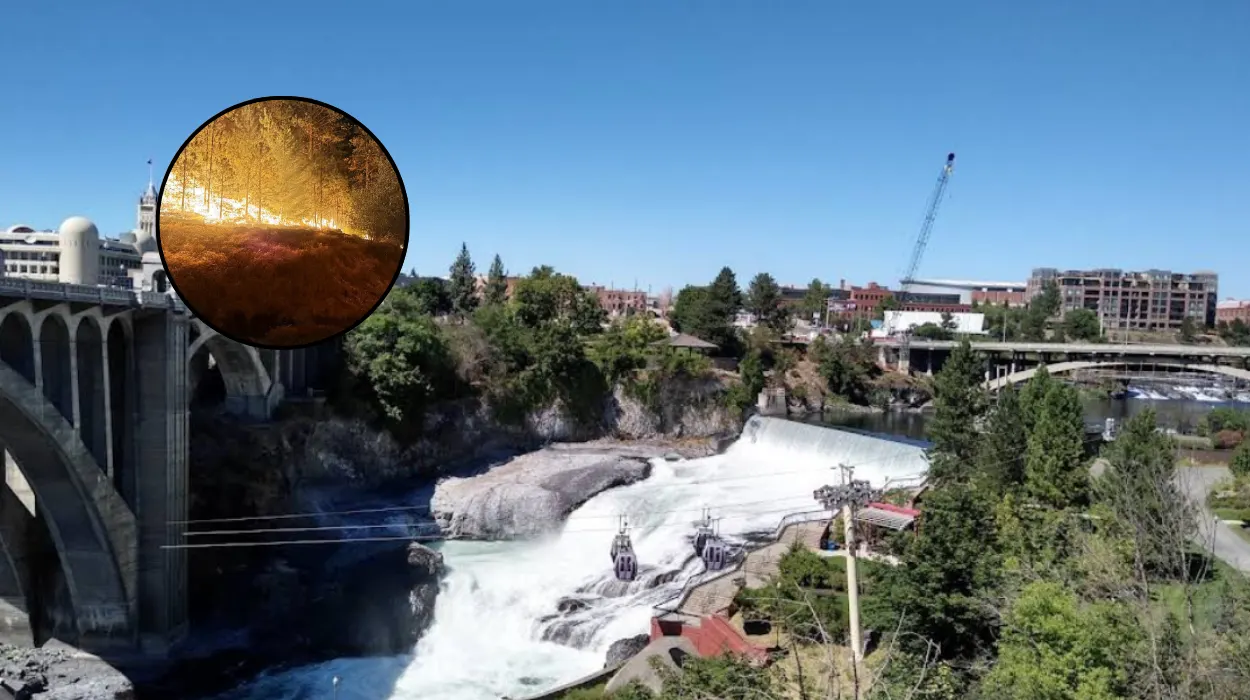
Spokane (Evening Washington News) August 4, 2026 – Wildfires raging on the outskirts of Spokane for a third consecutive day have destroyed at least 700 buildings and forced tens of thousands of residents to evacuate from Washington state’s second-most populous city. The cluster of three fires—scorching more than 3,200 hectares (8,000 acres) on the northern fringe of the city—ranks as the single highest firefighting priority in the United States amidst widespread regional drought.
- Key Points
- What Is the Current Scale of the Spokane Wildfires and Evacuations?
- How Are Emergency Responders Attempting to Contain the Blazes?
- What Statements Have Public Officials Made Regarding the Crisis?
- What Is the Background of This Particular Development?
- How Will This Wildfire Development Affect Local Residents and Regional Infrastructure?
What Is the Current Scale of the Spokane Wildfires and Evacuations?
As reported by Reuters field correspondents, the wildfire situation escalated rapidly between Sunday and Monday as flames surged out of timbered areas into populated suburban developments. Benjamin Cossel, spokesperson for the incident command centre, confirmed that emergency evacuation orders expanded sharply from 4,000 individuals to roughly 64,000 residents within a 24-hour period.
Aerial infrared mapping conducted over the fire perimeter revealed that at least 700 structures have gone up in flames, with preliminary estimates suggesting another 400 structures suffer varying degrees of damage or total destruction. Video footage captured near the fire ground displayed massive columns of dense smoke rising ten kilometres from downtown Spokane, while suburban streets lay reduced to ash and charred chimneys.
As cited in reporting by the Associated Press, local authorities established emergency evacuation shelters at the Spokane Convention Centre to accommodate displaced families, including evacuated patients from the regional U.S. Veterans Affairs hospital.
How Are Emergency Responders Attempting to Contain the Blazes?
As reported by Reuters and the Associated Press, approximately 1,100 firefighters have been deployed to the Spokane blazes, supported by four fixed-wing tanker aircraft dropping fire-retardant slurry. However, incident managers confirmed that no water-dropping helicopters were immediately available due to critical asset distribution across the region.
As stated by Benjamin Cossel, public information officer for the federal incident management team, crews faced severe operational headwinds:
“We have weather working against us, and we have terrain working against us.”
Cossel explained that the geography surrounding the Spokane River features steep canyons that funnel erratic wind gusts reaching up to 45 miles per hour (72 km/h). These winds push flames rapidly up steep slopes, converting forest blazes into urban conflagrations. As of Monday, ground forces had recorded zero per cent containment across all three blazes—the Old Trails Fire, the Fairview Fire, and the Meadowview Fire.
What Statements Have Public Officials Made Regarding the Crisis?
During a joint afternoon news conference in Spokane, state and municipal leaders detailed the catastrophic loss experienced by local communities.
As reported by Reuters correspondent reporting from the briefing, Washington Governor Bob Ferguson stated:
“There are just so many Washingtonians who have literally lost everything in a very, very short period of time. In a matter of hours, their lives changed in deeply dramatic and fundamental ways.”
Spokane Mayor Lisa Brown addressed the ongoing uncertainty surrounding missing residents as search and rescue teams await safe entry into impacted neighborhoods:
“We are still assessing the potential for lives to be lost.”
Incident spokesperson Benjamin Cossel noted that while no fatalities had been verified, the high probability of finding victims remains once fire intensity subsides. Furthermore, U.S. Senator Maria Cantwell emphasized the continued risk during a local briefing, stating:
“We are not out of danger. The next couple of days will be challenging.”
State Public Lands Commissioner Dave Upthegrove highlighted the broader regional strain, stating to reporters that over 15 major fires are burning across Washington state alone, encompassing more than 250,000 acres.
What Is the Background of This Particular Development?
The eastern region of Washington State, alongside the broader Pacific Northwest, has experienced severe prolonged drought conditions and high summer temperatures leading up to August 2026. The National Interagency Fire Centre (NIFC) in Boise reported that over 29,200 personnel are currently deployed across the country to battle tens of thousands of active fires, concentrated primarily in Oregon, Washington, and Idaho.
Nationwide, NIFC data documents 44,722 wildfires year-to-date, marking the highest number of recorded ignitions for this period in over ten years, with nearly 5.2 million acres burned. North of the international border, British Columbia has reported explosive fire behavior caused by identical persistent drought conditions across western North America. Scientists consistently attribute these escalating fire trends, prolonged hot dry spells, and fuel dryness across North America and Europe to broad, human-caused climate factors.
How Will This Wildfire Development Affect Local Residents and Regional Infrastructure?
The immediate impact on the populations of Spokane County and surrounding eastern Washington communities involves significant displacement and long-term socio-economic disruption.
- Housing and Financial Strain: With over 700 structures destroyed and up to 400 more damaged, hundreds of displaced families face long-term rehousing challenges, insurance claims processing, and severe personal asset losses.
- Public Health and Air Quality: Massive smoke plumes continue to degrade regional air quality across eastern Washington, Idaho, and western Montana, increasing respiratory health risks for vulnerable populations, young children, and elderly residents.
- Infrastructure and Municipal Services: Emergency evacuations of facilities such as the local Veterans Affairs hospital and suburban commercial sectors strain regional medical networks, emergency services, and municipal utility grids.
- Resource Allocation Competition: Because resources remain stretched thin across 15 states, regional authorities face delayed containment timelines, extending the duration of red-flag alerts and evacuation orders for affected homeowners.