
Key Points
- Mount Rainier Rockfall Fatal Investigation: National Park Service officials have officially concluded that the 19 July 2026 rockfall at 11,600 feet on the Disappointment Cleaver route—which killed 44-year-old Bellevue climber Daihong Chen and injured three others—was a naturally occurring event.
- Ongoing Route Hazards: Park rangers warned that despite being the most popular summit path attempted by thousands annually, the Disappointment Cleaver route presents inherent risks of loose volcanic rock, even for experienced climbers such as Chen, who had successfully summited Mount Rainier multiple times.
- Landmark University Liability Ruling: In a narrow 5–4 decision rendered on 30 July 2026, the Washington State Supreme Court ruled that Washington State University (WSU) can be held legally liable in the 2019 hazing death of Sam Martinez, a 19-year-old freshman from Bellevue.
- Duty of Care Established: The state’s highest court upheld a lower appellate ruling, determining that WSU possessed a “special relationship” with the fraternity and owed a legal duty of care to protect pledges from foreseeable risks of hazing and severe alcohol misuse.
- Remand to Trial Court: The Supreme Court’s decision does not determine whether WSU breached its duty, but rather clears the way for the Martinez family’s 2020 wrongful-death lawsuit to proceed to a jury trial in Superior Court.
Bellevue (Evening Washington News) August 1, 2026 – Federal land managers and state judicial authorities have delivered two major legal and public safety findings directly impacting residents of Bellevue, Washington. Federal investigators at Mount Rainier National Park have formally closed their inquiry into a high-altitude rockfall that claimed the life of local climber Daihong Chen, determining the incident was an unavoidable natural occurrence along the mountain’s primary summit passage. Simultaneously, the Washington State Supreme Court issued a landmark 5–4 judicial ruling establishing that Washington State University owes a legal duty of care to protect its students from fraternity hazing, permitting a wrongful-death lawsuit filed by the family of Bellevue native Sam Martinez to move forward to a full civil trial.
- Key Points
- What Concluded the Investigation into the Fatal Mount Rainier Rockfall?
- What Did the Washington Supreme Court Rule Regarding WSU’s Liability in Sam Martinez’s Hazing Death?
- How Have the Victims’ Families and Legal Representatives Responded to the Court Ruling?
- Background of the Particular Developments
- Prediction: How Will These Developments Affect Outdoor Enthusiasts and Higher Education Institutions?
What Concluded the Investigation into the Fatal Mount Rainier Rockfall?
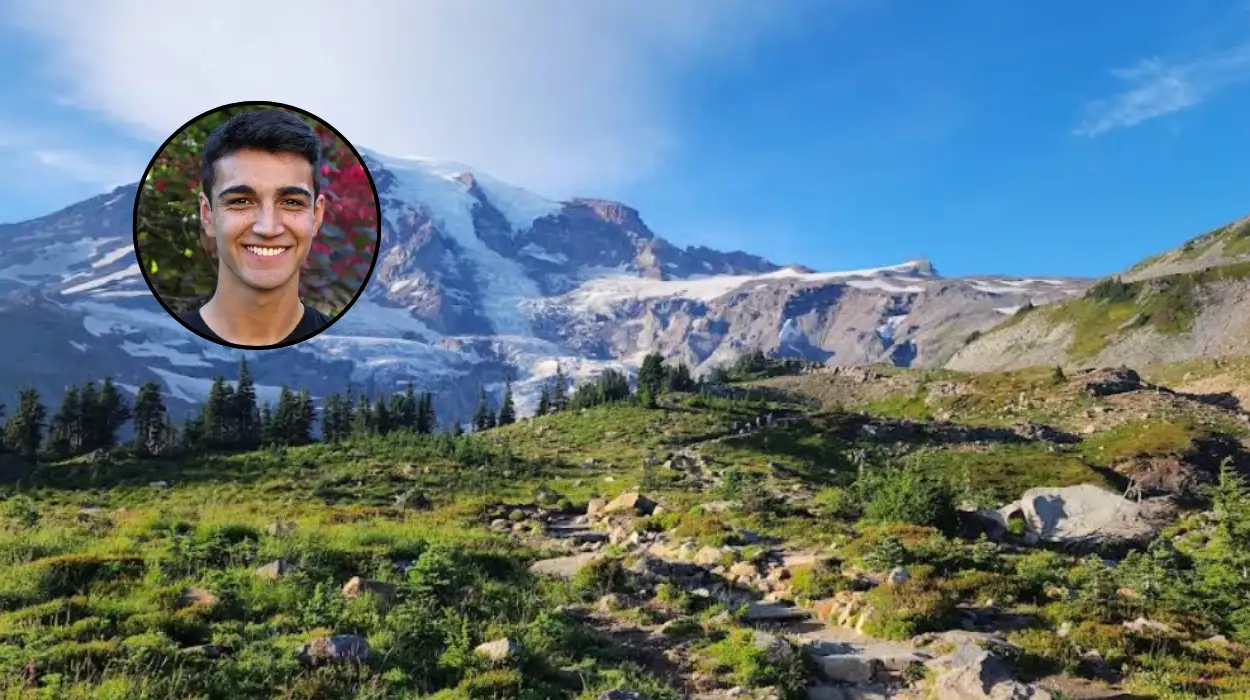
Investigators with the National Park Service have formally concluded their review into the fatal high-altitude incident that occurred on the slopes of Mount Rainier, determining that the collapse of rock was entirely a naturally occurring event.
As reported by Shawn Garrett of KING 5 News, the incident transpired at approximately 3:30 a.m. on Sunday, 19 July 2026, along the Disappointment Cleaver climbing route at an elevation of roughly 11,600 feet. Six unguided climbers, operating in two separate groups, were traversing the upper mountain when a slide of loose volcanic rock swept through the area.
As reported by Paige Cornwell of The Seattle Times, the Pierce County Medical Examiner’s Office confirmed that 44-year-old Bellevue resident Daihong Chen died as a result of multiple blunt-force injuries sustained during the rockfall. A second climber suffered severe injuries and was evacuated via helicopter to a regional trauma facility, whilst two additional individuals sustained minor injuries. Search and rescue personnel subsequently assisted the remaining uninjured climbers back to Camp Muir before airlifting them to the park’s helibase.
National Park Service representatives emphasized that the Disappointment Cleaver remains the most popular path for summit attempts in North America, attracting thousands of alpine enthusiasts each year. However, park authorities noted that the geology of the volcanic peak creates unpredictable hazards. Even highly skilled mountaineers—including Chen, who had completed multiple successful summits of Mount Rainier prior to the accident—remain exposed to objective risks such as rock movement caused by thermal thaw cycles and structural instability.
What Did the Washington Supreme Court Rule Regarding WSU’s Liability in Sam Martinez’s Hazing Death?
In a decision that alters the legal responsibilities of public higher education institutions, the Washington State Supreme Court ruled on Thursday, 30 July 2026, that Washington State University can be held liable for student deaths resulting from fraternity hazing rituals.
The 5–4 decision stems from the November 2019 death of Sam Martinez, a 19-year-old WSU freshman from Bellevue who died of acute alcohol poisoning during an off-campus “Big Brother” initiation event at the Alpha Tau Omega (Gamma Chi chapter) fraternity.
As reported by The Spokesman-Review, Justice Sal Mungia, writing for the Supreme Court majority, articulated that the university maintained a special relationship with recognized fraternal organizations, granting WSU sufficient oversight to establish an actionable duty of care.
“It should surprise no one that a house run by young men and full of other young men, many away from home for the first time in their lives, is fertile ground for abusing alcohol and engaging in dangerous initiation rituals,” Justice Mungia stated in the court’s majority opinion. “It was certainly no surprise to WSU.”
The ruling explicitly noted that the university’s degree of authority over recognized off-campus fraternities obligated it to take reasonable measures to enforce institutional prohibitions against severe alcohol misuse and hazing. The Supreme Court emphasized that its decision addresses solely the question of legal duty, leaving the determination of whether WSU breached that duty to a future jury trial.
How Have the Victims’ Families and Legal Representatives Responded to the Court Ruling?
The Supreme Court’s finding upholds a previous January 2025 decision by the Washington State Court of Appeals, reversing a 2022 order from a King County Superior Court judge who had initially dismissed the lawsuit on the grounds that universities do not owe a legal duty to monitor off-campus private residences.
As reported by KREM 2 News, Nicholas Ulrich, an attorney representing Washington State University during oral arguments, argued that WSU could not be held responsible for actions taking place at off-campus, privately leased fraternity housing. Ulrich referenced previous state legal precedents suggesting that post-secondary institutions cannot act as insurers of student safety in private off-campus settings.
Conversely, the family of Sam Martinez expressed relief that their six-year legal effort would finally be presented before a jury.
As reported by KREM 2 News, Jolayne Houtz, the mother of Sam Martinez, reflected on the ruling’s significance:
“We’re eager to share Sam’s story in front of a jury. It’s been a long time coming and we are ready,” Houtz stated following the decision. “Sam’s death reshaped everything about our family and our future, and I stand in the shadow of that every day. They knew this fraternity had a track record of hazing and assault and alcohol misuse and other misconduct. They knew that at the highest leadership levels at Washington State University, and they didn’t tell anyone.”
Police and campus investigation files revealed that prior to the November 2019 incident, the Alpha Tau Omega chapter had accumulated numerous complaints regarding disciplinary infractions over a five-year period. WSU subsequently revoked the fraternity’s official recognition following Martinez’s death.
Background of the Particular Developments
The two matters reflect distinct public safety and legal challenges across Washington State.
Mount Rainier’s Disappointment Cleaver route has long been recognized as a demanding glacier passage where dynamic geological conditions create persistent hazards. Melting snowpacks and freeze-thaw cycles during summer months frequently detach rock fragments along steep couloirs. Park rangers continuously audit route safety; however, natural hazards cannot be completely eliminated in wilderness alpine zones.
In higher education law, the regulation of Greek-letter organizations has historically presented complex jurisdictional questions regarding university authority versus private fraternity independence. Following the death of Sam Martinez in 2019, his parents successfully campaigned for legislative reforms, resulting in the enactment of “Sam’s Law” in 2022. Signed by former Governor Jay Inslee, the statute expanded the state’s legal definition of hazing and mandated that higher education institutions maintain public transparency logs detailing all official investigations into hazing and fraternity misconduct.
Explore More Bellevue News
Teso Life Replaces Former Rite Aid at Factoria in Bellevue 2026
Teenager Wins $75K Prize for Jute Sponge Removing Tyre Pollutants Bellevue 2026
Prediction: How Will These Developments Affect Outdoor Enthusiasts and Higher Education Institutions?
Impact on Outdoor Enthusiasts and Alpine Climbers
The official finding that the Mount Rainier rockfall was an unpreventable natural occurrence reinforces the inherent dangers of high-altitude mountaineering. Mountain guides, outdoor safety organizations, and national park officials are expected to increase emphasis on early-morning transit schedules—when freezing temperatures stabilize loose debris—and may advise climbing parties to exercise heightened vigilance when traversing the Disappointment Cleaver route during mid-summer temperature spikes.
Impact on Universities, Fraternities, and Student Pledges
The Washington Supreme Court’s decision creates a major legal precedent across Washington State. By establishing that public universities owe a legal duty of care regarding off-campus fraternity operations, higher education administrators will likely implement stricter oversight mechanisms for Greek life. Universities may enforce mandatory alcohol-free policies, mandate direct university supervision for off-campus chapter houses, or withdraw institutional recognition from organizations failing to comply with safety standards. Furthermore, national fraternity organizations operating within Washington will face increased legal risk, potentially leading to higher insurance premiums and stricter internal governance protocols to prevent hazing incidents.