
Key Points
- Widespread Examination Failure: The July 2026 Washington State Bar Examination, held at the Yakima Convention & Event Center, was abruptly cancelled after severe, unresolved technical failures rendered the new NextGen Uniform Bar Exam impossible to administer.
- Hundreds of Applicants Stranded: Approximately 645 to 700 standard-time bar examinees were left in professional and financial limbo after spending hours attempting to connect to a failing testing network.
- Systemic Hardware Issue: The National Conference of Bar Examiners (NCBE) attributed the problem to an “on-site hardware and configuration issue,” while venue representatives cited a “catastrophic equipment failure”.
- Emergency Law School Intervention: The deans of Washington’s three law schools—University of Washington School of Law, Seattle University School of Law, and Gonzaga University School of Law—have petitioned the Washington Supreme Court to grant emergency diploma privilege to affected candidates.
- Remedial Options Offered: The Washington State Bar Association (WSBA) has offered candidates a rescheduled exam in Tacoma on 1–2 September 2026, deferral to the February 2027 examination, or a refund of application fees.
- Supreme Court Review Pending: The Washington Supreme Court is currently reviewing the circumstances surrounding the disruption, with no fixed timetable yet announced for a final determination on diploma privilege.
Yakima (Evening Washington News) July 31, 2026 – Hundreds of prospective lawyers who spent months preparing for entry into the legal profession have been thrown into uncertainty after the Washington State Bar Association (WSBA) completely cancelled the state’s bar examination in Yakima following an irrecoverable network collapse. The disruption affected approximately 645 to 700 applicants gathered at the Yakima Convention & Event Center for the debut administration of the National Conference of Bar Examiners’ (NCBE) new NextGen testing platform. Following hours of unsuccessful technical troubleshooting, bar administrators acknowledged that they lacked sufficient confidence in the system to proceed safely, prompting emergency petitions from law school deans requesting that the Washington Supreme Court grant emergency diploma privilege to impacted graduates.
- Key Points
- What Caused the Cancellation of the Washington Bar Exam in Yakima?
- How Did the Technical Failure Unfold on Testing Day at the Yakima Convention Center?
- How Have Affected Bar Exam Applicants Reacted to the Abrupt Cancellation?
- What Solutions Have Law School Deans Proposed to the Washington Supreme Court?
- What Options Are Currently Available to Impacted Examinees?
- Background of the NextGen Bar Exam Transition
- Predictions: How This Development Will Affect Law Graduates and the Legal Sector
What Caused the Cancellation of the Washington Bar Exam in Yakima?
The cancellation stemmed from an acute technical failure that prevented examinees from accessing and completing the digital test software.
As reported by reporting staff of The Spokesman-Review, the NCBE attributed the crisis to an “on-site hardware and configuration issue” unique to the location.
In a public statement released shortly after the collapse, the NCBE noted that while approximately 2,624 applicants across ten jurisdictions sat for the NextGen platform during the same testing window, Washington experienced a fatal network impasse.
As reported by local news staff of Lynnwood Times, the venue management at the Yakima Convention & Event Center described the incident as a “catastrophic equipment failure” that local technical teams and external software specialists were unable to remedy despite hours of emergency intervention.
As reported by reporting staff of The Spokesman-Review, the WSBA issued an official statement outlining its decision to pull the plug on the administration:
“WSBA did not have sufficient confidence that the technology issue had been resolved to safely resume the exam on July 29 and made the decision to cancel the July 2026 administration. We sincerely apologize to the candidates who worked so hard to prepare, and we deeply regret that we could not deliver a successful exam experience today.”
While minor delay incidents were reported in Maryland and Missouri—where testing was eventually completed after technical adjustments—Washington was the only jurisdiction forced to abandon the administration entirely.
How Did the Technical Failure Unfold on Testing Day at the Yakima Convention Center?
The sequence of events on Tuesday, July 28, left candidates waiting in the examination hall for nearly five hours before any definitive decision was communicated. Examinees had arrived at the Yakima venue before 8:30 a.m., expecting to launch the standardized testing software on their personal laptops.
As reported by reporting staff of The Spokesman-Review, bar applicant Guile described the descending chaos inside the hall:
“While the test was scheduled to begin at 8:30 a.m., applicants had trouble connecting to the Wi-Fi and the test nearly immediately. The on-site tech support seemed like they weren’t familiar with the software.”
According to attendee accounts documented by The Spokesman-Review, test monitors instructed applicants at 9:30 a.m. to disconnect from the primary network and attempt connection via a secondary backup network.
When that measure failed to resolve the bandwidth congestion and connection timeouts, administrators attempted a staggered login process around 11:00 a.m., allowing small groups of test-takers to attempt access sequentially while staff circulated through the room presenting early withdrawal or deferral options.
By 1:00 p.m., test administrators halted testing for Tuesday altogether, informing candidates that testing would be moved to Wednesday and Thursday.
However, as technical teams evaluated the infrastructure overnight, the WSBA determined that stability could not be guaranteed, leading to the full cancellation of the test cycle.
A small group of approximately 30 to 40 candidates receiving test accommodations were reportedly able to complete testing, but the vast majority were turned away.
How Have Affected Bar Exam Applicants Reacted to the Abrupt Cancellation?
The sudden cancellation has generated severe emotional and financial distress among law graduates, many of whom spent thousands of dollars on examination fees, prep courses, travel, and accommodation.
In addition to the standard $700 application fee paid to the state, applicants were required to pay an additional $150 technology fee specifically intended to support the digital examination platform.
As reported by legal analyst Ian Millhiser of Balls & Strikes, test-takers seeking refunds for that specific technology charge were initially instructed to seek reimbursement directly from the NCBE rather than the state bar association.
Candidates face compounding logistical hurdles, including expiring apartment leases, delayed employment start dates, and the immediate need to secure extended hotel reservations in Yakima during peak summer travel.
As reported by legal policy researcher Joby Mailman of the Cato Institute, local Yakima attorneys organized informal housing networks on digital forums like Reddit to offer free shelter to stranded test-takers who could not afford additional hotel nights.
As reported by reporting staff of The Spokesman-Review, applicant Guile highlighted the legal transferability dilemma facing candidates:
“You can’t transfer your score to another state if you have no score. So that’s obviously a problem for those groups.”
What Solutions Have Law School Deans Proposed to the Washington Supreme Court?
In response to the logistical deadlock, leadership from Washington State’s three accredited law schools stepped forward to petition the state’s highest judicial authority.
As reported by legal news editor Joe Patrice of Above the Law, the deans of the University of Washington School of Law, Seattle University School of Law, and Gonzaga University School of Law submitted joint emergency letters to the Washington Supreme Court, advocating for emergency diploma privilege.
Under this extraordinary administrative relief, eligible graduates of ABA-accredited law schools who were registered for the cancelled Yakima examination would be admitted to the state bar without being required to re-sit the exam.
As reported by reporting staff of The Spokesman-Review, Gonzaga University issued an official institutional statement confirming that 110 of its recent law graduates were among those affected:
“Our graduates did everything that was asked of them. They completed law school, devoted months to preparing, arranged their lives around the exam, and arrived ready to demonstrate their competence. The failure was not theirs. We also have asked the Washington Supreme Court to conduct a thorough and transparent review of the events surrounding the July 2026 bar examination, including convening a public hearing.”
As reported by reporting staff of The Spokesman-Review, Washington Supreme Court spokesperson Wendy Ferrell confirmed that the court is actively deliberating on the matter:
“The Court is actively working with the WSBA to learn more about what occurred and evaluating all options for a resolution.”
What Options Are Currently Available to Impacted Examinees?
As the Washington Supreme Court considers emergency relief, the WSBA has outlined three immediate remedial pathways for registered candidates:
Background of the NextGen Bar Exam Transition
The July 2026 administration marked a major structural pivot for legal licensing in Washington State. The state had formally adopted the NextGen Uniform Bar Exam, a redesigned testing regime developed by the National Conference of Bar Examiners (NCBE) intended to modernize legal licensing by shifting away from rote memorisation toward practical skills, scenario-based problem solving, and fully integrated digital testing.
Historically, bar examinations were conducted using paper booklets and written essay packets. Over the past decade, state bar authorities increasingly transitioned toward laptop-based testing utilizing specialized secure software applications.
The NextGen exam represented the NCBE’s most ambitious push toward a fully digital, cloud-reliant architecture designed to standardise legal testing nationwide.
Washington State previously granted diploma privilege during the COVID-19 pandemic in 2020, establishing a legal precedent for emergency licensure when standardized testing environments become unsafe or physically unviable.
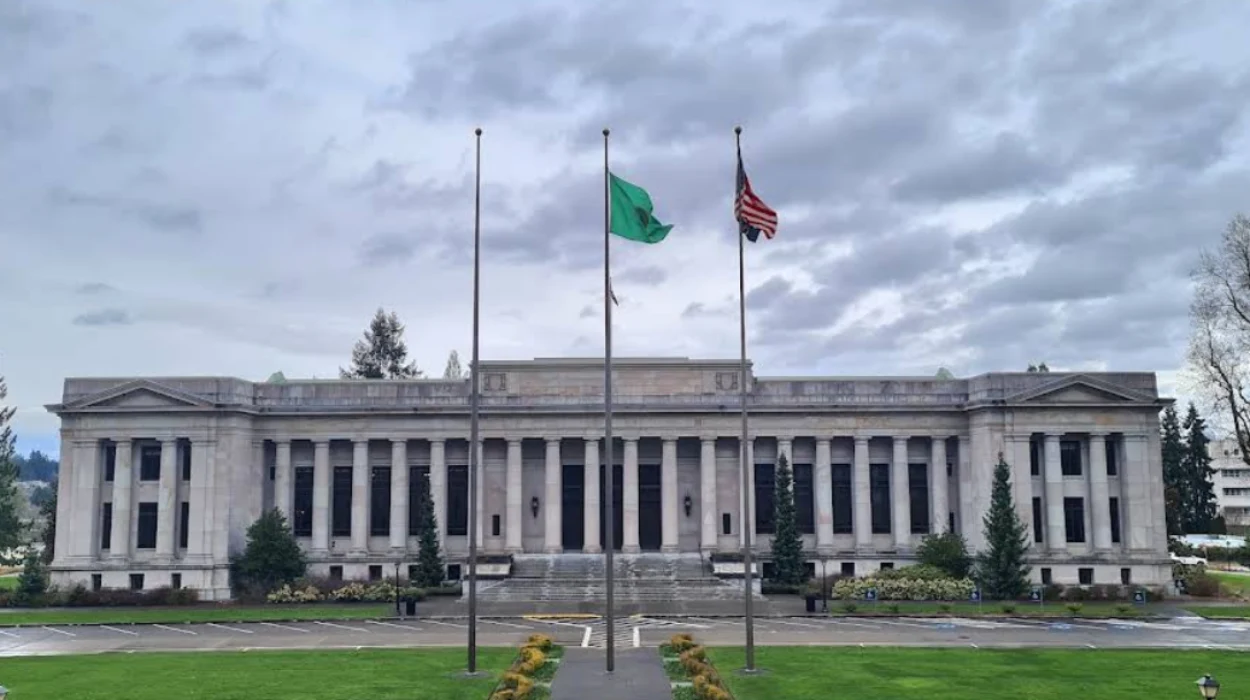
The state Supreme Court maintains ultimate constitutional jurisdiction over admission to the practice of law in Washington, giving the court full authority to grant diploma privilege or order alternative remedies independent of the WSBA or NCBE.
Explore More Yakima News
Washington Cancels July 2026 NextGen Bar Exam Over Wi‑Fi Failure in Yakima
Predictions: How This Development Will Affect Law Graduates and the Legal Sector
The collapse of the July 2026 Yakima bar examination carries immediate and long-term implications across multiple sectors of the legal community:
- Impact on Law Graduates and Candidates: Affected candidates face immediate financial vulnerabilities. Those with conditional job offers tied to passing the summer bar exam risk lost income, deferred start dates, or revoked offers if employers cannot accommodate a delay until results from a September makeup exam are released. Furthermore, candidates forced to re-study through August face burnout and additional living expenses. If the Washington Supreme Court grants emergency diploma privilege, candidates will experience immediate relief, entering the workforce as licensed attorneys without further delay.
- Impact on Legal Employers and Public Services: Public defender offices, legal aid clinics, state government agencies, and private law firms throughout Washington State rely heavily on incoming fall associate cohorts to manage caseloads. Delays in licensing create operational bottlenecks across judicial circuits, leaving legal service providers understaffed during a period of high demand.
- Impact on National Bar Exam Modernisation: This technical breakdown represents a major reputational setback for the NCBE and its NextGen examination rollout. Other jurisdictions currently planning to adopt the NextGen testing model are likely to re-evaluate their reliance on centralized digital testing infrastructure, demanding stricter redundancy protocols, offline backup modes, and local network verification standards before committing to future testing cycles.