
Key Points
- Victim Identified: A 21-year-old man, identified as Farron Kyle Wood of Clarkridge, Arkansas, died at the scene following a pedestrian collision on State Route 167.
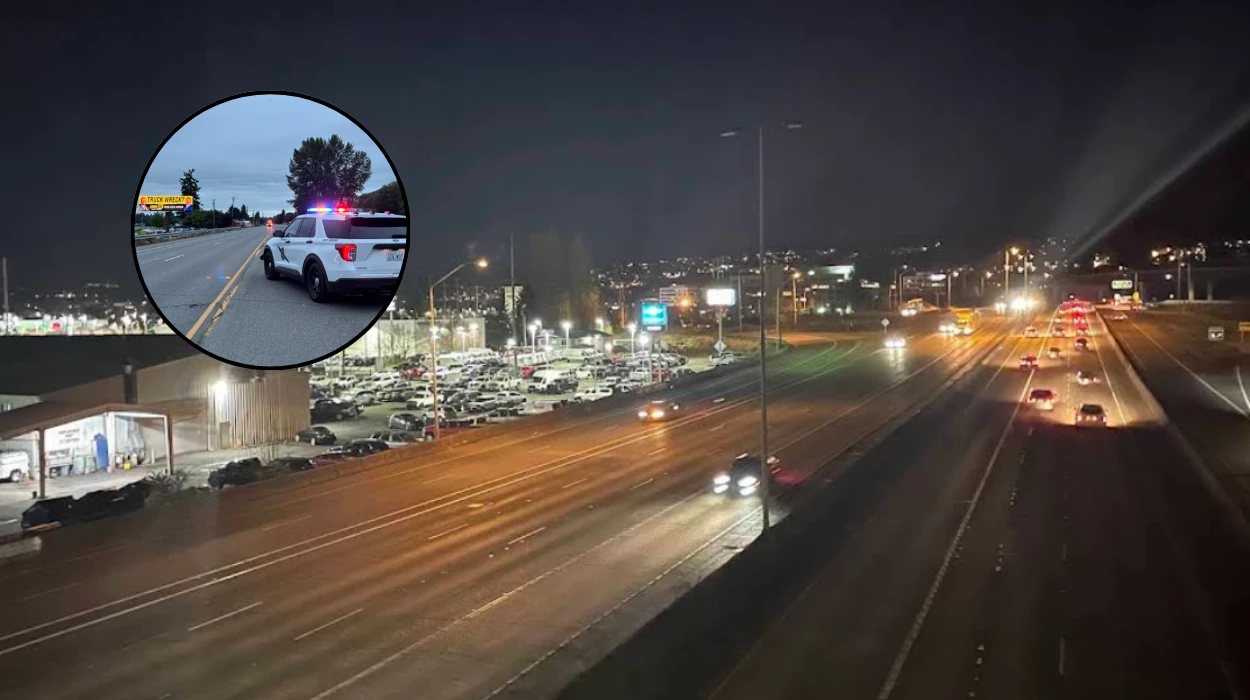
- Incident Location & Time: The fatal crash occurred at approximately 10:51 p.m. on Wednesday, 29 July 2026, on northbound State Route 167 near the exit ramp to Interstate 405 in Renton, Washington.
- Collision Details: A 2007 Honda Pilot struck Wood in the far right lane as he attempted to cross the highway from the right shoulder towards the left side.
- Driver Response: The male driver of the SUV was uninjured, remained at the scene in the neutral area between the freeway and exit, and called 911 immediately.
- Impairment Excluded: Investigators from the Washington State Patrol stated that neither alcohol nor drugs are suspected factors in the incident.
- Traffic Disruption: The northbound lanes of SR 167 were blocked for roughly three hours and 15 minutes, with traffic diverted to northbound I-405 whilst emergency crews investigated.
Washington (Evening Washington News) July 31, 2026 — A 21-year-old man was struck and killed by a Sport Utility Vehicle on northbound State Route 167 near the Interstate 405 interchange in Renton late Wednesday evening, according to initial reports from the Washington State Patrol. Emergency services responded to the scene shortly before 11:00 p.m. following a 911 call placed by the driver involved in the collision.
- Key Points
- What Occurred During the Fatal Collision on State Route 167 in Renton?
- Who Was Involved in the SR-167 Pedestrian Incident?
- How Did Emergency Services and the Washington State Patrol Respond?
- What Is the Background of Pedestrian Safety and Traffic Operations on State Route 167?
- How Could This Fatal Incident Affect Local Drivers, Regional Commuters, and Transportation Safety Stakeholders?
The incident necessitated an extended closure of the northbound carriageway, lasting over three hours while state troopers conducted a full crash reconstruction and clearance operation.
What Occurred During the Fatal Collision on State Route 167 in Renton?
As reported by Drew Dotson of the Renton Reporter, the fatal collision occurred at approximately 10:51 p.m. on Wednesday, 29 July 2026, along northbound State Route 167. The pedestrian entered the roadway from the right shoulder near the junction where the highway splits toward northbound Interstate 405.
Investigators with the Washington State Patrol established that the individual entered the traffic lane directly in the path of a 2007 Honda Pilot travelling northbound in the far right lane. The driver was attempting to exit SR 167 onto I-405 when the collision took place.
The impact occurred in the far right lane just before the exit ramp physically separates from the main freeway lines.
Following the collision, the vehicle came to rest in the gore point—the neutral paved area between the main freeway carriageway and the off-ramp.
The driver immediately contacted emergency services. First responders arrived shortly thereafter; however, the pedestrian sustained fatal injuries and was pronounced dead at the scene.
Who Was Involved in the SR-167 Pedestrian Incident?
As reported by Drew Dotson of the Auburn Reporter, the deceased pedestrian was identified as Farron Kyle Wood, 21, of Clarkridge, Arkansas. Official reports from state authorities confirm that Wood came to rest in the far right traffic lane after being struck by the oncoming vehicle.
The driver of the 2007 Honda Pilot, whose name has not been publicly released by law enforcement, was not injured in the crash.
The vehicle sustained noticeable front-end damage and was later removed from the highway by a commercial towing service.
According to Mark S. of the Pacific Attorney Group, the Washington State Patrol confirmed that preliminary findings indicate alcohol and drugs were not suspected factors for the driver involved in the crash.
Troopers have not announced any pending charges or citations against the motorist, as the pedestrian was crossing a controlled-access freeway outside of any designated crosswalk or pedestrian infrastructure.
How Did Emergency Services and the Washington State Patrol Respond?
As reported by the FOX 13 Seattle Digital Team, Washington State Patrol Trooper Rick Johnson communicated updates directly via social media as troopers established control over the collision zone. Trooper Johnson stated that
“Sadly the pedestrian that was struck has died from their injuries,”
while urging motorists to “Please use alternate routes” due to an extended highway closure.
The Washington State Patrol instituted a complete roadblock on northbound SR 167 near the I-405 junction. Traffic control measures were implemented to divert all oncoming northbound vehicles directly onto northbound I-405, avoiding the crash reconstruction area.
The closure remained active for approximately three hours and 15 minutes to allow collision detectives to map the scene, collect physical evidence, and clear debris. The roadway was subsequently reopened to traffic during the early morning hours of Thursday.
What Is the Background of Pedestrian Safety and Traffic Operations on State Route 167?
State Route 167, commonly known as the Valley Freeway, serves as a vital north-south transportation corridor connecting major commercial hubs in King and Pierce counties, including Renton, Kent, Auburn, and Puyallup.
Characterized by high-speed vehicle travel, multi-lane configurations, and heavy freight movement, the freeway is designed strictly for motor vehicle transit and lacks pedestrian infrastructure such as pavements or signalised crossings.
Despite strict state regulations prohibiting foot traffic on limited-access freeways, pedestrian entries onto high-speed corridors remain a recurring safety concern across the Puget Sound region.
Major interchanges—such as the convergence of SR 167 and I-405 in Renton—present heightened risks during overnight hours when ambient visibility is reduced, speed limits range between 50 and 60 mph, and motorists do not anticipate pedestrians crossing active lanes of traffic.
In recent years, the Washington State Department of Transportation (WSDOT) and the Washington State Patrol have executed public awareness initiatives and infrastructure adjustments along key regional corridors.
These efforts include improved roadside lighting near major ramps, increased barrier fencing along rights-of-way adjacent to commercial areas, and continuous monitoring via traffic camera networks to identify vulnerable road users entering controlled freeways before incidents occur.
Explore More Local News
Washington Department of Agriculture Misses Egg Facility Inspections (Olympia, Washington 2026)
Ecology Dept Reviews Sabey Data Center Expansion in East Wenatchee 2026
How Could This Fatal Incident Affect Local Drivers, Regional Commuters, and Transportation Safety Stakeholders?
The fatal collision on State Route 167 is anticipated to influence local transportation stakeholders, commuters, and regional enforcement agencies in several key ways:
- Impact on Local Commuters and Freight Operators: Nighttime closures along primary arterial routes like SR 167 necessitate traffic re-routing onto surrounding highways and municipal streets in Renton. While late-night traffic volumes are typically lower, recurring incidents along major interchange ramps highlight the vulnerability of logistics chains and overnight transit routes to unexpected closures.
- Heightened Focus on Pedestrian Intrusion Prevention: This development is likely to prompt state transportation officials and the Washington State Patrol to re-examine pedestrian access security along the SR 167 corridor. Local authorities may evaluate whether additional perimeter fencing or warning signage is required in areas adjacent to residential or commercial zones near the Renton interchange.
- Driver Awareness and Night-Time Safety Reminders: For the driving public across King County, the incident serves as a stark reminder of the hazards associated with nighttime driving along freeway off-ramps and interchange junctions. Law enforcement agencies routinely reiterate the importance of maintaining vigilant visual scanning, utilizing high-beam illumination when appropriate, and adhering to posted ramp speed limits to maximize reaction time for unexpected hazards.