
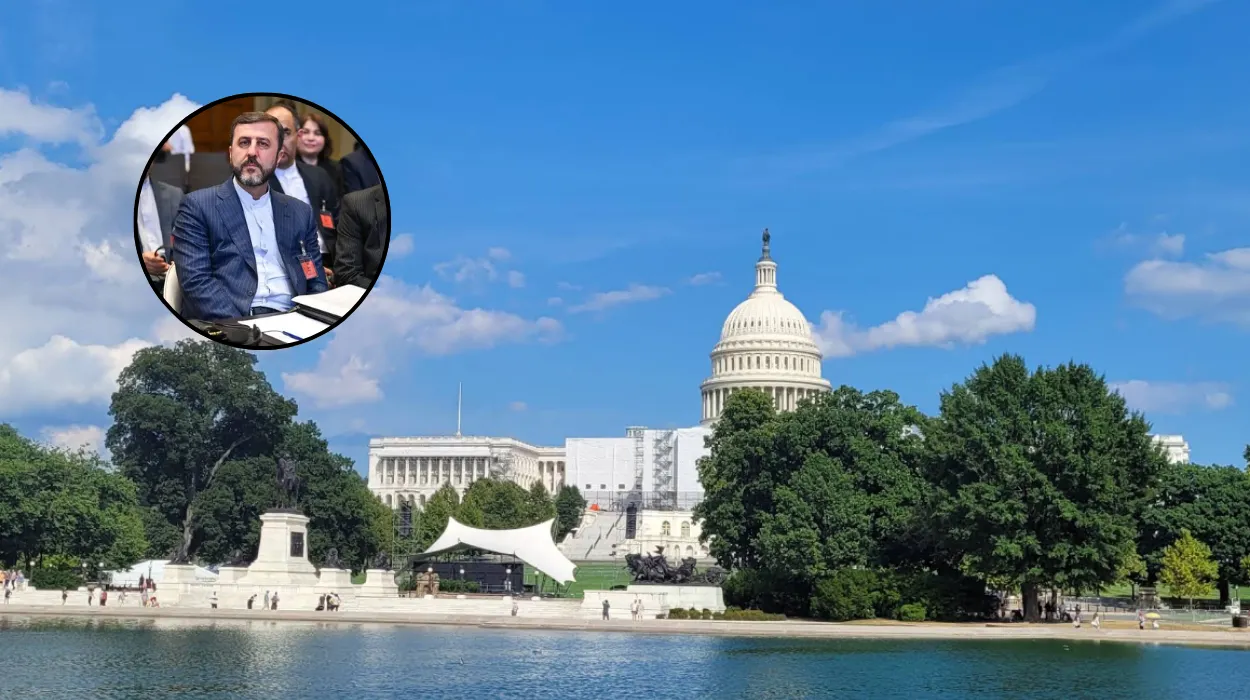
Key Points
- Iran’s Deputy Foreign Minister Kazem Gharibabadi said Tehran has suspended its commitments under the Pakistan‑mediated Islamabad Memorandum of Understanding (MoU) with the United States, citing continued US military attacks and a resumed naval blockade.
- Gharibabadi told state television that the US had not just violated but “completely dismantled” the MoU, meaning Iran no longer considers itself bound by the agreement.
- Foreign Ministry spokesperson Esmaeil Baghaei earlier described the MoU as being in a “crisis phase” and reiterated Tehran’s “commitment for commitment” principle, saying Iran will only honour obligations if Washington does the same.
- Iran’s UN ambassador Amir Saeid Iravani, in a letter to the UN Security Council, accused the US of systematically undermining the MoU and committing “war crimes” through renewed strikes, oil‑sale restrictions and support for Israeli operations in Lebanon.
- Tehran has ruled out seeking fresh talks with Washington first, with Gharibabadi stating Iran “will never request negotiations with the United States” and will instead wait for US compliance.
- The MoU, signed in mid‑June 2026 in Islamabad, was intended to halt hostilities, lift the US naval blockade, and open a 60‑day negotiation window on sanctions and nuclear issues; Iran now says those conditions have collapsed.
Tehran (Evening Washington News) July 18, 2026 —Tehran has formally suspended its obligations under the Islamabad Memorandum of Understanding (MoU) with Washington after accusing the United States of violating and then “dismantling” the pact through renewed military strikes and a reinstated naval blockade, according to statements from senior Iranian officials and a letter to the United Nations.
- Key Points
- What has Iran said about suspending the MoU with the US?
- How did the US violate the MoU, according to Tehran?
- What does Iran say about future talks and the Strait of Hormuz?
- How has Iran framed the issue at the United Nations?
- What is the status of the MoU’s original terms?
- Background to the Islamabad MoU and the current breakdown
- Prediction: How this development could affect regional and global audiences
What has Iran said about suspending the MoU with the US?
Deputy Foreign Minister Kazem Gharibabadi told Iran’s IRIB state broadcaster that the US decision to end the pause on its naval blockade of Iranian ports “completely dismantled” the MoU, leaving Tehran with no remaining commitments under the agreement.
“The United States came and violated all of its commitments under this Memorandum of Understanding,”
Gharibabadi said, adding that the word “violation” was not strong enough to describe Washington’s actions.
“The US has not merely violated the Memorandum of Understanding. With tonight’s action, the MoU has been completely dismantled. Iran is no longer bound by the MoU,”
he said, as quoted by Iranian state media.
In a separate interview, Gharibabadi said Iran would not be the first side to request new negotiations with Washington, telling a European foreign ministry official in a phone call that Tehran had not left the negotiating table but that the US had disrupted the process through its actions.
Foreign Ministry spokesperson Esmaeil Baghaei, speaking at a weekly press briefing, had earlier warned that the MoU had entered a “crisis phase” because of repeated US breaches.
He said Iran remained committed to the principle of “commitment in exchange for commitment” and insisted Tehran had never been the first party to breach its obligations.
As reported by correspondents of News18, Baghaei said relations between Tehran and Washington had entered a period of uncertainty, blaming the US for failing to uphold its commitments and accusing it of “openly violating” the ceasefire framework.
How did the US violate the MoU, according to Tehran?
Iran alleges multiple breaches relating to military operations, maritime restrictions and regional activities. In a letter to the UN Security Council, Iran’s UN ambassador Amir Saeid Iravani said Washington had
“not only failed to honor its commitments but has actively and systematically undermined the very foundations of the Memorandum”
almost immediately after it was signed.
Iravani listed what Tehran described as violations, including renewed military strikes on Iranian territory, cancellation of licences for Iranian oil sales, creation of a parallel maritime route through the Strait of Hormuz, and continued US backing for Israeli military operations in Lebanon.
Gharibabadi separately said the main basis of the MoU was ending the war against Iran and on other fronts, but that it had been violated “in both Iran and Lebanon”.
He also previously called the US revocation of a waiver allowing Iranian oil sales a “blatant violation” of Article 10 of the MoU, and cited repeated breaches of Articles 1 and 2 due to Israeli actions in Lebanon and threatening statements against Iran.
Baghaei, as reported by Aaj English TV, accused the US of violating several provisions of the 14‑point Islamabad MoU, arguing Washington began breaching the agreement almost immediately after it was signed and did not even allow the one‑month implementation period stipulated under Clause 5 relating to Iran’s obligations in the Strait of Hormuz.
What does Iran say about future talks and the Strait of Hormuz?
Iran has adopted a hardline public stance on further diplomacy in the immediate term. Gharibabadi told state television that Iran
“will never request negotiations with the United States”
and that Tehran would exercise “full sovereignty over the Strait of Hormuz”, adding that during wartime “Iran must control all of the Strait”, including waters traditionally shared with Oman, according to Tasnim News Agency.
Baghaei, as reported by Roya News, reaffirmed that a memorandum of understanding
“only holds value for us as long as it secures our national interests and national security”
and stressed that Iran’s compliance is directly tied to the actions of the United States and its allies.
How has Iran framed the issue at the United Nations?
Iran’s UN mission has sought to internationalise its complaints. In the letter to the Security Council, Iravani characterised US actions as unlawful and called on the council to take “immediate, effective and decisive steps” to force Washington to stop what he described as ongoing violations, including strikes and measures affecting Iranian oil exports.
The letter also referenced what Iran described as war crimes, though it did not provide independent legal findings; it framed the MoU as a mechanism intended to end the conflict and lead to a lasting peace arrangement that Iran says has been undermined by US conduct.
What is the status of the MoU’s original terms?
The Islamabad MoU, digitally signed in mid‑June 2026 and mediated by Pakistan and Qatar with Swiss facilitation for the formal signing, was designed as a temporary framework to halt hostilities and open a 60‑day negotiation window focused on sanctions and nuclear issues.
Gharibabadi had earlier told Iranian media that the MoU did not mean “trusting the enemy” but had been written with “active distrust”, and that Iran would monitor implementation of US commitments before entering the 60‑day talks.
Under the original design, verification of US obligations — including ending the naval blockade, ending hostilities, and releasing blocked Iranian assets — was meant to precede Iran’s full entry into the next negotiation phase. Tehran now says those preconditions have failed and the agreement is effectively void.
Background to the Islamabad MoU and the current breakdown
The Islamabad MoU emerged from indirect negotiations involving Pakistan and Qatar, with Switzerland hosting the formal signing ceremony in mid‑June 2026.
It aimed to create a pause in fighting, lift a US naval blockade around Iranian ports, and establish a roadmap for talks on sanctions and Iran’s nuclear file.
Iranian officials repeatedly stressed that the deal was not based on trust but on reciprocal performance: “commitment for commitment”.
Gharibabadi said the text reflected Iran’s leverage from military and diplomatic strength and that Tehran incorporated its key positions into the draft.
Within weeks, however, both sides accused each other of violations. Iran pointed to resumed US strikes, restrictions on oil sales, and Israeli operations in Lebanon backed by Washington as breaches of the ceasefire and MoU clauses.
The US side, according to summaries in Gulf News, argued that Iran had breached the agreement first, with President Donald Trump later declaring the memorandum “meant nothing” after Tehran’s actions.
The latest escalation — a fresh wave of US airstrikes and a reinstated naval blockade — prompted Tehran to declare the MoU “dismantled” and to suspend its own obligations.
Prediction: How this development could affect regional and global audiences
The suspension of the MoU and the accompanying rhetoric increase the risk of prolonged military exchanges in the Gulf and wider Middle East, which could affect several audiences:
- Regional governments and populations may face heightened security threats from expanded air and naval operations, with potential disruptions to shipping lanes and energy exports that could raise insurance costs and affect trade through the Strait of Hormuz.
- Global energy markets could react to any sustained interference with oil transit or port operations, as even perceived risks to Hormuz traffic tend to influence crude prices and freight rates.
- Diplomatic actors and mediators — including Pakistan, Qatar, European states and the UN — may confront a narrower window for de‑escalation if both sides硬的en their public positions and refuse to initiate fresh talks.
- Businesses with Gulf exposure — from shipping lines to insurers and energy firms — may need to reassess risk profiles and contingency plans if the ceasefire framework continues to erode and military activity intensifies.
Unless verified compliance with core MoU commitments is re‑established or a new framework is negotiated, the trajectory points toward a more volatile security environment with knock‑on effects for regional stability and global trade.