
Key Points
- Summit Delegation: Pine Island residents Cindy and Alan Bickford joined over 70 climate disaster survivors in Washington, D.C., to advocate for structural emergency reforms.
- Legislative Demands: The Florida representatives lobbied the office of US Representative Byron Donalds, presenting proposals to allow incremental flood insurance payments and secure heightened funding for the Federal Emergency Management Agency (FEMA).
- Local Preparedness Models: The Bickfords highlighted the grassroots success of Pine Island’s Beacon of Hope and the Greater Pine Island Emergency Task Force (GPIETF) as scalable frameworks for national disaster resilience.
- National Statistics: Advocacy organisers presented data indicating that 51% of Americans have now lived through four or more extreme weather incidents, highlighting a critical shift in national exposure.
- Digital Expansion: Building on the Capitol hill event, the Extreme Weather Survivors group is launching a free online community platform during a structured launch week scheduled for July 20-24, 2026.
Washington, D.C. (Evening Washington News) July 16, 2026 — In a direct bid to influence federal emergency management policy as critical funding bills sit before the United States Congress, hurricane survivors from southwest Florida have taken their recovery challenges directly to Capitol Hill. Cindy and Alan Bickford, residents of Pine Island, Florida—a community heavily impacted by the Category 4 winds and devastating storm surges of Hurricane Ian in 2022—were among a delegation of more than 70 individuals from across the United States who convened in the nation’s capital on June 29, 2026. The delegation attended the “Extreme Weather Survivors Stolen Summers Summit and Advocacy Day,” an event organized to systematically train disaster survivors in legislative storytelling and connect them with federal lawmakers.
- Key Points
- Why Did Southwest Florida Survivors Take Their Demands To Capitol Hill?
- How Did Local Grassroots Resilience Form A Blueprint At The Summit?
- What Role Did Art And Direct Storytelling Play At The U.S. Capitol?
- Background of the Extreme Weather Advocacy Movement
- Prediction: How This Advocacy Will Affect Coastal Residents and Policyholders
Why Did Southwest Florida Survivors Take Their Demands To Capitol Hill?
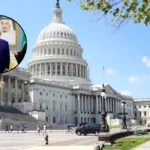
As reported by local news outlets covering the Florida delegation, the Bickfords coordinated directly with the legislative staff of US Representative Byron Donalds (R-FL 19th District), whose constituency encompasses the storm-exposed barrier islands of Lee County.
The primary objective of the meeting was to convey the compounding systemic obstacles that residents face during long-term coastal recovery.
According to reports, the Bickfords detailed their personal experiences navigating the post-disaster landscape, specifically highlighting the friction points encountered when dealing with the Federal Emergency Management Agency (FEMA), private insurance providers, and municipal rebuilding permits.
To address these vulnerabilities, the Florida advocates presented two specific policy proposals to Representative Donalds’ office:
- FEMA Funding Authorization: A formal request for the congressman to support expanded, stable federal funding allocations for FEMA as it faces an escalating volume of multi-billion-dollar domestic disasters.
- Flood Insurance Restructuring: A proposal to reform National Flood Insurance Program (NFIP) structures, allowing policyholders to pay premiums in monthly or quarterly increments rather than the currently mandated annual lump-sum payments.
The policy proposals coincide with active legislative debates in Washington, where several bills aimed at restructuring FEMA’s administrative processes and funding levels are currently undergoing committee review.
How Did Local Grassroots Resilience Form A Blueprint At The Summit?
Beyond detailing the administrative delays associated with federal recovery, the Pine Island delegation presented local solutions that could serve as national models.
As documented in community updates, the Bickfords presented data regarding the operational success of the Beacon of Hope and the Greater Pine Island Emergency Task Force (GPIETF).
The GPIETF, which operates under the administrative leadership of the Beacon of Hope nonprofit, was officially authorized by the Lee County Board of Commissioners to coordinate directly with the Lee County Emergency Operations Center.
The task force brings together local business owners, regional utility managers, and emergency services to initiate immediate, localized disaster response before off-island state or federal personnel can arrive on the scene.
The Bickfords reported that summit attendees from other storm-exposed jurisdictions expressed significant interest in the Pine Island structural model, particularly regarding how an isolated island community managed to secure its own power, internet, and food distribution networks independently in the immediate aftermath of a major storm.
What Role Did Art And Direct Storytelling Play At The U.S. Capitol?
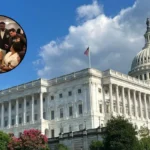
The second day of the summit shifted from closed-door congressional offices to the public grounds of the US Capitol. The Bickfords joined fellow advocates at a public art installation titled “Stolen Summers: The Next 250,” designed to mark the upcoming United States Semiquincentennial by highlighting the human cost of climate instability.
As reported by climate policy writer Cheryl Barnds, the installation featured 250 curated narratives detailing extreme weather recovery and physical loss from all 50 states.
During the exhibition, survivors took turns presenting oral histories to passing congressional staff, tourists, and media representatives.
Opening the exhibition, Chris Kocher, co-founder of the non-profit organization Extreme Weather Survivors, stated:
“People who have lived through floods, fires, extreme heat, and other weather disasters are the fastest growing population in this country, and those families need support.”
The installation aimed to visually represent the statistics compiled by the non-profit, which show that approximately 51% of modern Americans have personally experienced four or more distinct extreme weather events.
Organizers stressed that as disasters become more frequent and expensive, public sentiment is shifting toward demanding systemic, preventative action from federal leaders.
Background of the Extreme Weather Advocacy Movement
The Washington summit represents a key milestone for Extreme Weather Survivors, a nationwide, trauma-informed peer network designed specifically for individuals who have lived through acute weather disasters.
Founded to address the long-term psychological and physical isolation that follows structural destruction, the group provides free, trauma-informed support while simultaneously training survivors to engage in public policy advocacy.
Historically, disaster recovery in the United States has been treated as a localized, temporary issue, with coordination heavily reliant on short-term federal aid and private insurance payouts. However, as climate-induced weather anomalies increase in severity, organizations like Extreme Weather Survivors have sought to nationalize the conversation.
By establishing a permanent, unified lobby of survivors from different regions—uniting wildfire survivors from the West Coast with hurricane survivors from the Gulf Coast—the organization aims to build a cohesive national constituency.
Following the momentum of the Washington advocacy days, the organization is transitionally shifting its focus toward digital scaling. Leaders have announced the official launch of a free, nationwide online community platform designed to facilitate continuous peer-to-peer resource sharing.
The platform is scheduled for a public “Launch Week” running from July 20 to July 24, 2026, which will feature virtual connection events, disaster-specific workshops, and community-building initiatives open to any individual affected by extreme weather.
Explore More Local News
Police Investigate Body Found on Washington Street, Vicksburg 2026
Trump Presses Iraqi PM al-Zaidi on Militia Disarmament, Washington 2026
Prediction: How This Advocacy Will Affect Coastal Residents and Policyholders
The efforts of the Washington delegation are expected to have a direct, tangible impact on coastal property owners and residents of high-risk climate zones in the coming years.
If the legislative proposals advanced by advocates like the Bickfords are successfully integrated into federal policy, homeowners in flood-prone regions could see a major change in the affordability of disaster protection.
Transitioning the National Flood Insurance Program (NFIP) from an annual lump-sum billing cycle to an incremental monthly payment model would significantly reduce the immediate financial strain on middle- and low-income families.
This structural change could lower barriers to maintaining continuous flood coverage, thereby reducing the number of uninsured properties when subsequent storms make landfall.
Furthermore, the promotion of community-led disaster frameworks, such as Pine Island’s Emergency Task Force, is likely to accelerate a shift toward localized emergency management.
As federal resources are increasingly stretched thin by concurrent national disasters, federal and state agencies are predicted to incentivize and fund decentralized, county-level resilience hubs.
For coastal residents, this transition means that initial post-disaster survival infrastructure—ranging from localized power generation to immediate medical and supply distribution—will increasingly be managed by trained local neighbors rather than delayed federal rescue teams.