

Key Points
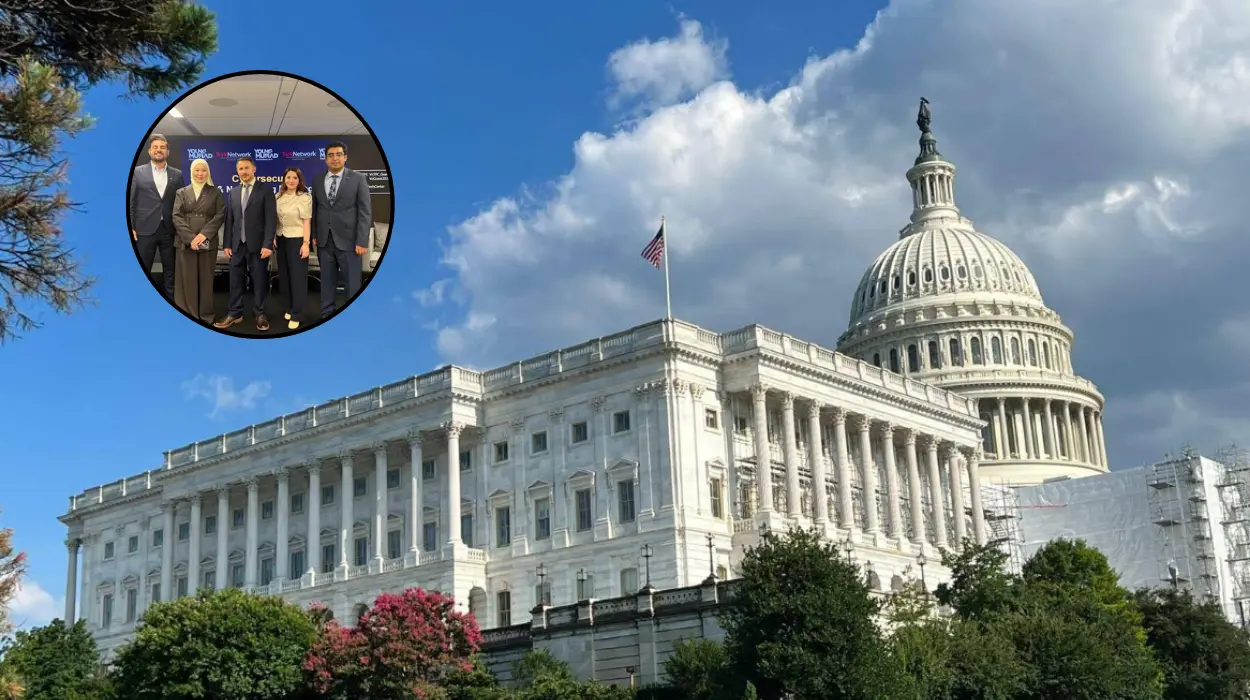
- Strategic Collaboration: Young MÜSİAD Washington D.C. partnered with TurkNetwork Magazine to host a specialized “Cybersecurity Networking & Awareness” forum.
- Premier Venue: The summit took place on June 24, 2026, at Verizon’s high-profile Technology and Policy Center in the heart of Washington D.C.
- Broad Attendance: The event brought together a large delegation of Turkish and American entrepreneurs, tech professionals, and university students based across the District of Columbia, Maryland, and Virginia (DMV) region.
- Diplomatic and Institutional Backing: Key opening speeches were delivered by senior leaders from TurkNetwork Magazine, Young MÜSİAD, MÜSİAD Virginia, and the Turkish Presidential Investment and Finance Office.
- Expert Insights: Industry veterans Michelle Ilknur Vonal and Bahadır Dilber led the technical panels, addressing corporate threats, Zero Trust architecture, and artificial intelligence in security.
- Economic Diplomacy: The event served as a commercial and social bridge, designed to fortify bilateral economic ties between the United States and Türkiye.
Washington, D.C. (Evening Washington News) July 9, 2026, in a formal partnership with TurkNetwork Magazine, convened an executive-level “Cybersecurity Networking & Awareness” forum on June 24, 2026, within the secure confines of the Verizon Technology and Policy Center. The strategic gathering was engineered to dramatically elevate cybersecurity readiness among corporate leaders, whilst simultaneously expanding commercial cooperation between the Turkish and American tech sectors.
- Key Points
- What Were the Strategic Goals of the Young MÜSİAD Cybersecurity Initiative?
- Who Delivered the Opening Briefings at the Verizon Technology Center?
- How Are Industry Experts Mitigating Corporate Cyber Threats and AI Risks?
- What Commercial Opportunities Developed During the Strategic Networking Session?
- Background of the Young MÜSİAD Institutional Framework
- Future Predictions: How This Development Will Impact Young Professionals and Entrepreneurs
- Institutional Maturation of Transatlantic Ventures
What Were the Strategic Goals of the Young MÜSİAD Cybersecurity Initiative?
As reported by staff correspondents at TurkNetwork Magazine, the international assembly was targeted at resolving a critical vulnerability in the contemporary commercial ecosystem:
the escalating complexity of cross-border cyber threats facing small-to-medium enterprises (SMEs) and young entrepreneurs.
By utilizing the state-of-the-art facilities at the Verizon Technology and Policy Center, the organizers sought to create a secure, high-tech environment where technical education could directly merge with cross-industry networking.
The event successfully attracted an influential cohort of Turkish and American entrepreneurs, executive professionals, and academic researchers from across the Washington metropolitan area. The strategic placement of this event in the nation’s capital allowed organizers to bridge the gap between commercial market interests and federal-level technological policies, positioning Young MÜSİAD as a vital institutional conduit in the transatlantic technology sector.
Who Delivered the Opening Briefings at the Verizon Technology Center?
According to reporting from editorial teams at MÜSİAD USA Chronicles, the opening segment of the summit featured a series of aligned addresses detailing the geopolitical and macroeconomic parameters of US-Türkiye trade relations.
The initial welcoming remarks were delivered by Sıtkı Kazancı, representing TurkNetwork Magazine, who emphasized the critical role that independent media and specialized trade publications play in chronicling and connecting diaspora business communities across North America.
Following Kazancı, Hashim Yahya, the Regional Manager and President of Young MÜSİAD Washington D.C., outlined the organizational growth strategy for the youth wing of the Independent Industrialists and Businessmen Association (MÜSİAD).
Yahya detailed how the organization’s expanding global footprint—which currently extends across dozens of international representative offices—is purposefully geared toward equipping the next generation of corporate executives with structural resilience, ethics, and deep technical competencies.
The institutional framework was further expanded by Mehmet Tavan, the MÜSİAD Virginia Representative, who spoke on the regional integration of commerce across the broader DMV area. Tavan highlighted the necessity of local business chapters providing practical, real-world utility to their members, rather than merely acting as static social clubs.
Concluding the introductory session, Alicia Sornson, the District of Columbia Representative for the Turkish Presidential Investment and Finance Office, provided a macroeconomic overview of current bilateral investment pipelines.
Sornson explicitly touched upon the rapid expansion of the Turkish-American corporate ecosystem in Washington D.C., underscoring how collaborative technology events serve as foundational pillars for strengthening long-term social, diplomatic, and economic ties between Ankara and Washington.
How Are Industry Experts Mitigating Corporate Cyber Threats and AI Risks?
As documented by technology analysts tracking the event panels, the core educational component of the evening was led by two prominent cybersecurity practitioners:
Michelle Ilknur Vonal, an active Cybersecurity Engineer, and Bahadır Dilber, an expert specializing in Cybersecurity and Identity Access Security.
The two speakers provided a comprehensive diagnostic assessment of the modern digital threat matrix, moving past theoretical concepts to deliver actionable defense protocols for the attending business owners.
During her presentation, Michelle Ilknur Vonal focused heavily on the mechanics of modern corporate cyber threats, specifically pointing out that human error and outdated perimeter defenses remain the primary entry points for corporate threat actors.
Vonal detailed the structural transition toward “Zero Trust Architecture”—a security framework based on the rigid premise of “never trust, always verify”—explaining how companies must strictly authenticate every user and device attempting to access institutional networks, regardless of whether they sit inside or outside the physical office perimeter.
Complementing Vonal’s architectural analysis, Bahadır Dilber broke down the complexities of Identity and Access Management (IAM) within cloud environments.
Dilber noted that as mid-sized corporations rapidly shift their core infrastructure to distributed cloud systems, identity verification becomes the new true firewall. Furthermore, Dilber provided a deep dive into artificial intelligence-driven security solutions.
He detailed how machine learning algorithms are now actively utilized by both sides of the cybersecurity landscape: threat actors are using AI to engineer highly sophisticated, automated phishing campaigns, while enterprise security teams are deploying AI to analyze massive network traffic patterns in real-time, allowing them to isolate anomalies and contain data breaches before they can spread horizontally across corporate networks.
The technical panel concluded with an extended interactive session, where both Vonal and Dilber fielded questions from entrepreneurs regarding the financial feasibility of implementing robust cybersecurity controls within resource-constrained startup environments.
What Commercial Opportunities Developed During the Strategic Networking Session?
Based on event logs compiled by TurkNetwork Media, the final phase of the program transitioned into a structured networking and business-to-business (B2B) matchmaking session.
This portion of the evening allowed attendees to immediately apply the conceptual knowledge gained during the cybersecurity briefings to their ongoing commercial operations.
The session successfully brought together young tech professionals, legal advisers, venture capitalists, and academic students from regional universities.
By establishing an open yet highly targeted environment, the forum facilitated preliminary discussions on several joint ventures in the technology, consulting, and software engineering sectors.
Representatives from Young MÜSİAD noted that these face-to-face interactions are vital for lowering market entry barriers for young Turkish entrepreneurs arriving in the United States, while simultaneously giving American technology companies direct access to a highly skilled, bilingual talent pool.
Background of the Young MÜSİAD Institutional Framework
To fully understand the context of the Washington D.C. summit, it is necessary to examine the institutional architecture of the host organization.
Founded originally in Istanbul, Türkiye, in 1990, MÜSİAD (the Independent Industrialists and Businessmen Association) was established as a values-driven, non-governmental business organization focused on driving ethical economic growth, equity, and social development.
Recognizing the vital importance of cultivating future leadership, the organization established “Young MÜSİAD” in 2002.
The youth division was specifically designed to cater to entrepreneurs, professionals, and university students aged 18 to 35, focusing on business ethics, entrepreneurial innovation, and international trade awareness.
Over the past two decades, Young MÜSİAD has transformed into a massive international network, operating more than 56 representations inside Türkiye and over 32 dedicated foreign offices worldwide. The establishment of the Washington D.C.
branch, alongside regional hubs in New York, Chicago, Philadelphia, and Houston, marks a coordinated, long-term effort by the organization to embed itself within the United States market.
By partnering with diaspora publications like TurkNetwork Magazine, the organization has created a highly resilient infrastructure capable of executing complex educational programs, policy forums, and high-level networking initiatives designed to support corporate entities operating in an increasingly globalized economy.
Explore More Local News
Washington’s Libya Haftar Talks Risk Sudan Signals — North Africa 2026
Damaging Storms and Flash Floods Threaten Commuters: Washington D.C. 2026
Future Predictions: How This Development Will Impact Young Professionals and Entrepreneurs
The successful execution of the Cybersecurity Networking & Awareness event at Verizon is poised to trigger several distinct structural shifts for young professionals and business owners operating within the transnational US-Türkiye corridor.
For small-to-medium business owners and young entrepreneurs, the direct access to enterprise-grade insights from experts like Vonal and Dilber will likely accelerate the adoption of formal cybersecurity frameworks.
As federal and international data privacy regulations tighten throughout 2026, smaller firms can no longer afford to treat security as a secondary concern.
Entrepreneurs who attended this session are predicted to transition their businesses toward cloud-native, Zero Trust setups much earlier in their lifecycle, reducing the statistically high risk of early-stage bankruptcy caused by catastrophic data breaches or ransomware strikes.
For young professionals and international students in the DMV area, the deepening relationship between corporate giants like Verizon, diplomatic investment bodies, and trade networks like Young MÜSİAD will create a highly predictable, formalized career pipeline.
The ongoing alignment of these organizations predicts an increase in specialized internships, technical mentorships, and direct employment opportunities within the defense, telecommunications, and cybersecurity sectors.
Bilingual young professionals who possess a deep understanding of both American operational security standards and Turkish market dynamics will find themselves in exceptionally high demand as corporations seek to secure their international supply chains.
Institutional Maturation of Transatlantic Ventures
Looking long-term, the ongoing occurrence of these high-level technology forums indicates that Turkish-American commercial ventures are rapidly moving past traditional trade sectors—such as textiles, real estate, and food services—and shifting decisively into advanced software engineering, artificial intelligence governance, and digital infrastructure protection.
This evolution will likely lead to increased venture capital allocations from both American and Turkish investment funds, directly benefiting young innovators who can present secure, compliant, and highly scalable technological solutions to global market demands.