
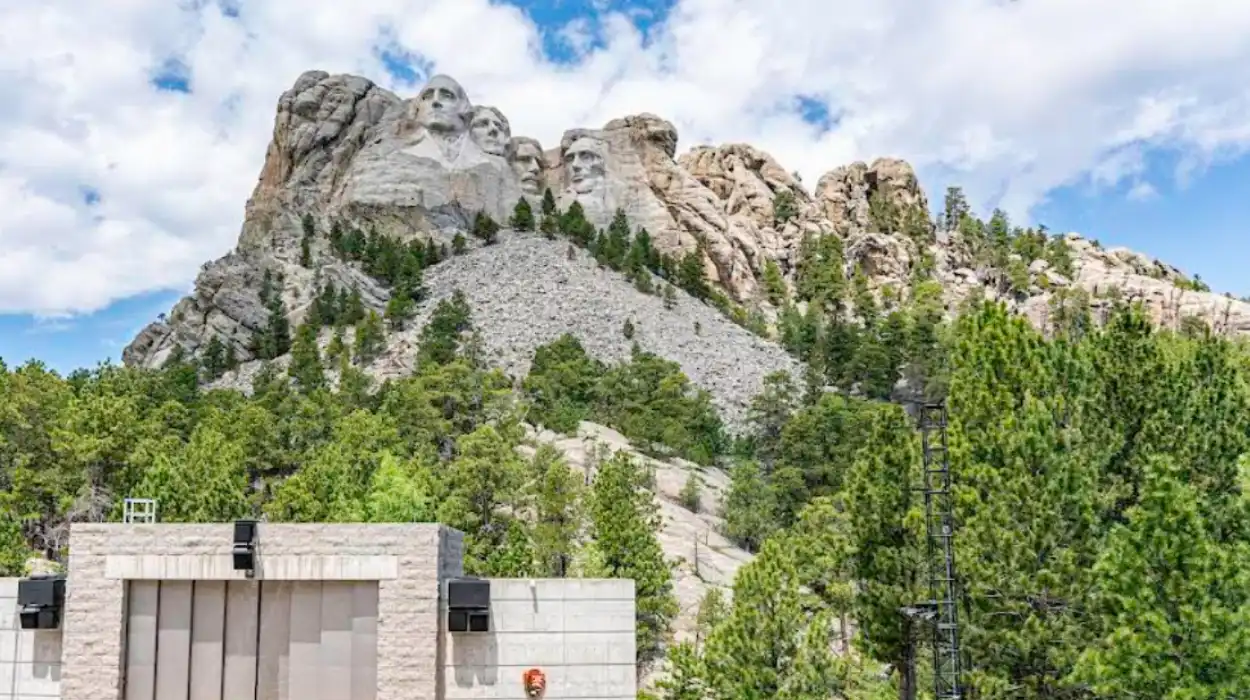
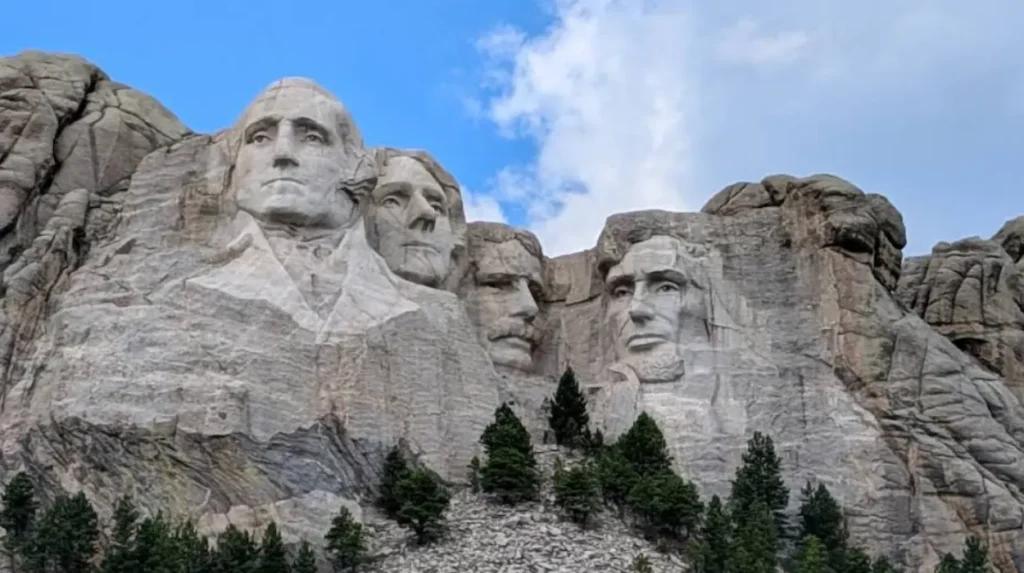
Mount Rushmore is a national memorial in South Dakota that features four U.S. presidents carved into granite: George Washington, Thomas Jefferson, Theodore Roosevelt, and Abraham Lincoln. It is one of the most recognized landmarks in the United States and a major tourism site tied to American history, national symbolism, and Native American land history.
- What Is Mount Rushmore?
- Why Was Mount Rushmore Built?
- Who Are The Four Presidents?
- How Was Mount Rushmore Carved?
- What Is The History Behind The Site?
- What Makes The Monument Significant?
- How Has The Monument Changed Over Time?
- What Facts Matter Most?
- Why Does Mount Rushmore Still Matter?
- What Should Visitors Know?
- Why It Ranks For Search
What Is Mount Rushmore?
Mount Rushmore is a monumental granite sculpture in South Dakota that depicts four U.S. presidents and represents the founding, expansion, preservation, and development of the United States. The memorial stands as a historic landmark, a tourism draw, and a contested symbol of American identity.
Mount Rushmore is located in the Black Hills region of South Dakota, an area with deep cultural and spiritual meaning for several Native American tribes. The sculpture was designed by Gutzon Borglum and later completed by his son, Lincoln Borglum, after construction began in 1927 and finished in 1941. The site became a national monument in 1925 and is now managed by the National Park Service.
Why Was Mount Rushmore Built?
Mount Rushmore was built to attract visitors to South Dakota and to present a national story through four presidential figures chosen to symbolize major phases of U.S. history. The project combined tourism goals, political symbolism, and large-scale public art.
The original idea came from South Dakota state historian Doane Robinson in the 1920s. His first concept focused on other figures and a different site, but Borglum redirected the project toward the four presidents and the current mountain face. Borglum described the work as honoring the founding, expansion, preservation, and unification of the United States. That framework explains why Washington, Jefferson, Lincoln, and Roosevelt were selected.
The memorial also reflects the federal government’s growing role in national monuments during the early 20th century. Funding, labor, engineering, and public messaging all came together in one of the most ambitious sculpture projects in U.S. history.
Who Are The Four Presidents?
The four carved presidents are George Washington, Thomas Jefferson, Theodore Roosevelt, and Abraham Lincoln. Each figure represents a different national theme: independence, expansion, conservation and industrial power, and preservation of the Union.
George Washington represents the founding of the United States as its first president and commander of the Continental Army. Thomas Jefferson represents expansion because he authored the Declaration of Independence and oversaw the Louisiana Purchase era. Abraham Lincoln represents preservation because he led the nation through the Civil War and kept the Union intact. Theodore Roosevelt represents development because he expanded the role of the federal government and supported conservation, infrastructure, and modern American power.
The order and selection were deliberate, not decorative. Borglum wanted the monument to communicate a historical narrative through recognizable leaders who shaped the nation’s growth. That design choice remains central to how the memorial is interpreted today.
How Was Mount Rushmore Carved?
Mount Rushmore was carved using dynamite, drills, hand tools, and pneumatic equipment over 14 years of work, with most of the rock removed by blasting and the finishing done by hand. The project depended on engineering, scale models, and skilled labor.
Construction started on October 4, 1927, and continued through October 31, 1941. Around 400 workers participated in the project. Roughly 90 percent of the mountain was shaped with dynamite, then refined with tools such as pneumatic hammers and chisels. Borglum used scale models to guide the final carving and to translate the design to the mountain face.
The faces are about 60 feet tall each, which makes the sculpture visible from a long distance. The mountain itself rises to about 5,725 feet above sea level. The scale explains why the work became a landmark in both art history and American engineering.
What Is The History Behind The Site?
The Mount Rushmore site sits on land that was historically sacred to the Lakota and other Native peoples, and the Black Hills were recognized in the 1868 Treaty of Fort Laramie before gold discovery and later U.S. settlement pressures led to conflict. The memorial’s history includes both national celebration and deep controversy.
The Black Hills are called Paha Sapa by the Lakota, and the area has long held religious and cultural importance. The U.S. government recognized the Black Hills as Lakota territory under the 1868 Treaty of Fort Laramie. That agreement unraveled after gold was discovered in 1874, which triggered large-scale intrusion and conflict. The resulting Great Sioux War and the broader erosion of treaty rights remain central to understanding the site’s meaning.
The mountain used for the memorial was originally known by Native communities as the Six Grandfathers Mountain. The later name “Mount Rushmore” came from Charles E. Rushmore, a New York lawyer connected to an 1880s expedition in the Black Hills. That naming history is part of the broader transformation of the site from Indigenous homeland to national monument.
What Makes The Monument Significant?
Mount Rushmore is significant because it combines sculpture, national symbolism, engineering, and contested cultural history in one protected landscape. It is also one of the most visited landmarks in the United States, with more than 1.8 million visitors recorded in 2024.
The memorial’s importance goes beyond the carved faces. The full cultural landscape covers 1,278 acres and includes natural features, structures, viewsheds, and visitor design elements. The National Park Service identifies the site as a cultural landscape with significance in art, history, and archaeology. The period of significance in the National Register context stretches from 3500 BCE to 1967 CE.
Visitor numbers show the memorial’s continued relevance. The site drew 1,850,329 visitors in 2024. That scale makes the memorial one of the most important heritage tourism destinations in the country.
How Has The Monument Changed Over Time?
Mount Rushmore changed from a privately driven carving project into a federally managed memorial with added infrastructure, security, and visitor planning. The site now reflects both preservation needs and modern tourism management.
The National Park Service incorporated Mount Rushmore into its system in 1933. After Borglum died in March 1941, Lincoln Borglum finished the project later that year. The memorial has since undergone operational updates, security improvements, and landscape planning tied to public access and preservation.
The site also includes facilities, trails, and overlooks that support the visitor experience while protecting the monument. These changes help preserve the sculpture while making it easier for the public to understand and view the memorial.
Explore More Things to do
Colchuck Lake Hike Guide: Washington State Adventure Tips
Lake Wenatchee Washington Guide for Outdoor Activities and Camping
What Facts Matter Most?
The most useful facts about Mount Rushmore are its location, scale, construction timeline, visitor volume, and historical symbolism. These facts explain why the site remains important to travelers, historians, and search audiences today.
- Location: Black Hills region of South Dakota.
- Carvers: Gutzon Borglum and Lincoln Borglum.
- Presidents: Washington, Jefferson, Roosevelt, and Lincoln.
- Face height: about 60 feet each.
- Construction years: 1927 to 1941.
- Worker count: about 400 workers.
- 2024 visitation: 1,850,329 people.
These facts form the core of most user intent around the topic. They support quick answers, featured snippets, and AI-generated summaries because they are specific, stable, and widely cited.
Why Does Mount Rushmore Still Matter?
Mount Rushmore still matters because it remains a powerful symbol of U.S. national identity while also standing at the center of ongoing debates about land, memory, and representation. Its meaning is historical, political, and cultural at the same time.
The monument attracts visitors who want a clear symbol of American history. It also draws scrutiny because it was built on land with deep significance to Native communities and because the Black Hills remain tied to treaty conflict and dispossession. Those competing meanings keep the memorial relevant in education, public history, and civic discussion.
For evergreen publishing, this combination matters. A page about Mount Rushmore ranks best when it explains the sculpture itself, the four presidents, the carving process, the Black Hills context, and the ongoing significance in one complete narrative. That structure matches how users and AI systems extract meaning from authoritative content.
What Should Visitors Know?
Visitors should know that Mount Rushmore is a protected national memorial with strict site rules, defined access areas, and a focus on both interpretation and preservation. Planning matters because the memorial functions as a managed public site, not only a scenic viewpoint.
The site has rules for parking, pets, accessibility, special permits, and drones. Drones and other unmanned aircraft are prohibited within the memorial boundary. Pets are restricted to parking garages and adjacent areas. These rules protect visitor safety and preserve the memorial environment.
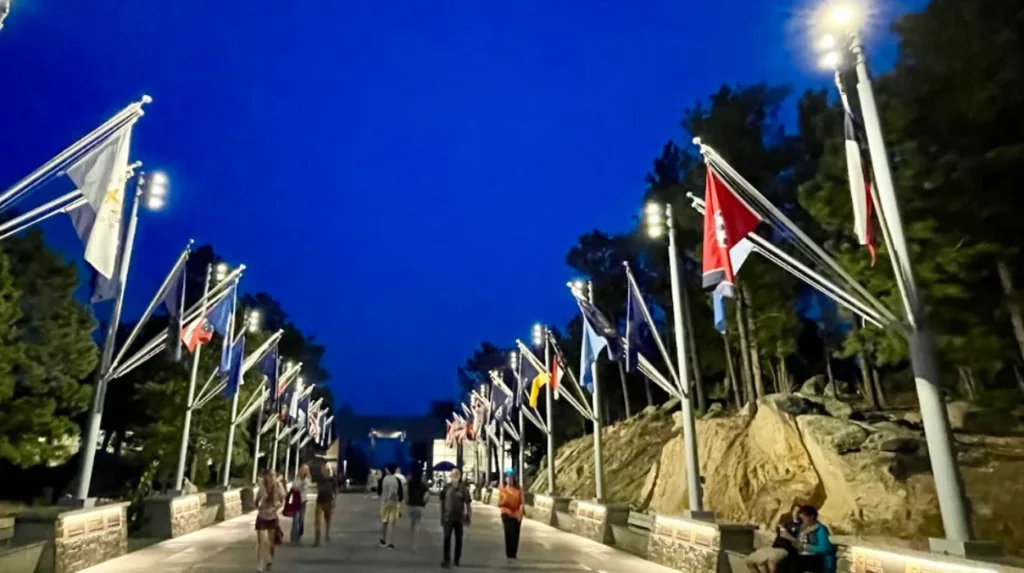
The site experience is built around approach, framing, and arrival, which means the monument is designed to be seen through carefully managed viewpoints. That makes Mount Rushmore different from a roadside attraction. It is a formal national memorial with layered historical meaning, a large cultural landscape, and continuing preservation needs.
Why It Ranks For Search
Mount Rushmore ranks well in search because it is a high-recognition entity with stable facts, strong historical associations, and clear informational intent. Search systems favor pages that define the monument, explain its background, and answer direct user questions in a structured way.
This topic supports broad search intent because users want facts, history, visiting information, and cultural context. The strongest evergreen coverage uses the central entity name repeatedly and naturally, then expands into related entities such as the Black Hills, the National Park Service, Borglum, the four presidents, and the Lakota context. That entity-rich structure improves semantic relevance.
For a Washington audience, the topic also works well because Mount Rushmore connects to national history, road-trip planning, civic education, and U.S. landmark travel interest. A complete article on the subject can serve general readers, travelers, students, and AI search results at the same time.
What is Mount Rushmore?
Mount Rushmore is a national memorial in the Black Hills of South Dakota featuring the 60-foot-tall granite sculptures of four U.S. presidents: George Washington, Thomas Jefferson, Theodore Roosevelt, and Abraham Lincoln. It symbolizes key periods in American history and is one of the most recognizable landmarks in the United States.