
Key Points
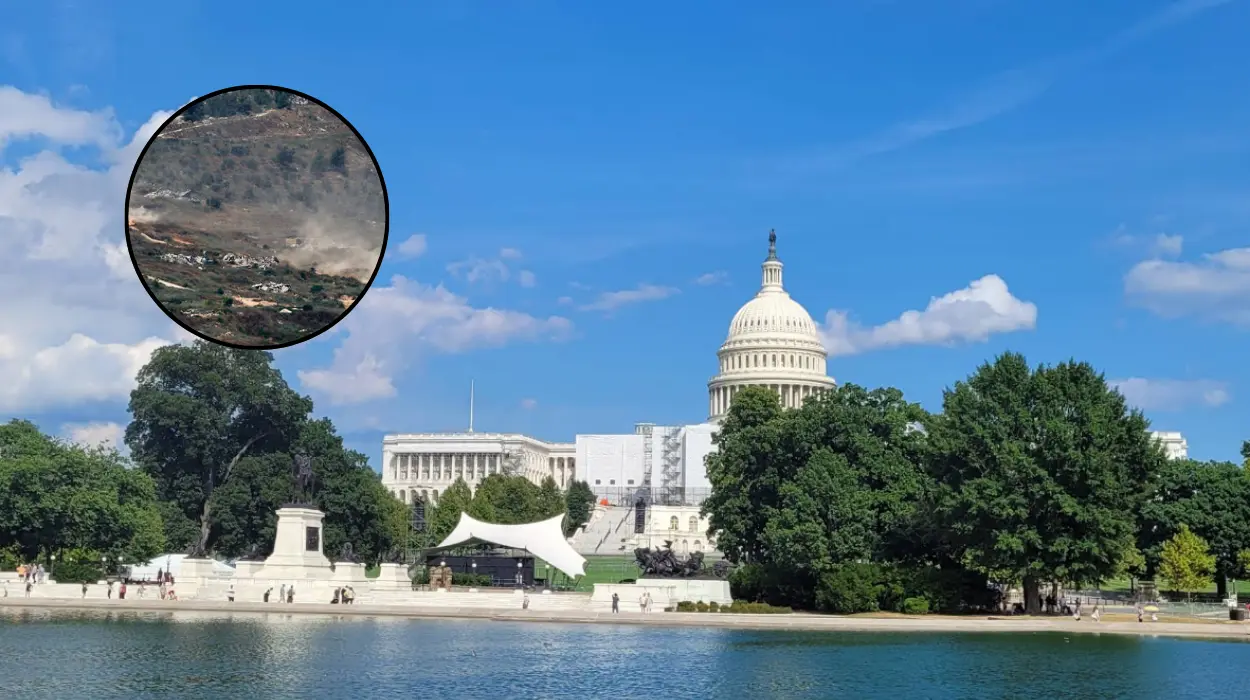
- An Israeli drone struck the Nabatiyeh area in southern Lebanon on Saturday, according to Lebanon’s state news agency.
- The strike came one day after Israel and Lebanon signed a US-brokered framework agreement in Washington.
- The agreement was signed by Lebanese Ambassador Nada Moawad and Israeli Ambassador Yechiel Leiter at the US State Department, with US Secretary of State Marco Rubio present.
- Rubio described the deal as “the first step” in a difficult but necessary process.
- The reported framework is said to include a gradual withdrawal of Israeli forces from southern Lebanon, though no timeline was given.
- The talks have been linked to efforts to end fighting between Israel and Hezbollah after months of cross-border hostilities.
Washington (Evening Washington News) June 27, 2026 – An Israeli drone struck the Nabatiyeh area in southern Lebanon on Saturday, just a day after Israel and Lebanon signed a US-brokered framework agreement in Washington aimed at reducing border tensions, according to Lebanon’s state news agency and Reuters reporting.
As reported by Reuters via The Express Tribune, the strike hit the Nabatiyeh al-Fawqa area near the Farah amusement park intersection, while the framework deal had been announced at the US State Department in Washington.
The timing is significant because it came immediately after the two sides publicly presented the agreement as a first step towards easing hostilities.
Who signed the agreement?
As reported by Reuters, Lebanese Ambassador Nada Moawad and Israeli Ambassador Yechiel Leiter signed the trilateral document with the US in Washington. US Secretary of State Marco Rubio said before the agreement was inked:
“Today we’ve taken the first step in what will be a difficult journey, without a doubt, but an important and an essential and a necessary one.”
Reuters reported that the deal was described as a framework agreement rather than a full peace accord, and the officials did not immediately provide the full details.
The reporting also said the text was intended to support an end to fighting between Israel and Hezbollah.
What does the framework include?
According to Reuters reporting carried by The Express Tribune, a senior Lebanese source said the deal includes a “gradual” withdrawal of Israeli forces from southern Lebanon.
That source said there was progress on outstanding issues, but did not specify a timetable or the exact areas involved.
The same report said the officials did not explain how the new framework differs from an April 16 ceasefire deal that had already preceded several rounds of US-brokered talks.
Reuters also noted that the Washington discussions included a proposal for Israeli forces to hand some occupied territory in southern Lebanon to the Lebanese military.
How did the two sides describe it?
According to Reuters, Moawad said the trilateral framework was “a first step on the road to restoring Lebanese sovereignty and territorial integrity, securing a permanent and final cessation of hostilities, enabling our people to go back to their land, and allowing all Lebanese to live in peace, security, and prosperity.” Leiter, meanwhile, said:
“In this performance-based trilateral framework agreement, Iran is out, Hezbollah is out, and the road to peace between Israel and Lebanon is in.”
The same reporting said the two officials did not take questions from reporters after the announcement.
Reuters also reported that Israeli Prime Minister Benjamin Netanyahu later said Israeli forces would remain in a “security zone” in southern Lebanon until Hezbollah is disarmed.
What is the security context?
Reuters reported that the conflict escalated after Hezbollah fired at Israel on March 2, following US and Israeli attacks on Iran.
The agency said the ensuing Israeli air and ground attacks in Lebanon have killed more than 4,000 people and displaced more than a million.
The same report said Israel’s death toll in this round of hostilities includes at least 32 soldiers and four Israeli civilians.
It also said violence has continued despite the ceasefire, with Israel saying on Friday that its troops had killed seven Hezbollah members near the area it occupies, though Reuters said it could not confirm that claim independently.
Why does the strike matter now?
The drone strike is important because it happened almost immediately after both sides publicly framed the Washington agreement as a step towards lowering tensions.
It also shows that the wider security environment remains unstable even while diplomatic efforts continue.
The report that Israeli troops still regard parts of southern Lebanon as a “buffer zone” suggests the practical situation on the ground remains contested.
Background of the development
This development sits within the longer Israel-Hezbollah confrontation that intensified after cross-border fighting resumed earlier in the conflict.
Reuters reported that previous ceasefire efforts and US-brokered talks did not fully stop violence, and that the latest framework was meant to address unresolved issues, including the status of Israeli positions in southern Lebanon.
The Washington signing therefore represents part of a broader diplomatic attempt to move from temporary pauses in fighting towards a more durable arrangement.
Prediction
For people in southern Lebanon, the immediate effect is likely to be continued uncertainty, especially in areas close to the border or within zones described by Israel as security areas.
For residents hoping to return to their homes, any gradual withdrawal arrangement could matter, but only if it is actually implemented and monitored on the ground.
For regional audiences following the conflict, the development suggests negotiations may continue, but the strike shows that any progress could remain fragile and vulnerable to renewed escalation.