

Key Points:
- Historical Origins: George Washington scrawled a recipe for “small beer” in his notebook in 1757 while serving as a colonel in the Virginia militia during the French and Indian War.
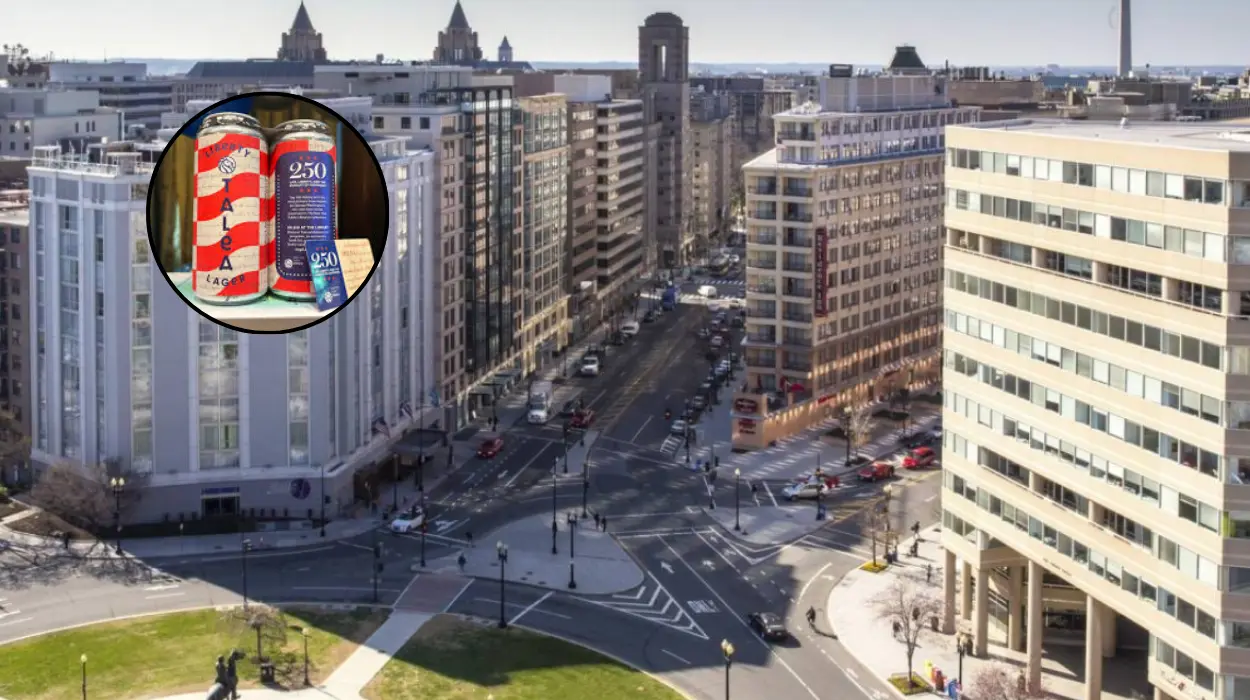
- The Modern Recreation: As part of its America 250 celebrations, the New York Public Library (NYPL) collaborated with New York-based Talea Beer Co. to brew a limited batch of the original recipe alongside a modern adaptation named “Liberty Lager”.
- The Function of Small Beer: Historically, small beer provided armies with clean, potable drinking water and essential caloric energy, protecting soldiers from waterborne diseases like dysentery.
- Distinct Ingredients and Taste Profile: Containing molasses, hops, yeast, and water, the 1757 recipe yields a low-alcohol (1–3%), dark amber, cloudy liquid with a sweet, tart, and wine-like flavour profile.
- Serving Conditions: Unlike modern refrigerated beverages, the historical beer was consumed at ambient room or outdoor temperatures, depending on the season in which the military units were marching.
Washington (Evening Washington News) June 19, 2026 – A centuries-old military notebook has bridged the gap between early American history and modern craft brewing, allowing contemporary audiences to literally taste the past. The New York Public Library (NYPL) has partnered with local craft brewers to resurrect a specific “small beer” recipe handwritten by George Washington in 1757. Long before he became the first President of the United States, Washington was a colonel in the Virginia militia navigating the logistical hardships of the French and Indian War, where securing safe, drinkable liquids for his troops was a matter of military survival. By translating these archival instructions into a tangible beverage, the project highlights how early Americans relied on low-alcohol fermented drinks to bypass contaminated water supplies and sustain physical energy during long military campaigns.
- Key Points:
- Why did George Washington write a recipe for small beer in 1757?
- How is the New York Public Library celebrating America 250 using this historical archive?
- What are the ingredients and unique characteristics of Washington’s original small beer?
- Under what environmental conditions was this historical beverage traditionally consumed?
- Background of the particular development
- Prediction: How this development can affect craft beer consumers and history enthusiasts
Why did George Washington write a recipe for small beer in 1757?
The historical context of the recipe reveals that beer was treated less as a casual luxury and more as a baseline health necessity for early American military forces.
According to Julia Golia, director of the New York Public Library’s 42nd Street research library, the perception of fermented beverages has shifted drastically over the centuries.
Golia stated that while people today think about beer as something to get at a barbecue, in the past, it actually served as a critical method of securing potable drinking water due to the widespread contamination of natural water sources.
The structural health of an entire military unit often depended heavily on what the soldiers drank. Golia further noted that if everybody in an army contracted dysentery, the commanding officers were in significant trouble, making small beer a vital resource to rescue the troops from widespread illness.
By boiling the water during the brewing process and introducing a low level of alcohol, the early militia effectively killed off dangerous pathogens, providing a stable, hydrating alternative to raw river or well water.
How is the New York Public Library celebrating America 250 using this historical archive?
The recreation of Washington’s recipe serves as a cornerstone for the library’s broader historical commemorations. As part of its official celebration of America 250, an initiative marking two and a half centuries of United States history, the library pulled the original document from its Manuscripts and Archives Division.
To transform the text into a liquid reality, the library management commissioned the New York-based, women-founded Talea Beer Co. to produce a couple of hundred bottles of Washington’s exact formula.
Because the strict historical recreation was intended primarily for internal educational and archival purposes, Talea Beer Co. also used the 1757 manuscript as creative inspiration to develop a commercial product for the public.
The commercial variant, named “Liberty Lager,” offers a more contemporary flavour profile tailored to modern palates while paying homage to the original archival source.
This modern adaptation is currently being distributed and sold directly within Talea’s various taproom locations across New York City.
What are the ingredients and unique characteristics of Washington’s original small beer?
The term “small beer” refers explicitly to the drink’s low alcohol content, which historically hovered between 1% and 3% alcohol by volume (ABV). This kept the militia hydrated and energised without causing high levels of intoxication that would compromise military readiness.
The original text penned by Washington outlines a simple yet distinct ingredient list combining hops, yeast, water, and a remarkably high volume of molasses.
The heavy reliance on molasses creates a stark sensory contrast to the grain-heavy profiles of modern beers. Eric Brown, the brewmaster at Talea Beer Co., explained that the extensive use of molasses makes the beverage very different from what modern consumers are accustomed to drinking.
Brown described the flavour profile as notably sweeter and a little tart, exhibiting characteristics akin to baking sugar, a cookie-like spice, and a subtle touch of minerality.
Visually, Washington’s brew pours a dark amber hue, closely resembling the appearance of a traditional Irish-red ale.
Furthermore, because eighteenth-century brewing techniques lacked modern industrial filtration systems, the liquid remains highly cloudy. The overall taste is described as more complex and shifting in the mouth, carrying a closer resemblance to wine than to a standard light lager.
This level of sensory complexity remains unexpected for a beverage that was fundamentally designed to provide quick hydration and a rapid sugar-driven caloric boost to marching soldiers.
Under what environmental conditions was this historical beverage traditionally consumed?
Unlike contemporary beers that are strictly preserved and served cold via modern refrigeration, small beer in the mid-1700s was subject entirely to the elements.
The beverage would have been served and consumed at ambient room temperature or whatever outdoor climate dictated at the time.
Golia explained that the soldiers would have drank the beer at likely whatever the temperature was in the environment in which they were actively marching.
Consequently, if the militia was operating during the winter months, the liquid in their canteens would have been naturally cold, whereas if they were deployed during the summer season, the beverage would have been consumed warm.
Background of the particular development
The original manuscript detailing the recipe is officially preserved within the George Washington Papers housed at the New York Public Library’s Manuscripts and Archives Division. Written when Washington was just 25 years old during his service in the Virginia Regiment, the notebook reflects the severe supply chain and sanitary challenges faced by colonial forces during the French and Indian War (1754–1763).
At the time, water purification science did not exist, but empirical experience had taught military leaders that fermented beverages prevented the spread of deadly waterborne bacteria.
Small beer was typically brewed using the “second running” of mashed grains or, as in Washington’s case, supplemented with readily available colonial commodities like molasses to trigger fermentation.
The decision by the NYPL to revive this document aligns with a growing movement among national cultural institutions to make history interactive and sensory ahead of the United States Semiquincentennial (America 250).
By partnering with Talea Beer Co., an established entity in the modern craft beer sector, the library has shifted its archival outreach from purely static exhibitions to experiential history.
Explore More Local News
Upriver Fire Destroys Homes and Prompts Evacuations: Spokane 2026
US Backs Down on DeepSeek CXMT Blacklist: Washington 2026
Prediction: How this development can affect craft beer consumers and history enthusiasts
This development is highly likely to accelerate a niche trend where craft beer consumers and history enthusiasts seek out experiential, historically accurate culinary products.
For the average craft beer consumer, the release demonstrates that historical styles offer completely distinct flavour profiles—such as the molasses-driven, wine-like traits of Washington’s brew—which challenge the current market dominance of heavily hopped India Pale Ales (IPAs) and clean, filtered lagers.
This could encourage local breweries nationwide to collaborate with regional historical societies, generating a new sub-genre of heritage brewing.
For history enthusiasts, this project transforms abstract colonial history into a tangible, sensory experience. It provides educators and museums with a highly engaging blueprint for how archival materials can be communicated to the public outside of traditional display cases.
As the United States approaches its 250th anniversary, consumers can expect an influx of similar historical recreations, linking everyday modern commodities directly to documented foundational texts of the eighteenth century.