
Key Points
- Water has started refilling the Lincoln Memorial Reflecting Pool in Washington, D.C., on Thursday, June 3, 2026, after renovation work concluded
- President Donald Trump announced the refilling from the Oval Office, showing a video of water bubbling into the freshly painted basin
- The pool’s basin was painted a deep shade Trump called “American flag blue,” which the administration describes as “a very dark blue, low in chroma”
- Resurfacing work was completed Wednesday, June 2, 2026, with the pool expected to be fully refilled no later than Sunday, June 7, 2026
- Trump initially estimated the project would cost $1.5 million to $2 million, but contract records show at least $14.8 million worth of contracts awarded
- The no-bid contract went to Atlantic Industrial Coatings, a Virginia-based firm that previously worked on a swimming pool at Trump’s National Golf Club in Sterling, Virginia
- The Cultural Landscape Foundation filed a lawsuit in U.S. District Court on May 6, 2026, arguing the administration failed to complete required historic preservation reviews
- The Interior Department pushed back on the lawsuit, claiming it was based on “a fundamental misunderstanding” and that the bright blue was only primer, not the finished coat
- The 2,030-foot-long pool sits east of the Lincoln Memorial and was the site of Martin Luther King Jr.’s “I Have a Dream” speech during the 1963 March on Washington
- Interior Secretary Doug Burgum promoted the revamp, stating it would be finished “well before July 4” for the nation’s 250th anniversary
- The pool was last comprehensively renovated in 2012 under a roughly $34 million project funded by Obama-era stimulus money
- Critics argue Trump is focusing too much on personal “vanity projects” in Washington, D.C.
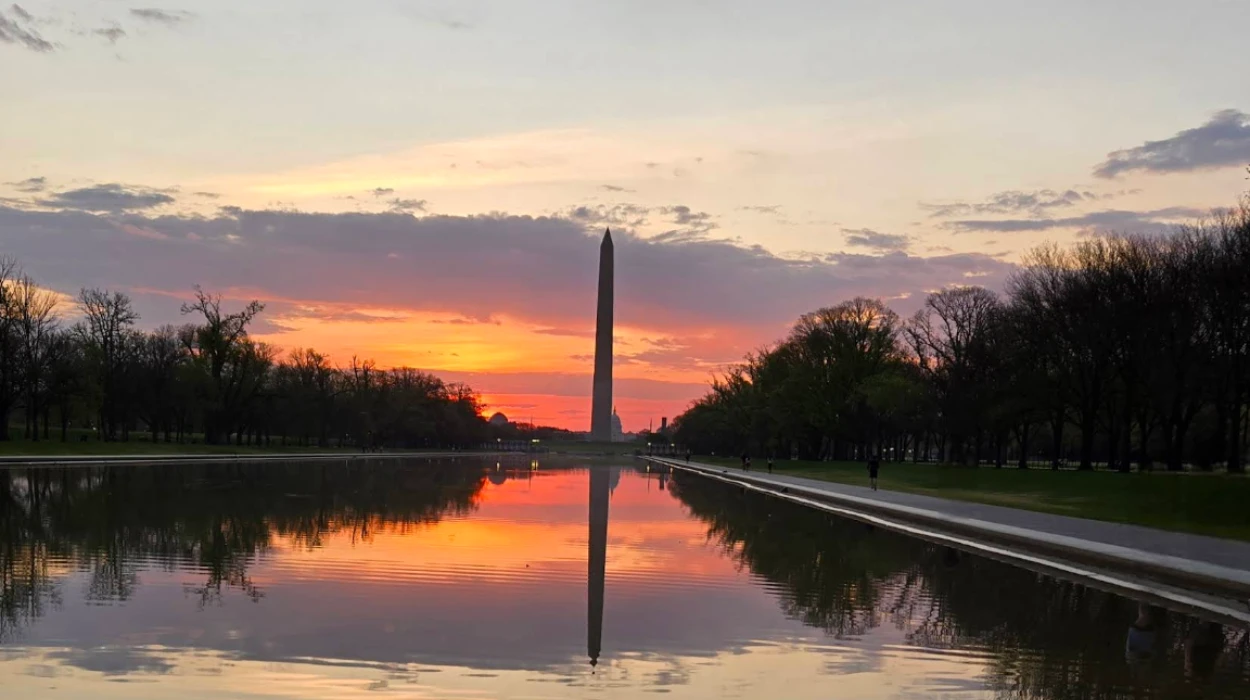
Washington (Evening Washington News) June 6, 2026 — Water has started flowing into the Lincoln Memorial Reflecting Pool after President Donald Trump’s renovation, which included painting the basin a deep shade he called “American flag blue.” (Associated Press, Alex Brandon, Julia Demaree Nikhinson, Rahmat Gul, Rod Lamkey Jr., John McDonnell, Allison Robbert, and Stephanie Scarbrough) June 3, 2026 — The Lincoln Memorial Reflecting Pool began refilling Thursday with water bubbling up through pipes at the center of the pool, slowly unveiling the full effect of a recent dark-blue paint job.
- Key Points
- How Did the Cost of the Reflecting Pool Renovation Compare to Trump’s Initial Estimate?
- What Legal Battle Has Emerged Over the Reflecting Pool Renovation?
- Why Does the Lincoln Memorial Reflecting Pool Hold Historic Significance?
- What Did Interior Secretary Doug Burgum Say About the Renovation?
- Background of the Reflecting Pool Renovation Development
- Prediction: How This Development Can affect Washington, D.C. Visitors and Historic Preservation Advocates
President Donald Trump announced the refilling from the Oval Office on Thursday, showing a video during an unrelated event with water bubbling into the freshly painted basin at the foot of the Lincoln Memorial.
Live video showed water accumulating in the center of the basin, with workers and trucks still inside the pool. During the event, Trump said, “That’s clean, beautiful water,” according to the report.
The administration said in a court filing that the pool was set to be filled with water no later than Sunday, June 7, 2026.
Trump noted the work to paint the shallow basin a deep shade was completed Wednesday, June 2, 2026. As of early Thursday, there were still vehicles in the basin and no sign of water in it, but the refilling process had begun.
How Did the Cost of the Reflecting Pool Renovation Compare to Trump’s Initial Estimate?
As reported by the Associated Press, Trump has put the cost of the work on the pool at $1.5 million to $2 million, but records show at least $14.8 million worth of contracts has been awarded for the project.
The New York Times reported that the Interior Department added $6.2 million to the no-bid contract for repairs late last week, bringing the total to $13.1 million.
According to The New York Times, the National Park Service awarded Atlantic Industrial Coatings a no-bid contract on April 3, 2026, after President Trump publicly stated he had
“a guy who’s unbelievable at doing swimming pools”.
Trump claimed he consulted three companies that previously worked on his personal swimming pools before choosing one that worked at Trump National Golf Club in Sterling, Virginia.
Documents obtained by The New York Times reveal that Atlantic Industrial Coatings is overcharging the federal government by $13.1 million—an amount seven times greater than the estimate provided by President Trump.
According to an analysis by the National Park Service, while the standard profit margin for such projects typically ranges from 6 percent to 12 percent, Atlantic Coatings is securing a staggering 20 percent profit margin.
What Legal Battle Has Emerged Over the Reflecting Pool Renovation?
The Cultural Landscape Foundation and other plaintiffs sought emergency relief in federal court last month, arguing that federal officials are painting over a historic landmark without proper review or public notice.
On Monday, May 6, 2026, the nonprofit organization focused on landscape architecture initiated legal action in U.S. District Court in Washington, aiming to stop the painting project.
The foundation stated in its lawsuit that
“with each passing day of resurfacing, the historic integrity of the Reflecting Pool is being increasingly and fundamentally altered”.
The plaintiffs noted they were willing to agree to a longer briefing schedule if the U.S. Department of the Interior agreed to temporarily halt the painting while the court considered their motion, but the federal government would not agree to that pause.
The Interior Department has previously pushed back on the lawsuit, saying it appeared to be based on “a fundamental misunderstanding” of the project. The defendants said the bright blue color cited by the plaintiffs was only a primer layer—not the finished coat.
According to the federal government, the final coat will be “a very dark blue,” low in chroma, consistent with the Reflecting Pool’s historic character and intended to improve its reflectivity.
Both sides disagree over whether required reviews were completed under the National Historic Preservation Act and the National Environmental Policy Act.
Plaintiffs said federal officials did not conduct the required reviews before moving forward, while defendants said they completed a streamlined Section 106 review under an existing programmatic agreement and used a categorical exclusion under the National Environmental Policy Act.
Why Does the Lincoln Memorial Reflecting Pool Hold Historic Significance?
The pool, which is more than 2,000 feet long, was the site of Martin Luther King Jr.’s “I Have a Dream” speech and other events.
It was on August 28, 1963, that Martin Luther King Jr. gave his famous “I Have a Dream” speech as part of the March on Washington for Jobs and Freedom.
The speech was delivered to an estimated 250,000 people who came to Washington, D.C., on August 28, 1963, to march for civil rights.
The 2,030-foot-long, 6-acre pool, designed by Henry Bacon, sits east of the Lincoln Memorial. The last comprehensive renovation of the pool took place in 2012 under a roughly $34 million project funded by Obama-era stimulus money, according to the National Park Service and the firm that managed that rebuild.
Trump stated that the upgraded pool would have a lifespan of “40 to 50 years”. He noted that one contractor suggested removing the existing stone and replacing it as part of a three-year renovation project estimated at $300 million, but the administration rejected that proposal.
Trump said the administration rejected an earlier proposal to replace the pool’s 1920s granite, which he described as costing about $300 million and taking roughly three years.
What Did Interior Secretary Doug Burgum Say About the Renovation?
Interior Secretary Doug Burgum said Friday that crews are applying an “American flag blue” coating to the Lincoln Memorial Reflecting Pool as part of a roughly $1.5 million resurfacing President Donald Trump announced Thursday.
Burgum wrote on X that “Renovations are underway!” and thanked Trump “for investing in our capital,” adding that the pool
Burgum told Congress he didn’t know who was making his department’s decisions on plans for the country’s 250th anniversary. On Wednesday, Burgum disputed some of lawmakers’ characterizations, even denying that contractors are painting the landmark.
“There is no painting going on on the reflecting pool,”
he said.
Trump had said in a social media post Wednesday that water would begin to flow “shortly”.
“The walking paths outside of the Pool will, likewise, be cleaned, sandblasted, and finished soon,”
he wrote.
“This will be the first time since the day it was built, 1922, that it has worked, and worked wonderfully, indeed!”
Background of the Reflecting Pool Renovation Development
The renovation of the Lincoln Memorial Reflecting Pool began in April 2026, when President Trump revealed plans for a significant renovation project.
In April, Trump described the pool as “filthy” and “dirty,” indicating it requires significant improvement. The project was fast-tracked to be completed well before the nation’s 250th anniversary on July 4, 2026.
The contract for waterproofing and repainting the pool was awarded to Atlantic Industrial Coatings, a firm based in Virginia, on April 3, 2026.
The company was tasked with resealing the joints and waterproofing the concrete slabs. While the pool floor was originally gray, Trump opted for a new hue he referred to as “American flag blue”.
Initially, Trump claimed he chose the firm based on its experience with swimming pools at his golf resorts, but later denied any prior knowledge of the company in a post on Truth Social.
As of Sunday, about percent of the pool’s had been completely coated, according to government documents reviewed by The New York Times.
Another critical aspect of the project—replacing the leaking joints between the slabs—was reported as 0 percent complete, with just 12 days remaining before the deadline.
The Cultural Landscape Foundation, an education and advocacy organization, filed the lawsuit asking for a temporary preliminary injunction in U.S. District Court for the District of Columbia. The organization wants to halt the work, saying the Trump administration failed to undergo required reviews for changing historic sites before applying a blue tint to the bottom of the pool.
The lawsuit references a provision of the National Historic Preservation Act, which states that reviews must take place before changes are made to historic sites.
Prediction: How This Development Can affect Washington, D.C. Visitors and Historic Preservation Advocates
This renovation development can affect Washington, D.C. visitors in several ways. The pool is expected to be fully refilled by Sunday, June 7, 2026, meaning tourists visiting for the nation’s 250th anniversary celebrations around July 4 will see the newly painted “American flag blue” basin. Visitors will experience the visual change from the original gray floor to the dark blue coating, which the administration claims will improve reflectivity.
The $13.1 million to $14.8 million cost, which is seven times Trump’s initial $1.5 million to $2 million estimate, means taxpayers are bearing significantly higher expenses than publicly promised. This could affect public trust in government renovation projects and future funding decisions for National Mall improvements.
Historic preservation advocates, including the Cultural Landscape Foundation, continue to challenge the renovation through legal means, arguing the project fundamentally altered the historic integrity of the Reflecting Pool.
If the lawsuit succeeds, it could set a precedent for requiring stricter review processes before modifying historic sites on the National Mall, potentially slowing future renovation projects.
The no-bid contract awarded to Atlantic Industrial Coatings, a firm with ties to Trump’s golf course, has sparked controversy over potential favoritism in federal contracting.
This could influence how future no-bid contracts are scrutinized by Congress and the public, potentially leading to stricter oversight of federal procurement processes for historic landmark projects.