Key Points
- Republican lawmakers in Congress have signalled a limited but notable willingness to resist President Donald Trump on several issues this week.
- The setbacks touched three main areas: the Iran war, a proposed 1.8 billion dollar “anti-weaponisation” fund, and a White House project involving ballroom funding.
- Reporting also said lawmakers failed to advance action on other priorities linked to the White House security and ballroom agenda.
- The week has been framed by multiple outlets as evidence that some Republicans are beginning to draw lines around Trump’s demands.
- Democrats have continued pressing Republicans to break with Trump over his handling of the Iran issue.
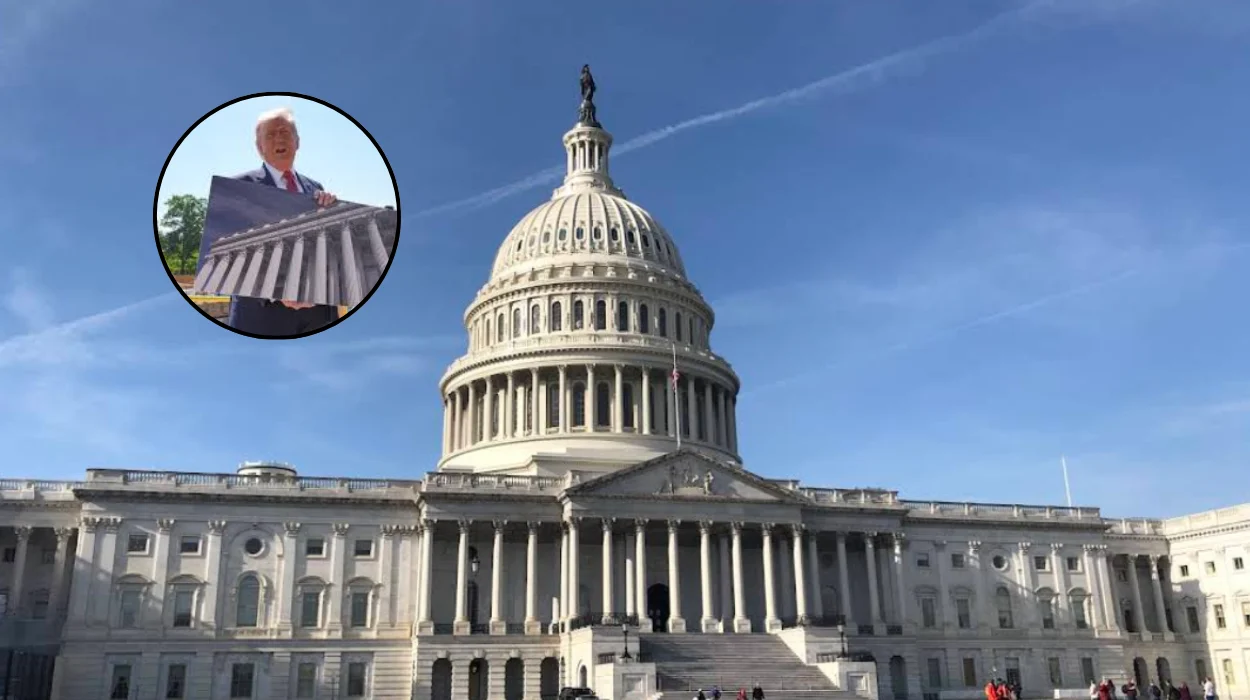
Washington, D.C (Evening Washington News) 23 May 2026 — Republican lawmakers have dealt President Donald Trump a series of setbacks on Capitol Hill this week, with votes and procedural moves exposing friction inside the party over the Iran war, an “anti-weaponisation” fund and White House-backed spending priorities.
What happened on Capitol Hill?
The clearest sign of resistance came as House Republicans abruptly pulled a vote on a resolution related to the Iran war, according to reporting from The New York Times. That move followed broader pressure and uncertainty around how far Congress should go in backing Trump’s position on Iran.
A separate Washington Post report said the week also brought setbacks on a proposed 1.8 billion dollar “anti-weaponisation” fund and on the White House’s ballroom plans. PBS News reporting highlighted that lawmakers failed to act on several of the president’s priorities, including funding tied to White House security and ballroom projects.
Why are Republicans pushing back?
The reporting suggests that Republican members are not staging a full break with Trump, but they are showing more willingness to delay, weaken or block specific requests.
PBS correspondent Lisa Desjardins said the biggest moments came when lawmakers failed to move on several of the president’s key priorities.
That is politically significant because Trump has often relied on his influence over the Republican base to keep congressional Republicans aligned with him.
This week’s events suggest that pressure from inside Congress may be growing, especially when members see a risk to their own political position.
What did the media reports say?
The Washington Post, in a report published on 23 May 2026, described the week as one in which Republicans “dealt him setbacks” across several fronts, including the Iran war and spending priorities.
PBS News, in social coverage of the same developments, said congressional Republicans “drew a few lines” with Trump this week.
The New York Times reported that House Republicans cancelled a vote on a resolution directing Trump to withdraw the U.S.
forces from Iran or seek further approval, signalling the issue remained politically sensitive. Other reporting noted that Democrats were increasing pressure on Republicans to distance themselves from Trump over the Iran question.
How significant is this for Trump?
The immediate significance is that Republican control of Congress does not automatically translate into automatic approval of Trump’s agenda.
Even where there is no open rebellion, delays and cancellations can still weaken momentum behind the White House’s priorities.
The wider political signal is that some Republicans may be weighing party loyalty against their own electoral survival.
That tension is especially visible when issues involve spending, war powers and projects that are closely associated with Trump himself.
What comes next?
The next stage will depend on whether Republican leaders choose to revisit the blocked or delayed items or leave them stalled.
The Iran issue is likely to remain especially sensitive because it combines national security, congressional authority and Trump’s own position.
If more Republicans continue to resist, the White House may find it harder to secure fast legislative wins even in a friendly Congress.
If party discipline returns, the setbacks may prove temporary rather than a sign of a lasting split.
Background of the development
This development fits a longer pattern in which Trump has often used political pressure to keep Republicans aligned behind him.
The latest reporting suggests that congressional Republicans are now testing the limits of that arrangement on issues where they face outside pressure or internal unease.
The Iran dispute, in particular, reflects a recurring tension between the executive branch and Congress over war powers and military oversight.
The spending-related disputes also show how White House priorities can become vulnerable when lawmakers decide the political cost is too high.
Prediction
For Republican lawmakers, this development could encourage more visible caution before backing every Trump request, especially on war-related or politically sensitive spending issues. For Trump, it may mean that achieving quick legislative victories will require more negotiation and less reliance on party loyalty alone.
For voters and observers, the main effect is likely to be a Congress that appears less uniform than Trump’s team might prefer, with Republicans more willing to draw occasional boundaries. That could slow parts of the White House agenda, but it may also sharpen public scrutiny of how far GOP lawmakers are prepared to go in supporting the president.