
Key Points
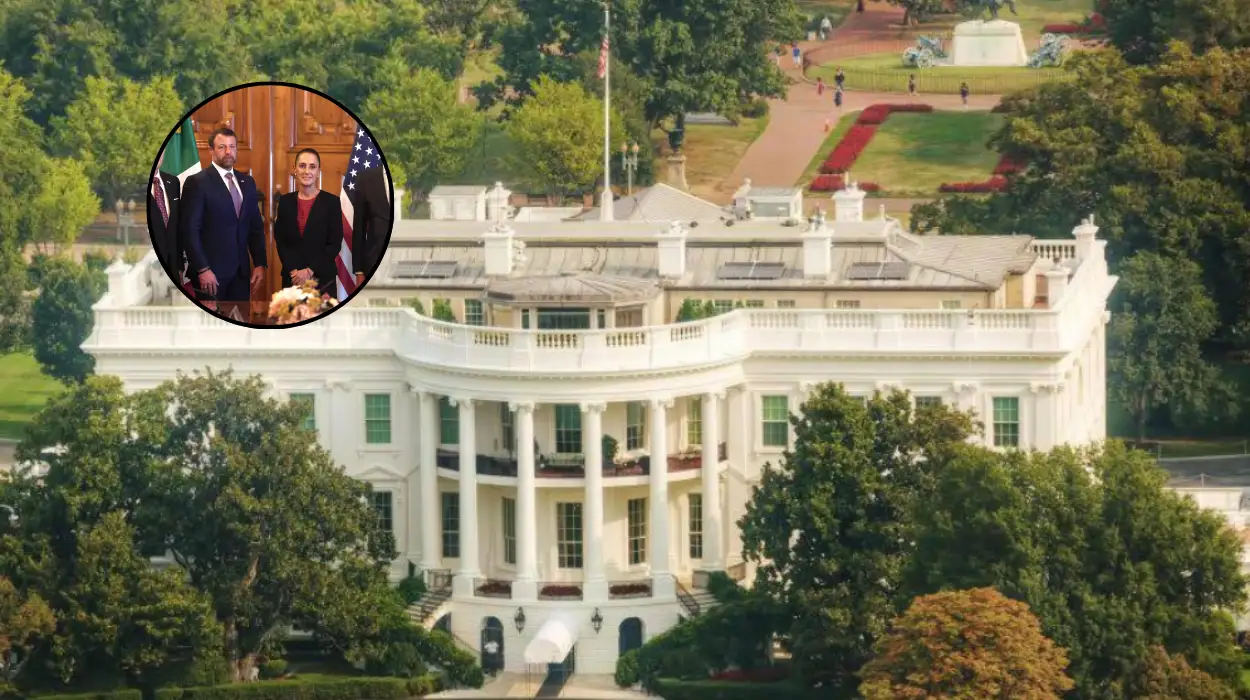
- Mexican President Claudia Sheinbaum met with U.S. Homeland Security Secretary Markwayne Mullin in Mexico City on Thursday amid a diplomatic row over Washington’s accusations against officials in the state of Sinaloa, including Governor Rubén Rocha.
- The meeting took place at the National Palace and was attended by senior Mexican security and interior‑ministry officials, signalling that Mexico is seeking to re‑align its security and migration agenda with Washington.
- Sheinbaum said the two sides agreed to continue collaborating “within the framework of mutual respect between our countries,” underscoring Mexico’s desire to stabilise relations after the controversy over Sinaloa.
- For Mullin, the visit marked his first trip to Mexico and his first in‑person meeting with Mexican counterparts since his appointment by President Donald Trump in March.
- The U.S. Embassy and Mexico’s Foreign Ministry described the talks as a follow‑up on the bilateral agenda covering security cooperation, border management, and migration.
- The encounter comes as Mexico prepares for its participation in the 2026 World Cup, a joint venture with the United States and Canada, against the backdrop of strained trust over cartel‑linked accusations and cross‑border security pressures.
Washington (Evening Washington News) May 22, 2026 – Mexico – Mexican President Claudia Sheinbaum met with U.S. Homeland Security Secretary Markwayne Mullin in the capital on Thursday in an effort to recalibrate relations with Washington amid a diplomatic row over U.S. accusations against officials in the northern state of Sinaloa, including Governor Rubén Rocha, a senior figure in Sheinbaum’s political party.
- Key Points
- How did the meeting play out in the National Palace?
- What did Sheinbaum and Mexican officials say?
- What is the controversy over Sinaloa and Governor Rubén Rocha?
- What did Washington say about the visit?
- How does football factor into this diplomatic moment?
- Background: How did this moment in Mexico–U.S. relations develop?
- Prediction: How might this diplomatic reset affect audiences?
The meeting, held at the National Palace in Mexico City and reported by multiple outlets, comes at a sensitive moment as Mexico grapples with the fallout of Washington’s allegations while preparing for its role in the 2026 World Cup, a major joint infrastructure and soft‑power project with the United States and Canada.
How did the meeting play out in the National Palace?
The talks began shortly before noon, with Sheinbaum hosting Mullin alongside Mexico’s Security and Citizen Protection Secretary Omar García Harfuch, the defense and navy ministers, and Interior Secretary Rosa Icela Rodríguez, according to Mexican government accounts cited by national and international outlets.
Rodríguez arrived by motorcycle, a detail highlighted by some Mexican media, as traffic in the capital was heavier than usual due to marches and demonstrations taking place elsewhere in the city.
On the U.S. side, Mullin was accompanied by Ambassador Ronald Johnson, and the visit marked his first trip to Mexico since his appointment by President Donald Trump in March, underlining the symbolic importance of the encounter.
What did Sheinbaum and Mexican officials say?
Following the meeting, Sheinbaum posted a brief statement on her social‑media accounts, as reported by several Mexican news organisations. She wrote that the two sides
“agreed to continue collaborating together within the framework of mutual respect between our countries,”
a phrase that has been widely quoted to signal Mexico’s attempt to de‑escalate tensions and reassert a cooperative tone.
The Mexican Foreign Ministry, in a later statement carried by national outlets, said that Mullin and the members of Mexico’s Security Cabinet discussed
“the main issues of the bilateral agenda on security, the border, and migration,”
indicating that counter‑narcotics and migration management remained central to the dialogue. The ministry did not provide detailed minutes of the talks, however, and stopped short of addressing specific accusations or legal cases that have strained relations over recent weeks.
What is the controversy over Sinaloa and Governor Rubén Rocha?
The timing of Mullin’s visit is closely tied to a controversy that has shaken Mexico’s ties with Washington: U.S. authorities have levelled serious accusations against public‑official‑linked figures in Sinaloa, including its governor, Rubén Rocha, a prominent member of Sheinbaum’s Morena party.
Various international outlets have reported that U.S. officials have accused Sinaloa‑based actors of alleged collusion with or facilitation of cartel activity, charges that the Mexican government has viewed as politically sensitive and potentially damaging to cross‑border cooperation.
Mexican officials have publicly pushed back against what they describe as one‑sided accusations lacking sufficient evidence or prior consultation, while still insisting that Mexico remains committed to joint security efforts.
Analysts quoted by Mexican and international media have suggested that the Sinaloa row has “hobbled” Sheinbaum’s administration ahead of high‑stake summits and regional events, including the 2026 World Cup, because it has complicated efforts to present a unified front on security with Washington.
What did Washington say about the visit?
The U.S. Embassy in Mexico, as reported by several outlets, described the meeting as an opportunity to “follow up on the main issues of the bilateral agenda,” echoing the language used by the Mexican Foreign Ministry. In brief public remarks following the encounter, U.S. officials cited
“security cooperation, border management, and migration”
as key pillars of the relationship, but avoided commenting in detail on the Sinaloa allegations during the immediate post‑meeting briefings.
Analysts consulted by U.S.‑based outlets noted that Mullin’s presence in Mexico sent a signal that Washington still sees Mexico as a mandatory partner on security, even as trust rattles over the Sinaloa issue and broader drug‑war dynamics.
Other commentators, quoted by Mexican newspapers, interpreted the visit as a “reset”‑style gesture from both sides, aimed at preventing the Sinaloa dispute from derailing long‑standing security and migration protocols.
How does football factor into this diplomatic moment?
Paradoxically, the high‑level security talks occurred against the backdrop of Mexico’s preparations for the 2026 World Cup, a joint venture hosted by Mexico, the United States, and Canada. Several international outlets have observed that while the meeting was far removed from football in substance, its symbolic weight is felt in the wider context of Mexico’s public‑image strategy ahead of the tournament.
Sports and politics analysts quoted by those outlets have noted that Mexico wants to project stability and strong cross‑border cooperation, especially with Washington, as it prepares for large‑scale infrastructure projects, fan movements, and international media attention.
At the same time, the Sinaloa controversy has raised questions about how Washington perceives Mexico’s internal governance and security apparatus, creating a delicate balancing act for Sheinbaum’s government.
Background: How did this moment in Mexico–U.S. relations develop?
Mexico and the United States have long shared a complex relationship built on deep economic integration, security cooperation, and migration pressures, but also on periodic friction over sovereignty, drug‑war tactics, and internal political decisions in Mexico.
In recent years, the two countries have deepened their collaboration on migration management and counter‑narcotics operations, even as Mexican administrations have increasingly emphasised the need for “non‑intervention” and respect for Mexico’s domestic legal processes.
The current strain around Sinaloa stems from a series of U.S. accusations that officials and local actors in the state have, in some way, tolerated or facilitated cartel operations—a pattern of allegations that Mexican leaders have repeatedly criticised as insufficiently substantiated or prematurely publicised.
Claudia Sheinbaum’s administration inherited this sensitive dynamic, and her early‑term diplomacy has focused on trying to maintain security cooperation while defending Mexico’s judicial and political autonomy.
At the same time, the 2026 World Cup planning process has created a new layer of interdependence between Mexico, the United States, and Canada, with infrastructure, security, and migrant‑movement coordination expected to intensify as the tournament approaches.
Analysts quoted by international outlets have argued that major security and diplomatic disagreements between Mexico and Washington could affect everything from stadium‑security planning to cross‑border fan travel arrangements, even if the day‑to‑day football‑related talks remain largely separate from the Sinaloa row.
Prediction: How might this diplomatic reset affect audiences?
For Mexican audiences, the Sheinbaum–Mullin meeting and the accompanying language of “mutual respect” may be framed as a cautious attempt to stabilise a relationship that directly affects border communities, security operations, and migration policy. If concrete cooperation arrangements on security and migration follow, the public could see more coordinated operations at the U.S.‑Mexico border, as well as potential changes in how Mexican authorities handle extradition requests and joint investigations, particularly those touching on Sinaloa‑linked cases.
For U.S. audiences, especially in states that share the Mexico border, a partially reset relationship could translate into more predictable coordination on cartel‑related security issues and border‑management protocols, although the sensitivity of the Sinaloa episode may also prompt continued political debate in Washington over how to balance security cooperation with respect for Mexican sovereignty.