
Key points
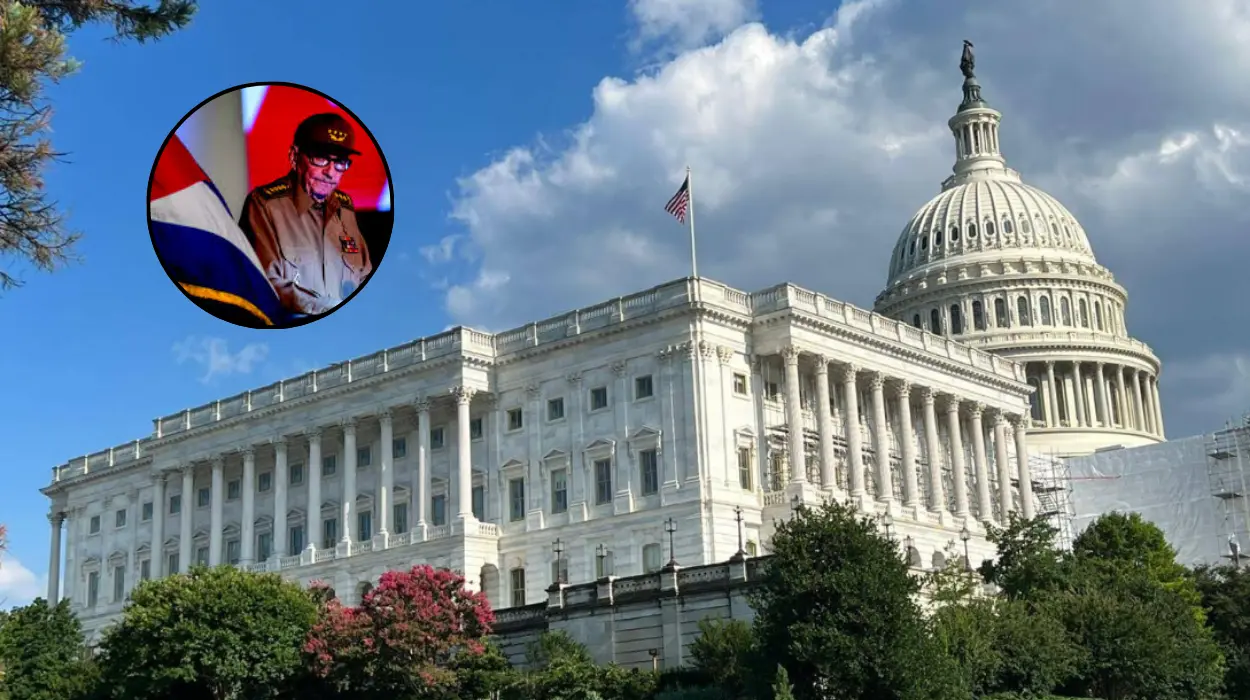
- US federal prosecutors in Miami have unsealed an indictment charging former Cuban president Raúl Castro with murder in connection with the 1996 downing of two civilian aircraft operated by the Miami‑based NGO “Brothers to the Rescue,” killing four people, three of them US citizens.
- Acting US Attorney General Todd Blanche announced the charges, which also include conspiracy to commit murder and other related counts involving five other Cuban officials.
- The indictment is being framed by US officials as part of a broader campaign to hold Cuba’s leadership accountable for past actions, even as Washington tightens sanctions and an oil blockade against the island.
- Fresh US sanctions, including an oil‑export blockade and an executive order targeting individuals in Cuba’s energy, defence, financial and security sectors, have deepened shortages of fuel, electricity, food and medicine, and triggered protests in Havana.
- President Donald Trump has publicly hinted at a more muscular stance, telling a Florida audience that the US would be “over” Cuba “almost immediately” and suggesting the deployment of the USS Abraham Lincoln aircraft carrier near the island as a signal of pressure.
- Analysts and UN officials warn that, against the backdrop of Cuba’s worst economic crisis in decades, the combination of rhetoric, sanctions and now a high‑profile indictment risks inflaming unrest and raises long‑dormant questions about whether the US might escalate to military intervention.
Havana (Evening Washington News) May 22, 2026, relations enter a new, highly volatile phase this week as the US Justice Department’s indictment of former Cuban president Raúl Castro over the 1996 Brothers to the Rescue plane shootings has sharpened already‑fierce tensions and raised the prospect of further US intervention in Cuba.
- Key points
- What is the new indictment – and what does it allege?
- How has Cuba responded to the indictment and sanctions?
- How severe is Cuba’s economic crisis – and what role do US policies play?
- How has the Trump administration escalated pressure on Havana?
- Could the United States intervene militarily – and what are the risks?
- Background to this development
- What might this mean for different audiences?
What is the new indictment – and what does it allege?
According to reporting by NPR’s Eyder Peralta, prosecutors in Miami have charged Raúl Castro with murder and other related offences over the 1996 incident in which two unarmed Cessna aircraft operated by the humanitarian group Brothers to the Rescue were shot down by Cuban fighter jets over the Florida Straits.
The group, based in Miami, used small planes to monitor Cuban migrants at sea and alert the US Coast Guard.
As stated by Acting US Attorney General Todd Blanche in a public announcement reported by the BBC, the indictment alleges that the Cuban government, under Raúl Castro’s direction when he was defence minister, monitored the NGO’s flights, trained pilots to intercept them and then ordered the downing of two planes on 24 February 1996, killing four people.
Three of the victims were US citizens, which has long been a central point of contention in US–Cuban relations.
The charges, which also name five other Cuban officials alongside Castro, are purely criminal in form, but observers note that they are being deployed in a political context.
As underlined by BBC correspondent Will Grant in coverage of the case, the indictment is being read by experts as part of a broader US strategy to keep Cuba’s leadership under legal and diplomatic pressure amid a wider economic squeeze.
How has Cuba responded to the indictment and sanctions?
Cuban officials have swiftly rejected the indictment as politically motivated and legally invalid. BBC’s reporting quotes Cuban Foreign Minister Bruno Rodríguez describing the new US sanctions as “illegal and abusive,” and characterising the oil‑export blockade as an attempt to destabilise the island’s government.
The foreign minister has also argued that the indictment revives a half‑century‑old hostility that Cuba says Washington has never fully abandoned.
On the streets of Havana, the indictment has coincided with ongoing discontent over the US‑driven oil blockade, which has sharply reduced fuel deliveries and led to repeated blackouts, disrupted hospitals, and crippled public transport.
Al Jazeera’s coverage of a UN rapporteur’s visits to Cuba notes that the UN’s special rapporteur on unilateral coercive measures, Alena Douhan, has repeatedly warned that US sanctions have “suffocated the social fabric” of Cuban society, exacerbating shortages of food, medicine and electricity.
Protests on International Workers’ Day, reported by the BBC, saw demonstrators outside the US Embassy in Havana chanting against the oil blockade and the broader sanctions regime, pointing to power cuts and empty pharmacies as evidence of the strain on daily life.
How severe is Cuba’s economic crisis – and what role do US policies play?
Several recent reports describe Cuba’s economy as being in its worst condition since the 1990s “special period” following the collapse of the Soviet Union. Writing for The New York Times, journalist Elisabeth Malkin and colleagues report that the island’s gross domestic product shrank by more than four per cent in the last reported quarterly figures, inflation has soared and the state‑run rationing system has repeatedly failed to meet basic needs.
These authors also note that Cuban authorities blame the US embargo as the primary cause of the crisis, insisting that restrictions on trade and financial flows have cut off crucial sources of revenue and credit.
At the same time, they observe that internal mismanagement, rigid state‑owned‑enterprise structures and stalled reforms in the private‑sector sphere have further corroded the economy.
The UN’s Douhan has similarly argued that Washington’s “comprehensive system of economic, trade and financial restrictions” constitutes the longest‑standing unilateral sanctions regime in modern US history, and that third‑country firms often over‑comply with the embargo to avoid secondary sanctions, thereby limiting Cuba’s access to technology, spare parts and investment. Power‑grid failures and fuel shortages, she adds, have held back both short‑term recovery and long‑term planning.
How has the Trump administration escalated pressure on Havana?
The current indictment arrives within a broader shift in US policy under President Donald Trump, who returned to the White House in January 2025 and has since moved to reverse the more relaxed Cuba‑engagement policies of President Joe Biden. In July 2025, The Hill’s Dan Roberts reported that Trump issued a White House memo directing senior cabinet members to tighten controls on tourism to Cuba and to restrict
“economic practices that benefit the government or its security and intelligence apparatus at the expense of the Cuban people.”
Later, in early May 2026, the BBC detailed a new executive order signed by Trump that expands sanctions to target individuals in Cuba’s energy, defence, financial and security sectors, as well as those accused of human‑rights abuses or corruption.
That order coincided with the oil‑export blockade, which has reduced the number of oil tankers reaching Cuba to almost one per month, according to Cuban and international observers cited by the BBC and Al Jazeera.
Trump’s rhetoric has also grown more confrontational. As reported by the BBC, the president told a Florida audience that the US would be “over Cuba “almost immediately,” and suggested that the USS Abraham Lincoln aircraft carrier might be deployed near the island as a signal of pressure on the Cuban government.
Explore More Local News
Washington’s 2022 Recruiting Class Aftermath in Seattle 2026
Pentagon Freezes PJBD as Canada Defence Row Deepens | Washington 2026
Could the United States intervene militarily – and what are the risks?
The question of direct US military intervention in Cuba has not been openly raised in official Washington statements, but Trump’s language about the Abraham Lincoln and the broader tightening of sanctions have revived speculation that a more aggressive posture is being contemplated.
Analysts quoted in BBC and Al Jazeera pieces stress that any military action would be a dramatic break with recent decades, when US policy has relied on economic and diplomatic pressure rather than force.
Nonetheless, the UN rapporteur Douhan has warned that the cumulative effect of US sanctions and the political isolation of Cuba has already had serious consequences for the realisation of human‑rights protections, including the rights to life, food and health. In the same vein, The New York Times’ reporting on the economic free‑fall notes that unemployment, underemployment and the loss of skilled professionals—including doctors and engineers—have weakened the state’s capacity to manage crises, increasing the risk of social unrest.
Some analysts quoted in international media argue that further escalation, especially if accompanied by military signalling such as carrier deployments or flight‑blockade scenarios, could embolden opposition groups but might just as easily rally hard‑liners within Cuba’s leadership and harden resistance to any negotiated settlement.
Explore More Local News
Raúl Castro Indicted Over 1996 Shootdown, U.S. Charges in Washington 2026
Washington Trenching Rule Requires Written Work Plans | Tumwater WA 2026
Background to this development
The legal and political escalation now underway sits atop a long‑running US–Cuban conflict that dates to the 1961 break in diplomatic relations and the imposition of a comprehensive economic embargo.
The 1996 Brothers to the Rescue incident, in which two civilian planes were shot down, became a flashpoint almost immediately, prompting the passage of the Helms‑Burton Act in the US Congress, which tightened the embargo and created legal avenues for relatives of victims to pursue damages.
Since then, successive US administrations have varied the intensity of pressure, liberalising some travel and remittance rules under Barack Obama, only for Donald Trump’s first term (2017–2021) and now his second to roll back many of those openings and reframe Cuba as a compliance and human‑rights concern.
The latest indictment of Raúl Castro represents a continuation of that pattern: using past events to justify present‑day criminal and political pressure while the Cuban economy, already weakened by decades of sanctions and internal constraints, faces its most acute crisis in years.
What might this mean for different audiences?
For the Cuban population, the immediate implication is continued economic hardship and heightened uncertainty. Journalists and UN officials quoted in Al Jazeera and BBC reporting warn that prolonged fuel shortages, power cuts and medical‑supply gaps could deepen public frustration and increase the likelihood of protests, especially in urban areas such as Havana, Santiago de Cuba and Matanzas.
For the Cuban diaspora in the United States, particularly in cities like Miami, the indictment may reinforce long‑held demands for accountability over the 1996 killings, while also raising concerns that any further escalation could trigger new waves of migration or family‑separation scenarios as people seek to leave the island.
For regional governments and international institutions, the US move raises questions about the legality and proportionality of sanctions‑heavy strategies. UN rapporteur Alena Douhan has already urged Washington to reconsider its unilateral measures, arguing that they have disproportionate effects on civilians and may violate international human‑rights standards.