
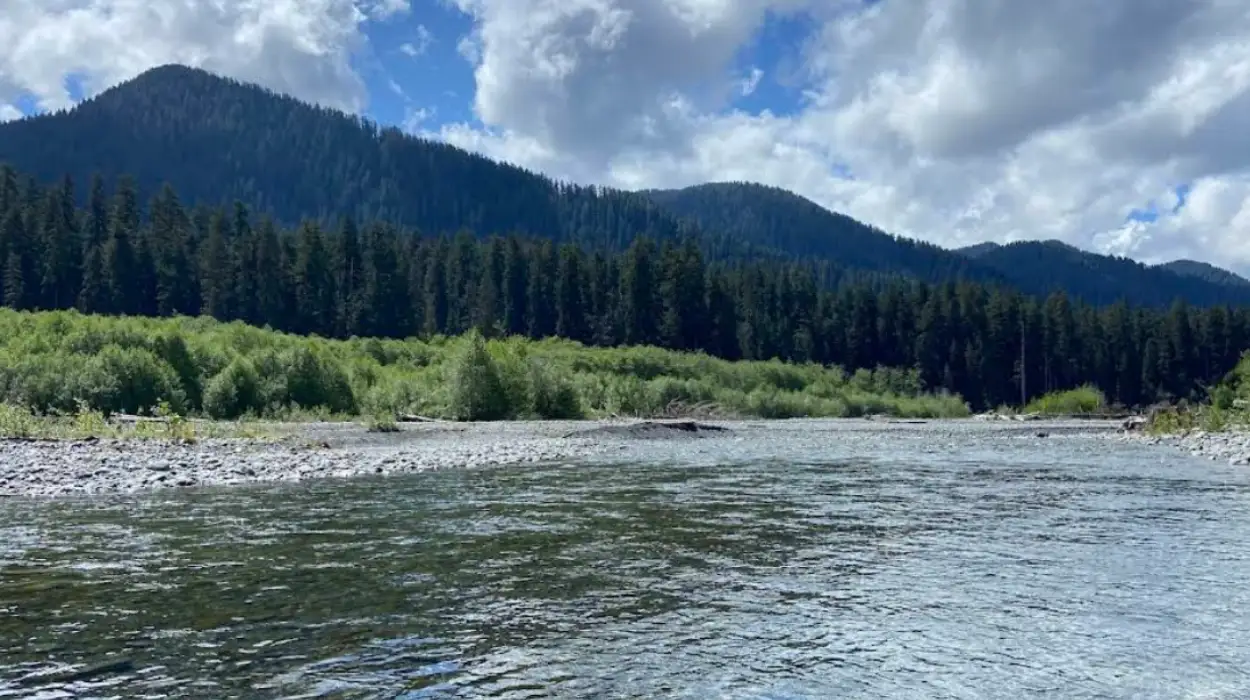
The Hoh Rain Forest is a temperate rain forest located on the Olympic Peninsula in western Washington State, situated within Olympic National Park. It is one of the largest temperate rain forests in the United States and receives an average of 140 inches (355 centimetres) of precipitation annually. The ecosystem is defined by its high rainfall, dense canopy of coniferous and deciduous trees, and extensive epiphyte populations, which are plants that grow on other plants without harming them. The area serves as a critical habitat for diverse Pacific Northwest flora and fauna, managed under federal protection to preserve its ecological integrity.
- What Is the Hoh Rain Forest and Why Is It Famous?
- Where Is the Hoh Rain Forest Located and How Do Visitors Access It?
- What Are the Best Moss Trails to Hike in the Hoh Rain Forest?
- What Wildlife Species Inhabit the Hoh Rain Forest Ecosystem?
- How Does the Weather and Climate Shape the Rainforest?
- What Is the Historical Significance of the Hoh River Valley?
- When Is the Best Time to Visit the Hoh Rain Forest?
- How Does the Nurse Log Process Benefit Forest Regeneration?
- What Regulations and Safety Guidelines Apply to the Hoh Rain Forest?
What Is the Hoh Rain Forest and Why Is It Famous?
The Hoh Rain Forest is a protected temperate rain forest within Olympic National Park, Washington, renowned for its massive old-growth trees, abundant mosses, and unique biodiversity. It is famous as one of the quietest ecosystems in North America.
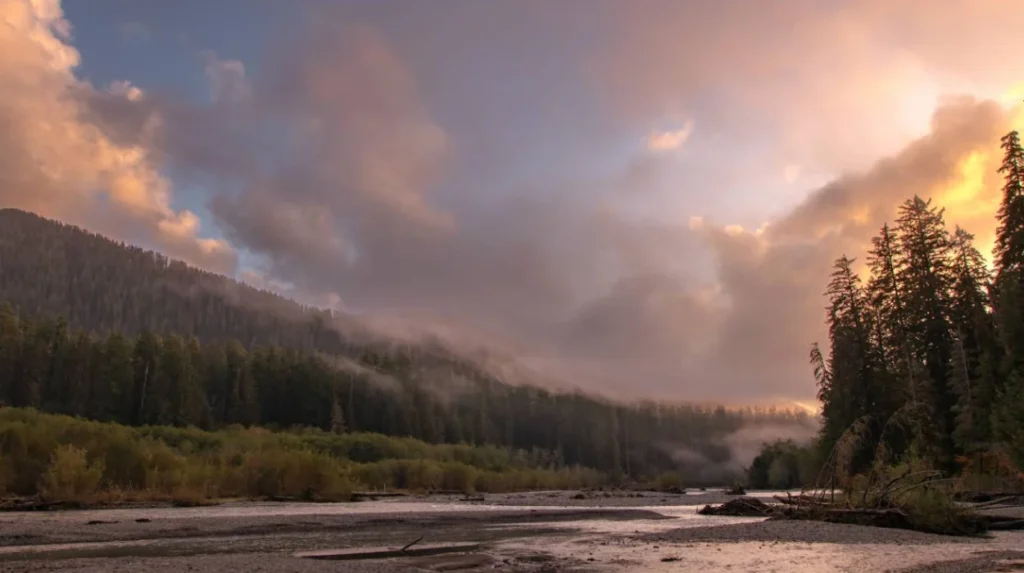
The Hoh Rain Forest occupies a glaciated valley carved by the Hoh River, which flows 56 miles (90 kilometres) from Mount Olympus to the Pacific Ocean. The rainforest environment is created by maritime climatic conditions, where moisture-laden air from the Pacific Ocean cools and condenses as it rises over the Olympic Mountains. This process results in a high volume of annual rainfall that sustains the lush vegetative growth. The ecosystem is dominated by giant tree species, including Sitka spruce (Picea sitchensis) and Douglas fir (Pseudotsuga menziesii), some of which reach heights exceeding 300 feet (91 metres) and ages older than 500 years.
Historically, the region was shaped by Pleistocene glaciation, with glaciers advancing and retreating to carve the wide, U-shaped valley that characterizes the Hoh River basin today. Indigenous peoples, specifically the Quinault and Hoh tribes, inhabited and utilized the resources of this coastal region for thousands of years prior to European exploration. In 1938, President Franklin D. Roosevelt signed the legislation establishing Olympic National Park, which placed the Hoh Rain Forest under permanent federal protection. In 1976, the park was designated as a United Nations Educational, Scientific and Cultural Organization (UNESCO) International Biosphere Reserve, and it became a World Heritage Site in 1981, confirming its global ecological importance.
The structural complexity of the Hoh Rain Forest is defined by distinct vegetative layers. The canopy layer consists of mature conifers, while the understory contains deciduous trees such as bigleaf maple (Acer macrophyllum) and vine maple (Acer circinatum). The forest floor is covered with a dense carpet of ferns, including sword fern (Polystichum munitum), and bryophytes, which are non-vascular plants including mosses and liverworts. Hanging epiphytes, predominantly club moss (Selaginella oregana), drape from tree branches, absorbing nutrients and moisture directly from the air. This structural arrangement maximizes light absorption and nutrient cycling within the ecosystem.
The implications of preserving the Hoh Rain Forest extend to global climate research and conservation biology. The massive biomass of the old-growth forest functions as a highly efficient carbon sink, storing substantial amounts of atmospheric carbon dioxide. Additionally, the acoustic purity of the area, monitored by acoustic ecologists under initiatives like “One Square Inch of Silence,” provides baseline data on natural soundscapes. The preservation of this undisturbed habitat ensures the survival of specialized species that cannot adapt to fragmented secondary forests, making the Hoh a critical benchmark for ecological health.
Where Is the Hoh Rain Forest Located and How Do Visitors Access It?
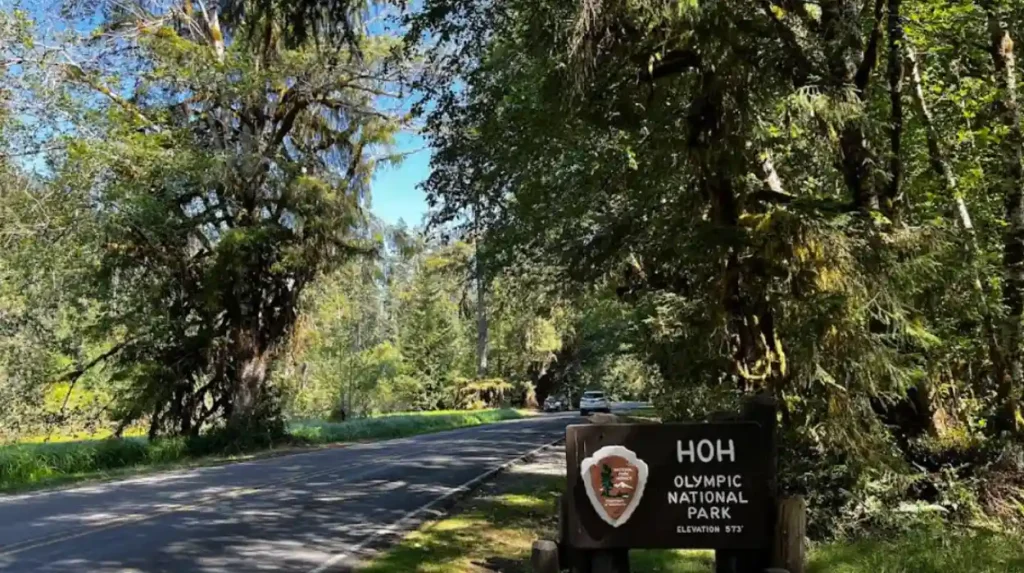
The Hoh Rain Forest is located on the western side of Olympic National Park on Washington’s Olympic Peninsula. Visitors access the forest via Upper Hoh Road, branching off U.S. Route 101 south of the town of Forks.
The geographic coordinates of the Hoh Rain Forest Visitor Center are 47.8601° N latitude and 123.9348° W longitude. The forest sits approximately 31 miles (50 kilometres) south of Forks, Washington, and about 85 miles (137 kilometres) west of Port Angeles, Washington. The primary access route requires turning east off U.S. Route 101 onto Upper Hoh Road, which runs parallel to the Hoh River for 19 miles (31 kilometres) before terminating at the Hoh Rain Forest Visitor Center and parking area. This road operates year-round, though winter weather events can cause temporary closures due to fallen trees or localized flooding.
The infrastructure managing visitor access consists of several components maintained by the National Park Service. The Hoh Rain Forest Visitor Center provides educational exhibits, terrain maps, backcountry permits, and mathematical data regarding recent weather patterns. A vehicle entry station regulates admission fees, which contribute to park maintenance under the Federal Lands Recreation Enhancement Act. The parking facilities accommodate standard passenger vehicles, recreational vehicles, and tour buses, though capacity is limited relative to seasonal demand, often resulting in vehicle queues during peak operational hours.
The process of accessing the rainforest varies depending on the point of origin within Washington State. Visitors traveling from Seattle must cross Puget Sound via Washington State Ferries, such as the Seattle-Bainbridge or Edmonds-Kingston routes, before driving west on State Route 104 and U.S. Route 101. The journey covers approximately 220 miles (354 kilometres) and requires four to five hours of travel time. Visitors arriving from the south, such as Portland, Oregon, drive north along U.S. Route 101 through Aberdeen, Washington, approaching the Hoh River valley from the south.
The regional economic and logistical implications of visitor access are significant for the Olympic Peninsula. The high volume of tourists, exceeding 300,000 individuals annually, concentrates economic activity in nearby municipalities like Forks and Beaver. This tourism increases demand for local hospitality infrastructure, including hotels, campgrounds, and restaurants. To mitigate environmental degradation from vehicle emissions and soil compaction along the access corridor, the National Park Service evaluates long-term transportation strategies, including potential shuttle systems and timed-entry reservation frameworks.
What Are the Best Moss Trails to Hike in the Hoh Rain Forest?
The best moss trails in the Hoh Rain Forest are the Hall of Mosses Loop, the Spruce Nature Trail, and the Hoh River Trail. These paths offer accessible viewing of old-growth trees, hanging epiphytes, and river ecosystems.
The trail system at the Hoh Rain Forest is engineered to provide varying levels of interaction with the temperate ecosystem. The trails originate from the central courtyard adjacent to the Hoh Rain Forest Visitor Center. The paths feature explicit signage detailing trail length, elevation profiles, and safety regulations. The infrastructure includes wooden boardwalks, gravel stabilizing grids, and footbridges designed to prevent soil erosion and protect the delicate root systems of the surrounding vegetation from foot traffic.
The individual trails exhibit distinct ecological characteristics and structural components:
- Hall of Mosses Loop: This trail is a 0.8-mile (1.3-kilometre) loop with an elevation gain of 50 feet (15 metres). It features a grove of ancient bigleaf maple trees heavily draped in club moss and licorice ferns (Polypodium glycyrrhiza).
- Spruce Nature Trail: This trail covers a 1.2-mile (1.9-kilometre) loop with less than 30 feet (9 metres) of elevation change. It traverses both old-growth forest and younger secondary growth areas shaped by the shifting course of the Hoh River, showcasing species like red alder (Alnus rubra).
- Hoh River Trail: This path is an 18.5-mile (30-kilometre) one-way backcountry trail that climbs from 575 feet (175 metres) to 4,300 feet (1,310 metres) at the Blue Glacier moraine on Mount Olympus, serving as the primary route for mountaineers.
The pedagogical and recreational processes enabled by these trails involve active observation of forest dynamics. As hikers traverse the Hall of Mosses, they observe nurse logs, which are fallen trees that provide nutrients, moisture, and elevated positioning for new seedlings. The Spruce Nature Trail allows visitors to observe the transition from river gravel bars to established forest terraces. The Hoh River Trail demands preparation for wilderness navigation, requiring hikers to register at backcountry campsites, manage waste according to Leave No Trace principles, and secure food storage containers against wildlife.
The management of these trails carries long-term implications for conservation and visitor safety. High foot traffic causes trail widening and soil compaction, which disrupts the shallow root networks of Sitka spruce trees. The National Park Service implements seasonal maintenance schedules to clear fallen debris, repair boardwalks, and re-route paths away from active river erosion zones. By channeling pedestrian movement along hardened pathways, park authorities maintain the ecological integrity of the interior rainforest while satisfying public education mandates.
What Wildlife Species Inhabit the Hoh Rain Forest Ecosystem?
The Hoh Rain Forest ecosystem is inhabited by Olympic Roosevelt elk, black-tailed deer, cougars, black bears, banana slugs, and diverse bird species. These animals rely on the dense vegetation and clean river systems for survival.
The faunal composition of the Hoh Rain Forest includes both vertebrate and invertebrate species that have adapted to high-humidity, old-growth environments. The isolation of the Olympic Peninsula by water and mountains has led to the development of endemic subspecies, which are organisms found nowhere else on Earth. The trophic structure of the forest relies on a complex food web where primary consumers feed on abundant plant matter, and apex predators regulate prey populations to maintain ecological equilibrium.
The wildlife population includes several prominent species:
- Olympic Roosevelt Elk (Cervus canadensis roosevelti): The largest subspecies of elk in North America, with adult males weighing up to 1,100 pounds (500 kilograms). They alter forest structure by grazing on understory plants like salmonberry (Rubus spectabilis).
- Pacific Banana Slug (Ariolimax columbianus): A bright yellow terrestrial gastropod mollusc reaching lengths of 10 inches (25 centimetres). It acts as a primary decomposer by consuming detritus, fungi, and animal waste.
- Olympic Black Bear (Ursus americanus altifrontalis): An omnivorous mammal that forages for berries, insects, and spawning salmon along the riverbanks.
- Northern Spotted Owl (Strix occidentalis caurina): A threatened raptor species that nests exclusively in the cavities of old-growth conifers.
The behavioral and biological processes of these species are synchronized with the seasonal patterns of the rainforest. During the autumn mating season, known as the rut, male Roosevelt elk engage in vocalizations called bugling and clash antlers to establish dominance within harems. Banana slugs secrete a specialized mucus layer that prevents desiccation, which is severe drying, allowing them to traverse the forest floor even during dry summer spells. In late summer and autumn, anadromous fish species, including coho salmon (Oncorhynchus kisutch), migrate from the Pacific Ocean up the Hoh River to spawn, delivering marine-derived nutrients to the terrestrial food web.
The status of wildlife within the Hoh Rain Forest serves as a critical indicator for broader environmental health and conservation policy. The protection of the northern spotted owl within the park provides a refuge from the habitat fragmentation occurring in unprotected timber lands across the Pacific Northwest. Monitoring elk population dynamics allows biologists to understand how herbivory patterns influence forest regeneration. Safeguarding these wildlife populations ensures the preservation of evolutionary processes within an intact ecosystem, supporting biodiversity goals outlined by federal mandates and international treaties.
How Does the Weather and Climate Shape the Rainforest?
The weather and climate shape the rainforest through extreme precipitation driven by maritime air masses colliding with the Olympic Mountains. This interaction creates a hyper-humid environment that allows temperate rainforest flora to thrive.
The climate of the Hoh Rain Forest is classified as a marine west coast climate, designated as Cfb under the Köppen climate classification system. The primary driver of this climate is the Pacific hyper-maritime influence, combined with steep topographic variance. Annual precipitation averages 140 inches (355 centimetres), but can exceed 160 inches (406 centimetres) in exceptional years. The temperature range remains moderate due to the buffering capacity of the nearby ocean, with average winter lows hovering around 35°F (2°C) and average summer highs reaching 70°F (21°C).
The climate system relies on distinct meteorological components:
- Orographic Lift: The process where moist air is forced to rise over mountain barriers, cooling adiabatically and releasing precipitation on the windward slopes.
- Atmospheric Rivers: Narrow corridors of concentrated moisture transport in the atmosphere, such as the “Pineapple Express,” which deliver heavy rainfall events during winter months.
- Rain Shadow Effect: The dry conditions produced on the leeward side of the mountains, contrasting sharply with the wet conditions of the Hoh Valley.
The hydrological cycle within the forest involves complex distribution pathways. When heavy rain falls, the multi-layered forest canopy intercepts a percentage of the water, slowing its descent to the forest floor. This interception reduces soil erosion and allows for gradual absorption into the water table. The abundant epiphytic mosses act as biological sponges, absorbing up to four times their dry weight in water. During the drier summer months of July and August, when rainfall drops significantly, the gradual release of water stored in the moss canopy maintains high humidity levels within the forest interior.
The long-term implications of climate patterns in the Hoh Rain Forest are central to contemporary climate change modeling. Shifts in global jet stream positions alter the frequency and intensity of atmospheric rivers, potentially causing severe winter flooding that destabilizes riverbanks and destroys salmon spawning beds. Conversely, reductions in winter snowpack on Mount Olympus decrease the summer meltwater volume entering the Hoh River, threatening cold-water aquatic species. Understanding these climatic interactions allows scientists to forecast how temperate rain forests across the globe will respond to changing atmospheric compositions.
What Is the Historical Significance of the Hoh River Valley?
The historical significance of the Hoh River valley involves thousands of years of Indigenous habitation, 19th-century European exploration, industrial logging pressures, and landmark federal conservation initiatives.
The Hoh River valley holds deep historical roots bound to the cultural identity of the Hoh River Tribe, or Chaláat, who have resided along the river since time immemorial. Their traditional territory extended from the glacial headwaters of Mount Olympus down to the river mouth at the Pacific Ocean. The river served as a highway for cedar dugout canoes, and the forest provided vital materials for survival. European contact began in the late 18th century through maritime fur traders, followed by terrestrial expeditions in the late 19th century that mapped the interior of the Olympic Peninsula.
The history of the valley is defined by several key developments:
- The Treaty of Olympia (1855): An agreement between the United States government and the local tribes, including the Hoh and Quinault, which ceded Indigenous lands while reserving hunting and fishing rights for the tribes.
- The Homestead Act of 1862: Legislation that prompted American pioneers to clear rainforest land for agriculture and cattle ranching along the lower Hoh River terraces.
- The Spruce Production Division (1917): A division of the United States Army established during World War I to harvest high-strength Sitka spruce timber from the region for military aircraft construction.
- The Olympic National Park Act (1938): Federal legislation signed by President Franklin D. Roosevelt that permanently protected the valley from commercial exploitation.
The process of transitioning the Hoh Valley from an active timber resource zone to a protected wilderness required decades of political negotiation. Throughout the early 20th century, regional timber industries sought to maximize lumber production to support urban expansion in Western Washington. Conservationists, organized under groups like the Emergency Conservation Committee, campaigned to protect the old-growth forests, arguing that the unique ecosystem could not regenerate once logged. The establishment of the park halted large-scale logging within the upper watershed, though timber harvesting continued on surrounding state and private lands, creating a sharp boundary between protected old-growth and commercial timber plantations.
The historical preservation of the Hoh Rain Forest established a major precedent for modern environmental law and public lands management. The survival of this intact watershed provided a living laboratory for the development of modern forest ecology, allowing researchers like Jerry Franklin to define the structural characteristics of old-growth ecosystems. The ongoing legal framework regarding tribal fishing rights, affirmed by the 1974 Boldt Decision, continues to shape co-management practices between federal agencies and Indigenous nations. This history demonstrates the evolving societal values regarding natural landscapes, moving from resource extraction toward ecological stewardship.
When Is the Best Time to Visit the Hoh Rain Forest?
The best time to visit the Hoh Rain Forest is from May through September for optimal trail conditions and reduced rainfall, or from October through April to experience the maximum volume of rain and moss growth.
Selecting a visitation window requires balancing weather conditions against crowd density and park operations. The summer season, spanning from June to August, features the lowest precipitation metrics, with average monthly rainfall dropping below 3 inches (7.6 centimetres). Conversely, the late autumn and winter seasons, running from November to January, experience peak precipitation, with monthly totals often exceeding 20 inches (51 centimetres). The Hoh Rain Forest Visitor Center adjusts its operational calendar accordingly, reducing hours during the winter season due to decreased staffing and severe weather events.
The distinct seasonal phases offer specific trade-offs for travelers:
- Summer Peak (June – August): Provides dry hiking trails, operational campgrounds, and maximum daylight hours. However, it brings high tourist volume, causing parking lot closures and wait times at the entrance station exceeding two hours between 10:00 AM and 3:00 PM.
- Shoulder Seasons (May and September): Offers moderate weather conditions and intermediate crowd levels. September features the onset of the elk rut, presenting unique wildlife viewing opportunities.
- Winter Wet Season (October – April): Showcases the rainforest in its most natural state, with vibrant, water-saturated mosses and active river flows. Visitors experience solitude but must navigate low temperatures, short days, and frequent rain.
The logistics of planning a visit involve checking real-time data feeds provided by Olympic National Park management. During peak summer periods, visitors should arrive at the entry gate prior to 9:00 AM or after 5:00 PM to secure parking spaces without prolonged delays. Winter travelers must monitor regional road conditions for alerts concerning washouts along Upper Hoh Road. Proper equipment preparation is mandatory regardless of the season; waterproof outerwear, sturdy footwear, and synthetic layers are essential components for navigating the slippery, wet environment safely.
The seasonal distribution of tourism impacts both the preservation of the trail systems and local resource allocation. Concentrated summer tourism accelerates trail wear, requiring intensive autumn repair cycles by trail crews. Off-season travel distributes economic benefits more evenly across the Olympic Peninsula’s hospitality sector, supporting local businesses through the winter months. By understanding the seasonal dynamics of the rainforest, visitors can optimize their travel experiences while reducing their collective footprint on this sensitive ecosystem.
How Does the Nurse Log Process Benefit Forest Regeneration?
The nurse log process benefits forest regeneration by providing a decaying log that serves as a nutrient-rich, elevated substrate for seedlings, allowing them to bypass the intense competition of the crowded forest floor.
The nurse log phenomenon is a cornerstone ecological process within old-growth temperate rain forests. When a mature conifer, such as a western hemlock (Tsuga heterophylla) or Sitka spruce, falls due to windthrow, senescence, or fungal decay, its biological journey enters a new phase. The fallen trunk, which can remain on the forest floor for centuries, transitions from living tissue to a foundational nursery for successive generations of vegetation.
The nurse log mechanism operates through a sequence of physical and chemical stages:
- Decomposition: Wood-decay fungi, including bracket fungi, break down the tough lignin and cellulose structures of the wood, softening the outer bark layer.
- Moisture Retention: The decaying wood fibers act like a sponge, absorbing and holding large volumes of water throughout the dry summer months.
- Seedling Colonization: Wind-blown seeds land on the moss-covered surface of the log, where they find a hospitable germination environment.
- Root Growth: The young seedlings extend their roots down around the sides of the log, eventually reaching the mineral soil below.
This process offers a distinct competitive advantage to developing trees. The forest floor is frequently covered in a thick layer of duff, moss, and aggressive understory plants like salal (Gaultheria shallon) and huckleberry (Vaccinium), which block sunlight and exhaust the energy reserves of tiny seeds. By germinating on top of an elevated nurse log, tree seedlings gain better access to available light filtering through the canopy. Furthermore, the elevated position protects the young plants from being buried by falling winter debris or drowned in standing pools of water during heavy rains.
As the nurse log continues to decay over decades, it gradually dissolves completely, leaving behind a striking architectural feature in the mature forest: a straight line of trees standing on stilted roots, often referred to as a “colonnade.” These mature trees appear to be standing on wooden stilts, a physical testament to the long-gone log that once supported their growth. This continuous cycle of death, decay, and rebirth ensures the long-term resilience and structural diversity of the Hoh Rain Forest, highlighting the vital ecological value of leaving fallen timber undisturbed within the ecosystem.
What Regulations and Safety Guidelines Apply to the Hoh Rain Forest?
Regulations and safety guidelines in the Hoh Rain Forest mandate staying on designated trails, maintaining safe distances from wildlife, securing proper backcountry permits, and adhering to strict trash disposal protocols to protect the ecosystem.
Olympic National Park enforces strict regulations under Title 36 of the Code of Federal Regulations to protect both visitors and the fragile rainforest environment. The high volume of foot traffic requires systematic management to prevent habitat degradation. Violations of these rules can result in federal citations, fines, or expulsion from the park.
Critical regulations include:
- Pet Prohibition: Domestic animals are prohibited on all interior trails within the Hoh Rain Forest, including the Hall of Mosses and Spruce Nature Trail, to prevent wildlife disruption and disease transmission.
- Wildlife Distance: Visitors must maintain a minimum distance of 50 yards (46 metres) from large mammals, including Roosevelt elk and black bears, and 100 yards (91 metres) from cougars.
- Leave No Trace: All refuse must be packed out or deposited in bear-proof waste receptacles located at the visitor center and designated campgrounds.
- Permit Requirements: Wilderness camping along the Hoh River Trail requires an advance permit secured through the Recreation.gov digital portal.
The enforcement process relies on a combination of law enforcement park rangers and educational signage deployed at major trail junctions. Rangers monitor high-use zones to ensure compliance with the prohibition against collecting natural items, including moss, rocks, plants, and wood, which must remain in place to support nutrient cycling. Backcountry campers must store all food, scented items, and garbage in approved, hard-sided bear canisters to prevent habituating wildlife to human food sources, which often leads to dangerous human-animal conflicts.
Adhering to these safety guidelines directly impacts the preservation of the rainforest and reduces the need for emergency search and rescue operations. Soil compaction caused by off-trail hiking destroys the delicate mycorrhizal fungi networks that assist tree roots in absorbing vital nutrients. By respecting wildlife boundaries, visitors protect the natural behavioral patterns of species like the Roosevelt elk, ensuring they can forage without stress. These collective conservation efforts guarantee that the unique wilderness qualities of the Hoh Rain Forest remain preserved for future generations.
What is the Hoh Rain Forest?
The Hoh Rain Forest is a temperate rainforest located in Olympic National Park, Washington, known for its old-growth trees, moss-covered landscape, and heavy rainfall.