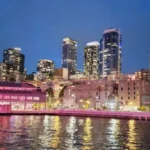

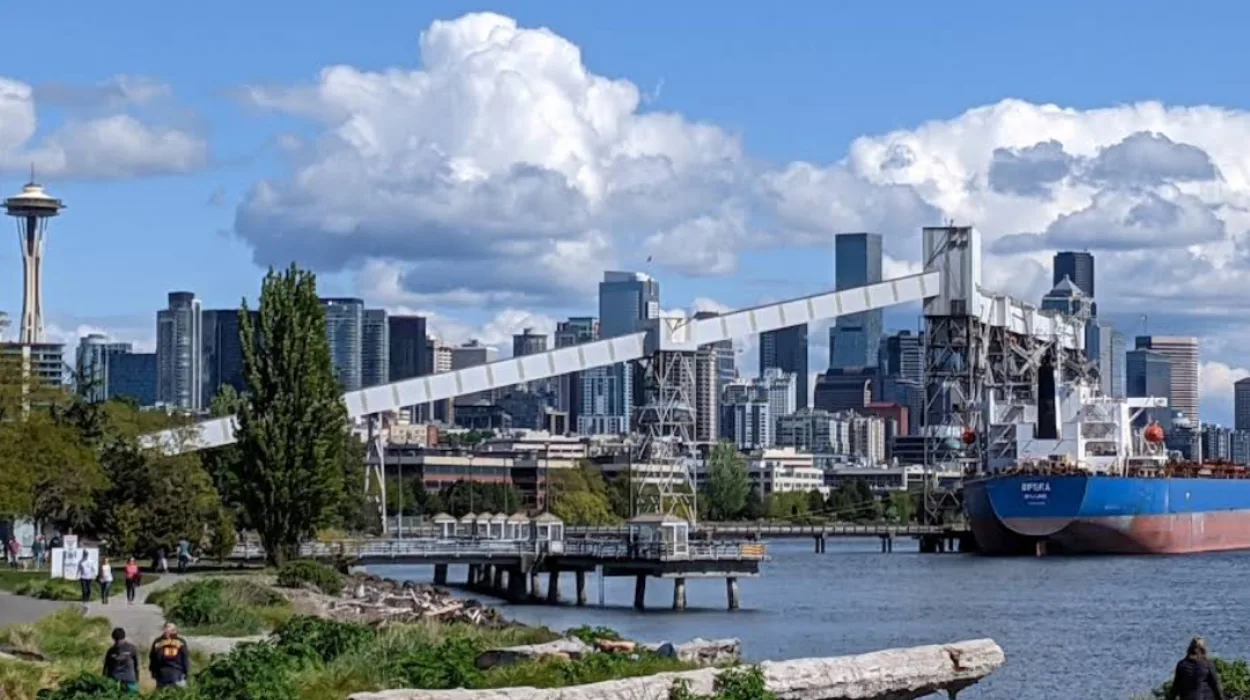
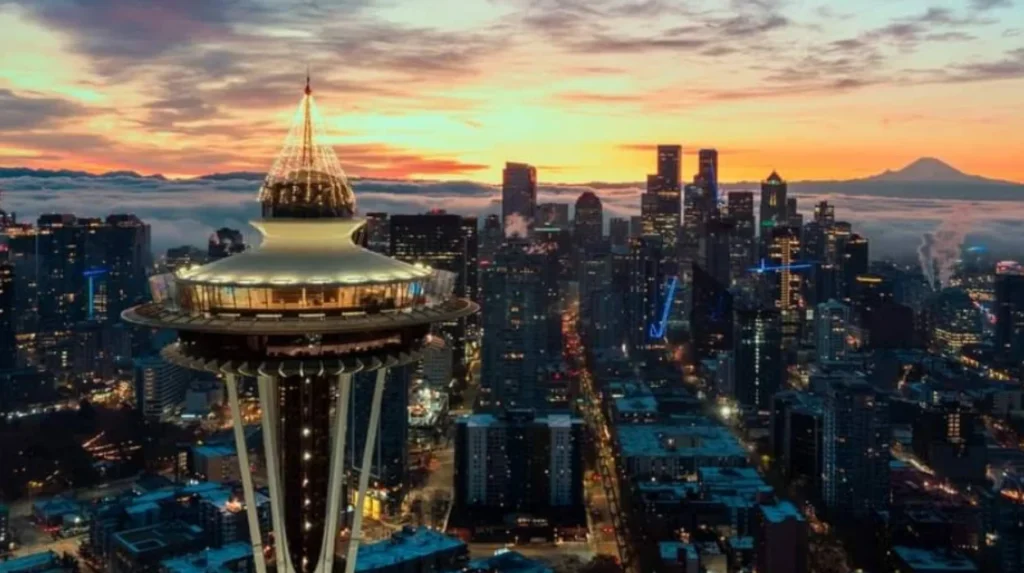
The Space Needle is a 605-foot-tall tower in Seattle, Washington, built in 1962 for the Century 21 Exposition world’s fair. It features a saucer-shaped upper structure with a 360-degree observation deck at 520 feet and the Loupe, a rotating glass floor at 500 feet. This iconic landmark offers panoramic city views and attracts 1 million visitors yearly.
- Where is the Space Needle located?
- When was the Space Needle built and what is its history?
- How much does it cost to visit the General Admission tickets?
- What are the hours of operation?
- How do you get tickets for the Space Needle?
- What are the best times to visit for optimal views?
- What views can you see from the Space Needle?
- What dining options exist inside the Space Needle?
- What tips help avoid crowds at the Space Needle?
- Is the Space Needle accessible for people with disabilities?
- What should you know about photography at the Space Needle?
- What nearby attractions pair with a Space Needle visit?
- What weather considerations apply when visiting?
The Space Needle stands in Seattle Center, a 74-acre cultural campus. Architects John Graham and Victor Steinbrueck designed it with three main legs supporting a central elevator shaft and revolving restaurant space. Steel construction used 8,660 tons of material, completed in 400 days. The tower’s hourglass shape narrows to 18 feet at the foundation and widens to 138 feet at the top saucer.
Elevation defines its appeal. The observation deck sits 520 feet above ground, providing unobstructed sightlines. The Loupe rotates fully every 45 minutes, offering dynamic perspectives. Engineering includes 25 lightning rods and earthquake-resistant dampers rated for 9.1 magnitude events. Daily operations involve 72 elevators trips per hour during peak times.
Visitor impact remains steady. In 2024, attendance reached 1.1 million, up 15% from pre-pandemic levels. Revenue supports Seattle Center maintenance. Future upgrades include LED lighting synchronized with music events through 2030.
Where is the Space Needle located?
The Space Needle locates at 400 Broad Street in Seattle Center, Seattle, Washington 98109. It sits one mile north of downtown, adjacent to the Seattle Monorail station and Climate Pledge Arena. Public transit access takes 2 minutes by monorail from Westlake Center.
Seattle Center spans 74 acres in the Uptown neighborhood. The site formerly housed the 1962 world’s fair grounds. Nearby landmarks include the Museum of Pop Culture 0.1 miles east and Chihuly Garden and Glass 0.2 miles south. Parking garages offer 4,000 spaces within 0.5 miles.
Transportation options serve all visitors. Sound Transit Link light rail stops at Westlake station, 1 mile south; monorail covers that distance in 2 minutes. King County Metro buses 1, 2, 13, and 33 stop directly outside. Ride-sharing drop-off zones align with Broad Street entrance. Walking from Pike Place Market takes 25 minutes via 1st Avenue.
Accessibility features include ADA-compliant paths and elevators. Free shuttles connect to light rail during events. Traffic peaks evenings near Climate Pledge Arena, adding 15 minutes to drives.
When was the Space Needle built and what is its history?
Construction began April 4, 1961, and completed April 15, 1962, for the Century 21 Exposition world’s fair. Edward E. Carlson commissioned it as a futuristic symbol after sketching a doodle on a napkin. The tower hosted 2.3 million fair visitors and survived a 1999 renovation costing $20 million.
The Century 21 Exposition drew 10 million attendees to Seattle. Planners selected the needle to compete with taller structures like the Eiffel Tower. Edward Carlson, Western International Hotels president, inspired the concept. Engineers used a tripod base anchored 30 feet into bedrock for stability. Opening day featured President Kennedy’s remote address.
Post-fair operations shifted to tourism. Annual visitors averaged 800,000 through the 1990s. A 2000-2002 renovation added glass enclosures and the Loupe. 2017-2020 upgrades cost $100 million, installing Skyrisers benches and Oculus stairs. Hurricane-force winds tested it in 1962 at 125 mph without damage.
Historical records document milestones. 1974 fire damaged the restaurant, rebuilt as SkyCity in 1977. 1999 millennium celebration lit the top in red, white, blue. LED systems now display 30 million colors for holidays.
How much does it cost to visit the General Admission tickets?
General Admission tickets cost $40 for adults (13-64), $30 for youth (5-12) and seniors (65+), and free for children under 5. Prices include access to both observation decks, the Loupe, and rotating glass floor. Book online to save 10% and skip lines; citypass bundles reduce to $32.
Ticket tiers target different needs. Skip-the-Line option adds $10 for priority entry. Twilight tickets after 7 PM drop to $25. Combination passes with Chihuly Garden cost $65. Annual memberships at $99 allow unlimited visits for locals.
Revenue funds preservation. 2025 sales reached 1.2 million tickets, generating $45 million. Dynamic pricing adjusts 5% during peaks like July-August. Refunds apply within 24 hours of purchase.
Purchase channels ensure availability. Official site spaceneedle.com processes 80% of sales. Viator and GetYourGuide offer 5% discounts. On-site kiosks accept cards only; no cash since 2020.
What are the hours of operation?
The Space Needle opens 9 AM to 10 PM daily in summer (Memorial Day to Labor Day), 10 AM to 8 PM otherwise. Last elevator ascends 45 minutes before closing. Hours extend to midnight on July 4 and New Year’s Eve.
Seasonal adjustments align with demand. Winter closes at 6 PM weekdays. Holidays like Thanksgiving maintain 10 AM-8 PM. Maintenance closures occur Tuesdays in January, announced 30 days ahead.
Crowd patterns dictate timing. Mornings before 11 AM see 20% fewer visitors. Evenings after 6 PM offer sunset views. Online reservations slot times in 30-minute windows.
Real-time checks confirm changes. Official app notifies of weather delays. Snow rarely closes it due to de-icing systems rated for -20°F.
How do you get tickets for the Space Needle?
Buy tickets online at spaceneedle.com, selecting date and time slot. Choose General Admission or bundles like CityPASS. Print QR code or use mobile; on-site sales available but add 20-minute waits. Groups of 15+ get 15% discount.
Online process takes 2 minutes. Calendar shows availability; peak slots fill 48 hours ahead. Email confirmation arrives instantly. Accessibility tickets reserve front-of-line.
Alternatives include resellers. Seattle CityPASS integrates 5 attractions for $129, saving 47%. Go City Explorer Pass offers 1-7 day options. Corporate partners like Viator guarantee entry.
Validation occurs at entry. Scanners read QR codes; re-entry allowed same day with wristband. Lost tickets replace for $10 fee.
What are the best times to visit for optimal views?
Visit early morning 9-11 AM or late afternoon 4-6 PM weekdays for clearest skies and 30% fewer crowds. Sunset slots at 8 PM in summer provide golden hour over Puget Sound. Avoid weekends and noon-3 PM peaks.
Weather data guides choices. Seattle averages 152 clear days yearly; May-September offers 70% visibility. Mount Rainier appears on 40% of visits. Cloud cover peaks December-February at 80%.
View quality varies by deck. Upper deck at 520 feet spots Olympic Mountains 50 miles west. Loupe floor reveals Elliott Bay ships 1,000 feet below. Telescopes magnify 100x.
Crowd stats confirm patterns. 2025 data shows 5,000 daily visitors; mornings average 800. Drones capture real-time queues on official social channels.
What views can you see from the Space Needle?
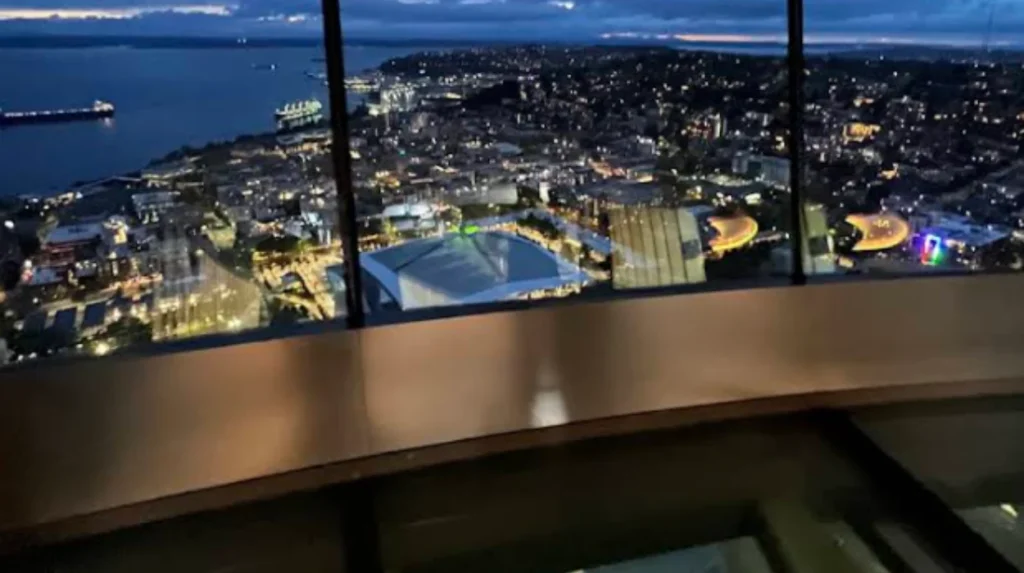
From 520 feet, see 360-degree panorama: downtown Seattle south, Puget Sound west, Lake Union north, Cascade Mountains east, Mount Rainier southeast on clear days. Spot ferries, stadiums, and 60 miles to Olympics.
Observation deck circles fully. South views include Lumen Field (Seahawks stadium, capacity 68,740) and T-Mobile Park (Mariners, 47,929 seats). West overlooks 200-square-mile Puget Sound with 20 ferry routes. North reveals Gas Works Park and University of Washington.
Lower deck Loupe shows vertical drops. Glass floor rotates, exposing 500-foot height over Seattle Center. Skyrisers benches tilt outward 35 degrees for photos. Night lights illuminate 5,000 city blocks.
Visibility stats: 90% see Mount Rainier (14,410 feet) in summer. Telescopes identify 50 landmarks. Annual light shows enhance 20 nights.
What dining options exist inside the Space Needle?
Loupe Lounge on lower deck serves cocktails, small plates, and brunch; reservations required, $40 minimum weekends. No full restaurant since SkyCity closed 2017. Vending machines offer snacks; outside cafes within 200 feet.
Loupe Lounge seats 64 with views. Menu includes charcuterie ($28), salmon crudo ($22), and aviation cocktails ($18). Brunch slots book 90 days ahead. Private events host 100 guests.
Historical dining evolved. SkyCity rotated 47 minutes per revolution, serving 1.5 million meals yearly until 2017. Current setup prioritizes views over meals.
Nearby options: Armory market 0.3 miles has 10 food trucks. Pike Place (1 mile) offers 80 stalls.
What tips help avoid crowds at the Space Needle?
Book 9 AM weekday slots online; arrive 15 minutes early. Visit November-February off-season for 50% fewer people. Use monorail entry to bypass parking lots.
Capacity limits elevators to 8 per trip, 1,200 hourly. Priority tickets cut waits from 60 to 10 minutes. Off-peak months average 2,000 daily versus 8,000 summer.
Security screens bags under 12×12 inches. Lockers store free for 2 hours. Drones and tripods prohibited.
Real examples: January 2025 saw 1,100 visitors/day; July hit 9,500. Early birds exit by noon.
Is the Space Needle accessible for people with disabilities?
Full ADA access includes elevators, ramps, and tactile maps. Wheelchair spaces on decks; service animals allowed. ASL tours Thursdays; quiet hours Tuesdays.
Elevators fit two wheelchairs, 5-minute rides. Loupe floor has edge guards. Staff assist 500 disabled visitors monthly.
Upgrades post-2018 added braille signage. Annual audits comply with 2024 standards.
What should you know about photography at the Space Needle?
Tripods banned; phones and DSLRs allowed. Skyrisers benches enable tilted selfies. Professional shoots require $250 permit.
Decks provide 360-degree light. Telescopes aid zooms. Annual photoshoots number 2,000.
Social stats: #SpaceNeedle tags 500,000 Instagram posts yearly.
What nearby attractions pair with a Space Needle visit?
Chihuly Garden and Glass (0.2 miles, glass sculptures), Museum of Pop Culture (0.1 miles, music exhibits), Climate Pledge Arena (0.3 miles, events). Seattle Monorail connects to Pike Place Market (1 mile).
Bundles save 30%. CityPASS includes 7 sites. Walking path takes 45 minutes total.
Visitor data: 70% combine two attractions.
What weather considerations apply when visiting?
Seattle averages 38 inches rain yearly; pack layers for 50-70°F. Views clear 60% summer days. Indoor decks shelter rain.
Forecasts predict 70% accuracy. Wind over 40 mph limits outdoor areas.
Is the Space Needle worth visiting in Seattle?
Yes, the Space Needle is considered one of Seattle’s top attractions because it offers 360-degree city views, a rotating glass floor called the Loupe, and panoramic sights of Puget Sound, Mount Rainier, and the Seattle skyline. Most visitors spend 1-2 hours there, especially during sunset hours.