
Key points
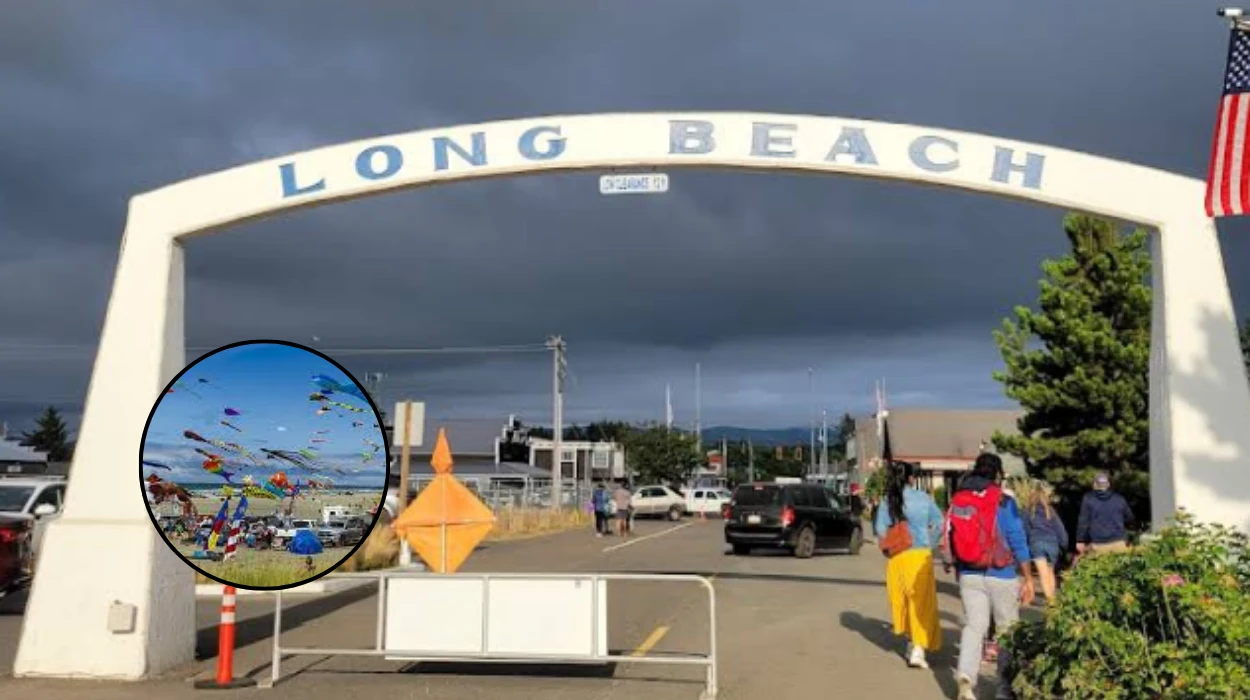
- Every third full week of August, Long Beach, Washington hosts the Washington State International Kite Festival, billed as the largest kite festival in the United States.
- The week‑long event began in 1981 with nine participants and now draws hundreds of kites and thousands of spectators annually.
- Traditional opening rituals include a woman standing in a field with crushed red chili pepper, scattering the red dust into the sky to wish for fair winds, a practice started by the late Kay Buesing, owner of Long Beach Kites.
- The festival features a wide variety of kites, including multicoloured artistic designs, giant dragons, inflatable figures, stunt kites, Japanese fighter kites, vintage and historic kites, as well as character‑shaped kites such as ponies, Minions and SpongeBob SquarePants.
- Spectators can watch synchronized aerial performances, kite‑flying competitions and mass ascensions, alongside local food vendors, a beer garden, artisan booths and three stages of live music around the town of Long Beach.
- Long Beach brands itself as the “kite‑flying capital of the U.S.,” with kite‑flying common on the beach year‑round and anchored by the World Kite Museum nearby.
- The World Kite Museum, founded in 1990, holds more than 1,500 kites from at least 26 countries and includes exhibits on the history of kites in Washington State, World War II kites used for training and defence, and kites from Thailand, Malaysia, Indonesia and other regions.
- The museum’s Hall of Fame honours figures such as Alexander Graham Bell, Benjamin Franklin, the Wright brothers and the Kite‑Flying Children of the Gaza Strip, among other international kite‑makers and enthusiasts.
Long Beach, Washington (Evening Washington News) May 4, 2026 – The skies over Long Beach erupt each August with a rainbow‑like swarm of kites as the Washington State International Kite Festival lifts off in what promoters call the biggest kite festival in the United States. Organised around the third full week of August, the week‑long celebration has grown from a modest nine‑participant gathering in 1981 into a major regional draw that now features hundreds of kites representing the work of some of the world’s most renowned kite designers and manufacturers.
- Key points
- How did the wind‑wish ritual with chili pepper begin?
- What kinds of kites can visitors see over Long Beach?
- Why has Long Beach become known as the “kite‑flying capital of the U.S.”?
- What does the World Kite Museum show visitors about the history of kites?
- Who is honoured in the World Kite Museum’s Hall of Fame?
- What else does the festival do beyond flying kites?
- Background of this development
- Predictions for how this development could affect its audience
As reported by the Evergreen Coast tourism website, the event encompasses a broad spectrum of kite styles, from historic and vintage kites to inflatable animal figures, Japanese fighter kites, stunt kites and mass‑launch ascensions that fill the sky simultaneously.
In addition to the flying displays, the festival grounds host local food vendors, craft booths, a beer garden and three separate stages of live musical entertainment, transforming the small coastal town into a temporary kite‑centric festival precinct.
How did the wind‑wish ritual with chili pepper begin?
A distinctive opening ritual draws attention each year as a woman stands in a field holding crushed red chili pepper and releases the red dust into the breeze, a gesture meant to bring fair winds for the coming week of flying.
Local organisers say this ceremony dates back to Kay Buesing, a former owner of Long Beach Kites, who introduced the custom before the first Washington State International Kite Festival. The red‑chili rite has since become a symbolic marker of the festival’s continuity and the community’s reliance on steady coastal winds for successful flying.
What kinds of kites can visitors see over Long Beach?
The festival’s visual appeal lies in the sheer diversity of kite forms on display. Ornamental kites range from intricately painted flat panels to three‑dimensional sculptures, including giant dragons, human‑sized ponies, cartoon characters such as Minions and SpongeBob SquarePants, and abstract geometric inflatables.
Judges and kite‑makers say that many of the newest designs push the limits of aerodynamics and materials, using lightweight plastics, ripstop nylon and computer‑aided patterning to create increasingly large and complex shapes.
Synchronized aerial routines are another highlight, with teams of fliers choreographing movements that mimic dance, combat and formation flying.
Competitions are held for categories such as best‑decorated, most creative, largest single kite and best‑flying stunt kite, with enthusiasts travelling from multiple U.S. states and a handful of international locations to take part.
Why has Long Beach become known as the “kite‑flying capital of the U.S.”?
Long Beach’s reputation as a kite‑flying hub is underpinned by both its geography and its institutional infrastructure. The town sits along an exposed stretch of the Pacific coastline that offers relatively steady winds and open beachfront, conditions that kite‑flyers describe as ideal for year‑round flying.
Local businesses and tourism organisations have leaned into that identity, branding the area as the “kite‑flying capital of the U.S.” and promoting both the August festival and daily beach kite‑flying as signature activities.
The World Kite Museum, established in 1990 in a converted beach cottage donated by the city, has played a central role in entrenching that image.
The museum now occupies a two‑story building containing more than 1,500 kites from at least 26 countries, with changing galleries that spotlight themes such as Japanese, Thai, Malaysian and Indonesian kites, as well as historical and military‑use specimens.
What does the World Kite Museum show visitors about the history of kites?
Exhibits at the World Kite Museum trace the tool‑and‑toy duality of kites across centuries and cultures. Early galleries outline the use of kites in scientific experimentation, including efforts by Alexander Graham Bell and the Wright brothers, both of whom experimented with kite‑borne gliders and control surfaces as part of early aviation research.
Museum displays also illustrate how kites were used to test weather instruments, lift cameras and carry communication lines, bridging the gap between science and sport.
The museum’s World War II‑era section documents the role of kites in military training and defence.
Historical accounts shown there describe target kites used to train machine‑gunners aboard ships, as well as barrage kites flown on wire lines designed to damage or destroy low‑flying enemy aircraft.
These displays are often accompanied by period photographs and technical schematics to emphasise the practical engineering behind wartime kite systems.
Who is honoured in the World Kite Museum’s Hall of Fame?
The World Kite Museum’s Hall of Fame recognises individuals whose work has advanced what the museum describes as the “art, science, religion and sport” of kiting across cultures. Early inductees include figures such as Alexander Graham Bell, Benjamin Franklin and the Wright brothers, reflecting their contributions to using kites in early flight experiments and scientific inquiry. Other honourees include George Peters, noted for both aesthetic and aerodynamic innovation in large‑scale kites, and Scott Skinner, a longtime promoter of kiting worldwide who helped found the Drachen Foundation.
The Hall of Fame also includes the Kite‑Flying Children of the Gaza Strip, presented in a plaque that situates kite‑flying as a form of cultural expression amid political and social strain. Each inductee is represented by a small plaque and a miniature kite said to be symbolically connected to their work, alongside archival nomination materials kept in the museum’s records.
What else does the festival do beyond flying kites?
Beyond the aerial displays, the Washington State International Kite Festival functions as a community and tourism event for Long Beach. Local restaurants and food vendors set up stalls along the beachfront, offering coastal fare and festival‑style snacks, while artisans sell hand‑made crafts, including small kites that visitors can purchase and fly on the spot.
The beer garden and music stages provide evening entertainment, drawing both families and adults who come primarily for the social atmosphere rather than kite‑flying.
The Long Beach Chamber of Commerce and the nonprofit that runs the World Kite Museum have jointly pointed to the festival as a driver of off‑season tourism, saying it helps sustain local businesses during a period that might otherwise be quieter than the peak summer months.
Background of this development
Kite‑flying as a mass‑participation event in Long Beach did not begin with the Washington State International Kite Festival. Long‑standing local kite‑shops and informal beach gatherings created a culture of kite‑flying that predated the formal festival by decades, with residents recalling kites over the beach as far back as the mid‑20th century.
The 1981 launch of the festival under local organisers, including figures associated with Long Beach Kites, provided a structured, annual event that could showcase those informal traditions while attracting outside visitors.
The World Kite Museum’s founding in 1990 reflected a broader desire to preserve and interpret that tradition. Initially housed in a one‑room exhibit in the Long Beach City Council chambers during the 1989 kite festival, the museum expanded into a dedicated building after the American Kitefliers Association’s archives merged with its collection in the late 1990s. Over time, the museum has also added rotating exhibits, including themed displays on Japanese, Thai and Indonesian kites and on postage stamps featuring kites, to broaden its educational reach beyond the summer festival crowd.
Predictions for how this development could affect its audience
For local residents and small‑business owners in Long Beach, the continued growth of the kite festival and the museum could help sustain seasonal tourism and provide a reliable economic anchor for coastal commerce. If visitor numbers stabilise or increase, local entrepreneurs may see opportunities to expand food, craft, and kite‑supply businesses, though they would also face pressure from rising costs and competition.