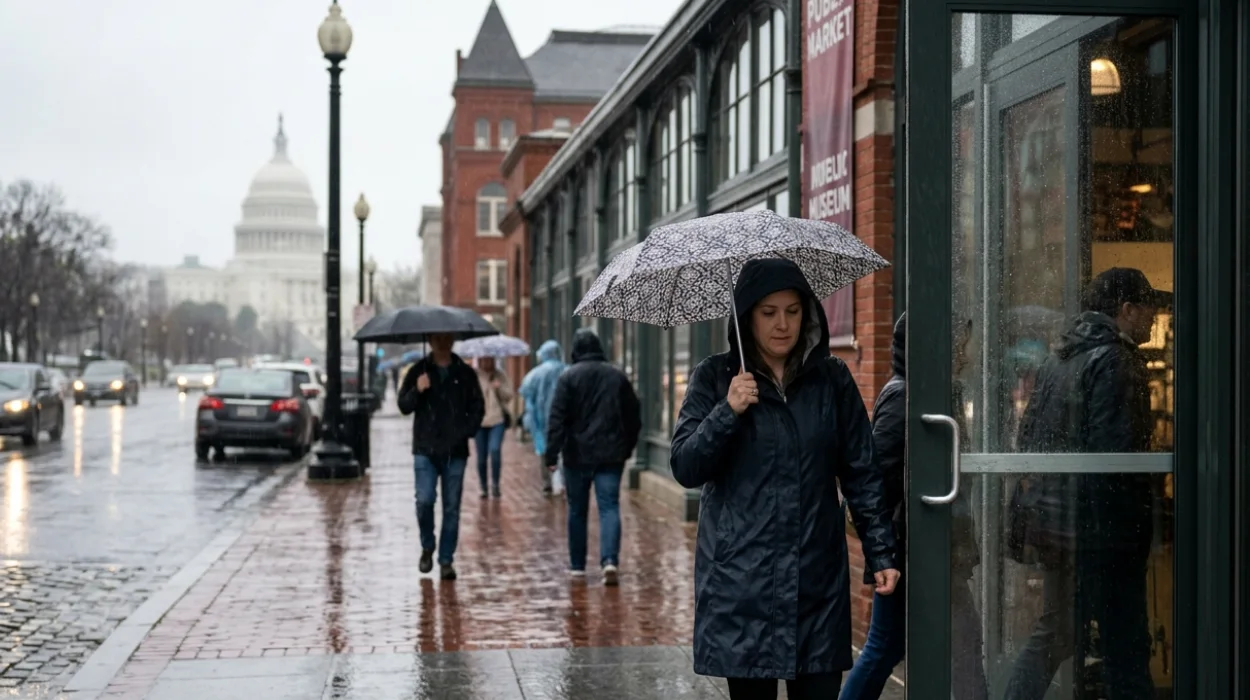
Washington, DC has a deep roster of indoor places that keep a rainy day useful, cultural, and easy to plan. The city’s strongest options cluster around museums, markets, entertainment venues, and historic buildings, so visitors and locals can stay indoors without losing momentum.
- What counts as a strong rainy day activity in DC?
- Why indoor planning matters in DC
- Which museums work best on a rainy day?
- Smithsonian museums
- National Gallery of Art
- International Spy Museum
- Where can you eat and browse indoors?
- Union Market
- Downtown game spots
- What indoor options work for families?
- National Children’s Museum
- Smithsonian family stops
- What indoor choices fit a short evening?
- Best evening sequence
- How should visitors build a rainy-day itinerary?
- Sample rainy-day framework
- Why does DC rank so well for indoor travel?
- What should readers remember before they go?
What counts as a strong rainy day activity in DC?
A strong rainy day activity in DC is indoors, centrally located, easy to reach by Metro or on foot, and open long enough to fill part of an evening or a full day. The best options combine shelter, variety, and a clear purpose, such as learning, eating, playing, or relaxing. DC is especially well suited to indoor plans because many of its top attractions are concentrated downtown and near transit corridors.
A useful way to think about rainy-day planning is by activity type. Museums cover learning and history, markets cover food and casual browsing, immersive attractions cover entertainment, and wellness spaces cover rest. That structure helps travelers choose quickly when weather changes and time is limited.
DC also has a strong public-institution footprint, which matters on wet days. The Smithsonian museums alone hold nearly 140 million objects, works of art, and specimens, and admission is free at every location. That makes indoor planning simpler and more flexible than in many other large cities.
Why indoor planning matters in DC
Rain changes walking time, outdoor monument visits, and sightseeing rhythm. DC’s landmarks are spread across wide avenues and open spaces, so a wet day often pushes people toward enclosed attractions. That shift is useful, because it turns the city’s museums, food halls, performance spaces, and specialty venues into the main event rather than a backup plan.
The best indoor itinerary also respects distance. Downtown DC, Penn Quarter, the National Mall corridor, and Union Market each support a different kind of indoor day. A short evening requires one neighborhood cluster, while a full day can move between museum blocks and food stops.
Which museums work best on a rainy day?
DC’s best rainy-day museums are the Smithsonian museums, the National Gallery of Art, the International Spy Museum, the National Children’s Museum, and the National Museum of African American History and Culture. These institutions cover science, art, history, espionage, and family learning, which makes them the most reliable indoor anchors in the city. The Smithsonian network is especially strong because many museums are free and spread across central DC.
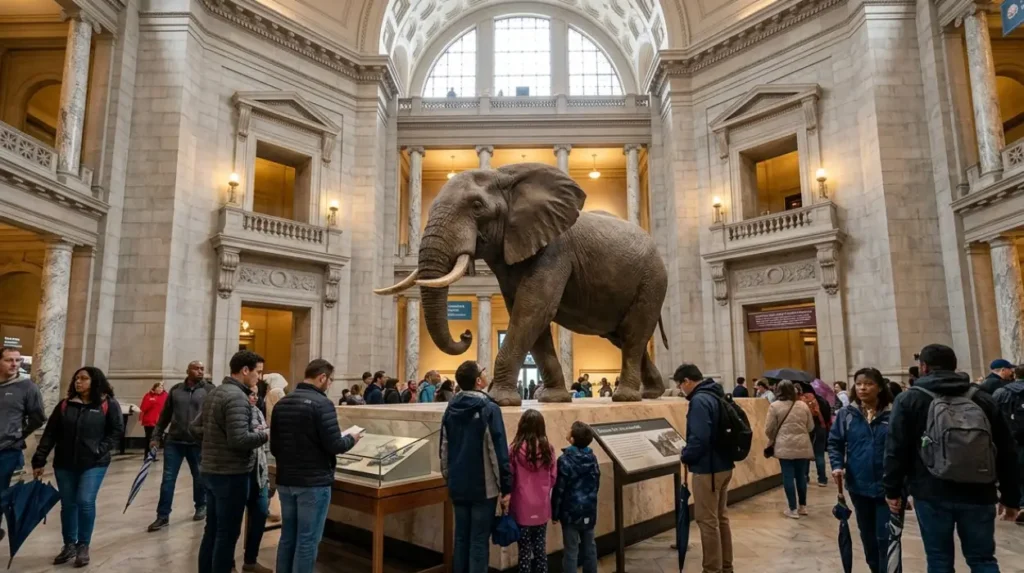
The Smithsonian Institution is the backbone of indoor sightseeing in Washington, DC. Its museums cover subjects from flight and space to natural history and world culture, and the scale is large enough to support repeat visits. For many visitors, this is the most efficient rainy-day option because it combines high educational value with low friction.
The National Gallery of Art is another major choice. Washington.org notes that the museum’s East and West Buildings hold more than 140,000 works and span four city blocks. That scale gives visitors a long indoor route without leaving the building complex, which is ideal when the rain continues for hours.
Smithsonian museums
The Smithsonian museums are the city’s most dependable indoor network. Washington.org describes the collection as nearly 140 million objects, works of art, and specimens altogether, with free admission at every location. That combination of breadth and cost makes the Smithsonian system the clearest first choice for broad audiences.
A rainy-day visitor can choose based on interest. National Museum of Natural History suits science and biodiversity. National Air and Space Museum fits aviation and technology. National Museum of American History covers national culture and material history. This division helps visitors focus instead of trying to “do” the entire system in one day.
National Gallery of Art
The National Gallery of Art gives a different kind of indoor experience. It offers quiet, long-form viewing, large galleries, and a major collection that supports both casual visits and deeper art study. The building layout also works well when weather interrupts outdoor walking because it offers substantial indoor circulation.
The museum’s size matters for rainy days because it stretches a visit without requiring multiple transfers or extra planning. A visitor can spend time in one wing, take a break, and continue without changing neighborhoods. That makes it one of the most practical cultural stops in DC during heavy rain.
International Spy Museum
The International Spy Museum works well for visitors who want an interactive indoor experience. Washington.org describes it as a state-of-the-art museum with enough spy-related intrigue and activities to fill an entire day. It is also a strong option for mixed-age groups because it is built around engagement rather than passive viewing.
The museum is open daily from 9 a.m. to 7 p.m. according to Washington.org. That schedule makes it useful for both daytime and late-afternoon plans. On a rainy evening, it also pairs well with dinner nearby in the L’Enfant Plaza or downtown corridor.
Where can you eat and browse indoors?
Union Market and nearby downtown districts give DC some of its best indoor food-and-browse options. These areas combine restaurants, specialty shops, casual seating, and enough variety to turn a rainy meal into a full indoor outing. Washington.org specifically highlights NoMa and Union Market as a dense concentration of rainy-day activity.
Food halls and market districts solve a common weather problem: they let groups split up and reconvene. One person can eat, another can shop, and a third can linger over coffee. That flexibility makes them especially useful for families, couples, and small groups with different energy levels.
Downtown DC also adds indoor game venues to the mix. Downtown DC’s own rainy-day guide points to SPIN DC for ping-pong and The Escape Game for timed puzzle play. That combination gives the district a stronger after-work or evening profile than museum-only plans.
Union Market
Union Market is one of DC’s easiest indoor anchors for rainy weather. Washington.org describes the NoMa and Union Market area as having a dense concentration of rainy-day activities and culinary options for many budgets. The district works especially well for casual dining, snack breaks, and flexible group plans.
A market setting also reduces commitment pressure. Visitors can stop in for one meal, extend to dessert, or move between vendors without needing a formal reservation strategy. That matters on rainy days, when the goal is usually convenience plus shelter.
Downtown game spots
Downtown DC adds an entertainment layer that many rainy-day lists miss. SPIN DC offers indoor ping-pong, and The Escape Game offers timed puzzle rooms. Both are useful because they convert bad weather into a planned activity rather than a delay.
These venues are especially strong for evening plans. They work after work, before dinner, or as a group activity when sightseeing is no longer the priority. They also fit central DC well, because they sit in walkable areas with restaurants and transit access nearby.
What indoor options work for families?
Families do best with interactive, high-activity spaces such as the National Children’s Museum, the Smithsonian museums, and indoor play-focused venues. These places keep children engaged with movement, hands-on exhibits, and clear learning goals, which matters when outdoor parks and monuments are off the table. The National Children’s Museum is built entirely around indoor, play-based exploration.
The strongest family venues give children control over the pace of the visit. That means open-ended exhibits, science exploration, and space to move. On a rainy day, those features reduce fatigue and help parents avoid long, difficult transitions between stops.
Washington.org describes the National Children’s Museum as an entirely indoor museum designed to cultivate curiosity and fun, with play-based exhibits focused on science, technology, engineering, arts, and math. That makes it a top family option when the weather narrows the day to enclosed spaces.
National Children’s Museum
The National Children’s Museum is built for indoor family time. Its design supports active learning rather than passive viewing, which helps younger visitors stay engaged longer. The museum’s STEM and arts focus also gives adults a structured educational benefit.
For families, that structure matters more than spectacle. Children need room to explore, and adults need a space where the whole visit does not depend on perfect weather. The museum solves both problems at once.
Smithsonian family stops
Several Smithsonian museums also work well for families. Natural history, air and space, and American history all give children strong visual anchors and broad topic coverage. Because admission is free, families can pair one museum with a meal break without stretching the budget.
Free admission also changes the decision-making process. Parents can choose the museum that best fits the child’s attention span instead of the one that best fits a ticket budget. That flexibility is one reason the Smithsonian remains one of DC’s strongest rainy-day assets.
What indoor choices fit a short evening?
A short rainy evening in DC works best with one compact indoor plan: a museum visit, a market meal, a game venue, or a walk through a major enclosed public space. The best evening choices reduce travel time, keep the setting central, and allow a clean exit before the night gets too long. Downtown DC, Penn Quarter, and Union Market are the most efficient starting points.
The key evening rule is simplicity. A two-hour plan should not require multiple reservations or long cross-city transfers. One indoor venue, one meal, and one transit route usually deliver the best result.
Rainy evenings also favor attractions with late hours or broad operating windows. Washington.org notes that the International Spy Museum is open until 7 p.m. daily. Downtown game venues also fit the evening rhythm well because they are designed for after-work leisure.
Best evening sequence
A practical evening sequence starts with dinner or snacks in Union Market, moves to a museum or game venue, and ends with dessert or a final drink nearby. This structure works because it keeps most movement indoors and inside one district. It also lowers the risk of weather interruptions between stops.
For many visitors, that is enough. A rainy evening in DC does not need a packed itinerary; it needs a short route with a warm interior, a clear activity, and a strong exit plan. That formula keeps the night easy and memorable.
How should visitors build a rainy-day itinerary?
The best rainy-day itinerary in DC uses one neighborhood cluster, one major anchor attraction, and one flexible backup stop. This approach reduces time lost to weather, transit, and indecision, while still covering culture, food, and entertainment. Central DC neighborhoods make this easier because they contain multiple indoor options close together.
A good itinerary starts with the anchor. For example, a Smithsonian museum creates a full morning or afternoon block. A market district creates a food-centered block. A game venue creates a short social block. Once that anchor is set, the rest of the day can be built around it.
Visitors also benefit from pairing quiet and active spaces. A museum visit followed by a food hall works better than two high-intensity activities in a row. The contrast gives the day structure and keeps energy stable when the weather feels flat or repetitive.
Sample rainy-day framework
Start with one museum, such as the National Gallery of Art or a Smithsonian museum. Add lunch or dinner at Union Market or another indoor food spot. End with a game, exhibit, or low-effort indoor stop in downtown DC. That sequence covers learning, eating, and entertainment without overcomplicating the day.
For families, replace the game venue with the National Children’s Museum. For adults, replace the museum with a longer gallery visit or the Spy Museum. For mixed groups, keep the food stop fixed and let the activity vary.
Why does DC rank so well for indoor travel?
DC ranks well for indoor travel because it has a high concentration of major institutions, free museums, walkable districts, and weather-proof public spaces. The city’s indoor range covers history, art, science, food, and entertainment within a relatively compact area. That concentration is one reason rainy days in DC remain productive instead of wasted.
This density has long-term value for visitors and locals alike. A rainy day does not eliminate the day’s options; it shifts them indoors. In DC, that shift still preserves access to nationally significant collections, major food districts, and interactive leisure spaces.
The city’s indoor strengths also help different audiences at once. Tourists get landmark museums. Families get play-based learning. Locals get quick entertainment after work. That broad utility keeps rainy-day content evergreen and useful across seasons.
What should readers remember before they go?
The smartest rainy-day plan in DC is to choose one indoor neighborhood, one anchor attraction, and one backup stop. Smithsonian museums, the National Gallery of Art, the International Spy Museum, the National Children’s Museum, Union Market, and downtown game venues form the core of the city’s strongest wet-weather options.
That mix covers the full range of needs: education, food, family time, and evening entertainment. It also matches how DC is built, with dense cultural corridors and multiple enclosed attractions near transit. For a rainy day, that structure is the real advantage.
Rain in Washington, DC does not remove the city’s best experiences. It changes the route to them. The smartest visitors follow the weather indoors and use the city’s museum, market, and entertainment network as the main plan, not the backup.
What are the best things to do in Washington, DC when it rains?
Top options include Smithsonian Institution museums, the National Gallery of Art, indoor markets like Union Market, and interactive spots like the International Spy Museum.